How Does Drinking Water Improve Skin Health and Hydration?

Healthy, hydrated skin is often seen as a sign of overall well-being. While skincare products help protect and nourish the skin, hydration starts from within. Water plays an important role in supporting normal body functions, including nutrient transport, blood circulation, and temperature regulation. These processes also help the skin function properly, making the benefits of drinking water for skin an important part of a healthy lifestyle.
Many people believe that drinking more water can transform their skin, but skin health depends on several factors, including the skin barrier, lifestyle, and skincare routine. In this blog, we will discuss the science behind skin hydration, the advantages of drinking water for skin, whether it can help dry skin, and practical ways to maintain healthy, hydrated skin.
Understanding the Connection Between Water and Skin Hydration

Water is present throughout the skin layers, and maintaining the right level of hydration is essential for it to function properly. Water supports important processes such as nutrient delivery, temperature regulation, and cell function. However, skin hydration depends not only on how much water you drink but also on how well your skin barrier retains moisture. Environmental factors, ageing, skincare habits, and certain skin conditions can all affect your skin's ability to stay hydrated.
Understanding how water supports the skin can help separate facts from common myths. The following sections explain why hydration matters, how the skin barrier works, and what current evidence says about the role of drinking water in maintaining healthy skin.
Why Water Is Essential for Skin Function
Water is essential for every organ in the body, including the skin. It supports normal cell function, helps transport oxygen and nutrients through the bloodstream, regulates body temperature, and aids in removing waste through the kidneys. These processes support normal skin function, maintenance of skin structure, and the skin’s ability to act as a protective barrier.
The outermost layer of the skin, called the stratum corneum, contains both water and natural lipids that work together to keep the skin soft and flexible. When the body is well hydrated, skin cells can function normally. However, the skin's moisture levels also depend on the strength of the skin barrier, which prevents excessive water loss. This is why drinking enough water is important, but it is only one part of maintaining healthy skin.
The importance of drinking water extends beyond skin health. Adequate hydration supports overall wellbeing, and one of the health benefits of drinking water is helping the body maintain normal physiological functions that indirectly contribute to healthy, resilient skin.
The Science of Hydration: Moisture Balance and Skin Barrier Support
Healthy skin depends on both adequate hydration and a strong skin barrier. The outermost layer of the skin helps retain moisture and reduces transepidermal water loss (TEWL), which is the natural evaporation of water from the skin. When this barrier is damaged by factors such as harsh cleansers, cold weather, ageing, or certain skin conditions, the skin loses moisture more easily and may become dry or irritated.
Drinking enough water supports normal body functions that help the skin perform at its best, but it does not directly hydrate the outer layer of the skin. Maintaining healthy skin requires both internal hydration and a consistent skincare routine, including using a suitable moisturiser. Together, these habits provide the greatest benefits of drinking water for skin health and help maintain its natural moisture balance.
What Can Drinking Water Really Do for Your Skin?
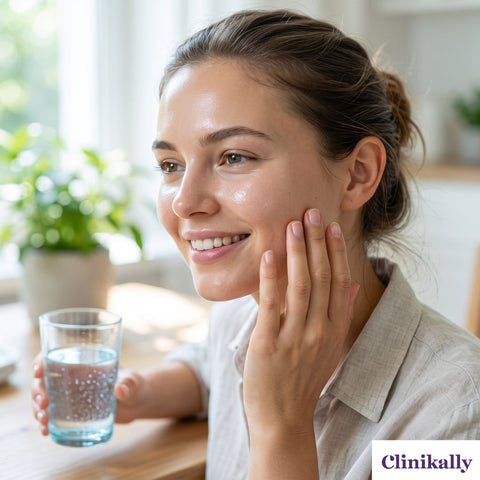
Drinking enough water is essential for overall health and supports many body functions that help keep your skin healthy. However, it is important to have realistic expectations. Drinking water alone cannot cure dry skin, erase wrinkles, or treat acne. Skin health is influenced by many factors, including your skin barrier, genetics, diet, sun exposure, and skincare routine.
The greatest benefits of drinking water come from maintaining proper hydration, especially if you are dehydrated. Combined with a balanced diet, regular moisturising, and daily sun protection, adequate water intake supports healthy skin function and contributes to a smoother, more comfortable complexion.
Benefits of Drinking Water for Skin Health

Drinking enough water supports your overall health and helps your skin function at its best. While water cannot replace a good skincare routine, staying hydrated supports several processes that contribute to healthy skin. Some of the key benefits of drinking water for skin include:
-
Supports Skin Elasticity: Adequate hydration may help improve skin elasticity, especially in people who are dehydrated.
-
Helps Maintain the Skin Barrier: Adequate hydration supports normal skin function, while a healthy skin barrier helps reduce moisture loss.
-
May Improve Overall Skin Appearance: Proper hydration can help the skin look healthier and feel less tight or dull.
-
Supports Normal Skin Cell Function: Water helps transport nutrients and oxygen, allowing skin cells to function properly.
-
Promotes Overall Skin Health: It supports essential body functions that indirectly benefit the skin.
The importance of drinking water extends beyond the skin. Drinking enough fluids, following a balanced diet, using a suitable moisturiser, and protecting your skin from the sun work together to maintain healthy, hydrated skin.
Can Drinking Water Help Dry Skin?
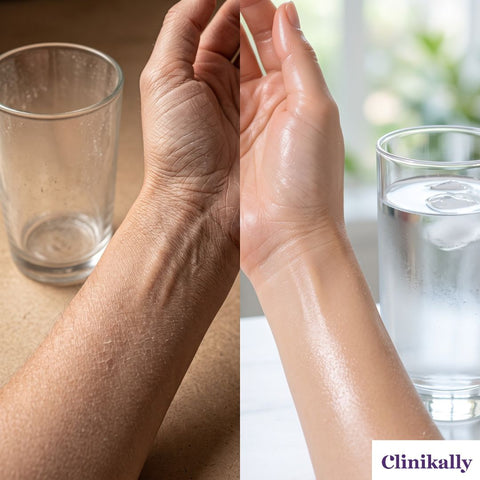
Dry skin and dehydration are often confused, but they are not the same. Dry skin is caused by a lack of natural oils and a weakened skin barrier, while dehydration occurs when the body does not have enough water. Although dehydration can make the skin feel tight and appear dull, drinking enough water is important for overall health, but it is not a standalone treatment for dry skin.
For most people, managing dry skin requires more than adequate hydration. A consistent skincare routine, including regular use of a moisturiser, helps restore the skin barrier and reduce moisture loss. If your skin remains dry despite drinking enough water, factors such as ageing, cold weather, low humidity, harsh cleansers, or skin conditions like eczema may be responsible. In such cases, consulting a dermatologist can help identify the underlying cause and recommend appropriate treatment.
How to Keep Your Skin Hydrated Beyond Drinking Water
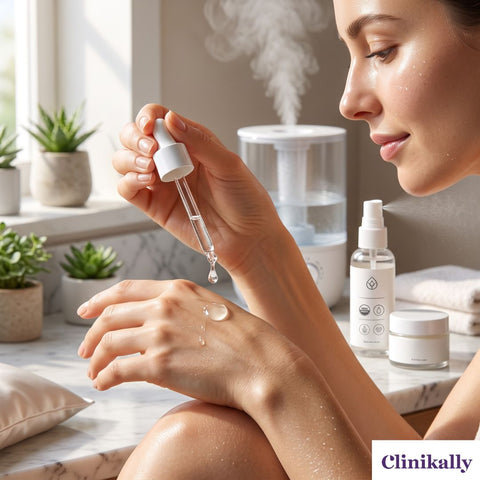
Drinking enough water is only one part of maintaining healthy skin. Keeping your skin hydrated also requires protecting the skin barrier and following healthy skincare habits. Here are some simple ways to help your skin retain moisture:
-
Use a Moisturizer Suitable for Your Skin Type: Apply a moisturizer regularly to lock in moisture and strengthen the skin barrier.
-
Choose Gentle Cleansers: Use a mild cleanser that cleanses the skin without stripping away its natural moisture.
-
Avoid Long, Hot Showers: Wash with lukewarm water and keep showers short to help prevent moisture loss.
-
Eat Water-Rich Foods: Include fruits and vegetables with high water content to support overall hydration and skin health.
How Much Water Should You Drink for Healthy Skin?

There is no fixed amount of water that guarantees healthy skin because your fluid needs depend on factors such as age, activity level, climate, and overall health. Instead of aiming for a specific number of glasses each day, drink enough fluids to stay adequately hydrated and increase your intake during hot weather, exercise, or illness.
The importance of drinking water lies in meeting your body's daily hydration needs rather than drinking excessive amounts. Water, milk, soups, and water-rich fruits and vegetables all contribute to your fluid intake. Pairing adequate hydration with a balanced diet and a consistent skincare routine offers greater benefits for your skin than relying on water alone.
Signs of Dehydration That Can Affect Your Skin

When your body does not get enough fluids, dehydration can affect how your skin looks and feels. While dehydration is not the same as dry skin, it may temporarily make the skin appear less plump, dull, or uncomfortable. Some common signs that your body may need more fluids include:
-
Dry or Sticky Mouth: Reduced fluid levels can decrease saliva production and cause dryness.
-
Dark Yellow Urine: This can be a common indicator that your body may need more fluids.
-
Feeling Thirsty: Thirst is one of the body's natural signals that it needs water.
-
Tiredness or Dizziness: Mild dehydration can sometimes affect energy levels and overall wellbeing.
-
Skin Feeling Tight or Looking Dull: Dehydration may make the skin appear less refreshed, although skincare and barrier health also play important roles.
Maintaining adequate hydration through water and other fluids, along with a balanced diet and proper skincare routine, can help support overall skin health. If skin dryness, irritation, or discomfort continues despite good hydration habits, it may be related to an underlying skin condition rather than dehydration alone.
Final Thoughts
Drinking enough water is an important part of maintaining overall health, and it also supports your skin's normal functions. However, healthy skin depends on more than hydration alone. A strong skin barrier, a balanced diet, regular moisturising, daily sun protection, and a consistent skincare routine all play an important role in keeping your skin healthy and hydrated.
The benefits of drinking water for skin are best seen as part of a healthy lifestyle rather than a quick fix. By combining adequate hydration with good skincare habits, you can support your skin's natural barrier, improve overall skin health, and maintain a healthier-looking complexion over time.