Best Products for Melasma Recommended by Dermatologists
Imagine waking up to stubborn, brown patches on your face that just won't fade. Melasma, often called the mask of pregnancy, is one of the most frustrating skin conditions to manage.
The biggest mistake people make? Scrubbing away at it with harsh exfoliants. That aggression only angers the skin, triggering more pigment and making dark spots worse.
Outsmarting melasma isn't about harsh treatments, it's about choosing the right products and care. With a gentle, dedicated routine focused on light protection, pigment blockers, and barrier repair, you can calm overactive skin and restore your glow.
What is Melasma?
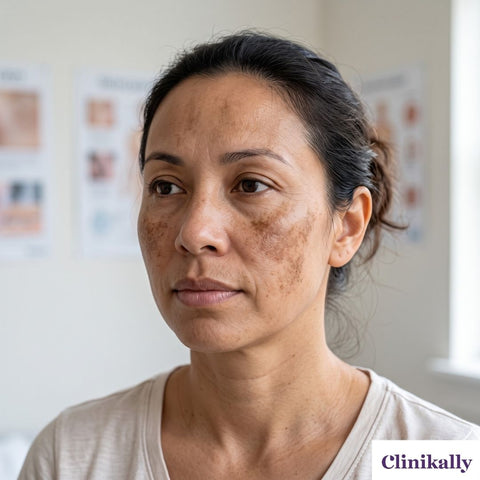
Melasma is a common, chronic skin condition that causes symmetrical, blotchy brown or gray-brown patches on sun-exposed areas of the face. It most frequently appears on the cheeks, forehead, bridge of the nose, upper lip, and chin.
The Science Behind Overactive Pigment Cells
The main cause of melasma is an overproduction of melanin, the natural pigment that gives skin its color. Pigment-producing cells (melanocytes) go into overdrive, sending excess melanin into the surrounding skin cells. Clinical studies show that melasma is not just a surface-level tan. It is a complex skin disorder where pigment cells stay constantly activated.
Internal and External Triggers That Cause Melasma Flares
Melasma develops through a mix of genetic predisposition, lifestyle factors, and environmental triggers:
-
Sunlight and Visible Blue Light: Ultraviolet rays (UVA and UVB) along with high-energy visible light (HEV or blue light from the sun and digital screens) stimulate melanocytes to produce excess pigment instantly.
-
Hormonal Fluctuations: Spikes in estrogen and progesterone make pigment cells hyper-sensitive. This explains why melasma frequently flares up during pregnancy, while taking oral contraceptives, or during hormone replacement therapy.
-
Skin Inflammation and Micro-Vessels: Areas affected by melasma often have underlying microscopic inflammation, extra blood vessels, and a compromised skin barrier. This keeps pigment trapped in both the top layer (epidermis) and deeper layer (dermis) of the skin.
Because so many overlapping triggers drive this condition, clearing melasma requires a multi-targeted skincare strategy rather than a single quick fix.
Top Products for Melasma: Dermatologists' Picks
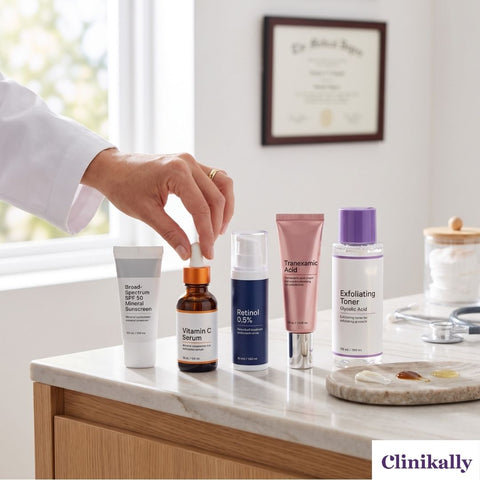
When managing melasma, dermatologists rely on targeted products, designed to inhibit excess melanin, speed up cellular turnover, block environmental light triggers, and treat systemic pigment production from within. Here’s a curated selection of some of the best products for melasma, grouped by their clinical mechanism and role.
Prescription Triple-Combination Creams
Triple-combination topicals remain the best creams for melasma, as they offer rapid clinical clearance of moderate-to-severe melasma. Combining Hydroquinone (pigment inhibitor), Tretinoin (cell turnover accelerator), and Fluocinolone Acetonide (a mild anti-inflammatory steroid), these prescription formulations tackle melasma across three distinct biological pathways simultaneously.
|
Product Name |
Key Ingredients |
Primary Benefits |
|
Hydroquinone 4%, Tretinoin 0.05%, Fluocinolone Acetonide 0.01% |
Suppresses tyrosinase, speeds cell turnover to purge pigment, and prevents inflammatory rebound. |
|
|
Hydroquinone 2%, Tretinoin 0.025%, Fluocinolone Acetonide 0.01% |
Fades deep epidermal pigment patches while minimizing skin irritation during initial use. |
|
|
Hydroquinone 4%, Tretinoin 0.025%, Mometasone Furoate 0.1% |
Provides strong depigmentation for resistant dark patches under dermatological supervision. |
|
|
Hydroquinone 2%, Tretinoin 0.025%, Fluocinolone Acetonide 0.1% |
Lightens stubborn patches while accelerating dead skin cell shedding. |
Non-Hydroquinone Depigmenting & Brightening Creams / Gels
Hydroquinone-free depigmenting topicals are essential for long-term maintenance after prescription treatment, as well as for individuals prone to irritation or post-inflammatory hyperpigmentation (PIH). These products utilize ingredients like Tranexamic Acid, Kojic Acid, Azelaic Acid, and Arbutin to halt melanin production without the risks associated with long-term steroid or hydroquinone use.
|
Product Name |
Key Ingredients |
Primary Benefits |
|
Kojic Acid Dipalmitate, Arbutin, Glycolic Acid, Octinoxate, Vitamin E |
Inhibits tyrosinase enzymes and provides mild surface exfoliation to surface pigment. |
|
|
Tranexamic Acid, Kojic Acid, Arbutin, Vitamin Acetate |
Blocks melanocyte-keratinocyte interaction and calms skin redness/vascular triggers. |
|
|
Tranexamic Acid, Alpha Arbutin, Kojic Acid, Vitamin C |
Targets persistent vascular and epidermal pigment to restore overall skin radiance. |
Best Serums for Melasma
Concentrated liquid serums deliver potent antioxidants deep into the skin to neutralize free radicals generated by UV rays and pollution. Antioxidants like Vitamin C (L-Ascorbic Acid) work synergistically with Ferulic Acid and Niacinamide to enhance skin radiance, prevent photo-aging, and keep melanin-producing pathways suppressed throughout the day.
|
Product Name |
Key Ingredients |
Primary Benefits |
|
L-Ascorbic Acid, Alpha Tocopherol (Vitamin E), Ferulic Acid |
Neutralizes sun-induced free radicals, boosts collagen, and brightens dull spots. |
|
|
L-Ascorbic Acid (15%), Copper Tripeptide-1, Arbutin |
Combines advanced antioxidant protection with anti-aging cellular repair. |
|
|
Clinikally The Ultimate NIA Serum + Pigment Corrector Cream (Combo) |
Niacinamide, Transexamic Acid, Epidermosil, Pigment-Correcting Actives |
Reduces melanosome transfer, calms inflammation, and locks in vital skin hydration. |
|
Tranexamic Acid, Sepicalm, Niacinamide, Lightening Actives, UV Filters |
Delivers targeted anti-pigment ingredients alongside daily ambient light protection. |
Best Sunscreens For Melasma
Strict, daily photoprotection is the best product for melasma management. Unlike standard sunscreens, tinted physical sunscreens containing Iron Oxides, Zinc Oxide, and Titanium Dioxide block UVA/UVB rays as well as High-Energy Visible (HEV/blue) light, a known trigger for melasma flares.
|
Product Name |
Key Ingredients |
Primary Benefits |
|
Zinc Oxide, Titanium Dioxide, Cyclopentosiloxane |
Blocks UVA, UVB, and HEV blue light while providing sheer coverage without a white cast. |
|
|
Photoage Hydra Ultralight Invisible Sunscreen Fluid Gel SPF 50+ PA+++ |
Chemical UV Filters, Anti ageing agents, Hydrating Polymers |
Delivers broad-spectrum photoprotection in a lightweight, non-greasy texture. |
|
Octyl Methoxycinnamate, Bis-Ethylhexyloxyphenol, Titanium Dioxide |
Provides a matte, water-resistant shield ideal for oily or acne-prone melasma skin. |
Best Supplements For Melasma
Oral nutraceuticals work systemically to manage pigment production from within. Ingredients such as oral Tranexamic Acid, L-Glutathione, and Ascorbic Acid help downregulate melanocyte activation, reduce skin vascularity, and provide systemic antioxidant support to prevent melasma recurrence.
|
Product Name |
Key Ingredients |
Primary Benefits |
|
Tranexamic Acid (250mg), L-Glutathione (250mg), L-Ascorbic Acid (500mg) |
Systemically inhibits melanin synthesis pathways and reduces vascular inflammation. |
|
|
Pine Bark Extract (Pycnogenol), C-enzyme Q10, L-Tyrosine, Vitamin B5 |
Offers internal protection against oxidative stress and UV-induced pigmentation. |
|
|
Tranexamic Acid, L-Glutathione, Alpha Lipoic Acid |
Targets deep-seated dermal pigmentation and evens out general skin tone. |
|
|
L-Glutathione Reduced, Tranexamic Acid, L-Ascorbic Acid |
Strengthens capillary walls, reduces micro-vascular flare-ups, and calms hyperpigmentation. |
Best Cleansers For Melasma
A proper melasma-friendly cleanser must be ultra-gentle, non-stripping, and formulated to clean the skin without disrupting the fragile cutaneous moisture barrier. Harsh scrubbing or drying agents increase skin inflammation, which can exacerbate hyperpigmentation; dedicated pigment cleansers incorporate mild exfoliants or soothing antioxidants to prepare the skin for active treatments.
|
Product Name |
Key Ingredients |
Primary Benefits |
|
Glycolic Acid (mild concentration), Gentle Cleansing Surfactants |
Gently removes dead skin cells and surface pigment without causing irritation or drying. |
|
|
Glutathione, Kojic Acid, Vitamin C, Vitamin E |
Cleanses impurities while delivering a refreshing burst of soothing antioxidants. |
Core Active Ingredients for Managing Melasma
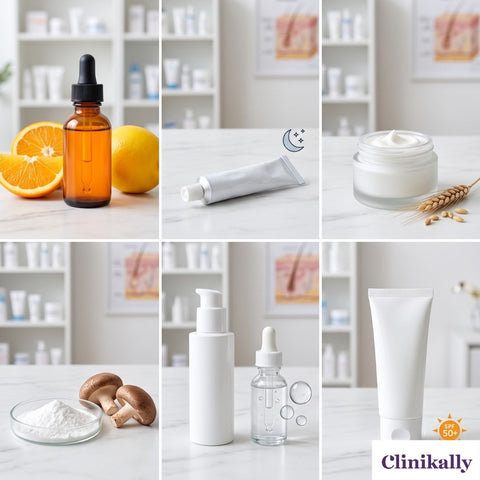
Effective melasma control relies on topical ingredients that target specific steps in the melanin production cycle. Because melasma is a complex skin disorder driven by overactive pigment production, vascular reactivity, and inflammation, dermatologists choose ingredients based on how they interrupt these pathways.
Below are the most clinically proven active ingredients used in melasma treatments.
-
Hydroquinone (2% to 4%): Known as the medical benchmark for pigment reduction. It inhibits the enzyme tyrosinase to stop melanin production and alters melanosome structures within pigment cells. Due to potential side effects like ochronosis from prolonged use, it is prescribed for short-term corrective phases under medical supervision.
-
Tranexamic Acid: A synthetic derivative of lysine that blocks the plasminogen/plasmin pathway. It reduces the chemical signals between pigment-producing cells and surrounding skin cells while quieting micro-vascular redness that keeps dark spots active.
-
Azelaic Acid (15% to 20%): A naturally occurring dicarboxylic acid that selectively targets hyperactive, abnormal pigment cells without affecting normal skin tone. It acts as a mild tyrosinase inhibitor and provides potent anti-inflammatory benefits, making it an ideal long-term option, especially for sensitive or acne-prone skin.
-
Alpha Arbutin and Kojic Acid: Gentle, plant-derived alternatives that inhibit tyrosinase activity by binding to copper ions needed for melanin synthesis. They are commonly used in daily maintenance products to maintain results and prevent rebound pigmentation.
-
Niacinamide (Vitamin B3): Rather than stopping pigment production at the source, niacinamide prevents already-formed melanin packets (melanosomes) from transferring into surrounding surface skin cells. It also strengthens the barrier function to reduce underlying inflammation.
-
L-Ascorbic Acid (Vitamin C): A powerful antioxidant that neutralizes free radicals caused by sunlight and pollution. It converts dark oxidized melanin back into lighter forms and boosts overall skin brightness when paired with daily sun protection.
-
Cysteamine (5%): A naturally occurring aminothiol antioxidant that reduces intracellular melanin, chelates copper and iron ions, and shifts melanin production away from dark pigment. It serves as an effective option for individuals who cannot tolerate hydroquinone.
Targeted Skincare Strategies That Work Best Against Melasma
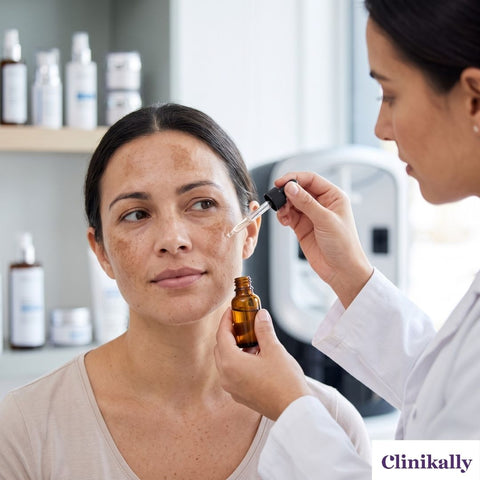
Clearing melasma requires a strategic, multi-layered approach rather than relying on a single ingredient. Pigment synthesis is driven by UV rays, heat, vascular inflammation, and hormonal signals. Because of this, an effective routine must target every stage of the pigment production process.
The Key Steps to Fix Melasma
-
Strict Photoprotection: Sunscreen is the foundation of melasma care. Broad spectrum formulas with iron oxides are essential because they block both UV light and high-energy visible light (blue light), which directly triggers pigment cells.
-
Tyrosinase Inhibition: Active ingredients like hydroquinone, kojic acid, and arbutin block tyrosinase, which is the main enzyme responsible for turning amino acids into melanin.
-
Melanosome Transfer Blockade: Ingredients such as niacinamide stop produced pigment from moving from pigment-producing cells into surrounding skin cells.
-
Vascular and Inflammatory Control: Tranexamic acid calms down underlying micro-blood vessels and reduces inflammatory signals that keep pigment production active.
-
Gentle Cellular Renewal: Mild chemical exfoliants like glycolic acid or mandelic acid speed up cell turnover to shed surface pigment without causing skin irritation or post-inflammatory dark spots.
Step-by-Step Daily Routine
Morning (AM): Protect and Prevent
-
Step 1: Gentle Cleanser – Cleanse with a mild, non-stripping face wash (such as Clinikally Foaming Face Wash) to clear overnight oil without damaging the skin barrier.
-
Step 2: Antioxidant Defense – Apply a vitamin C serum (such as Clinikally Vitamin C3+ Serum) to neutralize sun-induced free radicals and boost sun protection.
-
Step 3: Non-Hydroquinone Pigment Inhibitor – Layer a tranexamic acid or kojic acid product (such as Melano-TX Cream) to block daytime pigment signals.
-
Step 4: Tinted Broad-Spectrum SPF – Finish with a tinted physical sunscreen (such as Mis D Sun SPF 50) to shield against UV rays and blue light. Reapply every two to three hours.
Evening (PM): Repair and Correct
-
Step 1: Double Cleanse – Wash thoroughly to remove sunscreen, makeup, and daily environmental buildup.
-
Step 2: Corrective Active – Apply your prescription treatment (such as Triluma) or advanced maintenance cream (such as Kojivit Plus Gel) to target deep dark spots while the skin repairs itself overnight.
-
Step 3: Barrier Repair Moisturizer – Lock in moisture with a soothing cream containing ceramides or niacinamide to prevent irritation and keep the skin calm.
Final Thought: Managing Melasma Efficiently
Clearing melasma requires consistency, strict sun protection, and a multi-step routine that calms pigment production without irritating your skin. By protecting against UV and blue light, stopping excess melanin, and keeping your skin barrier healthy, you can achieve a clearer, more even complexion over time.
However, because melasma presents differently in every individual, always consult a dermatologist or qualified healthcare professional before starting any new product or treatment. A professional evaluation ensures you receive a personalized treatment plan and skincare routine to your specific skin type and hyperpigmentation depth.