What Are the Different Facelift Types and Their Benefits?
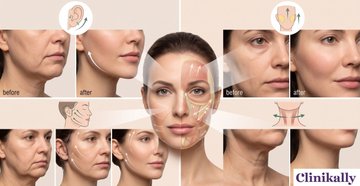
As we grow older our skin begins to produce less collagen which causes sagging and loose skin. Face lifting surgery aims to bring back the youth and the right one for you will depend on your skin type, how far the face has sagged and what you hope to achieve from the face lift surgery. What you are going to discover in this blog is the different kinds of facelifts you can avail as per your skin type.
What is a Facelift (Rhytidectomy)?
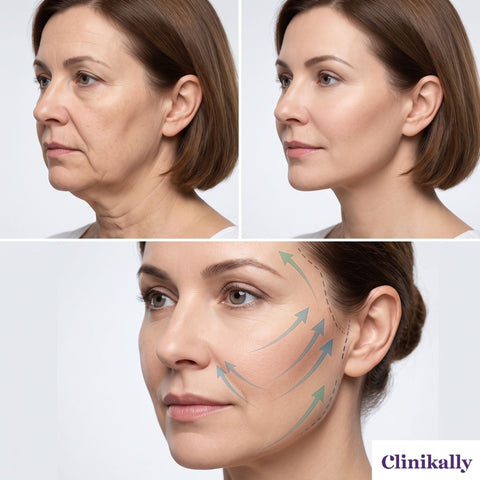
The medical word for facelift is "Rhytidectomy". This is an intervention that is used to revitalize and rejuvenate the face by minimizing the effect of aging. It involves tighten the skin and arranging deeper layers of tissue and smoothing out deep lines and creases. A true facelift surgery is a lift of the deeper layer of muscle in the face, which returns the jawline, cheeks and neck to a firmer and more youthful contour, in comparison to a facelift treatment that only targets the surface layer of skin.
In view of how much sagging there is and the aims of the patient, a facelift could be a small operation that just tightens the face's skin, or it could involve an extensive surgical facial lift. The method employed will determine the costs involved and recovery period, so you should know what kind of facelift you need.
The Science Behind Facelifts: How They Transform Aging Skin
Facelift treatment is considered one of the effective treatment procedures in dealing with the effects of aging as it actually repairs the structures responsible for the sagging rather than just masking surface wrinkles. The procedure can be carried out either surgically or non-invasively skin tightening procedure such as a thread lift or HIFU face treatment. The goal remains the same: restoring the face's underlying support system.
It is one of the most effective treatment procedures for dealing with the effects of ageing, because it actually repairs the structures which cause sagging, rather than merely conceals surface wrinkles. It can be performed either surgically or non-invasively by skin tightening techniques like a thread lift or treatment with HIFU (high intensity focused ultrasound). The same objective is still in place: to restore the underlying support system of the face.
-
Rebuilding the Dermal Matrix: The dermis relies on collagen for strength and elastin for flexibility. Collagen production naturally declines by about 1% each year starting in our 20s, causing the skin to gradually lose its structural memory and begin to sag. This is why facial skin tightening becomes increasingly important with age.
-
Tightening the SMAS Layer: The SMAS (Superficial Musculoaponeurotic System) is the deep muscular layer that supports the skin. Over time, the ligaments anchoring the SMAS loosen, causing the facial "mask" to droop downward a key reason facelift surgery targets this layer directly.
-
Restoring the Triangle of Youth: A youthful face carries volume high in the cheeks with a well-defined jawline, forming what's known as the Triangle of Youth. As we age, this triangle inverts as fat pads descend, creating jowls one of the primary concerns addressed by both surgical facial lift procedures and RF radio frequency skin tightening treatments.
Popular Types of Facelift Procedures Explained
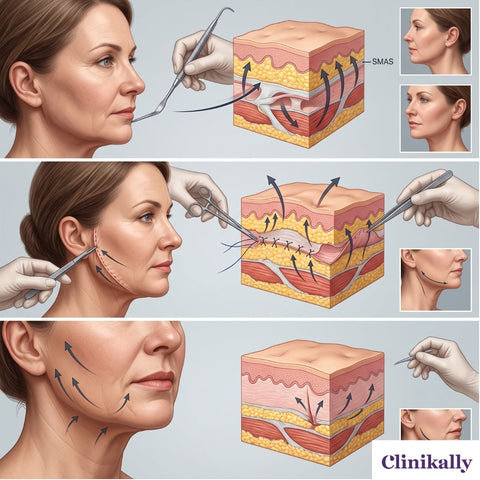
Facelifts aim to help the skin restore youthful curves by correcting drooping skin, wrinkles and loss of volume. Facelifts come in different types, with each type targeting a specific aging issue and desired effect.
|
Facelift Type |
Primary Benefit |
|
Deep Plane/SMAS Facelift |
Provides the deepest, longest-lasting structural lifting effect naturally. |
|
Mini Facelift |
Designed for early facial sagging with little down time. |
|
Mid-Facelift |
Rebuilds facial volume and uplifts the mid face area. |
|
Cheek Lift |
Lifts sagging cheeks and smooths under-eye hollowing. |
|
Jaw Line Rejuvenation |
Eliminates sagging jowls to create facial definition. |
|
S-Lift |
Provides moderate uplift with minimal, hidden scarring. |
|
Cutaneous Lift |
Removes excess loose skin without deep repositioning. |
|
Temporal or Brow Lift |
Lifts heavy brows to open the upper face. |
|
Liquid Facelift (Non-Surgical) |
Rebuilds volume instantly without surgery or downtime. |
1. Deep Plane/SMAS Facelift
Deep Plane/SMAS facelift is a complete facial lift procedure that is designed to reposition the deep muscular layer and fat pads as one single unit, not just tighten the skin. It is regarded as the gold standard technique for facelift surgery on the mid-face, jaw line and neck for natural and permanent results.
Benefits:
-
Delivers the most natural-looking, non-"pulled" results.
-
Long-lasting outcome, often 10+ years.
-
Comprehensively addresses mid-face, jawline, and neck sagging.
-
Reduces nasolabial folds and jowls simultaneously.
-
Minimizes tension on the skin, reducing scarring.
-
Improves both volume and contour in one procedure.
Best for: Patients with moderate to severe sagging in the mid-face, jawline, and neck who want a comprehensive, long-lasting surgical facelift rather than a temporary or partial fix.
2. Mini Facelift
The mini facelift is a less invasive face lift treatment that uses smaller incisions to address early signs of sagging in the lower face and jowls. It's a popular entry point into facelift surgery for those not yet ready for a full procedure.
Benefits:
-
Smaller incisions with less visible scarring.
-
Significantly quicker recovery time.
-
Lower surgical face lift cost compared to full procedures.
-
Effectively targets early jowls and lower face laxity.
-
Can often be done under local anesthesia.
-
Natural-looking, subtle improvement.
Best for: Younger patients or those in their 40s-50s with mild to moderate sagging who want a quicker, less invasive facial lift with minimal downtime.
3. Mid-Facelift
The mid-facelift is a targeted facial lifting treatment that focuses on the area between the mouth and cheekbones. It lifts sunken cheeks and softens deep nasolabial folds to refresh the center of the face.
Benefits:
-
Restores volume to sunken or flattened cheeks.
-
Softens deep nasolabial folds.
-
Creates a refreshed, lifted center-face appearance.
-
Can be combined with other facelift types.
-
Improves cheekbone definition.
-
Enhances overall facial harmony.
Best for: Patients experiencing flattened cheeks and deep smile-line folds who want to specifically rejuvenate the central face without a full facelift.
4. Cheek Lift
A cheek lift is a facial lift procedure designed specifically to raise sagging malar fat pads, restoring youthful plumpness and contour to the cheekbones while smoothing the transition into the lower eyelid.
Benefits:
-
Restores lost cheekbone volume and definition.
-
Smooths the lower eyelid-to-cheek transition.
-
Reduces tear trough hollowing.
-
Creates a lifted, youthful mid-face appearance.
-
Can be paired with a mid-facelift for enhanced results.
-
Long-lasting contour improvement.
Best for: Individuals with sagging or flattened cheeks and visible under-eye hollowing who want targeted mid-face rejuvenation.
5. Jaw Line Rejuvenation
Jawline rejuvenation is a facelift technique that corrects the lower face by removing jowls and sharpening the mandibular line, creating a cleaner, more defined jaw between chin and ears.
Benefits:
-
Eliminates sagging jowls.
-
Sharpens and defines the jawline.
-
Creates a smoother chin-to-ear contour.
-
Complements neck rejuvenation procedures.
-
Enhances facial profile and symmetry.
-
Suitable as a standalone or combined procedure.
Best for: Patients with a well-preserved mid-face but noticeable jowls and a softened jawline who want lower-face definition restored.
6. S-Lift
Named for its distinctive S-shaped incision, this technique tightens the face and neck with a moderate lift, minimal scarring, and shorter downtime than a full facelift.
Benefits:
-
Minimal, well-concealed scarring.
-
Moderate but noticeable lift.
-
Shorter recovery period.
-
Effective for both face and neck laxity.
-
Lower cost than deep plane procedures.
-
Good option for first-time facelift patients.
Best For: Patients with mild to moderate facial and neck sagging who want visible improvement with less invasive surgery and reduced downtime.
7. Cutaneous Lift
The traditional facelift technique that focuses purely on removing excess skin and tightening it. It's less commonly used alone today since it doesn't reposition deeper facial structures.
Benefits:
-
Removes excess, loose skin effectively.
-
Straightforward, well-established technique.
-
Can be combined with other procedures.
-
Reduces visible fine lines and skin laxity.
-
Suitable as a complementary step.
-
Shorter procedure time when used alone.
Best For: Patients with primarily excess skin and minimal structural sagging, often used alongside other facelift techniques for enhanced results.
8. Temporal or Brow Lift
An upper-face procedure often combined with a facelift to correct brow ptosis (drooping) and soften forehead lines for a more balanced, refreshed overall appearance.
Benefits:
-
Lifts drooping brows.
-
Softens forehead lines and wrinkles.
-
Opens up the eye area.
-
Complements mid- and lower-face lifts.
-
Creates overall facial balance.
-
Can be performed endoscopically for less scarring.
Best For: Individuals with sagging brows or a heavy, tired upper-face appearance, especially when combined with a lower facelift for complete facial rejuvenation.
9. Liquid Facelift (Non-Surgical)
A non-invasive skin tightening procedure that uses injectables, along with technologies like HIFU face treatment, RF radio frequency skin tightening, and thread lift (facial threading), to restore volume and smooth wrinkles without repositioning deep facial structures.
Benefits:
-
No incisions or surgical downtime.
-
Immediate, visible results.
-
Customizable treatment combinations.
-
Lower cost than surgical facelift options.
-
Minimal recovery time.
-
Ideal for gradual, maintenance-based aging correction.
Best For: Those seeking subtle rejuvenation without surgery, or as a maintenance option between surgical facelifts, particularly individuals with early signs of aging and volume loss.
Myths About Facelifts: Separating Fact from Fiction
Facelifts are an example of the most effective anti-aging procedures that can be used to restore the youthful face shape. However, misconceptions about the process have served as significant barriers to the process. Hence, facts on facelifts are important to make effective decisions.
Myth 1: Facelifts are artificial.
-
Fact: Contemporary surgeries, such as micro and deep plane facelifts, are supposed to produce natural results. Experts are able to move and reposition tissues without them appearing tight or unnatural.
Myth 2: Only older patients need facelifts.
-
Fact: Surgical facelifts are generally for patients with significant aging changes, while younger patients may benefit from minimally invasive or non-surgical techniques.
Myth 3: Facelifts are painful.
-
Fact: Anesthesia is used to numb the pain. Even though a certain discomfort is expected, it is minimal. The pain is short-lived and the majority of the patients can resume normal lives within days or weeks depending on the surgery.
Myth 4: Facelifts Are Only Surgical
-
Fact: Polydioxanone (PDO) or dissolvable threads, fillers, and laser treatments are non-invasive and pro. Video lifting with minimal downtime. These are used for minor to severe cases of sagging.
Myth 5: Are the Results Permanent?
-
Fact: Despite the long term nature of the effects of a facelift the passage of time will always have its way. The non-invasive treatments are temporary.
Benefits of Facelift Procedures for Youthful Skin
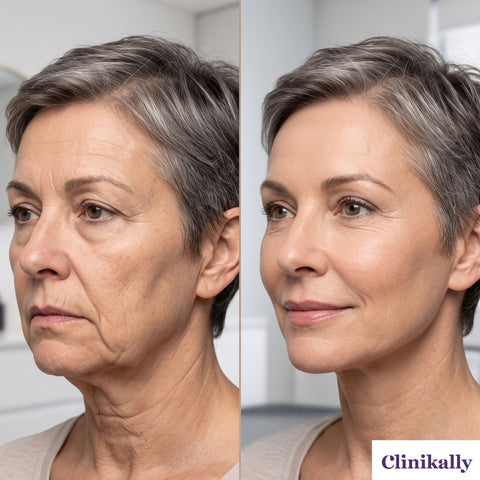
A facelift treatment delivers far more than surface-level improvement it provides comprehensive structural rejuvenation that no topical product, thread lift, or non-invasive skin tightening procedure can fully replicate. By addressing the deeper layers of the face, facelift surgery offers long-term benefits for a refreshed, natural appearance.
-
Comprehensive Wrinkle Reduction: While fillers and facial threading can temporarily soften individual wrinkles, a facelift corrects the underlying structural cause of deep creases, smoothing profound nasolabial folds and marionette lines at their source.
-
Precision Jawline and Neck Contouring: One of the greatest advantages of a facelift is the complete elimination of jowls and sagging skin beneath the jaw. It recontours the jawline into a sharp, clean profile a defining feature of youthful facial skin tightening.
-
Natural Volume Redistribution: Rather than simply stretching the skin, a modern facelift repositions fat pads back onto the cheekbones, restoring the natural Triangle of Youth and filling hollow areas for a relaxed, healthy appearance.
-
Long-Term Structural Integrity: Unlike non-invasive skin tightening procedures such as HIFU face treatment or RF radio frequency skin tightening, which require regular maintenance, a facelift can last over a decade effectively resetting the aging clock from a younger structural baseline.
-
Improved Skin Tightness and Texture: By removing excess, inelastic skin, the remaining skin fits smoothly over the underlying facial contours, eliminating crepey texture and delivering a firm, refined complexion that complements the results of any face lifting treatment.
Comparing Surgical and Non-Surgical Facelift Options
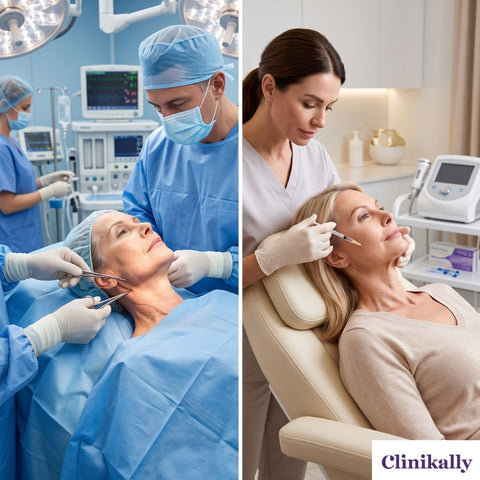
Facelifts are a professional way to restore youthful facial contours, but patients frequently worry about whether to go surgical or non-surgical. Understanding the differences outlined in the comparison table below can help you make an informed decision.
|
Feature |
Surgical Facelift |
Non-Surgical Facelift |
|
Primary Method |
Incisions made along hair/ear lines to lift deep muscle tissue (SMAS) and remove excess skin. |
Combination of dermal fillers, Botox, thread lifts, or energy treatments (Ultherapy, RF microneedling). |
|
Ideal Candidate |
Individuals with moderate to severe skin sagging, deep wrinkles, or pronounced jowls (typically ages 45+). |
Individuals with mild to moderate loss of skin elasticity or volume loss (typically ages 30–50). |
|
Invasiveness & Anesthesia |
Invasive; requires general anesthesia or intravenous sedation. |
Non-invasive to minimally invasive; usually requires topical numbing cream or local anesthesia. |
|
Procedure Time |
3 to 6 hours (outpatient surgery). |
30 to 90 minutes ("lunchtime" procedure). |
|
Recovery & Downtime |
2 to 4 weeks of social downtime; bruising, swelling, and temporary tightness are expected. |
Minimal to no downtime; mild redness or slight swelling resolves in 1 to 3 days. |
|
Onset of Results |
Immediate structural change, with final refined results visible after 3 to 6 months (as swelling subsides). |
Immediate for fillers; gradual over 2 to 3 months for collagen-stimulating energy devices. |
|
Longevity of Results |
Long-lasting: Typically lasts 10 to 15 years. |
Temporary: Results last 6 to 24 months depending on the modalities used; requires ongoing maintenance. |
|
Risk Profile |
Standard surgical risks (scarring, infection, nerve injury, reaction to anesthesia). |
Low risk (minor bruising, swelling, temporary asymmetry, rare vascular complications with fillers). |
|
Cost Consideration |
Higher upfront cost, but a one-time investment for a long duration. |
Lower initial cost, but recurring maintenance fees add up over time. |
Conclusion: Personalized Facelift Choices for Long-Term Results
Two faces don't age the same and two facelifts should be distinct. Perhaps your jawline slackened before your cheeks became flatter or anything else drooped. Hence, a one-size-fits-all solution won't work. The actual skill to facial rejuvenation is a comprehension of the aging pattern for each individual to create a plan to suit their unique needs. It may be a deep plane facelift for an individual with a dropped entire mid-face, a quick mini lift for early jowls, or perhaps a needle-only liquid facelift for an individual just wanting to lessen a couple of years.
The surgeons who are successful in this treat you like a blueprint and not a template. They look at your skin quality, bone structure, and how gravity has specifically played out on you before ever picking up a scalpel. That's the difference between looking "done" and looking like a rested, more youthful version of yourself, one that holds up for years, not months.