5 Best Kojic Acid Serum for Hyperpigmentation Suggested by Dermatologists
Stubborn dark spots, melasma, or post-acne marks can lead your skin to hyperpigmentation. It’s always frustrating to try product after product with zero results. As, fading hyperpigmentation isn’t about superficial brightening; it requires stopping excess pigment production at its source.
Dermatologists often recommend Kojic Acid serums, known for its effective action against hyperpigmentation. Derived naturally from fungi, Kojic acid blocks tyrosinase (the enzyme your skin uses to create melanin). By turning down this enzyme, it fades existing dark spots and prevents new ones from forming, making it a gentler, safer alternative to harsh skin-bleaching chemicals. In this blog, we’ll understand how effective kojic acid serums are, find out the best kojic acid for hyperpigmentation, and discuss the perfect skin routine to use it.
How do Kojic Acid Serums work?
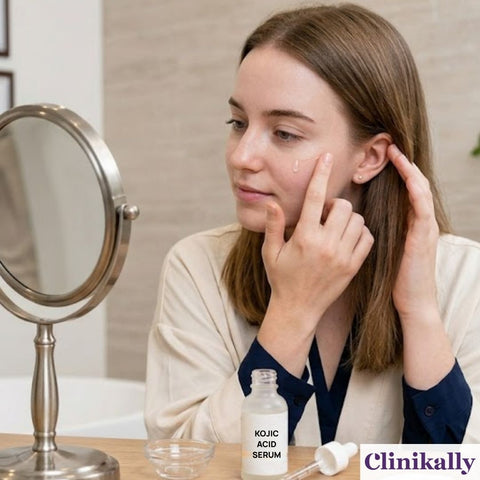
Various clinical studies published in the Indian Journal of Dermatology and the Journal of Molecular Science states that Kojic acid treats hyperpigmentation by targeting the root cause of dark spots. There is an enzyme known as tyrosinase that controls melanin (pigmentation) production. Kojic acid comes in action and stops this process in three different ways, let’s have a look:
-
Deactivates the Enzyme: To trigger pigment production, tyrosinase must bind with copper ions. Kojic acid acts as a chelating agent that binds to these copper ions instead, leaving the enzyme powerless to create dark spots.
-
Blocks Raw Materials: The skin requires specific amino acids to build pigment. Kojic acid mimics the shape of these raw materials, physically blocking the enzymes' active site and jamming the pigment assembly line.
-
Prevents Future Discoloration: While exfoliating acids only scrub away existing surface stains, kojic acid works during the creation process. It stops new pigment from forming, ensuring that when your skin naturally sheds, the rising cells underneath are clear and even-toned.
Expert Note: Dermatologists favor kojic acid over harsh bleaching agents as it temporarily down-regulates overactive pigment production. This makes it a highly effective, safer alternative for fading melasma, sun spots, and acne scars across all skin tones.
Top 5 Kojic Acid Serums to Fade Hyperpigmentation
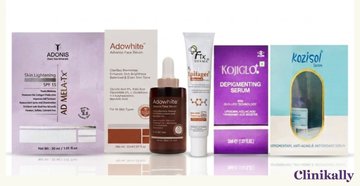
With plenty of options in the market, finding the best kojic acid serum for hyperpigmentation is a difficult task. The popular ones can be good, but will they work as effectively on your skin as promoted? Thus, to simplify your search and to offer you with the best kojic acid serums, we’ve designed this section.
|
Product |
Key Actives |
Main Benefits |
Skin Type/Best For |
|
5% Kojic Acid, 1% Alpha Arbutin, 2% Licorice, Tyrostat-09 |
It aggressively treats melasma, fades dark spots, and firms fine lines. |
All skin types / Dullness & Aging skin |
|
|
4-Butylresorcinol, Kojic Acid, Tranexamic Acid, Ceramides |
It provides deep pigment regulation with liposomal anti-irritation technology. |
Sensitive skin / Discoloration with redness |
|
|
Kojic Acid Dipalmitate, Tranexamic Acid, Alpha Arbutin, Phytic Acid |
It fades stubborn sun spots and melasma while blocking free radicals. |
All skin types / Sun damage & uneven tone |
|
|
Kojic Acid, Tranexamic Acid, Glutathione, Niacinamide |
It accelerates cellular turnover and clears deep sun tanning. |
All skin types / Active outdoor use & Post-acne marks |
|
|
8% Glycolic Acid, Mandelic Acid, 2% Kojic Acid Dipalmitate |
It offers high-potency multi-acid exfoliation that clarifies blemishes. |
All skin types / Stubborn surface imperfections |
1. Kozisol Serum
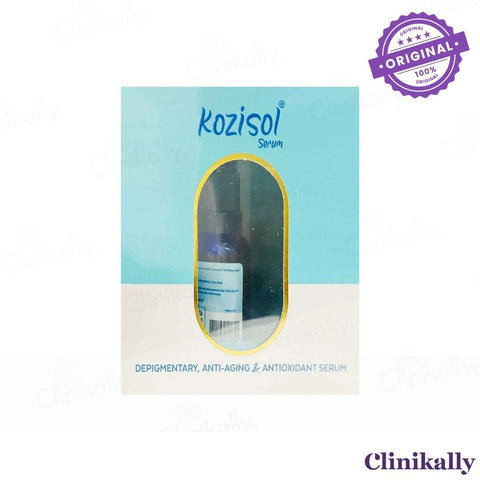
If your skin feels dull, tired, or showing a mix of dark spots and fine lines, this serum is perfect for you. Dermatologists recommend this formula as it addresses aging and pigmentation simultaneously. It pairs a powerful 5% concentration of Kojic acid with proven brighteners, that wakes up lackluster skin while actively fading localized discoloration. Alongside, the addition of deeply hydrating ingredients ensures that your skin stays plump and smooth throughout the brightening process.
|
Key Ingredient |
Specific Benefit |
|
5% Kojic Acid |
This high-potency depigmenting agent targets dark spots and melasma. |
|
1% Alpha Arbutin |
It fades acne marks and evens out hyperpigmentation. |
|
2% Licorice Extract |
It soothes the skin while naturally reviving a dull complexion. |
|
Tyrostat-09 |
It works at a cellular level to provide a visibly brighter complexion. |
|
Ethyl Ascorbic Acid (Vitamin C) |
It imparts powerful antioxidant defense to boost radiance and skin clarity. |
|
Hyaluronic Acid |
It infuses intense hydration to firm fine lines and smooth texture. |
2. Kojiglo Depigmenting Serum
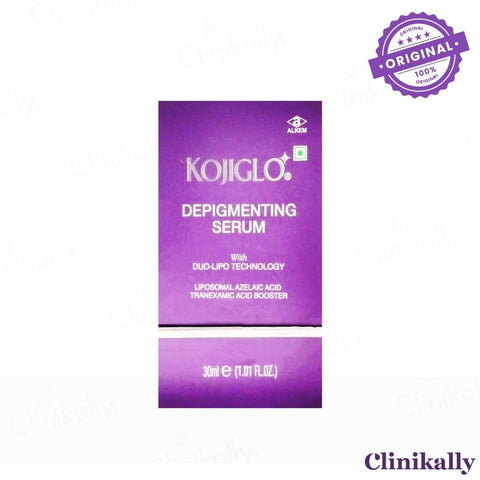
One of the most common concerns that users face when treating dark spots is skin redness, peeling, or a compromised skin barrier; especially if you have sensitive skin. This serum solves this problem with its liposomal delivery approach. It wraps its highly potent pigment-fighting chemicals into tiny microscopic bubbles that sink deep past the skin’s surface before releasing their active ingredients.
This gives you maximum medical-grade spot-fading results with virtually zero surface irritation, while ceramides work to keep your skin barrier completely locked and protected.
|
Key Ingredient |
Specific Benefit |
|
4-Butylresorcinol |
It acts as a potent depigmenting agent to stop severe discoloration. |
|
Kojic Acid & Alpha-Arbutin |
These ingredients team up to minimize dark spots and enhance overall luminosity. |
|
Tranexamic & Azelaic Acid |
It provides strong anti-inflammatory properties to calm red, irritated spots. |
|
Ceramides & Phospholipids |
It strengthens and repairs the skin barrier during active treatment. |
|
Liposomal Delivery (Duo-Lipo) |
It enhances deep ingredient penetration while eliminating standard skin irritation. |
|
Allantoin & Niacinamide |
It actively soothes skin inflammation, making it safe for daily sensitive skin use. |
3. Fixderma Epifager Advance Serum
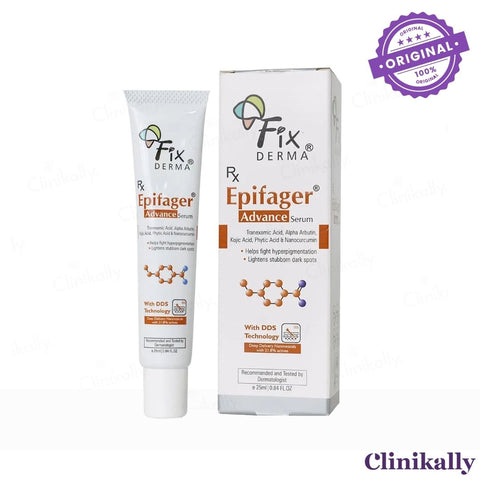
If you’re dealing with chronic melasma, stubborn sun patches, or muddy-looking skin tone from sun exposure, this serum is perfect for you. This lightweight serum combines four distinct pigment blockers that work together to break down clusters of dark pigment underneath the surface. It also contains powerful natural antioxidants to neutralize daily environmental stress and stop future dark patches from forming in their tracks.
|
Key Ingredient |
Specific Benefit |
|
Kojic Acid Dipalmitate |
It effectively reduces excess melanin production to clear deep patches. |
|
Tranexamic Acid |
It targets specific hyperpigmentation issues like vascular melasma. |
|
Alpha Arbutin |
It visibly fades surface spots and post-inflammatory acne marks. |
|
Phytic Acid |
It delivers mild exfoliation to improve skin clarity and speed up cell renewal. |
|
Nanocurcumin (Turmeric) |
This natural ingredient protects the skin barrier against free radicals and environmental damage. |
4. Adonis AD Mela-TX Skin Lightening Serum SPF 15
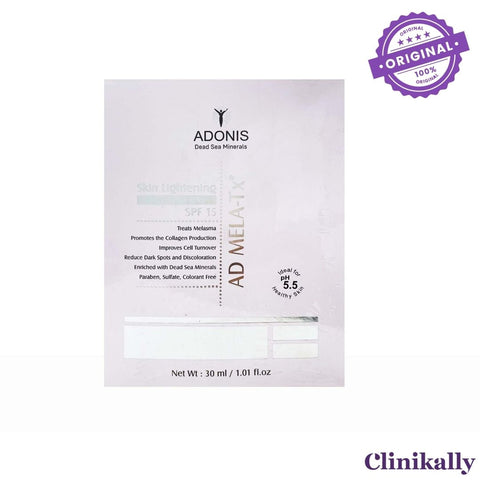
This lightening serum is designed for individuals who need their skincare to perform during the day. Various hyperpigmentation products turn your skin highly sensitive to daylight, causing dark spots to rebound if you step outside.
This dermatologist-developed formula counteracts that by offering a stable pH 5.5 formulation packed with premium pigment blockers such as Glutathione and Sepi White, alongside built-in SPF 15 protection. It accelerates your skin’s cell turnover to shed old sun tans and blemishes while keeping you protected on the go.
|
Key Ingredient |
Specific Benefit |
|
Kojic Acid & Tranexamic Acid |
It forms a multi-action complex that slows down chronic melanin production. |
|
Glutathione & Sepi White MSH |
It breaks down localized pigmentation clusters to eliminate severe sun tan. |
|
Mulberry Extract |
It exfoliates dead surface cells and works to improve cellular turnover. |
|
Dexpanthenol & Sepicalm |
It boosts skin hydration levels and prevents future pigment triggers. |
|
Built-in SPF 15 |
It shields the treated area from UV damage, stopping sun spots from darkening during the day. |
5. Adowhite Advance Face Serum
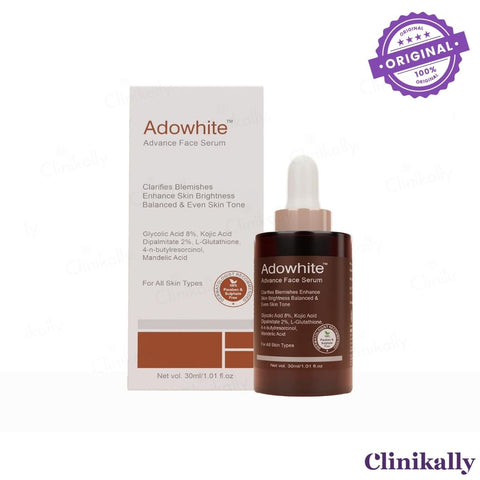
If you’re dealing with texture issues, stubborn surface blemishes, and uneven tone all at once, this serum can be a perfect choice for you. It features an intense multi-acid complex that includes a generous 8% Glycolic Acid along with Mandelic Acid.
This combination rapidly dissolves the dull, dead glue on the surface of your face, peeling away stained surface skin cells. At the exact same time, its clinical depigmenting agents travel deeper into the skin to turn off overactive pigment manufacturing, giving you a smooth, freshly clarified complexion.
|
Key Ingredient |
Specific Benefit |
|
2% Kojic Acid Dipalmitate |
It directly corrects skin imperfections by targeting the root causes of discoloration. |
|
8% Glycolic Acid |
This ingredient offers high-level targeted exfoliation to lift away pigmented dead skin cells. |
|
Mandelic Acid |
It clarifies surface blemishes and accelerates tone evening without stripping skin. |
|
4-n-butylresorcinol |
It aggressively interrupts the chemical pathways that generate dark spots. |
|
L-Glutathione |
It enhances overall skin brightness and promotes a balanced, luminous glow. |
How to use Kojic Acid Serum to Manage Hyperpigmentation?
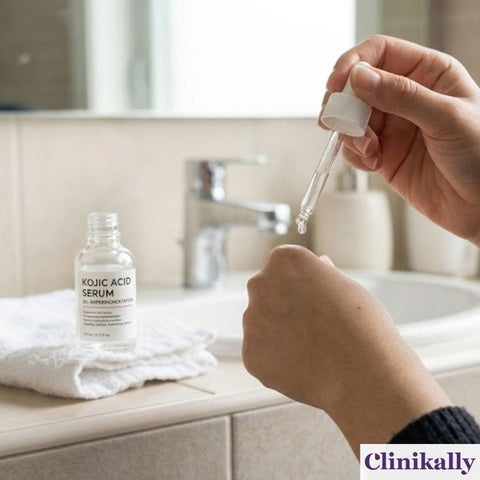
If you apply a kojic acid serum onto unprepared skin or layer it incorrectly, you will likely end up with a broken skin barrier and worsening of your dark spots due to rebound inflammation.
Managing hyperpigmentation is an exercise in biological patience and strategic layering. Based on clinical protocols from the Journal of Cutaneous and Aesthetic Surgery and global dermatological guidelines, here’s how you can add this serum into your routine.
1. Ensure Patch Testing
Before putting a new serum all over your face, you must patch-test first. Various clinical data show that Kojic acid is a fantastic alternative to hydroquinone, which can cause contact dermatitis if used improperly.
Apply a tiny drop of kojic acid serum to the inner side of your forearm or just under your jawline for three consecutive nights. If you experience zero redness, itching, or burning, you are safe to proceed.
2. The Slow-Introduction Phase
While starting with the kojic acid serum, you don’t have to apply it every day. As your melanocytes (pigment cells) are incredibly sensitive; if you shock them with aggressive daily application, they can panic and overproduce more pigment.
-
The Routine: Start by applying your serum exactly two to three nights a week on clean, completely dry skin.
-
The Waiting Rule: Never apply a potent serum on damp skin. Water acts as an enhancer, forcing the active ingredients to sink in too deep and too fast, heavily increasing your risk of irritation. Let your skin dry for 3 to 5 minutes after washing before applying the serum.
3. The Sandwich Layering Method
To get the most out of your serum without irritating your skin, follow this precise application sequence:
-
Step 1: Wash with a gentle, non-stripping cleanser.
-
Step 2: Apply a pea-sized amount of your chosen kojic acid serum across your entire face (or as a targeted spot treatment on stubborn patches).
-
Step 3: Give it 2 to 3 minutes to settle.
-
Step 4: Lock it in with a barrier-supportive moisturizer containing ceramides, cholesterol, or fatty acids. This seals the active ingredients into the skin while protecting your outer barrier.
4. Sun Protection is Mandatory
Medical studies continuously emphasize that UV light can trigger the tyrosinase enzyme. As Kojic acid actively suppresses your skin’s pigment defense mechanism, your skin becomes more vulnerable to sun damage while using it.
If you’re skipping sunscreen, you’re completely wasting your money on brightening serums. You must apply a broad-spectrum SPF 30 or higher every single morning, even if it’s cloudy or you’re sitting indoors near a window.
5. Managing Your Expectations
Skincare doesn’t work overnight. Medical journals tracking the efficacy of topical kojic acid note that visible pigment reduction typically begins around the 4 to 6-week of consistent use, with optimal stabilized results starting after 12 weeks.
Note: Dermatologists frequently recommend using a kojic acid serum consistently for up to 3 months to clear your skin, and then transitioning into a maintenance phase (reducing use to once or twice a week) to give your cellular pathways a resting period while reducing dark spots.
Final Thought: Using Kojic Acid Serum for Hyperpigmentation Safely
Hyperpigmentation is a long-run issue, and Kojic acid is always dermatologist favorite as it safely corrects discoloration at its biological root, offering a highly effective alternative to harsh prescription treatments.
Always do the patch-testing before adding any product in your routine. Additionally, it’s not necessary that all the products react the same with your skin and thus, always consult a dermatologist before adding any product in your routine to get effective results from hyperpigmentation.