What Causes Pregnancy Stretch Marks and Can They Be Prevented?
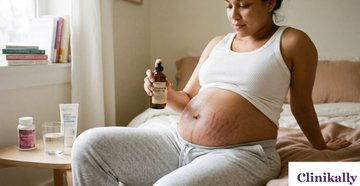
Pregnancy stretch marks are common as the body changes and grows during pregnancy. They may appear on the abdomen, hips, thighs, breasts, and other areas where the skin stretches. These marks are also called striae gravidarum. They are associated with structural changes in the deeper layers of the skin. Rapid skin stretching, hormonal changes, genetics, maternal age, and pregnancy weight gain may all play a role. Some women are more likely to develop stretch marks than others, even when they follow the same skincare routine.
Many expectant mothers look for ways to prevent or reduce pregnancy stretch marks. While no skincare product can guarantee prevention, regular moisturizing can help keep the skin comfortable and reduce dryness and itching. Following a balanced diet and gaining weight within the range recommended by your healthcare provider can support overall health during pregnancy, but these steps cannot guarantee that stretch marks will not develop. Understanding the causes and risk factors can help you make realistic choices about pregnancy skincare and postpartum care. In this guide, we will discuss the causes, risk factors, prevention methods, and treatment options for pregnancy stretch marks.
Understanding Pregnancy Stretch Marks
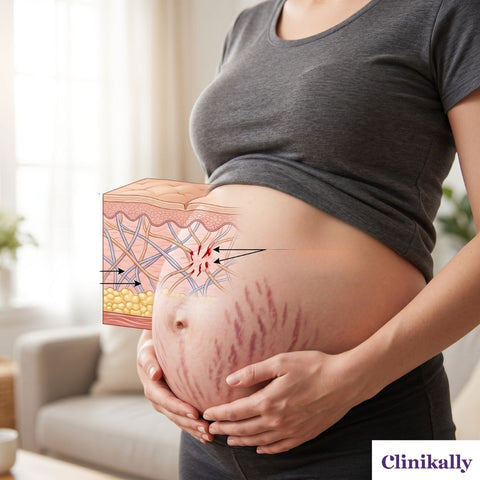
Pregnancy stretch marks develop when the skin changes and stretches as the body grows. They are linked to changes in the dermis, the deeper layer of the skin that contains collagen and elastin. Rapid skin expansion can place stress on this connective tissue and affect the way collagen and elastin are organised. This can lead to the long, narrow lines known as stretch marks. Hormonal changes during pregnancy may also affect the skin and its connective tissue, but the exact process behind pregnancy stretch marks is not fully understood.
Pregnancy stretch marks may first appear red, pink, purple, brown, or darker than the surrounding skin, depending on the person's skin tone. They usually become lighter over time and may develop a pale or silvery appearance. Genetics, maternal age, body mass index, pregnancy weight gain, and fetal size are among the factors associated with a higher risk. Although stretch marks cannot always be prevented, understanding how they develop can help set realistic expectations about pregnancy skincare and treatment.
What Striae Gravidarum Are?
Striae gravidarum are stretch marks that develop during pregnancy. They often begin as red, pink, purple, or darker lines and may feel slightly raised or itchy in some people. These early marks are sometimes described as striae rubra. Their early colour is related to changes in the skin and its underlying vascular structures.
As time passes, stretch marks usually become less noticeable. They may gradually turn pale, white, or silvery and are then known as striae alba. Stretch marks often fade after pregnancy, but they may not disappear completely. Some treatments may be more effective when stretch marks are still early and red or purple, although evidence varies by treatment and results are not guaranteed.
The Science Behind Stretching
Pregnancy stretch marks involve changes in the collagen and elastin network within the dermis. Collagen provides strength and structure to the skin, while elastin helps the skin stretch and return towards its usual shape. Rapid skin expansion can place stress on this connective tissue and contribute to the development of stretch marks.
Hormonal changes may also play a role. Glucocorticoids, including cortisol, can affect fibroblast activity and the production and structure of collagen and other components of the extracellular matrix. However, pregnancy stretch marks are caused by several factors, and hormones alone do not explain why some women develop them while others do not.
-
Collagen provides strength and structure to the skin. Changes in the dermal collagen network can contribute to stretch mark formation.
-
Elastin helps the skin stretch and return towards its usual shape. Changes and fragmentation of elastic fibres may occur in stretch marks.
-
Hormonal changes during pregnancy may affect collagen and other connective tissue components, which may increase susceptibility to stretch marks.
-
Rapid skin expansion can place greater mechanical stress on the dermis and contribute to stretch mark development.
-
Genetics are an important risk factor. A family history of stretch marks may increase the likelihood of developing them.
-
Skin tone can affect how stretch marks appear. Early marks may appear red, pink, purple, brown, or darker before becoming lighter over time.
-
Moisturizers can help maintain skin hydration and may reduce dryness and itching, but they have not been proven to reliably prevent stretch marks.
-
Balanced nutrition provides nutrients needed for normal skin structure and repair. However, individual nutrients or supplements have not been proven to prevent pregnancy stretch marks.
Understanding how the skin and connective tissue change during pregnancy can help set realistic expectations. Stretch marks cannot always be prevented, even with good skincare. Gentle moisturizing can support skin comfort, while healthy eating and appropriate pregnancy weight gain support overall maternal health. These measures are useful for general wellbeing, but they should not be presented as guaranteed ways to prevent striae gravidarum.
Who Gets Pregnancy Stretch Marks More Easily
Pregnancy stretch marks can affect anyone, but some women have a higher risk than others. Genetics appear to play an important role, while factors such as maternal age, body mass index, pregnancy weight gain, and the size of the baby may also influence risk. Having several risk factors does not mean that stretch marks are certain to develop, and some women may develop them without having obvious risk factors.
-
Genetics play an important role: Women with a family history of stretch marks may be more likely to develop striae gravidarum.
-
Greater pregnancy weight gain may increase the risk: Faster or higher weight gain can place more mechanical stress on the skin, although stretch marks can also develop with normal pregnancy weight gain.
-
Higher birth weight may be associated with stretch marks: Studies have found an association between birth weight and striae gravidarum, although the relationship is not fully understood.
-
Multiple pregnancies may increase the risk: This may increase skin stretching, but evidence for multiple gestation as an independent risk factor is less consistent.
-
First pregnancies may be associated with a higher risk: Although the evidence is limited,some studies have reported an association between first pregnancy and stretch marks.
-
Younger maternal age may be associated with a higher risk: Studies have found an association between younger age and striae gravidarum, although the reason is not fully understood.
-
Higher BMI before pregnancy may increase the likelihood: Pre-pregnancy body mass index has been associated with a greater risk of developing stretch marks in some studies.
-
Skin tone may affect how stretch marks appear: Early stretch marks can appear red, pink, purple, brown, or darker depending on the person's skin tone. Their colour usually becomes lighter as they mature.
Understanding these risk factors can help set realistic expectations about pregnancy stretch marks. Genetics and many pregnancy-related changes cannot be controlled. Maintaining healthy pregnancy weight gain within the range recommended by your healthcare provider is important for overall maternal and fetal health, but it cannot guarantee stretch mark prevention. Gentle moisturizing can help manage dryness and itching, while stretch marks that remain noticeable after pregnancy can be discussed with a dermatologist.
Prevention and Reduction Tips
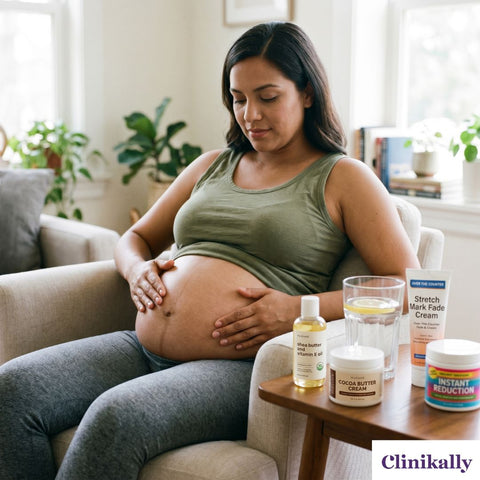
There is no guaranteed way to prevent pregnancy stretch marks. Genetics, skin changes, and the degree of skin stretching all affect whether they develop. Many products are marketed as stretch mark preventers, but research has not established any topical treatment as a reliably effective way to prevent pregnancy stretch marks.
A simple skincare routine can still be useful during pregnancy. Regular moisturizing can help reduce dryness, itching, and tightness as the skin stretches. Healthy eating and gaining weight within the range recommended by your healthcare provider support overall pregnancy health, although they cannot guarantee stretch mark prevention. If you want to use a specific product during pregnancy, check its ingredients and discuss any concerns with your doctor or dermatologist.
Why “Guaranteed Prevention” Creams Usually Don’t Deliver
Many stretch mark creams promise to prevent marks completely, but there is limited evidence to support these claims. Stretch marks develop in the dermis, where changes occur in collagen, elastin, and other connective tissue components. Moisturizers mainly improve hydration and support the skin barrier. They can improve skin comfort, but this does not mean they can prevent the structural changes associated with stretch marks.
Research on topical products for preventing pregnancy stretch marks has produced mixed results. Some studies have reported possible benefits from specific ingredients, but the overall evidence is not strong enough to recommend one cream as a reliable way to prevent striae gravidarum.
-
Stretch marks develop in the dermis: This deeper skin layer contains collagen and elastin, which are involved in the structural changes seen in stretch marks.
-
Genetic factors are important: A family history of stretch marks may increase the likelihood of developing them, which means skincare cannot fully control individual risk.
-
Pregnancy-related skin stretching matters: Changes in body size and abdominal expansion can increase mechanical stress on the skin.
-
Most moisturizers mainly support skin hydration: They can improve softness and reduce dryness, but this does not mean they can prevent stretch marks.
-
Evidence for common ingredients is mixed: Studies of products containing cocoa butter, vitamin E, and other moisturizing ingredients have not consistently shown reliable prevention of stretch marks.
-
Moisturizing can improve comfort: Regular use may help reduce dryness, itching, and tightness during pregnancy.
-
Marketing claims may go beyond the evidence: A product described as a "stretch mark prevention" cream does not necessarily have strong clinical evidence behind its claims.
-
Pregnancy-safe skincare should be focused: Choose gentle products with ingredients considered appropriate for pregnancy, and check with a healthcare professional when you are unsure about an ingredient.
-
Some ingredients have shown potential, but evidence remains limited: Centella asiatica has shown some potential in studies of pregnancy stretch marks, but the evidence remains limited. Hyaluronic acid is mainly useful for skin hydration, and evidence that it prevents pregnancy stretch marks is lacking.
The goal of pregnancy skincare should be realistic. A moisturizer can help keep the skin comfortable, but no cream can guarantee that stretch marks will not appear. If stretch marks develop, they often become less noticeable over time. Persistent or bothersome marks can be assessed by a dermatologist after pregnancy for suitable treatment options.
Moisturizing for Comfort: Supporting Itch Relief and Skin Flexibility (Not Miracles)
Regular moisturizing can help keep skin soft and reduce dryness, itching, and tightness during pregnancy. As the abdomen, breasts, hips, and thighs grow, the skin may feel stretched or uncomfortable. Applying a gentle, pregnancy-safe moisturizer can help support the skin barrier and improve comfort.
Ingredients such as glycerin, hyaluronic acid, shea butter, and plant oils can help moisturise the skin by attracting or trapping water. Vitamin E is also commonly used in body moisturizers, although there is not strong evidence that it prevents pregnancy stretch marks. These ingredients may make the skin feel softer, but moisturizers have not been proven to reliably prevent striae gravidarum.
For better skin comfort, apply moisturizer regularly, especially after bathing when the skin is slightly damp. Choose a gentle product if your skin is sensitive, and avoid products that cause burning, redness, or irritation. Moisturizing is a useful part of pregnancy skincare, but it should be viewed as a way to support skin comfort rather than a guaranteed stretch mark treatment.
Massage and Gentle Care: How Consistency Can Improve Skin Feel and Tolerance
Gentle massage can be a simple way to apply moisturizer and care for areas where the skin feels tight or dry. Massaging the abdomen, hips, thighs, and breasts with light pressure may help spread the product evenly and make the skin feel more comfortable. It can also make a daily skincare routine easier to follow.
Some studies suggest that massage, particularly when combined with moisturizing oils, may reduce the risk or severity of pregnancy stretch marks. However, the evidence is limited and inconsistent, so massage should not be considered a proven prevention method. Gentle massage can still be useful for applying moisturizer and improving skin comfort.
For pregnancy skincare, consistency is more important than using excessive pressure or large amounts of product. A gentle moisturizer applied regularly can help maintain skin hydration and reduce dryness. If a product causes itching, burning, redness, or a rash, stop using it and speak with your healthcare provider if the irritation continues.
Ingredients to Consider: Centella and Hyaluronic Acid as Supportive Options
Centella asiatica and hyaluronic acid are used in many skincare products for their moisturizing and skin-supporting properties. They may be useful in a pregnancy skincare routine, but neither ingredient can guarantee the prevention of stretch marks. Evidence for topical treatments during pregnancy remains limited, and results vary between studies and products.
-
Centella asiatica contains compounds that may affect collagen production and skin repair. Some studies have explored its use for stretch marks, but the evidence is not strong enough to confirm reliable prevention during pregnancy.
-
Hyaluronic acid helps attract and retain water in the skin. It can improve skin hydration and softness, but evidence that hyaluronic acid alone prevents pregnancy stretch marks is lacking.
-
Both ingredients can support skin hydration. Keeping the skin moisturised may help reduce dryness and itching as the skin stretches.
-
Centella asiatica may support skin repair. However, evidence from laboratory and small clinical studies cannot be used to claim that it will prevent striae gravidarum.
-
Hyaluronic acid can improve skin hydration without adding a heavy or greasy feel, depending on the product formulation.
-
These ingredients are found in many body moisturizers and stretch mark products. Their presence does not mean that the product has been proven to prevent stretch marks.
-
Regular moisturizing may improve skin comfort. Consistent use can help reduce dryness and tightness during pregnancy.
-
Gentle formulations may be suitable for sensitive skin. However, pregnancy-safe status depends on the full ingredient list, not just the presence of centella or hyaluronic acid.
-
A balanced diet supports normal skin health. However, combining these ingredients with good nutrition has not been proven to prevent pregnancy stretch marks.
Centella asiatica and hyaluronic acid can be considered supportive skincare ingredients during pregnancy when used in suitable formulations. Their main benefits are related to skin hydration and comfort rather than guaranteed stretch mark prevention. Before using a new product during pregnancy, check the full ingredient list and speak with your healthcare provider if you have concerns.
Some products marketed for stretch mark care include:
What to Avoid in Pregnancy: Retinoids/Tretinoin and Other High-Risk “Active” Choices
Pregnancy is a good time to keep your skincare routine simple and gentle. Some ingredients commonly used for acne, pigmentation, and skin ageing are best avoided during pregnancy. If you are unsure about an ingredient, check with your obstetrician, dermatologist, or other qualified healthcare professional before using it.
-
Retinoids, including tretinoin, adapalene, and retinol, are generally avoided during pregnancy. Oral retinoids are known teratogens, while topical retinoids have much lower systemic absorption. Even so, topical retinoids are generally avoided during pregnancy because their benefit does not outweigh the potential risk.
-
Oral isotretinoin is strictly contraindicated during pregnancy. It can cause serious fetal abnormalities and should never be used during pregnancy.
-
Strong chemical peels should be avoided unless medically advised. High-strength salicylic acid peels and other professional peeling treatments can cause significant irritation and are not appropriate for self-treatment during pregnancy. The safety of individual topical acids depends on their concentration, formulation, and area of use.
-
Hydroquinone is generally avoided during pregnancy. It has relatively high systemic absorption compared with many other topical skin-lightening ingredients, so safer alternatives are usually preferred.
-
Avoid excessive vitamin A exposure. Do not use high-dose vitamin A supplements or products containing retinoids unless specifically prescribed by your healthcare provider.
-
Strong or irritating acne treatments may increase skin sensitivity. Pregnancy can make the skin more sensitive, so harsh products may worsen dryness, redness, or irritation.
-
Highly concentrated essential oils may irritate sensitive skin. Natural does not always mean safer during pregnancy. Avoid applying concentrated essential oils directly to the skin unless their use has been discussed with a healthcare professional.
-
Avoid harsh scrubs and aggressive treatments. Vigorous exfoliation can irritate dry or sensitive skin and may make pregnancy-related skin discomfort worse.
For simple pregnancy skincare, gentle moisturizers and hydrating ingredients such as hyaluronic acid are commonly used. Centella asiatica may also be found in pregnancy skincare products, but its presence does not make every formulation automatically suitable for pregnancy. Always check the complete ingredient list and follow advice from your healthcare provider when needed.
Final Thoughts: A Personalised Plan for Stretch Mark Care During and After Pregnancy
Pregnancy stretch marks are common and can be influenced by genetics, maternal age, pregnancy weight gain, body changes, and the amount of skin stretching. A simple skincare routine can help manage dryness, itching, and tightness. Regular moisturizing and gentle skin care can support comfort, while gaining weight within the range recommended by your healthcare provider supports a healthy pregnancy. These steps support skin comfort and overall pregnancy health, but they cannot reliably prevent stretch marks.
After pregnancy, most stretch marks gradually become lighter and less noticeable, although they may not disappear completely. Keeping the skin moisturised can continue to support skin comfort. If you are concerned about the appearance of persistent stretch marks, a dermatologist can discuss treatment options such as prescription medicines or procedures that may improve their appearance. Some treatments, including topical retinoids, are not suitable during pregnancy. A dermatologist can recommend appropriate postpartum options based on whether you are breastfeeding and the type and age of the stretch marks. A personalised treatment plan can help you choose an option that is appropriate for your stage of pregnancy or postpartum recovery.