5 Best Shampoos for Curly Hair Recommended by Dermatologists
Do you often find managing your curly hair difficult? Curls are stunning, bouncy, and undeniably full of character; but let’s be honest, they can also be a total nightmare to manage. From mystery knots that seem to appear out of thin air to ends that are perpetually thirsty no matter how much product you dump on them, caring for curly hair often feels like solving a daily riddle.
As you have special hair, they definitely need special treatment. In this article, we’ll understand the mechanism of your hair, and find out some of the best shampoo for curly hair, recommended by dermatologists.
Biophysical Reality of Curly Hair & Why Standard Shampoos Fail
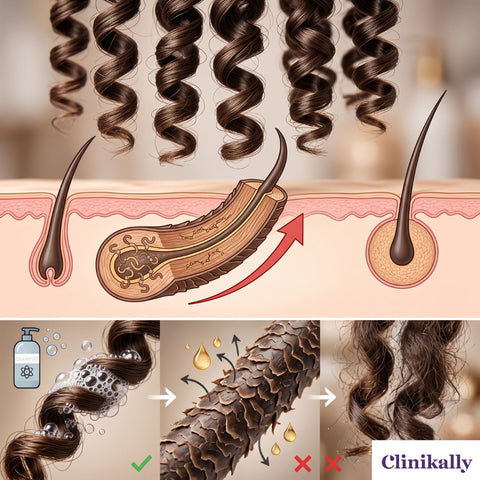
From a trichological perspective, hair is composed of a keratin core protected by overlapping cuticle scales, glued together by the cell membrane complex (CMC). In straight hair, the hair follicle is cylindrical, allowing natural sebum (a mixture of squalene, wax esters, and triglycerides) to travel easily down the smooth fiber.
Curly hair grows from asymmetrical, curved follicles, producing an oval cross-section characterized by twists along the shaft. These continuous curves create two major physiological vulnerabilities:
-
Sebic Obstruction: Scalp lipids cannot easily navigate the twists and turns of a spiral, leaving the mid-lengths and ends inherently lipid-deficient.
-
Exposed Cuticle Margins: The outer cuticle scales lift slightly along the outer apex of each curve or kink, creating points of high mechanical stress and elevated porosity.
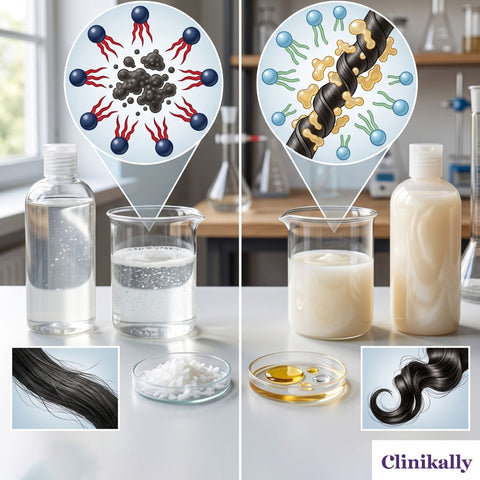
Conventional shampoos are designed around strong anionic surfactants (such as sodium lauryl sulfate) formulated to aggressively emulsify and strip lipids from oily, straight hair shafts. When applied to curly hair, these harsh cleansers strip away the vital hydrophobic monolayer, specifically 18-methyl eicosanoic acid (18-MEA) that protects the cuticle layer. Stripping 18-MEA leaves the hair hydrophilic, causing the fiber to swell in humid conditions and resulting in severe frizz, static, and shaft fracturing.
How Shampoos Formulated for Curly Hair Differ Chemically
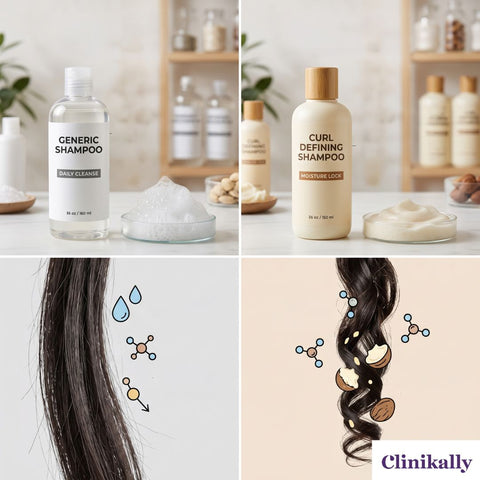
Shampoos formulated specifically for curly hair prioritize lipid preservation and charge neutralization over aggressive surface degreasing. The key formulation differences are governed by three primary chemical mechanisms:
1. Surfactant Mildness & Micellar Charge
Instead of harsh sulfates, curly hair shampoos rely on mild anionic cleansers (like sodium cocoyl isethionate), non-ionic surfactants, or amphoteric surfactants (such as cocamidopropyl betaine). These milder molecules form gentler micelles that remove superficial dirt and excess sebum without stripping the structural lipids within the cell membrane complex.
2. Neutralization of Electrostatic Repulsion
Hair fibers naturally carry a net negative electrical charge, which is amplified when dirt and sebum are washed away. In curly hair, mutual repulsion between negatively charged strands causes individual fibers to push away from each other, breaking up curl clusters and creating frizz. Curly hair shampoos incorporate cationic conditioning agents (such as polyquaterniums or guar hydroxypropyltrimonium chloride) that deposit onto the shaft during washing to neutralize this charge, reducing friction and restoring curl alignment.
3. Lipid Replenishment & Cuticle Sealing
To offset the inherent structural dryer state of curly hair, these specialized shampoos include bio-identical lipids, fatty alcohols, and lightweight plant oils. During the wash cycle, these lipophilic molecules bind to areas where 18-MEA has been depleted, restoring a hydrophobic barrier over exposed cuticles and preventing excessive water absorption into the inner cortex.
Top 5 Shampoos for Curly Hair
There are a variety of curly hair products available in the market, finding the right shampoo needs the understanding of key ingredients, and their specific benefits. To ease your search, here are 5 best shampoos for curly hair, suggested by dermatologists:
|
Products |
Key Ingredients |
Benefits |
|
Beauty Garage Pure African Shea Butter Retention Treatment Wavy Curl Shampoo |
Pure African Shea Butter (Butyrospermum Parkii Oil), Proteins and Amino Acids, Cocamidopropyl Betaine & Sodium Coceth Sulfate, Chamomile Extract (Anthemis Nobilis Flower Extract),Dimethicone & Citric Acid |
|
|
Plantcol, Shea Butter, Argan Oil, Sunflohair, Proquinoa HQ |
|
|
|
Argan Oil, Chia Seed Extract & Flax Seed Extract, Coconut-Based Surfactants, Aloe Vera Extract, Panthenol & Glycerin, Hydrolyzed Wheat Protein & Jojoba Oil |
|
|
|
Coconut Oil (Cocos Nucifera Oil), Shea Butter (Butyrospermum Parkii Butter), Avocado Oil (Persea Gratissima Oil), Olive Fruit Oil (Olea Europaea) & Jojoba Oil (Simmondsia Chinensis), Rosemary, Lemongrass & Lavender Extracts |
|
|
|
Baobab Protein, Seaweed Extract & Marshmallow Extract, Aloe Vera Leaf Extract & D-Panthenol, Alpha Olefin Sulphonate & Cocamidopropyl Betaine, Cetrimonium Chloride & Orange Essential Oil |
|
1. Beauty Garage Pure African Shea Butter Retention Treatment Shampoo
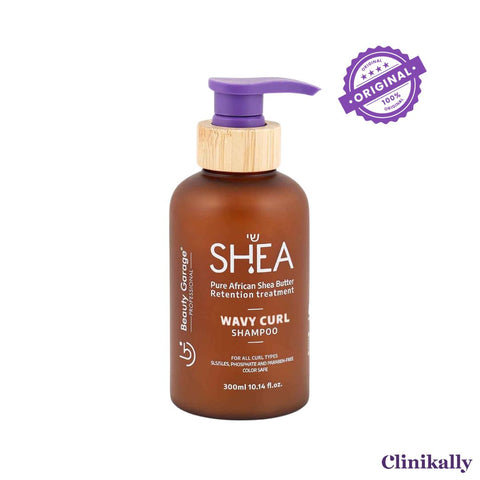
Designed as a heavy-duty moisture and repair treatment, this shampoo pairs rich plant lipids with structural proteins to revive compromised, high-porosity curls. It cleanses while creating a protective layer over vulnerable cuticles, making it ideal for thick or damaged textures that suffer from severe dry-weather breakage and loss of elasticity.
-
Rich Moisture Retention: Enriched with pure African shea butter (Butyrospermum Parkii Oil), it delivers deep hydration to lipid-starved lengths and ends, helping to prevent moisture loss.
-
Protein & Amino Acid Fortification: The inclusion of proteins and amino acids helps patch weak structural points along the curved hair shaft, strengthening hair fibers and restoring elasticity.
-
Frizz & Texture Management: By gently cleansing while conditioning, it smooths the cuticle layer, reducing frizz and enhancing wave and curl definition.
Who Should Avoid: It contains Sodium Coceth Sulfate (a modified sulfate cleanser) and Dimethicone (a non-water-soluble silicone), making it unsuitable for those avoiding sulfates and silicones.
2. The Curl Co Cleanse & Hydrate Curl Shampoo
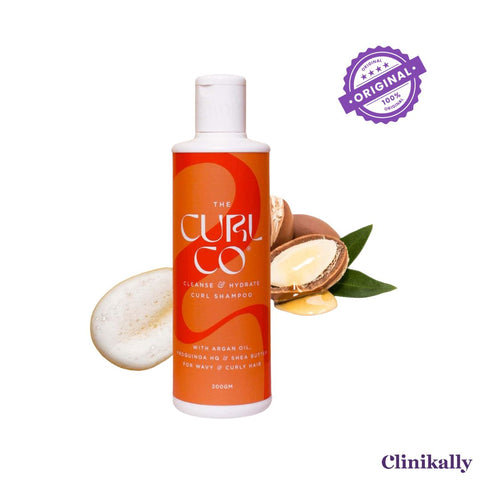
Formulated as a lightweight daily-care cleanser, this shampoo strikes a balance between clearing away scalp impurities and restoring natural movement. It uses proprietary botanical complexes and lightweight oils to revive limp curls, focusing on weightless bounce and manageable shine without leaving heavy residues behind.
-
Balanced Hydration & Cleansing: Formulated to effectively clear away product buildup and daily impurities from the scalp without leaving curls dry, rough, or stripped.
-
Nutrient-Dense Formulation: Uses a blend of botanical extracts (Sunflohair, Plantcol, Proquinoa HQ) along with Shea Butter and Argan Oil to deeply nourish strands and restore softness.
-
Lightweight Bounce: Provides smoothness and shine while keeping curls feeling weightless, refreshed, and ready for leave-in conditioners.
Who Should Avoid: Ingredients like Proquinoa HQ and specialized plant proteins can cause protein-sensitive curls to feel stiff, straw-like, or brittle if used too frequently.
3. Curl Up Curl Moisturising Shampoo
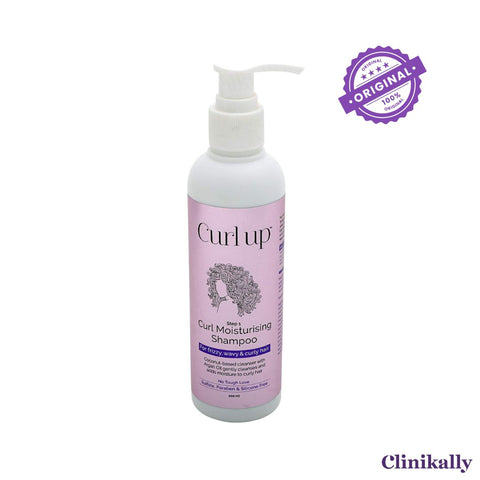
Built specifically for low-to-medium porosity curls prone to frizz, this sulfate-free formula relies on natural plant mucilage and mild coconut cleansers. It prioritizes surface smoothing and moisture retention by creating a protective, moisture-locking film around each strand during the wash cycle.
-
Gentle, Sulfate-Free Cleansing: Uses mild, coconut-based surfactants that cleanse the scalp while preserving the hair’s natural protective 18-MEA lipid layer.
-
Dual Seed-Extract Support: Features Chia Seed and Flax Seed extracts, which work together to boost thickness, improve elasticity, and form a gel-like film over strands to lock in curl definition and tame flyaways.
-
Deep Conditioning: Infused with Argan Oil, Jojoba Oil, Hydrolyzed Wheat Protein, Aloe Vera, and Panthenol to nourish dry curls and reduce static.
Who Should Avoid: It contains Hydrolyzed Wheat Protein; those with severe contact sensitivities to wheat-derived ingredients should perform a patch test first.
4. Giovanni Curl Habit Curl Defining Shampoo
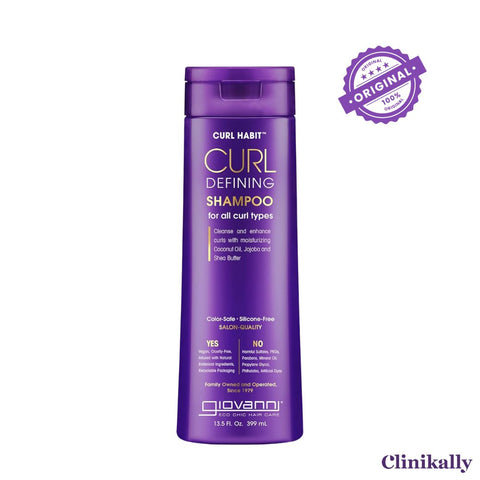
Rooted in botanical science, this formula focuses on restoring soft texture and shine through a multi-oil botanical blend rather than synthetic smoothing agents. It acts as an ultra-gentle, silicone-free wash that softens stiff strands and enlivens the scalp with invigorating plant essences.
-
Botanical Oil Blend: Combines Coconut, Avocado, Olive, and Jojoba oils to restore lipids along exposed cuticles, softening coarse, dry strands.
-
Silicone-Free Definition: Creates a light, gentle lather that cleanses without heavy silicones or harsh drying agents, keeping color-treated hair vibrant and soft.
-
Aromatic Scalp Refresher: Contains botanical extracts like Rosemary, Lemongrass, and Lavender to refresh the scalp and support healthy hair growth.
Who Should Avoid: The natural essential oil extracts (Lemongrass, Lavender, Rosemary) give a pleasant scent but can cause contact irritation on hypersensitive or eczema-prone scalps.
5. Manetain Moisturising Shampoo
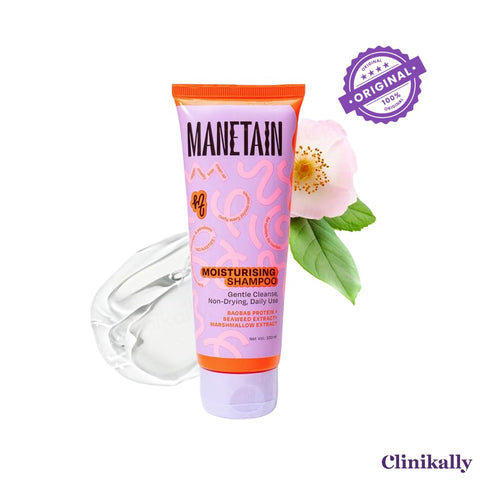
Engineered to combat mechanical friction and wet-detangling damage, this formula combines plant-derived proteins, high-slip botanicals, and charge-neutralizing agents. It provides superior slip during washing, making it easier to manage tightly coiled, tangle-prone patterns without causing fiber damage.
-
Slippery Detangling & Film Forming: Infused with Marshmallow Extract and Seaweed Extract, which provide natural slip and hydration to help detangle textured hair during washing.
-
Structural Repair: Utilizes Baobab Protein and D-Panthenol to penetrate the hair shaft, repairing micro-cracks and boosting elasticity to reduce breakage.
-
Frizz Neutralization: Contains Cetrimonium Chloride (a cationic conditioning agent) that neutralizes negative static charge on the hair surface, helping curl clusters align smoothly.
Who Should Avoid: It contains Orange Essential Oil, which may irritate individuals with allergic contact dermatitis or inflamed scalps.
Doctor’s Suggested Haircare Routine for Curly Hair
A dermatologist-approved routine for curly hair focuses on scalp health, barrier preservation, and moisture retention. Because the curvature of curly hair makes it naturally prone to friction, dryness, and breakage, a clinical approach emphasizes gentle cleansing and protection over mechanical force.
Step 1: Pre-Wash Detangling & Scalp Prep
-
Technique: Never brush or detangle dry hair. Apply a coat of lightweight hair oil or a wet detangling spray to provide slip, then use your fingers or a wide-tooth comb starting at the ends and working upward toward the scalp.
-
Dermatologist Reason: Wet or lubricated hair is much more pliable; dry brushing causes high tensile stress that fractures the hair shaft along curved weak points.
Step 2: Gentle Cleansing (1–2 Times Weekly)
-
Technique: Apply a sulfate-free, moisturizing shampoo directly to the scalp only. Gently massage the scalp with finger pads (not nails) to clear sebum and debris. Allow the lather to rinse down through the mid-lengths without aggressive scrubbing.
-
Dermatologist Reason: Heavy sulfates strip away the protective hydrophobic 18-MEA layer, leaving hair prone to environmental damage and frizz.
Note on Scalp Care: If you suffer from dandruff or seborrheic dermatitis, apply targeted anti-dandruff treatments only to the scalp for 2–10 minutes, followed by a moisturizing wash on the hair lengths to prevent extreme drying.
Step 3: Deep Conditioning & Cuticle Sealing
-
Technique: Apply a generous amount of a thick conditioner or deep-conditioning mask containing fatty alcohols (e.g., cetyl or stearyl alcohol), ceramides, or plant oils. Focus heavily on mid-lengths to ends. Leave it on for 5–10 minutes before rinsing with lukewarm or cool water.
-
Dermatologist Reason: Fatty alcohols and ceramides help smooth the raised cuticles along the curves, locking moisture into the cortex and minimizing friction between neighboring strands.
Step 4: Moisture Locking (The LOC/LCO Method)
While hair is still soaking wet, layer products from thinnest to thickest consistency to seal in hydration:
-
L - Liquid/Leave-in Conditioner: Replenishes base hydration.
-
O/C - Oil or Cream: Smooths the cuticle and defines natural curl clusters.
-
Gel/Styler (Optional): Forms a protective temporary film cast around curl clumps to shield them from atmospheric humidity and reduce frizz as they dry.
Step 5: Low-Friction Drying
-
Technique: Avoid rough, traditional terrycloth cotton towels. Gently squeeze out excess water using a microfiber towel or a soft cotton t-shirt. Air-dry, or use a blow dryer on a low heat setting with a diffuser attachment to distribute air evenly.
-
Dermatologist Reason: Heat over 350°F (175°C) and the abrasive texture of heavy towels break the structural hydrogen bonds in hair, permanently degrading curl elasticity and definition.
Overnight & Maintenance Protection
-
Silk/Satin Sleep Gear: Use a silk or satin pillowcase, or wear a satin bonnet/scarf. Unlike cotton, silk does not absorb moisture from the hair fiber or create mechanical friction while you sleep.
-
Low-Tension Hairstyles: If tying hair up, use a loose pineapple style or soft scrunchies. Avoid excessively tight ponytails or tight braids to reduce the risk of traction alopecia (hair loss caused by strain on the roots).
Final Thought: Making Right Choices for Your Curly Hair
Finding the right hair care routine for curly hair is a personal journey grounded in understanding your unique strand texture, porosity, and scalp needs. By prioritizing sulfate-free cleansers, nutrient-dense conditioners, and low-friction styling methods, you can protect your hair’s natural moisture barrier and enhance curl definition without causing unnecessary breakage. Utilizing products formulated with hydrating lipids, botanical oils, and mild surfactants helps keep your curls healthy, resilient, and manageable every day.
However, because scalp conditions and individual hair sensitivities vary widely, it is always best to consult a dermatologist or qualified trichologist before introducing new products or active treatments into your routine. A board-certified expert can evaluate your scalp health, identify potential allergens or underlying issues like seborrheic dermatitis, and provide personalized recommendations tailored specifically to your hair's unique needs.