Adenosine vs Minoxidil: Which Hair Loss Treatment Is Right for You?

Adenosine and minoxidil are two ingredients used in topical hair growth products, but they differ in how they work and the amount of scientific evidence supporting their use. Minoxidil has long been considered one of the most established topical treatments for androgenetic alopecia (pattern hair loss), while adenosine has emerged as a promising ingredient in shampoos, serums, and scalp treatments designed to support healthier hair growth.
Although both ingredients may help improve hair density and encourage hair growth, they are not interchangeable. Their effectiveness, side effects, and suitability vary depending on the cause of hair loss, scalp sensitivity, and individual treatment goals. Understanding these differences can help you make a more informed decision in consultation with your dermatologist.
In this blog, we'll compare adenosine and minoxidil, explain how each ingredient works, review the current clinical evidence, discuss their potential benefits and side effects, and help you understand which option may be more suitable for your hair concerns.
Understanding Hair Growth and the Role of Treatment

Hair grows in a continuous cycle consisting of three main phases: the anagen (growth) phase, catagen (transition) phase, and telogen (resting) phase. Most hair growth treatments aim to prolong the anagen phase or stimulate inactive hair follicles to produce new hair. However, their effectiveness depends largely on the underlying cause of hair loss.
Conditions such as androgenetic alopecia, telogen effluvium, alopecia areata, nutritional deficiencies, and hormonal imbalances affect hair follicles differently. While adenosine and minoxidil have primarily been studied for androgenetic alopecia, they may not be appropriate for every type of hair loss. Identifying the underlying cause with the help of a dermatologist is an important step before choosing any treatment.
Adenosine vs Minoxidil: Key Differences and Which Works Better
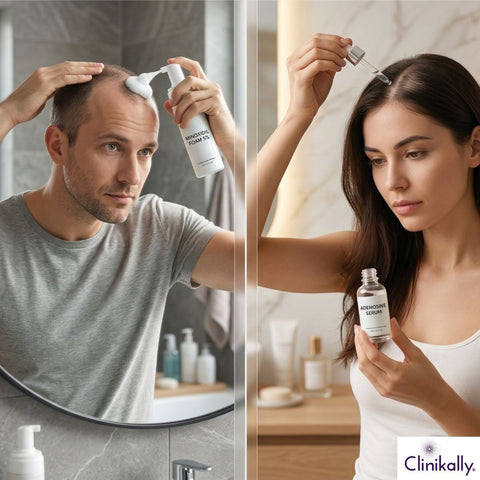
Both adenosine and minoxidil are used to promote hair growth, but they work in different ways and have different benefits. While minoxidil has been studied more extensively for treating androgenetic alopecia, adenosine has also shown promising results in supporting hair growth. Understanding their differences can help you choose a treatment that best suits your hair care needs.
|
Feature |
Adenosine |
Minoxidil |
|
How it works |
Supports healthy hair growth |
Helps stimulate hair follicles and prolong the anagen (growth) phase |
|
Best studied for |
Androgenetic alopecia |
Androgenetic alopecia |
|
Time to noticeable results |
3 to 6 months (approx.) |
2 to 4 months (approx.) |
|
Evidence |
Promising but limited clinical studies |
Extensive clinical research with strong evidence |
|
Common side effects |
Mild scalp irritation in some users |
Dryness, itching, irritation, temporary shedding |
|
Initial shedding |
Rarely reported |
Can occur during the first few weeks |
|
Scalp tolerance |
Generally well tolerated |
May irritate sensitive scalps, especially liquid formulations |
Hair growth treatments respond differently from person to person. The time taken to notice results depends on the underlying cause of hair loss, consistent use, and individual response.
Which Works Better?
Based on current clinical evidence, minoxidil remains the more established topical treatment for androgenetic alopecia because it has been evaluated in numerous clinical trials and is recommended in several clinical guidelines for managing pattern hair loss. It has consistently demonstrated its ability to improve hair density and slow the progression of pattern hair loss when used as directed.
Adenosine has also shown encouraging results, particularly in improving hair thickness and supporting healthy hair growth, but the available research is comparatively limited. While it may be a suitable option for some individuals, especially those looking for a gentler ingredient or who cannot tolerate minoxidil, more large-scale studies are needed to determine how its effectiveness compares in the long term.
Ultimately, the best choice depends on the underlying cause of hair loss, your scalp sensitivity, treatment goals, and your dermatologist's recommendation.
How Adenosine Supports Hair Growth?
Adenosine is a naturally occurring molecule that has gained attention as a hair growth ingredient. It may help support the natural hair growth cycle and improve hair thickness over time.
Research suggests that consistent use of adenosine may improve hair thickness and density in some people with androgenetic alopecia, resulting in fuller-looking hair over time. However, more large-scale studies are needed to better understand its long-term effectiveness.
While research on adenosine is still growing, studies have shown promising results for people with androgenetic alopecia, making it an ingredient that is increasingly being included in hair growth products.
Benefits of Adenosine for Hair Growth
Studies suggest that adenosine may support healthier hair growth, particularly in people with androgenetic alopecia. With consistent use, it may offer the following benefits:
-
Supports Hair Growth: Adenosine may help support normal hair follicle function, which can contribute to healthier-looking hair.
-
May Improve Hair Thickness: Research suggests adenosine may help increase the proportion of thicker hairs, making hair appear fuller over time.
-
Supports the Hair Growth Cycle: Adenosine may help support the normal hair growth cycle.
-
May Improve Hair Density: Clinical studies suggest that regular use of adenosine may improve hair density in some people with androgenetic alopecia.
-
Generally Well Tolerated: Topical adenosine is usually well tolerated, with mild scalp irritation reported in some users.
How Minoxidil Supports Hair Growth?
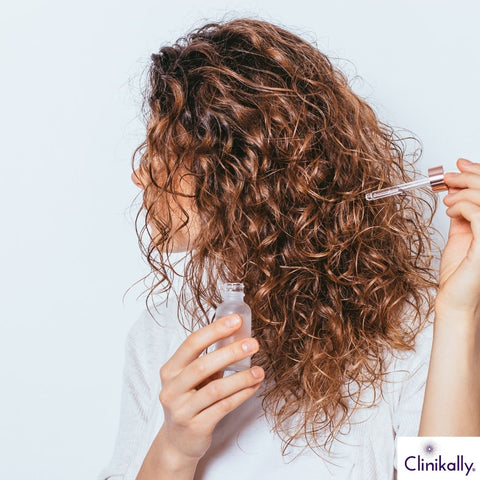
Minoxidil for hair growth is one of the most widely used and well-studied treatments for hair thinning and hair loss. It is commonly used to treat male and female pattern hair loss (androgenetic alopecia) and has been shown to promote hair regrowth with consistent use.
Minoxidil helps stimulate hair follicles and prolong the hair growth phase (anagen), allowing hair to grow for longer before entering the resting phase. Although its exact mechanism is not fully understood, these effects are believed to promote healthier hair growth over time.
With regular use, minoxidil may increase hair density and improve the appearance of thinning areas. Because hair grows slowly, noticeable results usually take several months. Continued use is important to maintain the benefits, as stopping treatment may gradually lead to renewed hair thinning.
Benefits of Minoxidil for Hair Growth
Minoxidil is widely used because it can help promote hair regrowth while slowing the progression of pattern hair loss. With consistent use, it may offer the following benefits:
-
Supports Visible Hair Regrowth: May help improve hair density and encourage regrowth in thinning areas.
-
Helps Slow Ongoing Hair Loss: Can help reduce continued thinning associated with androgenetic alopecia.
-
Commonly Used for Pattern Hair Loss: Suitable for both male and female pattern hair loss.
-
Results with Consistent Use: Some people may notice improvement within 2 to 4 months, although results vary and continued use is important.
-
Easy to Include in a Routine: Available in topical solutions and foams that can be incorporated into a daily hair care routine.
Potential Risks and Side Effects
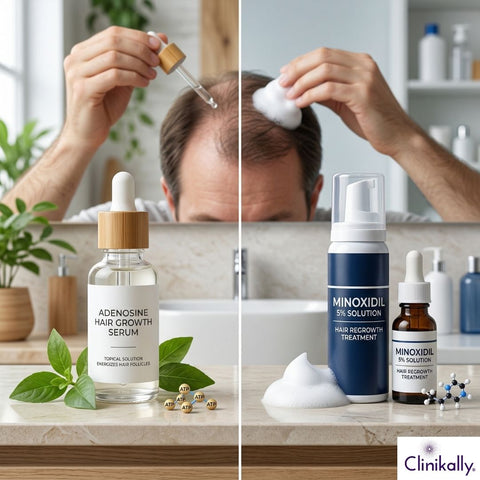
Both adenosine and minoxidil are commonly used to support hair regrowth, but like any topical treatment, they may cause side effects in some people. The type and severity of these effects can vary depending on individual skin sensitivity, the product formulation, and how it is used. Understanding these possible side effects can help you know what to expect during treatment.
Side Effects of Adenosine
Adenosine is generally well tolerated, and most reported side effects are mild when they occur. Here are some common side effects:
-
Mild Scalp Irritation: Slight itching, redness, or tingling after application.
-
Temporary Scalp Discomfort: Some people may notice mild irritation when they first start using the product.
-
Rare Allergic Reactions: In uncommon cases, redness, itching, or persistent irritation may occur.
Side Effects of Minoxidil
Minoxidil is a widely used treatment for hair loss, but some people may experience temporary side effects, particularly during the first few weeks of use. Common side effects may include:
-
Dryness or Flaking: The scalp may become dry or flaky, especially with liquid formulations.
-
Itching or Redness: Mild scalp irritation may occur after application.
-
Initial Hair Shedding: Temporary shedding can occur during the first few weeks as older hairs are replaced by new hair entering the growth phase. This is usually temporary and does not necessarily mean the treatment is not working.
-
Unwanted Facial Hair Growth: In some cases, accidental transfer of the product to nearby areas or increased absorption may lead to unwanted facial hair growth.
Factors to Consider When Choosing Between Adenosine and Minoxidil
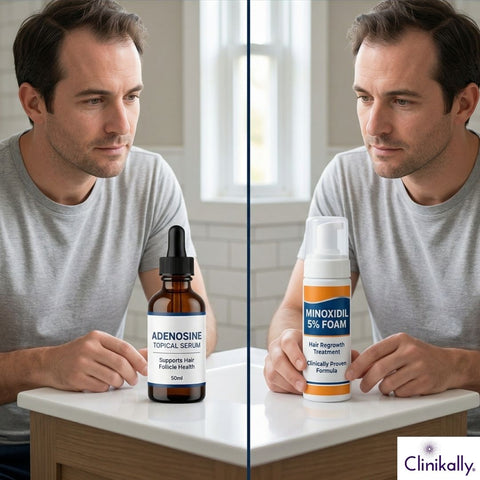
Choosing between adenosine and minoxidil depends on several factors, including the cause of your hair loss, your treatment goals, and your personal preferences. While both ingredients may support hair growth, understanding their differences can help you decide which option is more suitable for your needs. Here are some key factors to consider:
-
Cause of Hair Loss: Both adenosine and minoxidil are mainly studied for pattern hair loss (androgenetic alopecia), so identifying the cause of your hair loss is important before choosing a treatment.
-
Research: Minoxidil has been studied more extensively, while research on adenosine is still growing.
-
Possible Side Effects: Both treatments are generally well tolerated, but mild scalp irritation may occur in some people.
-
Consistency of Use: Regular, long-term use is important for both treatments to deliver and maintain results.
-
Long-term Commitment: Hair growth treatments usually need continued use to maintain their benefits.
When Should You Consult a Dermatologist for Hair Loss?
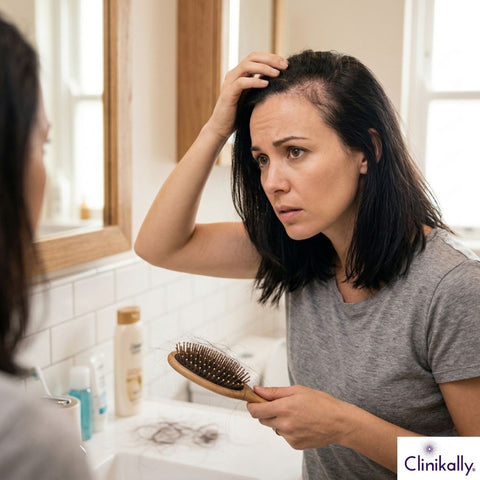
Hair loss can happen for many reasons, and not every case responds the same way to topical treatments. Identifying the underlying cause is important, especially if your hair loss is sudden, persistent, or getting worse. You should consider consulting a dermatologist if:
-
Sudden Hair Shedding: A sudden increase in hair fall may be linked to an underlying condition that needs proper evaluation.
-
Visible Bald Patches: Patchy hair loss, a widening part line, or a receding hairline may require targeted treatment.
-
Persistent Scalp Irritation: Ongoing itching, redness, pain, or inflammation should be assessed before continuing treatment.
-
No Visible Improvement: If you've used a hair growth treatment consistently for 3 to 6 months without noticeable improvement, a dermatologist can reassess your treatment plan.
-
Unclear Cause of Hair Loss: Hair loss can be triggered by factors such as stress, hormonal changes, nutritional deficiencies, or certain medical conditions.
A dermatologist can identify the underlying cause of your hair loss and recommend the most appropriate treatment based on your individual needs.
Lifestyle Tips to Support Hair Growth

While hair growth treatments can help promote regrowth, healthy lifestyle habits also play an important role in maintaining healthy hair. Supporting your overall health and following good hair care practices can help you get the most out of your treatment.
Here are a few simple tips to support hair growth:
-
Eat a Balanced Diet: Include enough protein along with essential nutrients like iron, zinc, and vitamin D to support healthy hair growth.
-
Avoid Crash Diets: Rapid weight loss or highly restrictive diets can trigger temporary hair shedding, so aim for gradual, balanced nutrition.
-
Manage Stress: Ongoing stress can increase hair shedding, so activities like exercise, meditation, or yoga may help.
-
Get Enough Sleep: Quality sleep supports your body's natural repair processes and overall well-being.
-
Follow a Gentle Hair Care Routine: Avoid excessive heat styling, harsh chemical treatments, and tight hairstyles that can damage the hair or put stress on the scalp.
-
Stay Consistent with Treatment: Hair growth treatments work best when used regularly and as directed.
Healthy lifestyle habits, along with the right hair growth treatment, can support healthier-looking hair over time.
Final Thoughts on Adenosine vs Minoxidil: Which Is Right for You?
Choosing between adenosine and minoxidil depends on the cause of your hair loss, your treatment goals, and your personal preferences. While both ingredients may help support hair growth, minoxidil is the more established option for pattern hair loss (androgenetic alopecia), whereas adenosine has also shown promising results but has been studied less extensively.
If you're unsure which option is right for you, consult a dermatologist to identify the underlying cause of your hair loss and choose the most appropriate treatment. With consistent use and the right hair care routine, you can take positive steps toward healthier hair and long-term hair growth.