Peptides for Hair Growth: How They Work and Best Benefits
Peptides have become strong weapons in the fight for healthier, more full hair. Peptides are the short chains of amino acids that are the building blocks of proteins. Even hair proteins such as keratin and collagen are also structurally made up of peptides which help to keep the hair strong, structured, and healthy. Over the past few years, peptide-based hair care products have gained immense popularity due to the inherent capacity to stimulate the hair follicles, promote scalp well-being, and maintain the hair growth cycle naturally. Other hair treatments usually tend to deal with the problem on the surface, whereas peptides target and act at the cellular level, optimizing communication between cells and stimulating the generation of growth factors. As a result, not only do these peptides play a role in fighting hair thinning and breaking but also help in the production of thicker, more resilient, and healthier hair strands with time. Regardless of their mode of application such as serums, shampoos, or topical therapies, peptides represent a promising, science-based method for rejuvenating hair and rebuilding confidence.
What Are Peptides and How Do They Benefit Hair?
Peptides are smallchains of amino acids. These serve as messengers to the body and instruct the cells to carry out specific actions such as repairing tissue, synthesizing collagen, or triggering growth. In the area of hair wellness, peptides help by:
-
Enhancing blood flow to the scalp
-
Stimulating the growth of proteins that are the building blocks of robust, healthy hair
-
Stimulating hair follicles to create more keratin, the primary protein in hair
-
Fortifying the hair shaft
-
Promoting the thickness and strength of hair strands.
-
Prolonging the growth stage of the hair cycle called as Anagen Phase,
-
Minimize shedding,
By improving scalp health and nourishing the hair follicles on the cellular level, peptides may play a leading role in treating everyday hair concerns such as hair thinning, hair breakage, and sluggish growth, which makes them a valuable complement to any hair care regimen.
Understanding the Science Behind Peptides in Hair Care
Peptides have caused immense transformation in hair care by introducing a more profound appreciation of how cellular biology can be used to produce greater, more healthy hair. Peptides are critical messengers in the body and are very important for healing tissues, stimulating hair growth, and improving the health of the scalp. As the study of dermatological science continues to evolve, peptides have become essential components of numerous haircare products that aim to enhance hair quality from root to tip.
-
Peptides trigger hair follicles to produce more protein such as keratin and collagen by signaling them.
-
They extend the anagen phase of the hair cycle, which results in thicker and longer strands of hair.
-
Peptides enhance the health of the scalp by increasing hydration and inflammation reduction, building a healthy environment to support hair growth.
-
Peptides increase blood flow around follicles, ensuring improved delivery of oxygen and nutrients.
-
Peptides support the hair shaft structure, minimizing breakage, brittleness, and split ends.
-
They also strengthen the dermal-epidermal junction, reducing hair fall and strands more firmly anchored.
-
Certain peptides function as carriers, transporting essential ingredients deeper into the scalp and hair follicle for optimal efficacy.
-
Their antioxidant benefits shield the scalp and hair from environmental aggressors and free radical damage.
-
Peptides help to fix broken hair by plugging in the holes and reinforcing weak points along the hair shaft.
-
Regular maintenance with peptide-containing products can refine hair texture, luster, and general toughness over time.
As the science of peptides advances, their place in next-generation hair care solutions only becomes more integral. By addressing the biological demands of the hair and scalp, peptides provide a natural yet highly effective route to thicker, healthier, and brighter hair, making them an essential part of any contemporary hair care routine. Several types of peptides have been identified for their potential to promote hair growth and enhance overall hair health. some of the most effective peptides used in hair care products are
-
copper peptides,
-
biotinoyl tripeptide-1,
-
acetyl tetrapeptide-3,
-
palmitoyl tetrapeptide-7,
-
oligopeptide-2,
-
myristoyl pentapeptide-17,
-
hydrolyzed keratin,
-
hexapeptide-11,
-
ghk-cu (glycyl-l-histidyl-l-lysine-copper).
Comparing Peptides to Other Hair Growth Ingredients
Peptides are now gaining popularity in hair care, usually compared with the likes of other well-known hair growth products such as minoxidil, biotin, and plant extracts. Although these conventional ingredients have their benefits, peptides offer a focused, science-based solution that targets hair health at a cellular level. Knowing how peptides compare to and complement other solutions can guide users into making better decisions regarding their hair care path.
-
Peptides vs Minoxidil: Peptides stimulate endogenous production of natural proteins such as collagen and keratin, which build hair from the roots, whereas minoxidil mainly functions through enhanced blood flow to the follicles without reconstructing their inner structure. Peptides are kinder with lesser side effects, while minoxidil may irritate, dry, or result in initial shedding at times.
-
Peptides vs Biotin: Peptides have a direct action at the follicular level through signaling repair and fortification, while biotin acts systemically through enhancement of nutritional status. Peptides tend to demonstrate localized hair texture and density improvement more quickly than biotin, which relies on long-term internal absorption.
-
Peptides vs Resveratrol: Peptides enhance cell signaling towards collagen and keratin synthesis, resulting in firmer hair follicles, while resveratrol primarily provides antioxidant protection from oxidative stress but does not cause hair growth per se. Peptides treat structure and health, while resveratrol essentially protects against damage.
-
Peptides vs Plant Extracts (e.g., Aloe Vera, Green Tea): Peptides function by talking to scalp cells to stimulate growth and repair, while plant extracts mainly calm inflammation and offer surface hydration. Peptides initiate structural reconstruction, while plant extracts maintain the general scalp environment.
-
Peptides vs Caffeine: Peptides instruct cells to reconstruct the protein matrix and build follicles, whereas caffeine addresses through stimulating blood flow and inhibiting DHT (a hormone associated with baldness). Peptides address structural integrity; caffeine enhances energy and growth factors for temporary stimulation.
-
Peptides vs Keratin Treatments: Peptides stimulate the natural development of keratin from the inside of the follicle, resulting in authentic hair health gains, whereas keratin treatments merely coat the exterior of the hair shaft, smoothing and tightening it for a short while without mending inner damage.
-
Peptides vs Hyaluronic Acid: Peptides repair and strengthen the follicle and hair structure, whereas hyaluronic acid is primarily hydrating for the scalp and hair shaft. Peptides target cellular regeneration, while hyaluronic acid focuses on moisture balance.
-
Peptides vs Saw Palmetto: Peptides condition and rejuvenate the hair follicles through enhanced protein synthesis, whereas saw palmetto is primarily a DHT-blocking mechanism to curb hormonal hair loss. Peptides are repair-oriented; saw palmetto is prevention-oriented.
-
Peptides vs Rosemary Oil: Peptides provide structural repair and bioactive stimulation of the cells, while rosemary oil enhances blood circulation and provides antioxidant protection. Peptides act deeper within the cells, while rosemary oil functions more at scalp surface health.
-
Peptides vs Niacinamide: Peptides communicate deep protein synthesis and regrowth of follicles, while niacinamide enhances scalp barrier integrity and increases hydration. Peptides focus on growth and rebuilding, while niacinamide mainly reinforces the outer layers of the scalp and minimizes inflammation.
To better understand the differences, an encapsulated version has been written below:
|
Ingredient Compared |
How Peptides Work |
How the Other Ingredient Works |
Key Difference |
|
Minoxidil |
Stimulate collagen and keratin production for stronger hair |
Increase blood flow to follicles without structural repair |
Peptides rebuild; minoxidil mainly stimulates blood flow |
|
Biotin |
Act directly on follicles to trigger growth and strengthening |
Improve overall nutritional health for hair support |
Peptides offer localized action; biotin works systemically |
|
Resveratrol |
Signal cellular repair and promote follicular growth |
Provide antioxidant protection against damage |
Peptides repair structures; resveratrol mainly defends |
|
Plant Extracts (Aloe Vera, Green Tea) |
Stimulate growth and repair at cellular level |
Soothe, hydrate, and protect scalp externally |
Peptides drive internal repair; extracts enhance scalp wellness |
|
Caffeine |
Strengthen follicles by rebuilding internal protein structure |
Boost circulation and block DHT to support growth |
Peptides focus on regeneration; caffeine energizes follicles |
|
Keratin Treatments |
Encourage natural keratin production inside the follicle |
Apply external keratin coating for temporary smoothness |
Peptides build hair strength internally; keratin treats surface |
|
Hyaluronic Acid |
Trigger protein synthesis and follicular regeneration |
Deliver hydration to scalp and hair shaft |
Peptides regenerate; hyaluronic acid moisturizes |
|
Saw Palmetto |
Repair and reinforce follicular structures |
Block DHT hormone linked to hair loss |
Peptides rebuild; saw palmetto prevents hormonal loss |
|
Rosemary Oil |
Stimulate deep cellular renewal and structure strengthening |
Boost scalp circulation and provide antioxidant support |
Peptides act deeper at follicular level; rosemary supports topically |
|
Niacinamide |
Promote collagen synthesis and strengthen follicles |
Enhance scalp barrier and reduce inflammation |
Peptides rebuild from within; niacinamide strengthens surface protection |
As more consumers look for smarter and more efficient hair growth solutions, peptides provide a high-tech advantage by cooperatively working with the body's biology instead of being antagonistic to it. With their variability, reduced side effect risk, and capacity to support other hair health approaches, peptides stand as a promising foundation for tomorrow's hair care regimens.
Peptides and Hair Strength: Rebuilding and Repairing Hair
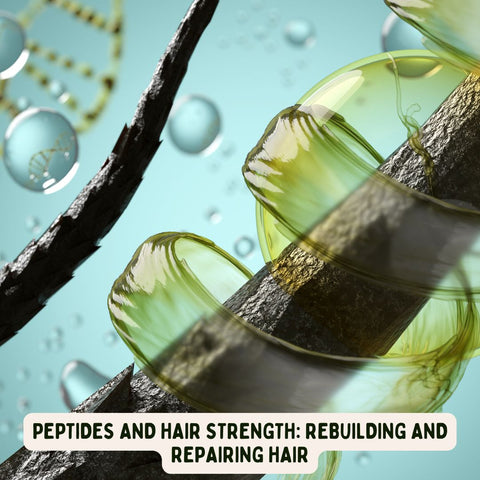
Peptides contribute significantly to hair strength and repair by enhancing the synthesis of structural proteins, primarily keratin and collagen, which are fundamental to hair integrity. In cases of hair fiber damage—whether due to oxidative stress, mechanical trauma, or chemical exposure—specific signaling peptides can trigger fibroblast activity and stimulate reparative pathways within the scalp and follicular environment. This not only promotes regeneration of weakened hair shafts but also fortifies the cuticle layer, improving tensile strength and elasticity. Additionally, peptides help maintain optimal hydration within the hair fiber matrix, minimizing protein loss and reducing susceptibility to breakage. When incorporated consistently into topical hair care formulations, peptides support long-term hair resilience, improve strand density, and restore the biomechanical properties of healthy hair.
How Peptides Strengthen Hair from the Inside Out
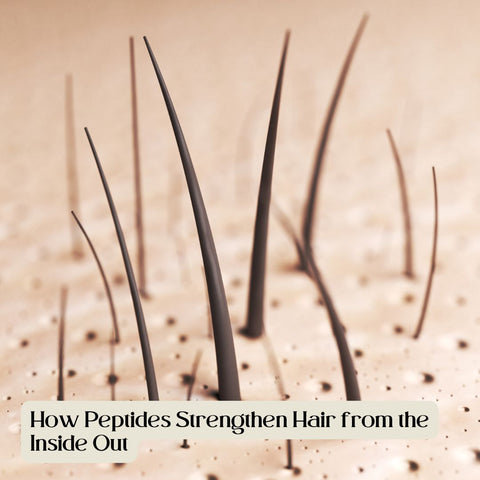
Peptides fortify hair both from the outside in and internally by targeting at a molecular level the root reasons for weakness. After being absorbed into the scalp, peptides get in direct contact with hair follicles, triggering them to enhance the production of keratin, collagen, and elastin, essential proteins responsible for creating the internal support framework of every hair strand. By stimulating cellular function and encouraging improved nutrient delivery to the follicles, peptides assist in strengthening the hair's internal structure, rendering it more resistant to outside stressors such as heat, pollution, and styling damage. This inside-out strategy not only strengthens the hair shaft but also enhances overall scalp health, providing a more stable base for long-term hair growth. With time, hair that has been treated with peptides becomes significantly strengthened, thickened, and more resistant to breakage, manifesting real cellular-level revitalization.
Using Peptides to Repair Damaged Hair
Healthy, robust hair tends to begin from the inside of the follicle, and when damage is done — whether by heat styling, chemical processing, or environmental stress — repairing the hair's internal structure becomes essential. Peptides provide a science-driven, effective means of repairing damaged hair by acting at the cellular level. Rather than merely covering up damage as some surface treatments do, peptides trigger actual regeneration, making them a valuable addition to any serious hair repair regimen.
-
Peptides restore damaged protein bonds in the hair shaft, restoring strength and elasticity.
-
They induce keratin synthesis, replacing the structural protein lost through damage.
-
Peptides repair the cuticle layer, smoothing hair, making it shinier, and more resistant to breakage.
-
They enhance moisture retention in damaged hair fibers, avoiding further dryness and brittleness.
-
Peptides enhance scalp health, providing a healthy environment for stronger, healthier regrowth.
-
They strengthen the bond between hair follicles and the scalp, minimizing hair loss following damage.
-
Peptides facilitate quicker recovery from chemical processes such as bleaching, coloring, or straightening.
-
Their anti-inflammatory action calms irritated, stressed scalps resulting from damage or harsh chemicals.
-
Peptides assist in enhancing the density and volume of thinning hair that has lost strength due to damage.
-
Daily use of peptide-containing products enhances the hair's resistance to subsequent damage.
Peptides are not merely a fad but an essential breakthrough in hair care science that delivers genuine solutions for those wanting to reverse damage and restore hair to its healthiest condition. By targeting internal repair instead of surface treatments, peptides deliver long-term enhancements in hair strength, softness, and appearance, enabling you to achieve hair that not only looks healthier but actually is stronger from the inside out.
Peptides and Scalp Health: Why It Matters
A healthy scalp is the basis for the best possible hair growth, and peptides are essential to keeping and restoring scalp health. Through increased microcirculation and collagen and elastin stimulation in the skin, peptides enhance the strength and resiliency of the barrier function of the scalp. The enhanced barrier traps moisture in, lessens transepidermal water loss, and protects against environmental irritants. Consequently, peptides can relieve a variety of typical scalp issues including dryness, flakiness, sensitivity, and even afflictions like seborrheic dermatitis or mild inflammation. Furthermore, by inducing an equilibrium, healthy environment, peptides minimize follicular congestion, promote healthier follicle function, and provide optimal conditions for long-term hair growth. With time, regular use of peptide-enriched treatments can create a healthier scalp environment, which in turn translates to healthier, denser, and more robust hair.
Peptides and the Hair Growth Cycle: Enhancing Follicle Health
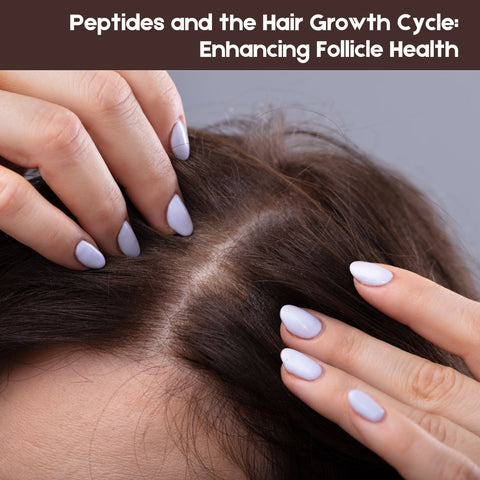
Knowing the hair growth cycle is critical for anyone wishing to enhance hair health, and peptides have been shown to be great allies in the facilitation of this natural process. The hair cycle is characterized by phases of growth, rest, and shedding, and the health of each follicle dictates how well hair transitions through these cycles. By affecting cellular behavior, peptides can strengthen follicles, induce longer growth cycles, and guarantee healthier, more durable hair in the long term.
-
Peptides induce the anagen (growth) phase, promoting follicles to grow thicker, stronger hair.
-
They cause the catagen (transition) phase to occur later, keeping hair in the active growth stage longer.
-
Peptides enhance cell-to-cell communication within the follicle, maximizing nutrient uptake and protein production.
-
They strengthen the dermal-epidermal junction, securing follicles more firmly and preventing premature hair loss.
-
Peptides restore and fortify compromised follicles, allowing them to grow healthy hair on a consistent basis.
-
They aid in the production of collagen surrounding the follicle, which increases elasticity and reduces scalp tension.
-
Peptides establish a healthier scalp environment by inhibiting inflammation and oxidative stress.
-
They stimulate improved blood flow around the follicles, providing an abundance of oxygen and nutrients.
-
Peptides regulate important growth factors responsible for sustaining active hair growth cycles.
-
Daily application of peptides may result in thicker, more voluminous hair by rejuvenating dormant or damaged follicles.
By truly working with the natural hair growth cycle and not against it, peptides offer a scientifically-backed solution to enhancing follicle health and overall hair vitality. Their capacity to enhance longer growth phases, improve follicular strength, and feed the scalp sets peptides as an essential ingredient for anyone looking for thicker, healthier, and more resistant hair.
How Peptides Interact with Hair Follicles for Growth
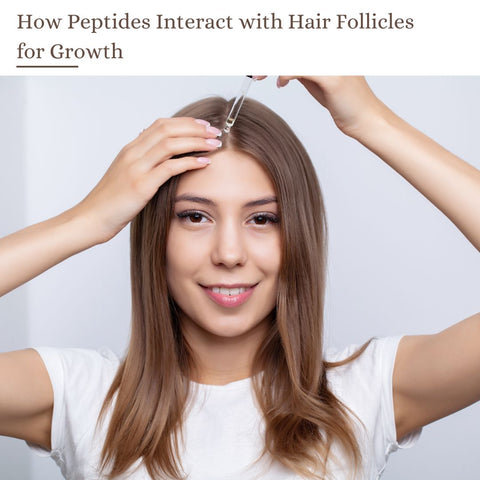
Peptides are highly effective molecules that directly communicate with hair follicles to create healthier, more robust growth. Rather than addressing only the outer layer, peptides penetrate deeper into the follicle, initiating crucial biological processes to repair, guard, and reenergize the follicle — resulting in noticeably fuller, healthier-looking hair over time.
-
Peptides adhere to follicle receptors, encouraging collagen and keratin production.
-
They increase energy in follicle cells, enhancing their overall functionality.
-
Peptides stimulate fibroblasts to release growth factors, continuing the growth cycle.
-
They boost nutrient uptake, strengthening the root of every hair follicle.
-
Peptides heal inner follicle damage from stress and aging.
-
They restore the extracellular matrix, enhancing follicle anchoring.
-
Peptides alleviate inflammation that weakens follicles.
-
They enhance scalp microcirculation, providing essential oxygen and nutrients.
-
Peptides prevent shrinkage of follicles, one cause of hair thinning.
-
Ongoing use keeps follicles activated for fuller, healthier hair.
By acting deep inside the follicle, peptides provide a wiser, more focused way of increasing hair growth. Their capacity to energize, shield, and repair the foundation of the hair makes them indispensable for anyone seeking fuller, healthier hair the natural way.
The Role of Collagen Peptides in Supporting Hair Growth
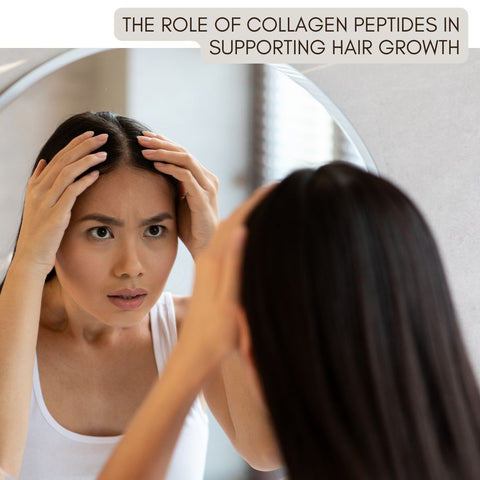
Collagen peptides are crucial for promoting hair growth by making the scalp and even the structural components of the hair itself stronger. Being a leading constituent of the dermis—also the most superficial layer of the scalp—the collagen provides hair follicles the support framework it needs. Consuming collagen peptides supplements the natural levels of the body's own collagen, which decreases with advancing age or owing to environmental attacks. This enhanced collagen matrix increases the elasticity of the scalp, improves blood flow, and strengthens the follicular milieu, enabling hair roots to secure themselves more effectively and encouraging healthier, longer growth phases. Collagen is also packed with amino acids such as proline and glycine, which are crucial in the manufacture of keratin, the major protein that composes hair shafts. Consequently, collagen peptides not only increase the strength and thickness of hair but also enhance the scalp's resiliency and overall hair vitality.
Peptides for Thicker, Fuller Hair: What You Need to Know
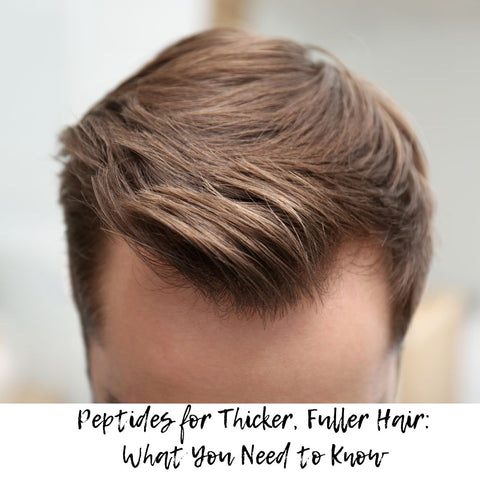
Peptides are an all-star ingredient for thicker, fuller hair with no harsh processing. These little amino acid chains operate beneath the surface, hitting hair follicles to restore strength, promote growth, and fortify scalp health. Their scientifically driven action delivers a natural, potent solution for redefining hair density and energy.
-
Peptides fortify the hair shaft by increasing keratin and collagen levels.
-
They prolong the hair's growth cycle, enabling strands to lengthen and thicken.
-
Peptides enhance scalp circulation, providing improved nutrient delivery to follicles.
-
They suppress inflammation, producing a healthier climate for hair growth.
-
Peptides enable hair to be anchored more firmly in the scalp, reducing fall and breakage.
-
They aid regeneration of compromised or miniaturized follicles.
-
Peptides enhance moisture retention, giving hair a fuller, more voluminous look.
-
Widespread use can reactivate dormant follicles, encouraging thicker regrowth over the long term.
-
Peptides shield hair from stressors in the environment, lessening thinning due to damage.
-
They complement other hair care programs, enhancing regimens as a whole.
Selecting peptides for hair care involves selecting a building-from-the-ground-up strategy — restoring hair at the roots, not covering up issues on the surface. Regular use can bring visibly thicker, fuller hair that feels stronger and healthier from within.
Choosing the Right Peptide Products for Your Hair Care Routine

Peptides have the potential to greatly enhance hair health, but selecting the proper peptide-based products is what makes a real difference. Since there are so many formulations, you need to select ones that fit your hair issues, scalp condition, and overall objectives. An intelligent choice will help you optimize the regenerative potential of peptides for healthier, thicker hair.
-
Search for products that specify peptides (such as copper peptides or signal peptides) toward the top of the ingredient list.
-
Select formulations that pair peptides with complementary ingredients such as hyaluronic acid, biotin, or caffeine.
-
Use lightweight serums or leave-in treatments that linger on the scalp longer for enhanced penetration.
-
Shun products with heavy silicones or sulfates that hinder peptide absorption.
-
Go for clinically tested or dermatologist-recommended products for established results.
-
Choose targeted treatments if you have particular concerns such as thinning, breakage, or scalp irritation.
-
Note concentration — products containing sophisticated peptide complexes tend to produce quicker, more potent results.
-
Select products formulated for daily or frequent use for regular stimulation of the follicles.
-
Review reviews and claims based on clinical studies to ascertain the product is suitable for your hair type and texture.
-
Be patient; allow peptide products a minimum of 8–12 weeks of regular use for noticeable results.
Selecting the appropriate peptide products can revolutionize your hair care process from simple maintenance to active rejuvenation. With careful selection and consistent use, you can unleash healthier, fuller, and more resilient hair in the long run.
Finding the Best Peptide Hair Serums and Treatments
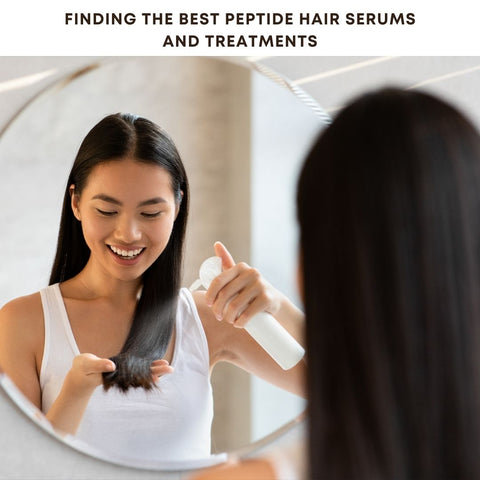
Selecting high-quality peptide hair serums and treatments is crucial to gaining visible and sustained hair health and growth benefits. Not all peptides are equal—premium products incorporate clinically tested peptides at concentrations and in delivery systems that provide penetration down to the follicles. Optimal serums are sometimes paired with complementary agents such as hyaluronic acid, biotin, or plant extracts that also increase scalp feeding and follicle stimulation. Applying a well-formulated peptide treatment is key to gaining maximum benefits including less hair shedding, thicker strands, enhanced scalp hydration, and accelerated growth. Conversely, low-quality products can produce minimal or no results, causing frustration and losing precious time. Having the proper peptide serum specific to your needs guarantees you address the underlying causes of hair thinning in the most effective way, promoting healthier, fuller, and more resilient hair in the long run. Certain peptide-enriched hair care products are:
Incorporating Peptides into Your Hair Routine for Maximum Effect

Peptides are able to bring intense benefits for hair growth and health, but how you apply them is critical. Adding peptides strategically to your hair care ensures maximum impact, allowing you to get thicker, healthier hair quicker and more reliably.
-
Apply peptide products directly on the scalp where follicles are best able to absorb them.
-
Apply peptides to clean, lightly damp hair to enhance penetration and effectiveness.
-
Opt for leave-in products or serums such as Capeli-Pro 8 Multi Peptide Serum in place of rinse-off solutions for greater follicle exposure.
-
Gently massage the scalp upon application to enhance blood flow and penetration.
-
Combine peptides with a healthy hair regimen — limit extreme heat styling and chemical processing.
-
Be consistent — use peptide products every day or as directed for optimal benefits.
-
Layer peptides with moisturizing ingredients such as hyaluronic acid for enhanced scalp nutrition. Reinvia-HS Hair & Scalp Protector Serum contains Hyaluronic acid along with other nourishing ingredients.
-
Don't use heavy oils right after peptides, as they may inhibit absorption.
-
Keep your scalp healthy — a healthy, irritation-free scalp optimizes peptide effects.
-
Wait patiently — it usually takes 8–12 weeks of consistent use to notice dramatic changes.
Using peptides the proper way makes them an effective addition to your hair routine. With steady use, correct application, and scalp-friendly routine, peptides can unlock visibly stronger, thicker, and more luminous hair.
How to Optimize Peptide Use for Long-Term Hair Growth Results
To get long-term hair growth outcomes with peptides, consistency and proper routine are essential. Peptide treatments must be used regularly, usually once or twice a day, to provide constant stimulation of hair follicles. Direct application of serums to a clean, dry scalp is necessary to achieve maximum absorption and penetration to the follicular level. Combining peptide application with a good scalp care regimen—in the form of mild cleansing, regular exfoliation, and reduction of harsh styling habits—can maximize effects further. Maintaining your hair health internally by means of adequate nutrition, hydration, and, if necessary, collagen supplementation can also multiply topical peptides' effects. Lastly, patience is essential; since hair growth occurs naturally, noticeable benefits tend to occur between 8 and 12 weeks or more. By keeping a consistent regimen and caring for the overall scalp environment, peptides are able to provide long-term gains in hair thickness, strength, and density.
Do Peptides Really Work for Hair Growth? Final Thoughts and Results
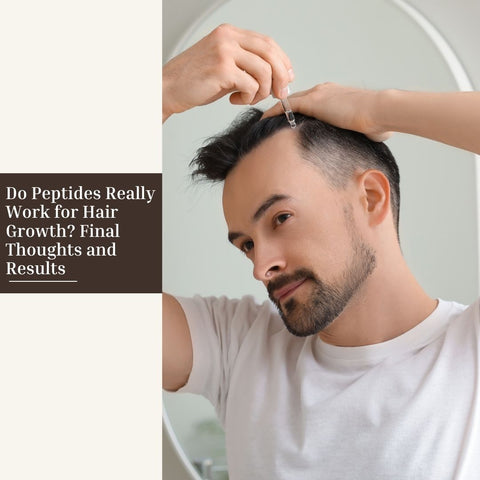
Peptides have been shown to be a scientifically proven and promising solution for maintaining hair growth and scalp health. By acting at the cellular level, peptides activate hair follicles, fortify hair structure, and provide an optimal environment for continued growth. Individual results will differ depending on the consistency, quality of the product, and pre-existing scalp conditions, but many users see visible improvements in hair thickness, strength, and density over time. It's a good idea to enter peptide treatment with realistic hopes, giving multiple weeks to several months for outcomes to become evident. Paired with a daily scalp care practice and healthy habits of living, peptides can prove an essential ally in rejuvenating hair from within, providing an effective, sustainable solution for the individual seeking better hair vitality and strength.