Top Sunscreens in India (2026) for All Skin Types
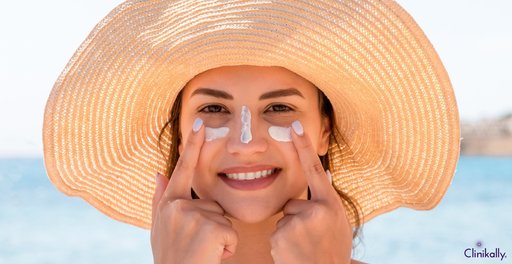
Changing climate conditions challenge our skin every day, requiring our routines to evolve in response. However, marketing and influencer trends often dictate our choices more than actual skin needs. Take sunscreens, for example; they are currently a major topic of discussion, yet everyone has a different opinion on their usage.
We know that sunscreen is an essential skincare product throughout the year. But which formula is right for you? How do they actually shield your cells? These questions often leave us more confused than protected. But not anymore.
In this blog, we’ll cover everything you need to know about UV protection to keep your skin healthy and safe. Let’s start the discussion with understanding the sunscreens.
Understanding Sunscreens: Types and Benefits
Sunscreen is a topical photo-protective product designed to safeguard the skin from the harmful effects of Ultraviolet (UV) radiation. It acts as an invisible biological shield. Additionally, it prevents premature aging, hyperpigmentation and even skin cancer.
Our skin has a natural defense mechanism called melanin, but it isn’t strong enough to handle prolonged exposure to modern environmental conditions. Sunscreens act as a secondary barrier that reflect or absorb the radiation and protect the skin cells from damage.
While marketing trends frame sunscreens as a beach-day essential; but dermatologists define them as a daily preventative medicine, regardless of the weather condition. These sunscreens have to withstand different climate conditions and harmful rays such as UVA and UVB rays. To ensure complete protection, there are two different types of sunscreen, widely used in the market: Chemical Sunscreen and Mineral (Physical) Sunscreen. But which one should you choose? Let’s understand!
Chemical vs Physical Sunscreens: Which One Should You Choose?
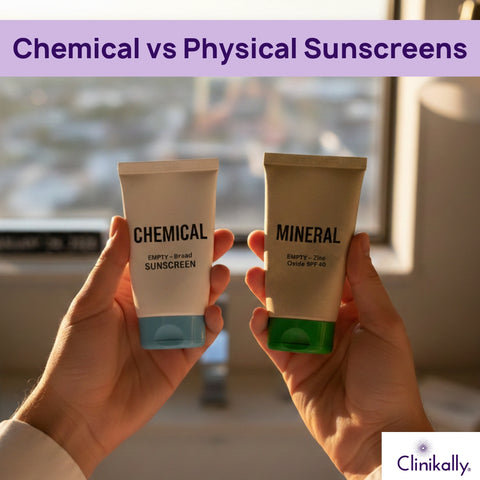
Each type of sunscreen has its own advantages. Physical sunscreens, also known as Mineral Sunscreens contain minerals such as zinc oxide and titanium dioxide, that are typically thought to be safer for sensitive or acne-prone skin. Chemical sunscreens containing organic chemicals may be more ideal for people looking for a lightweight, undetectable finish that works well with makeup. Here's an in-depth look at the differences:
Chemical Sunscreens:
- How they work: Chemical sunscreens act like a sponge using different compounds such as Avobenzone, Octisalate, Oxybenzone, etc. It converts UV rays into tiny amounts of heat and releases that heat from the body.
- Pros: Lightweight and undetectable finish, suitable for all skin types, and frequently easier to apply. Additionally, they’re water-resistant, better for swimming or heavy workouts as they don’t slide off easily.
- Cons: It takes 15-20 minutes after application before it becomes effective. Some chemical filters may be absorbed by the skin, causing irritation or breakouts in sensitive individuals.
Physical Sunscreens:
- How they work: Their working mechanism is similar to a suit of armor that uses mineral ingredients like zinc Oxide or Titanium Dioxide to sit on the surface of your skin. They form a physical barrier on the skin's surface, deflecting UV radiation away.
- Pros: Less likely to cause inflammation, appropriate for sensitive or acne-prone skin, and generally reef-safe. Great for Rosacea or redness, as it reflects heat rather than absorbing it.
- Cons: Can occasionally leave a white cast or feel heavier on the skin, especially on deeper skin tones.
What else should you look at before opting for sunscreen? Broad Spectrum protection! What is it? Let’s understand.
How Broad-Spectrum Sunscreens Protect Your Skin
Broad-spectrum sunscreen is a formula designed to protect your skin from UVA and UVB rays, both of which are hazardous and can cause sun damage, premature aging, and an increased risk of skin cancer. Let’s have a look at why these sunscreens are important:
- Protects against UVA and UVB rays: UVA rays cause accelerated aging, wrinkles, and skin cancer, while UVB rays induce sunburn and have been linked to skin cancer.
- Reduces the risk of skin cancer: Both UVA and UVB radiation can cause DNA damage in skin cells, potentially leading to cancer.
- Reduces premature aging: Sun exposure, particularly without enough protection, can cause wrinkles, age spots, and other symptoms of aging.
- Reduces sun damage: Broad-spectrum sunscreen protects against sunburn, hyperpigmentation, and other types of sun damage.
- Maintains firm, youthful skin: Broad-spectrum sunscreen prevents UV-induced collagen degradation, which contributes to a more youthful appearance.
How SPF Levels Impact Sun Protection
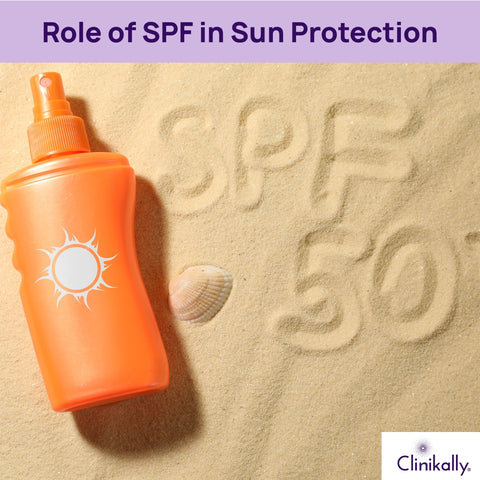
Higher SPF ratings in sunscreen imply better protection against UVB rays, which cause sunburn and raise the risk of skin cancer. While no sunscreen provides 100% protection, a higher SPF indicates you'll become sunburned after a longer period of sun exposure than a lower SPF. For example, SPF 30 prevents approximately 97% of UVB radiation, but SPF 50 blocks approximately 98%. Here's a thorough breakdown:
- SPF and UVB Protection: SPF, or Sun Protection Factor, determines how well a sunscreen protects against UVB radiation.
- How it works: The SPF number indicates how much longer it would take for your skin to burn with sunscreen than without it. For example, if your skin would burn in 10 minutes without sunscreen, then SPF 30 sunscreen would theoretically keep you safe for 30 times longer (300 minutes).
- Higher SPF, Great Protection: In general, greater SPF ratings provide better UVB protection. However, the difference in protection between SPF 30 and SPF 50 is minimal, with SPF 30 blocking 97% of UVB rays and SPF 50 blocking 98%.
- Broad spectrum protection: It is critical to use sunscreens that are "broad spectrum," which means they protect against both UVA and UVB radiation.
- Beyond SPF: Although SPF is a decent predictor of UVB protection, it's vital to realize that sun protection is a multifaceted approach. This involves wearing protective clothing, seeking shade, and applying sunscreen correctly.
Why Modern Sun Protection Goes Beyond the Sun
We often think that sunscreen is only a beach-day or outdoor essential. But did you know that your skin is under attack even when you are sitting indoors? In reality, the digital screens of our laptops and smartphones constantly emit High-Energy Visible (HEV) Blue Light. At the same time, everyday environmental pollution and indoor heat release harmful Infrared-A (IR) rays.
Both of these factors are hazardous to your skin cells. They penetrate deeply to break down skin collagen just as aggressively as direct sunlight. This leads to accelerated signs of aging, wrinkles, and stubborn skin concerns like hyperpigmentation and melasma.
To ensure complete protection in our modern lives, standard UV filters are no longer enough. True medical-grade protection requires a complete shield that blocks UV, Blue Light, and Infrared damage simultaneously. So, when you look for your perfect product, make sure it is designed to protect your skin from all of these modern environmental threats!
Top 10 Sunscreens in India for All Skin Type
Now that you understand the fundamentals of sunscreen, let us lead you to the best sunscreen available in India. Our recommendations have been vetted after consulting with specialists and dermatologists, so you can be confident that we're correctly pointing you! The Top 10 sunscreens in India for every skin type are given below:
| Product | Key Ingredients | Benefits |
| Clinikally SunProtect Sunscreen SPF 50/PA+++ | Green Tea, Ceramides | Repairs barrier; Antioxidant rich; Non-greasy |
| Aclaris Photon 360 Hydra Sunscreen Fluid Cream SPF 50+ | Hyaluronic Acid, Vit C | Deep hydration; Brightens skin; Blue-light protection |
| Dermatica Ray Protect Barelyon Fluid Sunscreen SPF 50 | Titanium Dioxide, Silicones | Makeup primer base; Water resistant; Smooth finish |
| UV Doux Silicone Sunscreen Gel SPF 50 PA+++ | Zinc Oxide, Tinosorb | Ultra matte; Sebum control; Sweat proof |
| Episoft AC Moisturiser with Sunscreen SPF 30 | Glycerin, Avobenzone | 2-in-1 hydration; Acne safe; Lightweight |
| Truderma Sunscreen Gel SPF 50 PA+++ | Phenyl Trimethicone, Zinc | Blurs pores; Anti-aging; Velvety texture |
| Photostable Gold Matte Finish Sunscreen Gel SPF 55 | Vitamin E, UV Filters | High stability; Oil-free; No white cast |
| Heliocare Color Sunscreen Protector Solar Gelcream SPF 50 | Fernblock, Hyaluronic Acid | Evens tone; DNA repair; Tinted coverage |
| Yuderma Eclipse Solaire Tinted Aqua Fusion Sunscreen SPF 50 PA+++ | Vitamin C, Suncat DE | Instant glow; Broad spectrum; Water-based |
| Solasafe SPF 50+ Silicone Sunscreen Gel | Vitamin E, Cyclopentasiloxane | Silky feel; Antioxidant shield; Non-comedogenic |
Now, when we know the best sunscreen types, let’s make it more specialized and understand the best sunscreens for different skin types.
Choosing the Best Sunscreens for Oily Skin
The Best Sunscreens for Oily Skin in India are all lightweight, non-comedogenic, and non-sticky, so your skin is protected without clogging pores or adding shine.
| Sunscreen Name | Key Ingredients | Benefits |
| IPCA Acne-UV Advanced Light Protection Silicone Sunscreen Gel | Zinc Oxide, Titanium Dioxide, Tinosorb S, Polylysine, Glycerin | Silicone-based gel that provides a matte finish without a greasy feel; non-comedogenic and oil-free. |
| Aclaris Photon Sunscreen Gel | Avobenzone, Titanium Dioxide, Octocrylene, Vitamin C, Glutathione, Aloe Vera | "Invisible shield" technology with a dry-touch, non-shiny finish; sweat and water-resistant. |
| Photostable Gold Matte Finish Sunscreen Gel | Methylene Bis-Benzotriazolyl (Tinosorb M), Tinosorb S, Vitamin E, Anhydrous Gel Matrix | Specifically reduces skin oiliness by up to 56%; provides a velvet matte finish and is hypoallergenic. |
| UV Doux Silicone Sunscreen Gel | Zinc Oxide, Titanium Dioxide, Bemotrizinol, Silicone Elastomer Blend | High sebum control; non-acnegenic and paraben-free; works excellently as a smooth makeup base. |
| Heliocare 360 Gel Oil-Free Sunscreen Protector Solar Dry Touch | Tinosorb S, Titanium Dioxide (Nano), Ensulizole, Fernblock® (Polypodium Leucotomos), Ferulic Acid | Unique "dry touch" technology that regulates sebum; protects against UVA, UVB, Visible Light, and Infrared-A. |
| Re'equil Ultra Matte Dry Touch Sunscreen Gel | Zinc Oxide, Titanium Dioxide, Octinoxate, Physalis Angulata Extract | Highest water and sweat resistance; behaves like a primer to blur pores while providing a heavy matte finish. |
Choosing the Best Sunscreens for Sensitive Skin
The best sunscreens for sensitive skin in India are soft, non-irritating, fragrance-free, and dermatologically tested to soothe and protect even the most reactive skin.
| Sunscreen | Key Ingredients | Benefits |
| Sebamed Sun Care Multi Protect Sunscreen Lotion | Octocrylene, Titanium Dioxide, Avobenzone, Tinosorb S, Provitamin B5 (Panthenol), Vitamin E, Inulin, Lecithin | Maintains skin's natural pH 5.5; water, sweat, and sand resistant for up to 6 hours; alcohol and perfume-free. |
| BioUV Spray Sunscreen SPF 50+ | Micronized Zinc Oxide, Titanium Dioxide, Vitamin E, Aloe Vera, Green Tea, Chamomile, Hyaluronic Acid | Anhydrous (water-free) tinted gel; provides a peach-tinted matte finish; hypoallergenic and specifically for post-procedure skin. |
| Ultrasun Photo Age Control Fluid Sunscreen | Tinosorb M (Nano), Titanium Dioxide (Nano), Tinosorb S, Ectoin, Vitamin C, Vitamin E, Grapeseed Extract | Protects against Blue Light and Infrared; restores moisture and reduces fine lines; "once-a-day" application technology. |
| CodeSkin UltraSensitive Mineral Sunscreen SPF 50+ | 100% Mineral: Zinc Oxide, Titanium Dioxide, Centella Asiatica, Niacinamide, Sodium Hyaluronate, Ectoin | Pure mineral formula that deflects UV rays to prevent stinging; safe for around the eyes and reactive/eczema-prone skin. |
How to Pick the Best & Most Affordable Sunscreen
Finding the best sunscreen in India doesn’t cost you much. There are a variety of brands available that offer top products at affordable prices. To get the best product for your needs, you just have to focus on a few key ingredients that are a must for a good sunscreen. You must look for products with hybrid formulas that combine mineral blockers such as Zinc Oxide with organic filters such as Tinosorb or Avobenzone. These ingredients provide high level, broad-spectrum protection without costing you much.
If you’ve any sort of skin concern, look for products that feature some functional units such as Niacinamide for oil control, Hyaluronic Acid for weightless hydration, and Vitamin E for environmental defense. Focus on sunscreen that is labeled non-comedogenic and water-resistant, so that you get the best product that fits within your budget.
How to Choose the Right Sunscreen for Your Needs
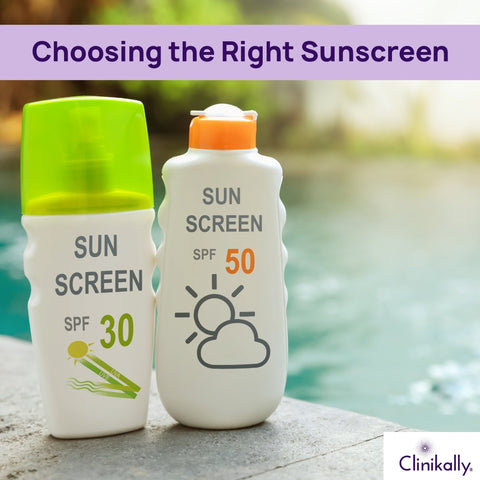
Choosing the proper sunscreen can be tough with so many options in the market, but it becomes simple once you match your skin type, lifestyle, and preferences to the appropriate formula. Here's a step-by-step guide to help you find the best sunscreen for your needs:
- Know your skin type: Know your skin type, which includes oily/acne-prone (gel-based, matte-finish, non-comedogenic), dry (creamy, hydrating formulas with additional moisturizer). Sensitive (mineral, fragrance-free, hypoallergenic). Combination (lightweight, non-greasy hybrids) and Normal (most formulae are effective).
- Check the label for protection: SPF 30-50 filters against 97-98% of UVB rays (perfect for Indian conditions). PA+++ or PA++++ signifies good UVA protection (the more '+' the better). Broad Spectrum gives UVA and UVB protection. Water resistance is crucial whether you're swimming or sweating.
- Decide between chemical, physical, or hybrid: Most skin types include non-sensitive (lightweight, invisible, layers well), sensitive, acne-prone, kids (gentle, reflects UV, acts fast), and balanced skin, daily wear (combines the best of both with an elegant texture).
- Other personal preferences: Other personal preferences are makeup-friendly (matte, invisible finish), natural/clean beauty (mineral or reef-safe), tinted coverage (physical), and no white cast (chemical or hybrid sunscreen).
Tips for Daily Application and Reapplication Practices
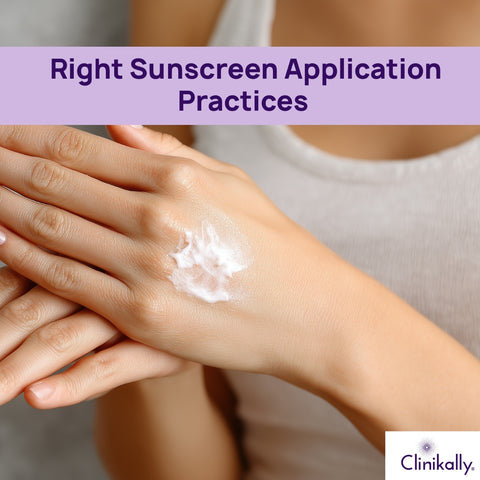
To properly reapply items such as sunscreen or moisturizer throughout the day, begin with a clean and prepared skin area. Reapply sunscreen every two hours, especially after swimming or sweating. Reapply moisturizer whenever your skin feels dry or when you reapply makeup. When applying sunscreen, use a clean applicator and avoid contacting your face directly. General tips for applications and reapplications:
- Cleanse and prepare: Before using any product, cleanse your skin with an effective cleanser to remove dirt, oil, and makeup. Regular exfoliation helps to avoid clogged pores and ensures that products are adequately absorbed.
- Apply equally: To avoid uneven coverage, distribute any product equally across your skin.
- Use a clean applicator: When applying sunscreen, use a clean applicator to avoid transmitting bacteria and to guarantee that the product is thoroughly administered.
- Reapply as needed: Reapply sunscreen every two hours, or more frequently if you're sweating or swimming. Moisturizers should be used whenever your skin feels dry or when you apply makeup.
Common Mistakes to Avoid When Using Sunscreen
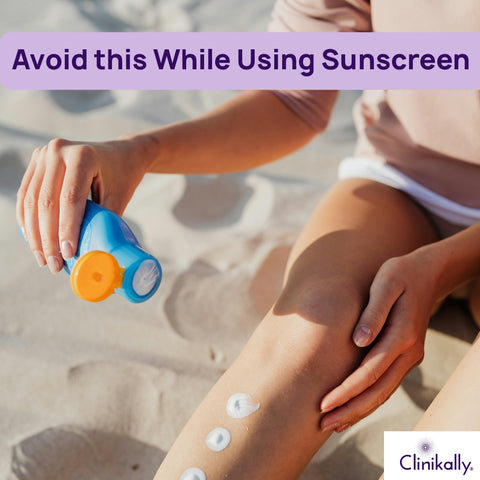
There are a variety of things you must take care of while using sunscreen. Some of the most common ones are:
- Using too little.
Solution: Use approximately 1/2 teaspoon for your face and 1 shot glass (30ml) for your entire body. Most people only apply 25-50% of the recommended amount, which reduces SPF effectiveness.
- I'm skipping reapplication.
Solution: Reapply every 2-3 hours, especially after sweating, swimming, or toweling off. SPF is not a one-time application; its efficacy diminishes with time and exposure.
- Using SPF with makeup or moisturizer.
Solution: Wear a dedicated sunscreen beneath makeup. Foundation or primer does not apply SPF in sufficient quantities to provide complete protection.
- Key areas are often overlooked.
Solution: Don't forget to protect your ears, neck, eyelids, hands, feet, and hairline, which are all vulnerable to sun damage.
- Apply sunscreen after going outside.
Solution: Apply 15-30 minutes before sun exposure to allow for absorption (particularly with chemical sunscreens).
- Using expired sunscreen.
Solution: Check the expiry date; old sunscreen may have degraded filters and provide minimal protection.
Final Thoughts on Sun Protection Essentials
Choosing the right sunscreen is a very important decision, necessary for every individual and every season. But choosing the right one is even more important to ensure adequate skin protection and proper skin health. By knowing the science, composition, and nuances behind sunscreens, SPF, and its types, you can find the best sunscreen for your specific skin type. You can also consult a dermatologist to better understand your skin and find an effective product that actually benefits you.
The one thing that you must remember is that the best sunscreen for your skin is not the expensive one, it’s the one that actually suits your skin that offers the result it promises. Consistency is another such important factor that will save you from those harmful UVA and UVB rays, offering you a life-saving shield. So, choose whether dermatologist recommended sunscreens listed in the article or something else, but make sure you take these insights, find your perfect match, and make sun protection a non-negotiable part of your daily routine. Your future self will definitely thank you!