Neck Aging Explained: Natural Ways to Reverse Signs of Aging
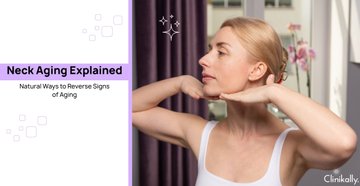
The neck is frequently one of the first areas to show visible signs of aging due to thinner skin and fewer oil glands, which leads to faster dryness and sagging; frequent movement from looking down at devices ("tech neck"); less sun protection, making it prone to sunspots and collagen breakdown; and weaker muscle tone, particularly in the platysma (neck muscle), causing banding and looseness. In this blog, we shall discuss neck aging.
Understanding Turkey Neck: Causes Behind the Skin Laxity

The informal term "turkey neck" refers to loose, drooping skin around the neck, which typically resembles a turkey's wattle. It is a frequent symptom of aging, although it can be caused by a variety of internal and environmental sources.
-
Natural aging: As we age, these critical structural proteins degrade, resulting in a loss of firmness and elasticity. The neck has fewer oil glands and a thinner dermis, which makes it more prone to wrinkles and drooping.
-
Muscle weakness (platysma banding): The platysma muscle that runs around the neck weakens and separates with time. This results in obvious vertical bands and leads to the sagging of neck skin.
-
Sun damage (photoaging): UV light increases the breakdown of collagen and elastin. Chronic sun exposure without SPF causes hyperpigmentation, wrinkles, and overall skin laxity.
-
Tech neck and repeated movement: Frequent staring down at phones or displays produces creasing over time. These repeating folds develop into deep horizontal lines and loose tissue.
-
Weight fluctuations: Rapid weight gain or reduction stretches skin fibers, and the neck is especially prone to sagging due to its delicate structure. The skin may not snap back after losing weight due to a lack of suppleness.
-
Genetics and hormones: A family history of drooping skin or a shorter jawline may enhance vulnerability. Women's estrogen levels fall, particularly after menopause, reducing collagen formation and fat distribution, which contributes to laxity.
-
Lifestyle habits: Smoking lowers blood flow and collagen formation. Poor diet and dehydration cause dry, dull skin and decreased skin rejuvenation.
-
Loss of facial volume and bone density: As people age, their jawlines become less sharp due to bone resorption in the mandible and fat pad descent. This causes the neck to appear looser and more undefined.
The Anatomy of Aging: Why the Neck Shows Early Signs
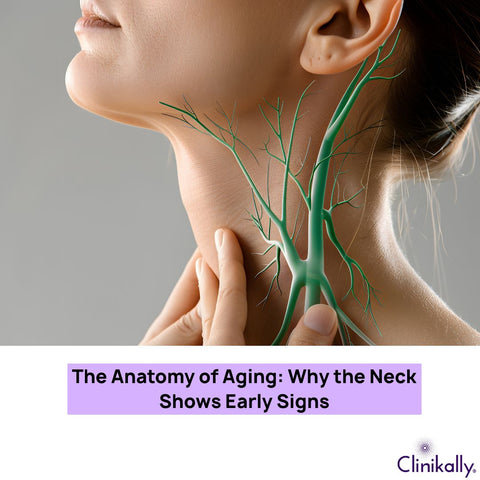
The neck may age faster than the face, although receiving significantly less attention. Here's why.
-
Thinner skin and fewer oil glands: The epidermis and dermis of the neck are naturally thinner than those of the face. They also contain fewer oil glands. It has fewer sebaceous (oil) glands, resulting in less natural moisturization, more dryness, and increased vulnerability to environmental harm.
-
Collagen and elastin breakdown: Aging reduces fibroblast activity, resulting in lower production of collagen (strength) and elastin (elasticity). The end consequence is drooping, wrinkles, and noticeable creases.
-
Underdeveloped muscle support: The platysma muscle is a thin sheet that extends from the jaw to the upper chest. It lacks substantial anchoring, especially over time. It weakens and separates into vertical bands. Muscle tone declines, which contributes to "turkey neck".
-
Chronic sun exposure (photoaging): The neck gets as much sun as the face but receives less SPF protection. UV radiation damages DNA in skin cells, accelerates the breakdown of dermal proteins, and results in sunspots, uneven tone, and crepey texture.
-
Repetitive motion and "Tech Neck": Frequent downward motion (such as glancing at phones or computers) results in dynamic wrinkles that become static with time, as well as permanent horizontal neck lines.
-
Fat redistribution and volume loss: As we age, fat pads in the face and jawline recede, resulting in volume loss in the midface and chin. This leads to poor jawline definition, as well as skin pooling and sagging in the neck.
-
Gravity and lax ligaments: Gravity gradually pulls on soft tissues, particularly in the lower face and neck. Ligaments that formerly held skin taut lose their recoil, making the neck appear "looser" or "droopier."
-
Hormonal changes: The drop of estrogen after menopause promotes the loss of skin thickness, moisture, and collagen formation.
Collagen Breakdown and Skin Elasticity in the Neck Area
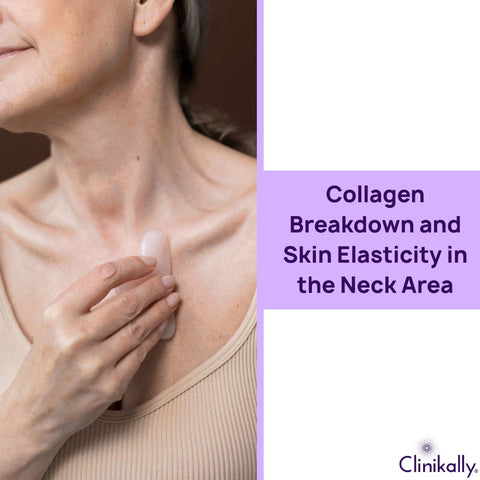
Collagen is the most abundant structural protein in the skin. It offers firmness, support, and elasticity. In the neck, collagen is broken down as follows:
-
Natural aging causes fibroblasts (collagen-producing cells) to become less active and elastin to deteriorate, diminishing flexibility.
-
UV Damage (Photoaging): UVA rays penetrate deeply, damaging dermal collagen, resulting in thinning skin, pigmentation, and rough texture. Pollution and oxidative stress free radicals prematurely degrade collagen fibers.
-
Poor posture/"Tech Neck": Repetitive folding of the skin causes to horizontal lines.
-
Dehydration and inflammation: Chronic dryness stresses the skin barrier, causing micro-damage, while an inflammatory diet or stress accelerates breakdown.
The ability of your skin to stretch and snap back is known as elasticity, and it is primarily due to elastin and collagen. Loss of elasticity in the neck causes loose, drooping skin, creases that do not bounce back, and a crepey texture. Unlike collagen, elastin production declines after puberty, so conserving what you have is critical.
Lifestyle, Genetics, and UV Exposure: Key Triggers

The neck is one of the first areas to exhibit signs of aging due to its thin skin, low oil content, and continuous movement—but the rate and severity are influenced by three primary factors: lifestyle choices, genetic predisposition, and sun exposure.
-
Genetics (the skin's blueprint): Genetics influence skin thickness, collagen density and quality, elastin resilience, and cellular turnover rate. If your parents or grandparents displayed early signs of sagging, crepey skin, or noticeable neck bands, you may be genetically susceptible. However, epigenetics (the way genes express themselves in response to their environment/lifestyle) means that you can still influence the outcome.
-
UV exposure (the most aggressive external trigger): UV radiation, particularly UVA, penetrates deep into the dermis and degrades collagen and elastin fibers. It affects the neck by causing accelerated wrinkling and laxity, sun spots and uneven pigmentation, thinner, fragile skin texture, and "Poikiloderma of Civatte" - a common mottled red-brown discoloration on the sides of the neck. Studies estimate that up to 80% of visible aging is caused by photoaging rather than time. To prevent UV damage, use a daily broad-spectrum SPF 30+, even on cloudy days, apply sunscreen all the way to the collarbones, utilize physical sun barriers (scarves, wide-brimmed hats), and combine topical antioxidants (Vitamin C, E, ferulic acid).
-
Lifestyle habits: Everyday choices that pile up include digital posture, smoking and alcohol, poor food, lack of sleep, and neglecting neck in skincare.
Solutions That Work: From Home Remedies to Professional Help

Whether you're experiencing early indications of aging like fine lines and crepey skin, or more advanced issues like sagging or neck bands, a variety of natural and clinical treatments can help you restore smoother, firmer skin.
-
DIY Neck Masks and Oils: Aloe Vera + Vitamin E moisturizes and repairs collagen. Coconut oil + turmeric is antioxidant-rich and brightening. The egg white mask temporarily tightens and firms.
-
Massage and lymphatic drainage: Use upward strokes with your fingertips, a gua sha or jade roller, and light oils (such as rosehip or almond). Improves blood flow, decreases puffiness, and tones the platysma muscle.
-
Neck exercises and posture training: "Chin lifts," "kisses to the ceiling," and platysma resistance motions can help prevent "tech neck" creasing by improving posture.
-
Natural topical treatments: It include green tea extract, Vitamin C, and niacinamide for antioxidant protection, retinol (or plant-based bakuchiol) for collagen stimulation, and peptide serums to aid in skin regeneration.
Neck Exercises: Can They Truly Tighten Sagging Skin?

To firm the neck by strengthening the underlying muscles, improving posture, and increasing circulation—all while supporting skin structure from inside. The neck contains platysma muscle, a thin, sheet-like muscle that runs from the jaw to the collarbone, as well as subcutaneous fat and skin layers, which are thinner and more fragile than facial skin, and a delicate collagen/elastin network that deteriorates with age. Muscles weaken and loosen with age, skin loses suppleness, and fat is redistributed or accumulated (double chin, sagging). Neck workouts will not rebuild collagen, but they can help tone muscles and improve definition. Proven advantages of neck exercises include:
-
Muscle Toning: Strengthening the platysma helps support the skin above, resulting in a more lifted, firm look.
-
Improved circulation: Increases blood flow, supplying nutrients and oxygen to the skin; aids in natural detoxification and healthier skin texture.
-
Postural correction: Poor posture leads to "tech neck" with skin folds and wrinkles, requiring training. Upright posture enhances the neck angle and profile.
Topical Treatments: Role of Retinoids, Peptides, and Moisturizers
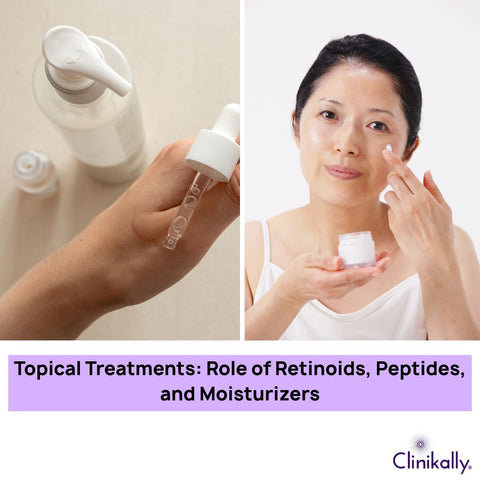
The neck reacts differently than the face; it is thinner, drier, and more sensitive to irritation. The right topical solutions can noticeably enhance skin texture, firmness, and tone, especially when applied consistently and correctly.
-
Retinoids (vitamin A derivatives that stimulate collagen production): It include retinol, retinaldehyde, tretinoin, and bakuchiol (a plant-based alternative). They boost collagen and elastin production, expedite cell turnover, reduce deriscolouration and fine wrinkles, and increase skin thickness and suppleness. Neck benefits include tightening crepey skin, softening horizontal neck wrinkles, reducing sun damage, and improving dullness. Usage Tips are: Start 2-3 times a week to build tolerance, apply a pea-sized amount from the jaw to the décolletage, follow with moisturizer to buffer irritation, and use exclusively at night, always followed by daily SPF.
-
Peptides (Skin's messenger molecules): Short chains of amino acids that tell skin cells to fulfill certain jobs, such as producing more collagen. They function by increasing collagen and elastin synthesis, improving skin healing and resilience, water retention, and barrier health. Benefits for the neck include firming and smoothing texture, plumping thin, papery skin, and being safe for regular use, even on sensitive neck areas.
-
Moisturizers (essential for skin barrier & plumping): They do, however, seal in moisture, soften rough texture, protect against environmental stress, and improve the appearance of crepey, dull skin. Look for compounds like humectants (hyaluronic acid, glycerin, aloe vera), emollients (squalane, shea butter, ceramides), and occlusives (dimethicone, petrolatum). Many are lighter and less perfumed to reduce irritation. Neck creams frequently contain niacinamide for barrier support, antioxidants (vitamin C, E, and green tea), and SPF to prevent further damage. Moisture is essential throughout the aging process of the neck.
Advanced Aesthetic Interventions: Ultrasound, RF, and Injectables
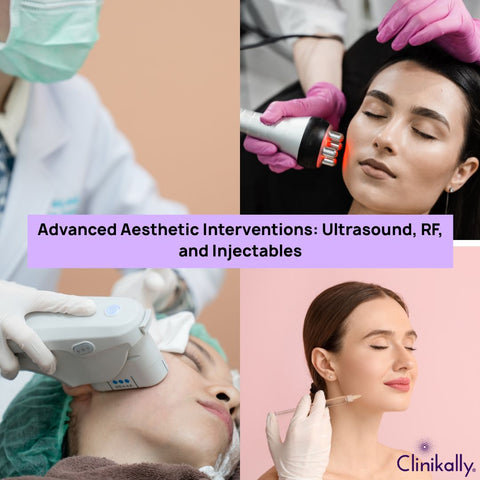
When topical skincare and home routines become ineffective, non-surgical technology can target the deeper layers of the neck, where aging begins. These treatments use non-surgical methods to increase collagen, tighten tissue, and smooth dynamic lines.
-
Ultrasound therapy: Ultrasound therapy uses focused ultrasound radiation to target the SMAS layer (deeper than RF or lasers). Activates a natural wound-healing response, resulting in new collagen over 2-3 months. The benefits include tightening mild to moderate skin laxity, lifting the under-chin and jawline sagging, smoothing horizontal neck lines, and improving shape. The procedure lasts 30-90 minutes, requires no incisions, causes only minor discomfort during energy supply, and has no downtime; results improve steadily over 3-6 months. With proper maintenance, the results can persist for 12-18 months. Ideal for the 35-60 age bracket with mild to moderate laxity and early jowls, technical neck lines, and slight double chin.
-
Radiofrequency (RF) treatments: Types include microneedling and surface RF (Thermage, Forma). RF energy produces regulated heat in the dermis, which causes collagen remodeling, skin tightening, and microneedling. RF adds mechanical injury to improve outcomes. Benefits include firming crepey skin, improving texture, fading horizontal and vertical wrinkles, evening tone, and reducing early sagging. The procedure takes 45-60 minutes, with mild redness and swelling lasting 1-3 days (longer with microneedling RF). Results last 6-12 months, with a progressive spike in collagen over time. Ideal for mild to severe neck aging, crepey texture, early skin thinning, and laxity, and is safe for all skin tones (RF does not target pigment).
-
Injectables (botox and dermal fillers): Botox (Botulinum Toxin A) temporarily relaxes platysma bands, smoothes vertical cords, and reduces chin-to-neck strain. The Nefertiti Lift (Botox in the jawline and neck) results in a more defined jawline, a softer "turkey neck" appearance, and an elevated neck. Duration is 3-7 days and lasts three to four months. Dermal fillers can increase volume and hydration or promote collagen. Can be used to provide horizontal necklines ("necklace lines"), modest skin plumping, and increased skin thickness.
Science-Backed Ingredients That Promote Neck Firmness
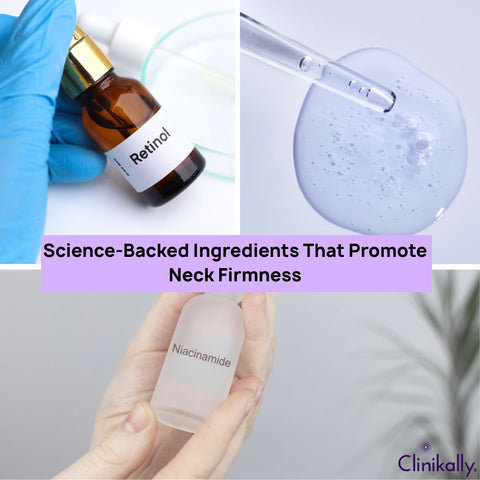
The neck has fewer sebaceous glands, thinner dermis, and is sometimes overlooked in skincare, resulting in early indicators of aging such as sagging, fine wrinkles, and crepiness. The following components have been clinically evaluated to promote firmness, smoothness, and elasticity.
-
Retinoids (retinol, retinaldehyde, and tretinoin): Increase collagen and elastin production, increase cell turnover, thicken the dermis, and improve texture. Tips for use include starting cautiously (2x/week), always pairing with SPF and moisturizer, and avoiding high-strength versions on thin neck skin.
-
Peptides (matrixyl, argireline, and copper peptides): Act as cellular messengers, causing collagen and elastin formation, reducing inflammation, and promoting healing. Tip: Gentle and safe for daily use, great for layering beneath moisturizer.
-
Hyaluronic acid (HA): It binds water up to 1000 times its weight, plumping the skin and improving surface stiffness. Tips: Apply to mildly damp skin and seal in with an occlusive moisturizer.
-
Niacinamide (vitamin B3): Increases ceramide formation while improving barrier function, firmness, and tone. Use tips that are compatible with retinoids and non-irritating, even on sensitive neck skin.
-
Vitamin C (ascorbic acid or derivatives): A powerful antioxidant that prevents UV-induced collagen degradation and promotes new collagen formation. Tips for use include using it in the morning under sunscreen and combining it with ferulic acid for increased stability.
-
Growth factors and EGF (epidermal growth factor): It stimulate cell regeneration and the creation of collagen and fibroblasts. Tips are best used post-procedure or during active skin renewal periods, and serum form allows for better penetration.
-
Bakuchiol (retinol substitute): It is a plant-based chemical that has retinol-like properties and increases collagen without irritation. Use tips are ideal for sensitive or mature neck skin and can be used both in the morning and afternoon.
-
Centella asiatica (Cica): Promotes collagen synthesis, reduces inflammation, and increases suppleness. Clinical support for wound healing; increases skin density and firmness; antioxidant-rich and barrier-supportive. Use tips are good in post-treatment treatments and suitable for everyday use and layering.
Role of Collagen-Boosting Compounds: Retinol, Vitamin C & Peptides
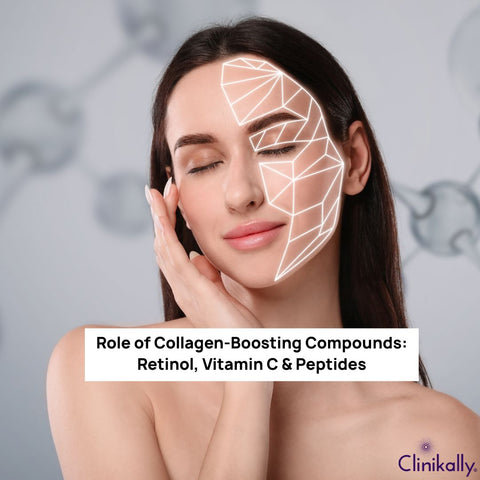
Collagen is a structural protein that provides skin firmness and suppleness. Collagen production reduces with age (about 1% each year after age 25), resulting in skin laxity, drooping, horizontal neck wrinkles, and crepey or thinned skin. Targeted topical ingredients such as retinol, vitamin C, and peptides promote collagen renewal from many perspectives, resulting in stronger, tighter, and smoother neck skin.
-
Retinol: It increases cell turnover in the epidermis, encourages fibroblasts to create new collagen and elastin, and thickens the dermal matrix, resulting in firmer skin. Benefits include reduced fine lines and crepiness, improved texture and tone, and increased skin density and resilience. Start with low concentrations (0.25-0.5%), apply at night, 2-3 times a week initially, and always follow with moisturizer and SPF.
-
Vitamin C (antioxidant collagen protector): Promotes collagen synthesis by stabilizing pro-collagen molecules, protects existing collagen from UV and pollution damage, and improves skin brightness and tone. Benefits include firming and tightening the skin by supporting collagen networks, reducing dullness and uneven pigmentation, and combating photoaging, a primary cause of neck wrinkles. Tips to use in the morning under sunscreen. If your neck is sensitive, choose stabilized versions such as ascorbyl glucoside or magnesium ascorbyl phosphate. Combine with vitamin E or ferulic acid to boost antioxidant power.
-
Peptides (builders and communicators): These molecules act as messengers, signaling the skin to make more collagen, elastin, and hyaluronic acid. They also assist barrier repair and structural integrity, and operate in tandem with retinoids and antioxidants. Benefits include stimulation of natural repair processes, visible improvement in skin thickness and smoothness, and suitability for delicate or mature skin that cannot withstand powerful actives. Tips include applying in the morning and evening after cleansing, combining with moisturizers or layering under retinol, and using consistently for 8-12 weeks.
Antioxidants and Skin Barrier Protection for Delicate Neck Skin

Antioxidants shield your neck from environmental damage and premature aging, while barrier-building elements nourish and rejuvenate. They work together to form a strong defensive system, which is required for long-term neck firmness, youth, and resilience.
Importance of Daily Sun Protection to Slow Down Neck Aging
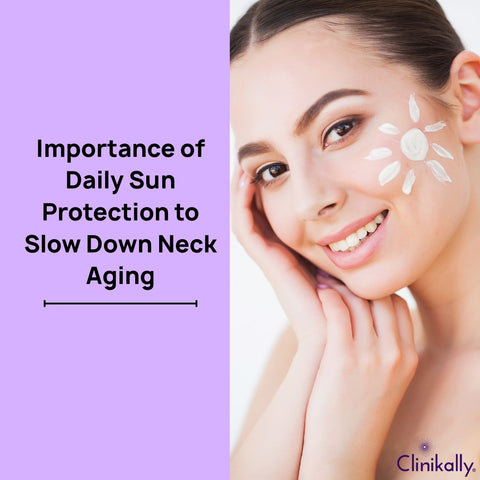
Daily sun protection is one of the most important stages in delaying neck aging. The sensitive skin around your neck is especially susceptible to UV damage, which hastens indications of aging such as wrinkles, sagging, and discoloration.
-
UV radiation causes accelerated aging: UV exposure (photoaging) accounts for up to 90% of visible skin aging. Even if you don't spend much time outside, the neck receives indirect sun exposure every day. UVA photons (which penetrate glass and clouds) are the principal cause of collagen degradation.
-
Thinner, more delicate skin: Neck skin is thinner and more sensitive, with fewer sebaceous glands, less collagen, and a thinner dermis. This makes it more susceptible to wrinkling, crepiness, and drooping. Once collagen is destroyed, it is much more difficult to restore than to avoid damage.
-
Neglect factor: Most people apply sunscreen solely to their faces, ignoring their necks. Over time, this causes a mismatch in tone and texture between the face and neck.
Crafting a Personalized Neck Care Routine for Long-Term Results

Developing a specific neck care routine is one of the most efficient ways to keep your neck looking youthful, firm, and even-toned throughout time. Because the neck presents distinct anatomical challenges—thinner skin, reduced sebaceous activity, and increased sun exposure—it necessitates tailored, regular care that changes with age and lifestyle.
-
Always include the neck in your skincare routine—don't stop at the jawline.
-
Apply goods gently (upward strokes only, no tugging).
-
Sun protection is required every day, whether indoors or on cloudy days.
-
Every season or skin change (age, climate, treatments) should prompt you to review your neck care routine.