Does Ginger Help in Hair Growth? Benefits, Myths & Facts

You must have seen several DIY trends, suggesting the usage of raw ginger on your scalp? Traditionally, it was also used to check hair loss and stimulate hair growth in East Asia. Even several companies produce shampoo containing an extract of ginger claimed to have anti-hair loss and hair growth promotion properties.
It led to various medical researches and the result might shock you. Gingerol, the active compound in ginger, doesn't have the ability to promote hair growth. On the other hand, it can suppress human hair growth and can cause prolongation of telogen phase. In this blog, we’ll understand various facts and uncover several myths associated with the usage of ginger for hair loss.
Understanding the Role of Ginger in Hair Health
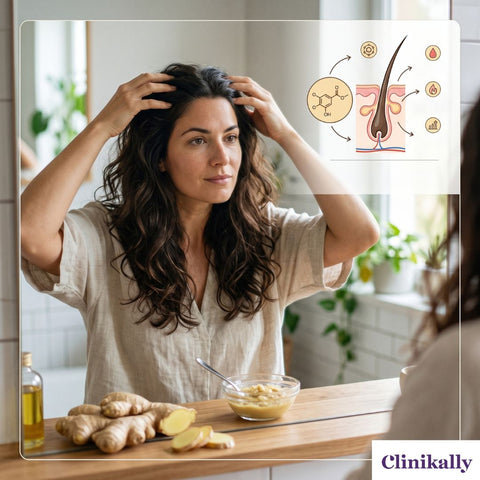
While the internet claims ginger is highly beneficial for rapid hair growth, medical studies reveal a much different reality. It’s necessary to clear out the role of ginger as it’s rather not capable of growing new hair but it’s effective in protecting the health of your scalp.
The Hair Growth Suppression Myth
Various beauty blogs claim that gingerol stimulates follicles to reverse balding. However, a study published in PLoS ONE discovered that 6-gingerol (ginger’s main active compound) actually suppressed hair growth by causing cellular apoptosis in human dermal papilla cells.
As it prolongs the hair follicle’s resting phase, various medical researchers are actually investigating its potential usage in hair removal, rather than growth.
Anti-Fungal Defense Against Dandruff
Ginger contains potent natural antimicrobial properties that directly target Malassezia, the yeast-like fungus primarily responsible for dandruff and seborrheic dermatitis. By controlling this fungal overgrowth, ginger-infused formulas help eliminate chronic flaking and restore a clean scalp environment.
Reduction of Scalp Inflammation
An irritated, itchy scalp can disrupt the natural hair cycle and lead to premature shedding. The anti-inflammatory bioactive compounds in ginger (like shogaols) help calm localized redness and soothe itching. Additionally, ginger's antioxidants neutralize oxidative stress caused by environmental pollutants and UV rays, protecting existing follicles from damage.
Hidden Risks of DIY Application
Applying raw, highly concentrated ginger juice directly to your hair roots can easily backfire. Dermatologists often warn that raw ginger, onion, or lemon juices disrupts the scalp’s natural pH, triggering acute contact dermatitis.
The severe chemical irritation and burning it can cause widespread inflammation, and accelerates temporary hair shedding (Telogen Effluvium). For effective scalp health, skip kitchen remedies and choose professionally formulated, pH-balanced shampoos or diluted essential oils instead.
Medically Backed Alternatives for Hair Growth
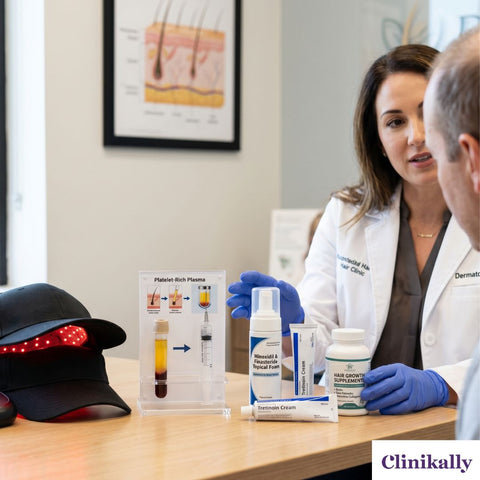
Now that we know that ginger is a hair-suppressant rather than a growth stimulant, we need to discuss some of the products that actually work. If your goal is to reverse thinning, treat pattern baldness, or actively stimulate new hair strands, you need medical advice more than instagram trends or kitchen remedies.
The products that we’re going to discuss requires dermatologists consultation and prescription as they’re optimal solutions that target the biological root causes of hair loss:
1. Minoxidil (Topical or Oral)
It’s a trusted over-the-counter hair restoration treatment. Unlike ginger, it forces hair into a resting state, actively widening blood vessels and opens potassium channels in the scalp. This process extends the active growth phase (anagen phase) of the hair cycle, waking up dormant follicles and pushing them to grow thicker, longer hair shafts.
2. Finasteride or Dutasteride
For individuals dealing with Androgenetic Alopecia (male or female pattern hair loss), the problem is caused by a hormone called DHT (Dihydrotestosterone). This hormone binds to hair follicles and shrinks them over time.
Medications such as Finasteride work systematically by blocking the 5-alpha reductase enzyme, preventing the conversion of testosterone into DHT. Ginger has zero hormonal impact, making finasteride a necessary medical intervention to halt genetic thinning.
3. Rosemary Oil
This is a true natural alternative effective enough to replace the DIY ginger trend. Various research suggests that rosemary oil is equivalent to 2% minoxidil if applied over six months. It doesn’t cause any scalp irritation and doesn’t leave any side effects often associated with kitchen hacks.
4. Low-Level Laser Therapy (LLLT)
If you’re interested in a non-chemical approach, LLLT utilizes medical-grade red light wavelengths to penetrate the scalp tissue. This light energy stimulates the mitochondria within your hair follicle cells, increasing cellular energy (ATP production) and encouraging sluggish follicles to return to a healthy, active growth state.
Is Dietary Ginger Good for Hair Growth?

Since applying raw ginger to the scalp is clinically known to suppress hair growth, many individuals have doubts that they should cut ginger completely from their diet as well? The answer is No. There is a massive biological difference between applying a concentrated chemical to a skin cell and ingesting a whole food as part of a balanced diet.
When you consume ginger in your food, teas, or smoothies, it passes through your digestive system, where your liver breaks down its compounds into system-wide benefits. Let’s have a look at some of these key benefits:
-
Lowers Systemic Inflammation: Chronic internal inflammation can negatively impact your entire body, including your skin and hair follicles. Eating ginger helps lower inflammatory biomarkers that support overall cellular health.
-
Boosts Nutrient Absorption: Ginger is widely known for its ability to improve digestion, ease nausea, and accelerates gastric emptying. A healthy gut absorbs vitamins, minerals, and amino acids more efficiently, ensuring your bloodstream can deliver these vital nutrients directly to your hair papilla cells.
-
Rich in Micronutrients: While it won’t cure baldness, ginger naturally contains trace amounts of magnesium, potassium, and Vitamin C, all of which supports cellular repair and immune function.
Final Thought: Keeping Ginger Out of Haircare Routine
After that much proof, the verdict is clear; don’t add ginger in your hair care routine. Modern Dermatological research has proven that ginger’s primary compound, 6-gingerol, actually suppresses hair growth and is studied for hair removal. Applying raw DIY ginger mixtures can cause severe chemical irritation and contact dermatitis, which can worsen hair shedding.
There is no requirement to remove ginger from your diet as it will offer anti-inflammatory benefits, but putting it directly into your scalp can be fatal. Hair loss is a complex medical issue driven by several conditions including genetics, hormones, or underlying health changes. If you’re experiencing thinning, receding hairline, or sudden shedding, skip the internet trends, and consult a dermatologist for a safe, clinically proven diagnosis and treatment plan.