Actinic Keratosis Uncovered: Causes, Risks & Protection Strategies
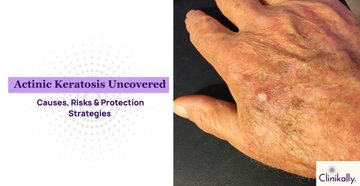
Actinic keratosis (AK) produces rough, scaly skin areas. Squamous cell carcinoma, a kind of skin cancer, can develop if AK is not treated properly. The greatest approach to avoid AK is to shield yourself from sun exposure. If you discover new red or rough pimples on your skin, contact your doctor for a diagnosis and treatment. In this article, we'll look at actinic keratosis, its causes, hazards, and prevention techniques.
What Is Actinic Keratosis?
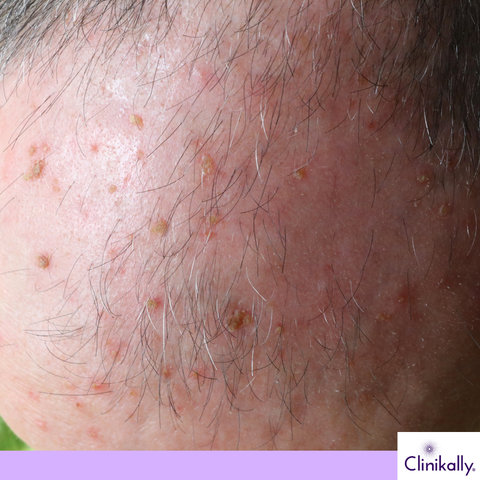
Actinic keratosis (AK) is one of the most common manifestations of cumulative UV exposure. It usually manifests as dry, scaly, or rough patches on sun-exposed skin, such as the face, scalp, lips, ears, forearms, or backs of hands. These lesions can feel like sandpaper and come in a variety of colors, including pink, red, brown, and flesh. While they appear little and modest at first, they frequently persist and can proliferate with time.
What distinguishes actinic keratosis is not just its look, but also its medical significance. AKs are classified as precancerous lesions because they have the potential to develop into squamous cell carcinoma (SCC), a frequent kind of skin cancer. According to research, approximately 5-10% of untreated AKs may develop into SCC. Even if only one lesion becomes cancerous, several AKs indicate broad UV exposure, putting the surrounding skin at danger. For many, AKs function as an early warning system: the body's method of indicating that the skin has suffered enough UV damage to disrupt normal cell proliferation. Addressing AKs as soon as possible can help to avoid problems, lessen the burden of persistent skin damage, and enhance skin health and appearance.
Understanding Actinic Keratosis at a Cellular Level
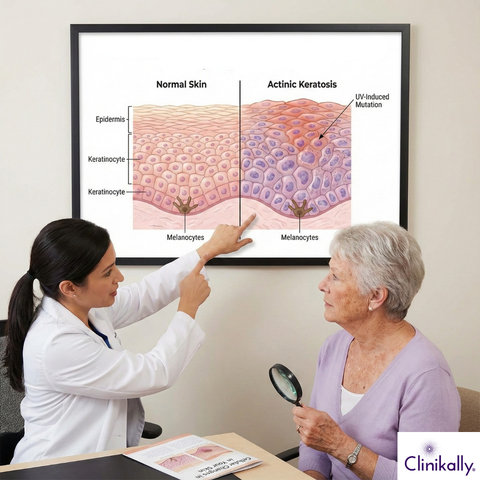
At its core, actinic keratosis (AK) is the skin's failing attempt to repair accumulated UV-induced DNA damage. UV light, particularly UVB, penetrates the epidermis and causes mutations in keratinocytes, the primary cells of the skin's outer layer. A crucial target is the p53 tumor suppressor gene, which typically inhibits aberrant cell development and repairs DNA. When p53 is altered, keratinocytes with damaged DNA lose normal control and begin to proliferate abnormally.
These altered keratinocytes concentrate in the epidermis' basal and lower spinous layers, resulting in dysplasia patches. In contrast to normal keratinocytes, which mature and shed in a controlled manner, dysplastic keratinocytes generate hyperkeratosis clusters (thickened, scaly skin). This is why AK lesions frequently feel rough and sandpapery.
At the microscopic level, AK is defined by:
-
Nuclear atypia, which includes irregular, enlarged nuclei in keratinocytes.
-
Parakeratosis (the retention of nuclei in the stratum corneum, indicating disrupted maturation).
-
Inflammatory infiltrates in the surrounding tissue indicate an immune response to abnormal cells.
If left unchecked, some of these dysplastic keratinocytes may break through the basement membrane and develop into invasive squamous cell carcinoma (SCC). This makes AK a precancerous condition; not all lesions will advance, but the possibility exists, particularly in high-risk people. Understanding AK at the cellular level explains why dermatologists emphasize early detection and treatment: by targeting aberrant keratinocytes before they progress to malignancy, we can effectively prevent skin cancer at its early stages.
How UV Exposure Triggers Actinic Skin Changes
Chronic ultraviolet (UV) exposure causes actinic keratosis (AK) by gradually disrupting the skin's molecular and structural integrity. UVA (long wave) and UVB (short wave) rays both contribute to DNA damage, although UVB is more directly responsible.
-
DNA damage in keratinocytes: UVB photons impact DNA directly in epidermal cells, resulting in pyrimidine dimers. These mutations disrupt normal cell replication and repair. The most important gene affected is p53, a tumor suppressor that normally inhibits cell development when DNA is disrupted. When p53 is compromised, aberrant keratinocytes continue to divide uncontrollably.
-
Oxidative stress from UVA: UVA penetrates deeper into the skin and produces reactive oxygen species (ROS). These free radicals target DNA, proteins, and lipids, reducing cellular defenses and hastening photoaging and precancerous alterations.
-
Chronic inflammation: Repeated sun exposure causes low-grade inflammation, generating cytokines and enzymes that alter collagen, elastin, and normal skin structure. This provides a "field" of injury in which numerous AKs can develop, rather than just isolated lesions.
-
Immune suppression: UV exposure also reduces Langerhans cell activity, which weakens the skin's immunological surveillance. This enables mutant keratinocytes to avoid identification and eradication.
Together, these mechanisms explain why AKs occur in sun-exposed locations and how their risk rises with cumulative lifetime sun exposure. UV light essentially converts healthy skin into a vulnerable environment in which aberrant cells thrive, reproduce, and perhaps develop into squamous cell carcinoma (SCC).
Who Is Most at Risk for Developing AK?
Actinic keratosis (AK) can harm everyone who gets enough sun, but certain populations are at a much increased risk due to genetics, lifestyle, and health issues.
-
Skin type and genetics: People with fair skin, light eyes, and blonde or red hair are more sensitive because they generate less melanin, the pigment that protects against UV rays. Those with a family history of skin cancer or AK have an increased risk.
-
Cumulative sun exposure: Years of chronic UV exposure put outdoor workers at danger, including farmers, construction workers, and lifeguards. Even recreational sunbathers, such as gardeners and frequent beachgoers, accrue skin damage over time, increasing the risk of AK.
-
Age factor: Adults over 40 are more likely to develop AK, reflecting the long period it takes for UV damage to accumulate. However, growing levels of tanning and outdoor activity have resulted in cases emerging earlier.
-
Geographic location: Living in areas with a high UV index—closer to the equator, at higher elevations, or in sunny climates—increases exposure intensity and duration, hastening AK development.
-
Weakened immune system: Individuals with weakened immune systems—whether because of organ donation, chemotherapy, or chronic illness—are less able to repair or combat aberrant keratinocytes, making AK more common and aggressive.
In brief, AK risk is highest in fair-skinned, middle-aged, or older persons with a history of chronic sun exposure, but it can affect anyone who has suffered considerable UV damage over time.
Recognizing and Diagnosing Actinic Keratosis
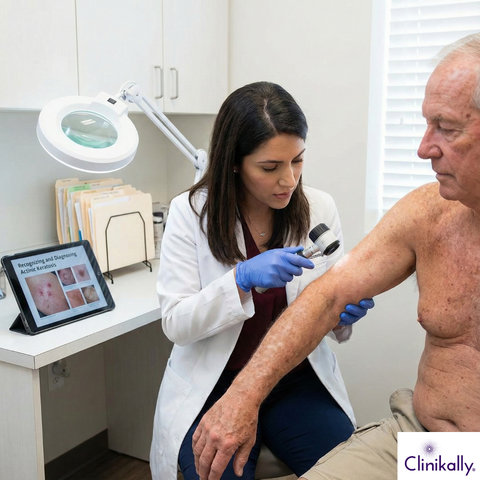
Actinic keratosis (AK) frequently grows subtly, making early detection critical to avoiding development. These lesions usually appear on sun-exposed areas such as the face, scalp, ears, forearms, and backs of the hands.
Common clinical features
-
Texture comes first; AKs are frequently felt before they are seen. Patients might notice rough, sandpaper-like patches.
-
Lesions can appear as small, flat, or slightly raised scaly plaques or as crusty, thickened growths. Colors range from pink to reddish-brown, occasionally blending into the surrounding skin.
-
Size and shape are typically less than 1 cm in diameter, with irregular borders.
-
They can be asymptomatic or cause itching, burning, or tenderness, particularly when irritated by sunlight or friction.
Diagnostic approaches
-
Dermatologists conduct clinical exams primarily through visual inspection and palpation. A rough texture is an important diagnostic clue.
-
Dermatoscopy with a help distinguish between benign lesions and skin cancers by revealing distinctive vascular and scaling patterns with a handheld dermatoscope.
-
A skin biopsy is carried out to rule out squamous cell carcinoma (SCC) if the lesion seems atypical, such as thicker, tender, or growing quickly.
Seborrheic keratosis, psoriasis, eczema, and superficial basal cell carcinoma all have the potential to mimic AK. This makes professional evaluation critical, particularly for individuals with several or atypical lesions. In practice, recognizing AK frequently entails noticing persistent, scaly spots that do not go away with moisturizers. A timely dermatologic evaluation ensures an accurate diagnosis and, if necessary, early therapy to avoid malignant transformation.
Common Signs and Symptoms
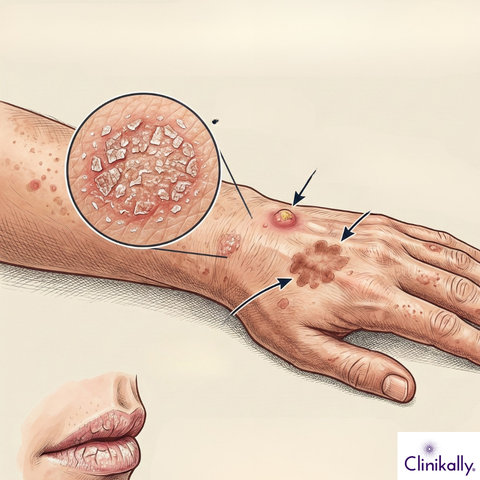
Actinic keratosis (AK) often appears gradually, but recognizing early warning signals might help avoid progression to skin cancer. Key indicators are:
-
Rough, gritty texture: The first sign is typically a patch that feels like sandpaper or a dry scab, even if it is barely visible.
-
Persistent scaly patches: Flaky, crusty areas that do not heal or reappear after peeling are typical. Moisturizers may temporarily soften them, but the roughness eventually returns.
-
Color variations: Lesions can be pink, red, tan, or brown, and they can sometimes blend in with the surrounding skin, making them difficult to notice.
-
Size and shape: Typically small (a few millimeters to 1 cm) with irregular borders, but they can gradually grow larger over time.
-
Location: Frequently observed on sun-exposed surfaces like the backs of the hands, forearms, lips, ears, and scalp.
-
Tenderness or discomfort: When rubbed by clothing or exposed to more sunlight, certain AKs may burn, itch, or feel sore.
-
Cluster formation: Several lesions may show up in a "field of damage," which represents extensive UV damage as opposed to a single, isolated area.
Any persistent, scaly, or changing skin change should be evaluated by a professional because AKs can closely resemble benign conditions or early cancers. Early detection lowers the risk of squamous cell carcinoma and enables prompt treatment.
Role of Dermatologists and Skin Biopsies
Because actinic keratosis (AK) can resemble benign skin conditions—or, in some cases, early skin cancers—the role of a dermatologist is critical to accurate diagnosis and treatment.
Dermatologist’s rolebroad-spectrum sunscreen (SPF 30 or higher)
-
Dermatologists are trained to distinguish between AK and seborrheic keratosis, psoriasis, and early squamous cell carcinoma (SCC).
-
Patients with one AK frequently have multiples, so dermatologists typically perform a thorough skin examination to identify additional lesions or areas of sun damage.
-
They consider parameters such as lesion number, thickness, and patient history (immunosuppression, past skin cancer) while deciding on treatment urgency.
Skin biopsies
-
When necessary, the majority of AKs are identified clinically rather than through intrusive testing. However, if a lesion is thicker, painful, ulcerated, fast expanding, or does not respond to normal therapies, a biopsy is advised.
-
A dermatologist numbs the region using a local anesthetic before removing a small sample of tissue. This is submitted to a pathology lab for microscopic examination.
-
The biopsy confirms whether the lesion is an AK or has progressed to squamous cell carcinoma. This ensures that therapy is correct and timely.
In brief, while many AKs can be seen with a skilled eye, dermatologists prevent missing malignancies by taking biopsies on lesions that cause worry. This proactive method strikes a balance between early detection and patient safety.
Actinic Keratosis vs Other Skin Conditions
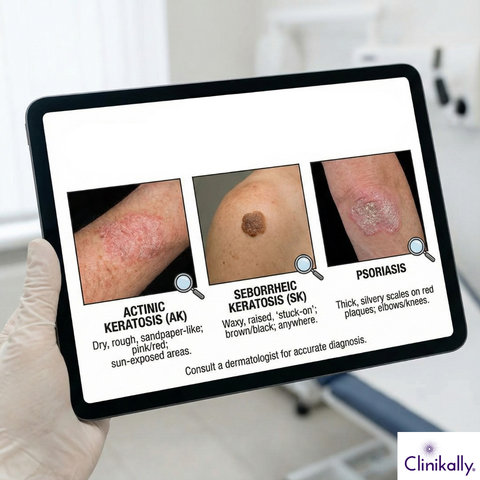
Actinic keratosis (AK) can resemble a variety of benign or malignant skin disorders, making proper diagnosis crucial. Dermatologists make diagnoses based on clinical clues, dermatoscopy, and, in some cases, biopsy.
-
Seborrheic keratosis vs. AK: Seborrheic keratosis is characterized by a waxy, "stuck-on" appearance, which is often pigmented and soft to the touch. On the other hand, AK is rough, sandpapery, flat or slightly raised with scaling, and more common in sun-exposed areas.
-
Psoriasis vs. AK: Psoriasis is characterized by well-defined red plaques covered in silvery scales that appear symmetrically on the body. On the other hand, instead of thick scales, AK has smaller, irregular patches that are frequently isolated and have a gritty texture.
-
Eczema vs. AK: Eczema is characterized by itchy, inflamed patches that may weep or crust; lesions fluctuate in response to triggers and improve with moisturizers and steroids. On the other hand, AK is characterized by persistent rough patches that are usually painless unless irritated and do not go away with conventional creams.
-
Basal cell carcinoma (BCC) vs. AK: BCCs are pearly, translucent nodules with visible blood vessels that may ulcer. On the other hand, AK refers to flat or slightly raised scaly lesions that lack pearly translucence.
-
Squamous cell carcinoma (SCC) vs. AK: SCC is a common complication of AK; lesions are thicker, painful, wart-like, or ulcerated, and they grow faster. On the other hand, AK causes thin, scratchy plaques that may progress but are not initially invasive.
In contrast to many benign skin conditions, AKs are classified as precancerous. Any persistent, scaly lesion in sun-exposed areas should be treated or monitored by a dermatologist to rule out malignant growth.
Treatment and Prevention
Treatment approaches:
Dermatologists advise treatment for actinic keratosis (AK) instead of watchful waiting because it has the potential to develop into cancer. There are several options:
-
Cryotherapy (Freezing): Liquid nitrogen eliminates aberrant cells; it is fast and efficient for isolated lesions but might cause temporary discoloration.
-
Topical medications: They include prescription creams like 5-fluorouracil (5-FU), imiquimod, diclofenac, and newer medicines like tirbanibulin, which treat many AKs at once by targeting aberrant cell development and activating the immune response.
-
Photodynamic therapy (PDT): A light-activated medication that selectively eliminates damaged cells while preserving healthy tissue; suitable for sun-damaged skin.
-
Curettage or Laser Therapy: Used to remove thicker or resistant lesions with precision.
Prevention strategies:
Preventing new AKs and decreasing recurrence are as crucial as treating current ones.
-
Sun protection: The first line of defense is to use broad-spectrum sunscreen (SPF 30 or higher) every day, as well as protective clothing, wide-brimmed hats, and UV-blocking sunglasses.
-
Avoid peak sun exposure: Limit your time outside between 10 a.m. and 4 p.m., when UV rays are strongest.
-
Routine skin checks: Self-examinations and annual dermatology visits can detect new or changing lesions early.
-
Lifestyle support: Avoid tanning beds, eat an antioxidant-rich diet, and use barrier-boosting moisturizers to aid in skin repair.
Treatment targets existing precancerous spots, whereas prevention stops the cycle of new harm. Together, they protect not just the appearance but also lower the chance of developing squamous cell carcinoma.
Topical Treatments and Cryotherapy
Topical treatments and cryotherapy are explained below.
Topical treatments
When many actinic keratoses appear on sun-exposed skin ("field cancerization"), topical remedies are ideal. These drugs act at the cellular level, either by killing abnormal cells or by increasing immune defense.
-
5-fluorouracil (5-FU): It is a chemotherapeutic cream that inhibits DNA synthesis in aberrant keratinocytes. Effective, but often results in transient redness, crusting, and discomfort before healing.
-
Imiquimod: It stimulates the immune system to target precancerous cells. Treatment can take weeks, as redness and swelling indicate an immune reaction at work.
-
Diclofenac gel: A gentler alternative that decreases prostaglandins involved in cell proliferation; more tolerated but less potent, needing longer use.
-
Tirbanibulin: It is a novel, short-course medication (typically 5 days) that breaks microtubules in aberrant cells, providing efficacy while minimizing side effects.
Advantages include treating both visible and subclinical lesions, reducing recurrence, and targeting larger areas of sun-damaged skin. Cons may cause transient cosmetic irritation during treatment; requires patient compliance.
Cryotherapy
Cryotherapy involves freezing lesions with liquid nitrogen, which causes cell death due to a rapid temperature reduction.
-
Best for isolated or small lesions, especially thin AKs.
-
Quick, performed in a dermatologist's office; the treated spot blisters or peels off in a few days to weeks.
-
Benefits include immediate, economical, and little downtime.
-
It may leave lighter or darker patches, is not suitable for widespread sun damage, and cannot treat invisible precancerous cells in surrounding skin.
Daily Sun Protection and Lifestyle Changes
Daily sun protection:
UV exposure is the leading cause of actinic keratosis, so diligent sun protection is the most effective preventative strategy.
-
Broad-spectrum sunscreen: Use SPF 30 or higher every morning, even on cloudy days. Look for formulas containing zinc oxide or titanium dioxide to ensure consistent UVA/UVB coverage.
-
Reapplication is important: Reapply every 2 hours outside and after swimming or sweating.
-
Protective clothing: Wide-brimmed hats, UV-blocking sunglasses, and tightly woven fabrics provide an additional barrier. UPF-rated clothing provides tested protection.
-
Shade smart habits: Avoid direct sunlight between 10 a.m. and 4 p.m., when UV radiation peaks.
Lifestyle changes:
Beyond sunscreen, everyday choices might help reduce UV-induced skin deterioration.
-
Avoid tanning beds: Artificial UV exposure is just as harmful, accelerating AK formation and increasing the risk of skin cancer.
-
Skin checks: Conduct monthly self-exams for new or changing lesions, and schedule yearly dermatology appointments.
-
Healthy diet: Antioxidant-rich foods (berries, leafy greens, nuts, and omega-3s) aid in oxidative stress reduction and skin restoration.
-
Hydration and moisturizers: Keeping skin hydrated helps to maintain barrier integrity, which reduces irritation from treatments such as topical creams.
-
Quit smoking: Tobacco accelerates skin aging and weakens repair mechanisms, resulting in worse UV damage outcomes.
Long-Term Dermatological Care
While many actinic keratoses can be treated with topical medications or in-office procedures, some require ongoing dermatological care. Early and regular follow-up ensures that precancerous lesions are treated before they progress to squamous cell carcinoma.
-
Persistent or recurrent lesions: If lesions resurface following cryotherapy or topical therapy, or if new spots emerge despite sun protection, a dermatologist may advise long-term surveillance and combination treatments.
-
Multiple or widespread AKs: When AKs form clusters ("field cancerization"), the chance of advancement rises. Long-term care programs frequently involve field-directed therapy, regular skin examinations, and preventive maintenance treatments.
-
High-risk patients: Those with fair skin, a history of frequent sunburns, compromised immune systems, or previous skin malignancies are substantially more vulnerable. They benefit from more frequent dermatological visits—usually every 3-6 months.
-
Suspicious changes: Suspicious alterations include rapid development, pain, bleeding, or thicker lesions, which may suggest the progression to invasive squamous cell carcinoma. Immediate dermatological assessment and biopsy are essential.
-
Treatment side effect management: Long-term care allows dermatologists to modify treatment regimens, administer calming adjuncts, and adjust therapies for sensitive or aging skin, balancing effectiveness and comfort.
Seek continuous dermatological care if you have recurrent, recurring, or changing AKs, are in a high-risk category, or have uncommon symptoms. Regular follow-ups shift management from reactive treatment to proactive skin cancer prevention.
Long-Term Management of Actinic Keratosis
Actinic keratosis (AK) management entails more than just treating visible lesions; it necessitates a personalized, lifelong approach that takes into consideration individual risk factors, skin type, and lifestyle habits.
-
Risk-based follow-up: Low-risk individuals with a small number of isolated AKs may only need yearly skin exams and spot treatments. Patients with moderate risk, recurrent lesions, or a history of chronic sun exposure benefit from 6-12 month visits. High-risk patients with fair skin, immunosuppression, or a history of skin cancer should have a full-body exam every 3–6 months.
-
Field-directed therapies: Dermatologists frequently recommend long-term "field treatments" for patients with broad lesions, such as topical 5-fluorouracil, imiquimod, or photodynamic therapy. These not only remove obvious spots but also address subclinical abnormalities before they become serious.
-
Preventive skin care routine: Daily broad-spectrum sunscreen with SPF 30 or higher. Antioxidant serums (vitamin C, E, and ferulic acid) can help minimize oxidative stress. Barrier-supporting moisturizers improve skin resilience during therapy. Avoid tanning beds and peak sunlight hours.
-
Lifestyle and wellness integration: A nutrient-dense diet, adequate hydration, stress management, and smoking cessation all aid in skin healing and resilience to UV-induced damage.
-
Patient empowerment: Patients can track changes between dermatology sessions by performing self-exams once a month and photographing any questionable spots.
Personalized management of AK shifts therapy from lesion-focused to proactive skin health preservation. Long-term outcomes increase with individualized follow-ups, field therapies, everyday prevention, and patient participation, and the risk of skin cancer progression is significantly reduced.