Hair Care 101: Your Guide to thick and dense hair
Ever felt excessive hair fall on your pillow, shower, or on your comb? Or have you ever looked in the mirror and found slight baldness or thinning of hair? It definitely sounds overwhelming, but up to 80% of men and 50% of women experience this condition by the age of 70 years. If you’re one of them or know someone who feels the same, this blog is a helpful guide for you.
You might have started searching for the latest hair growth serum or quick-fix hair growth pills, or you might have begun looking for hair growth remedies. However, in this blog, we’ll discuss only those hair care products that are tried and tested & actually bring results. Let’s start the discussion with an understanding of hair fall and its causes.
The Science Behind Hairfall & What Triggers It
There are many reasons for hair loss, just as there are many home remedies for hairfall and regrowth. But it’s hard to distinguish the exact cause behind your hair loss. The triggering factor can be anything, including your hair care routine, stress, genetics, hormonal stress, diet, and environmental factors. Let’s understand it more elaborately.
Hairs go through a natural growth cycle where hair follicles go through phases. Disruption of this cycle leads to excessive shedding or permanent hair loss. Let’s quickly have a look at the hair growth cycle.
The Hair Growth Cycle
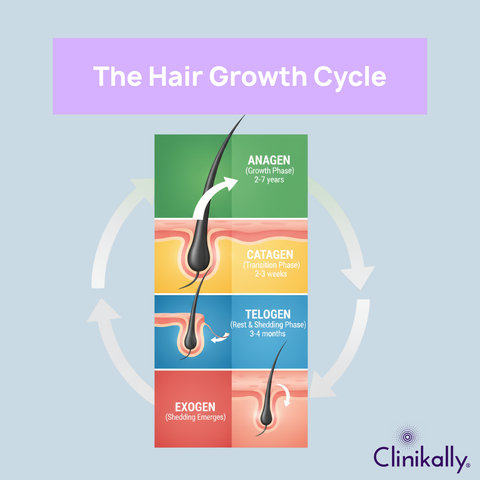
The hairs are made up of Keratin, a protein & their growth cycle is divided into four main phases:
-
Anagen (Growth Phase): This phase determines the hair's length and can last from 2 to 6 years. During this phase, your hair follicles are pushing out hairs that grow continuously until they’re cut or reach the end of their life span.
-
Catagen (Transitional Phase): The catagen phase starts after anagen phase and lasts for about 2 weeks. During this phase, hair follicles shrink, and hair growth slows down.
-
Telogen (Resting Phase): This phase lasts for 2 to 3 months. In this phase, hair doesn't grow, but it doesn't fall out either. During this phase, the follicles that released the hair during the catagen phase start forming new hairs.
-
Exogen (Shedding Phase): The Exogen phase is an extended form of telogen phase. During this phase, hair is shed from the scalp, often during washing or brushing. Losing 50-100 hairs during this phase is normal.
Now, when we know these hair growth phases, let’s have a look at the common hair loss problems & their type.
Common Types of Hair Loss
There are different patterns of hair loss & there are different causes behind them. To understand these types, let’s understand these causes first.
1. Androgenetic Alopecia (AGA)
Androgenic Alopecia is a common, cumulative, and genetically distinguished hair loss disorder, also known as male pattern baldness or female pattern hair loss. It’s a significant condition that you inherit from your family or results from hormonal actions. The AGA is different in both males and females. In men's, it follows a defined pattern, starting from both temples. The hairline starts moving backward (receding) to form a “M shape”, and the hair also thins at the top of the head (vertex or crown), causing partial to complete baldness. In females, the hair becomes thinner at the top of the head, and noticeable gaps become visible in the middle part. In females, the hairline doesn't recede or move backward, and total baldness is very rare.
2. Telogen Effluvium (TE)
Telogen Effluvium is a temporary form of hair loss due to an increase in hair shedding. It is a condition resulting from stress, shock, or a traumatic event, causing disturbance in the hair cycle. In Telogen Effluvium, the growth phase of hair slows down, pushing hair follicles into the shedding phase prematurely. TE is reversible, and if treated well, hair growth starts within 3-6 months. If hair shedding occurs frequently for more than six months, it can lead to chronic telogen effluvium.
3. Traction Alopecia
Traction Alopecia is a type of patchy hair loss caused by repeated physical tension on the hair roots. Excessive tension on the scalp can eventually lead to permanently damaged hair follicles.
What Triggers Hairfall
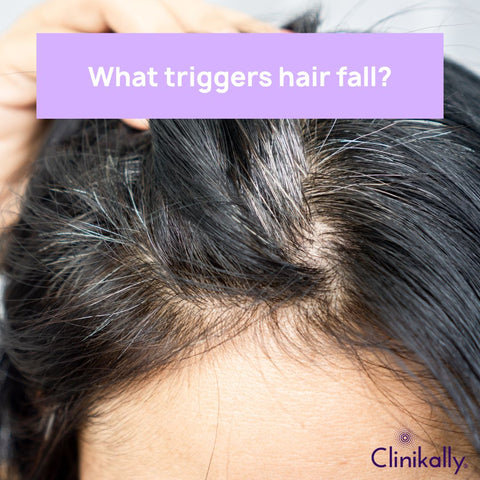
Hair loss isn’t a sudden but a gradual process that can be triggered by several internal and external lifestyle factors.
Let’s understand the Internal and External Factors separately.
Internal and Medical Triggers
There are a variety of internal factors considered that disrupt the growth cycle of the hair. Let’s have a look at the few:
- Genetic & Heritable Hair Loss: This is one of the most common types of hair loss. The main reason behind this type of hair fall is family history. As it is hereditary, it can be noticed through male pattern baldness or female pattern hair loss.
- Hormonal Imbalance: It is another internal hair loss type that weakens hair follicles and disrupts the growth cycle of the hair during hormonal shifts. Some of the major reasons for this hormonal imbalance include Thyroid disorders, pregnancy & childbirth (postpartum hormonal changes can cause a temporary, non-scarring increase in hair loss), Menopause, Polyendocrine Metabolic Ovarian Syndrome (PMOS), formerly known as Polycystic Ovary Syndrome (PCOS), causing excessive hair growth leading to scalp thinning. Apart from these, several medications such as birth control pills (oral contraceptives) can also trigger hormonal shifts, causing hair loss & thinning.
- Underlying Medical Conditions: Several health related issues, such as high blood pressure, disorders such as alopecia areata etc., can also deplete the healthy hair follicles, causing patchy hair loss.
External Triggers
Several daily habits, a bad hair care routine, and environmental factors can also lead to hair thinning and loss. Let’s have a look at a few:
- Stress and Lack of Sleep: Emotional stress, anxiety, or lack of sleep can trigger Telogen Effluvium, causing hair fall. Stress hormones push the hair follicles into the shedding phase prematurely, and sleep deprivations worsen the conditions, preventing the body from recovering properly. The hair thinning due to stress & lack of sleep usually shows after 2-3 months, and so it is often hard to determine.
- Poor Nutrition & Deficiencies: As we discussed earlier, hair is made up of a protein named keratin; hair growth heavily depends on a steady supply of nutrients. If your body lacks any nutrients, it prioritizes the nourishment of vital organs, leading the scalp to starve, causing hair thinning and breakage. Some of the major nutrients essential for hair growth are Protein, Iron, Biotin, zinc, Vitamin D, Vitamin E, Omega-3 fatty acids, etc. Apart from that lack of adequate water supply can also lead to hair fall.
- Dietary Practices: Several food ingredients that we consume on a daily basis can also affect the hair growth cycle. One of the most important examples includes sugar-laden foods and sugary beverages. Alongside High-glycemic foods (carbohydrates that rapidly increase blood sugar), such as white bread and pastries, can also lead to an insulin spike, causing hair thinning.
- Aggressive Hair Care Practices: Washing the hair too frequently with shampoos containing harsh ingredients such as sulfates and detergents can also strip the essential natural oils present in the scalp, causing dry, brittle hair, scalp irritation, and hair fall. If you’re not washing your hair or following any hair care routine enough, that can also lead to product buildup, dirt, and excess oil on your scalp and hair follicles, leading to infection, dandruff, and hair loss. Also, tight hairstyles such as ponytails, braids, or buns for a long time can lead to excessive tension on the scalp, causing traction alopecia.
- Hard Water & Mineral Build: We always blame harsh chemicals for all our underlying hair conditions, but hard water is a hidden culprit that remains unnoticed. It contains minerals such as calcium and magnesium that create a physical film over your scalp and hair shaft. This buildup clogs follicles and prevents nutrients from reaching the roots, leading to “mineral-induced” hair thinning. And, thus, to counter it, dermatologists recommend specialised hard water shampoos such as Iluvia Professional Hard Water Shampoo for hair cleansing. This shampoo is formulated with cheating agents that bind with and lift away these heavy metal deposits, lightening the hair and allowing the scalp to breathe and recover.
- Temperature: Due to atmospheric conditions or regular usage of high-temperature tools such as flat irons, curlers, or blow dryers can also weaken hair structure, causing brittle hair and hair fall.
Now we know what leads to hair loss. Let’s also see some early signs of hair loss so that we can get the consultations from a dermatologist earlier, saving our hair.
Early Warning Signs of Hair Loss
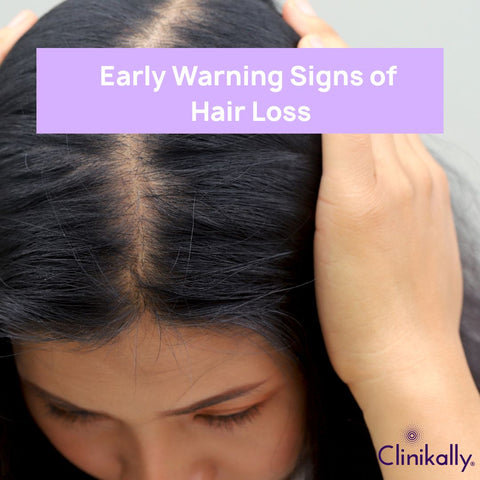
If you’re noticing any of these signs, it’s better to consult a dermatologist rather than follow YouTube-watched hair growth remedies. Ignoring these early signs can cause decreased hair density and can lead to acute or chronic hair loss.
- Itching or Scalp Irritation: Continuous itching and discomfort can be a warning sign that can lead to inflammation, weakening hair follicles, and affecting new hair growth. Thus, a clean, healthy scalp is the basic need for stronger hair growth. Several factors, such as stripping natural oil due to the usage of sulfates and detergent containing shampoos, or congestion in the scalp due to excess oil or dirt, can clog hair follicles, hindering blood flow, leading to scalp irritation. One more reason that leads to scalp irritation is prolonged usage of topical finasteride, which causes itching and irritation.
- Increased Shedding Phase: If you’ve started seeing excessive hair fall on your pillow, in the shower, or hairbrush, it’s time to consult a dermatologist. It is a major signal that your hair growth cycle is disrupted and can lead to telogen effluvium. We’ve discussed the reason behind it earlier; let’s quickly remember a few. So, some of the major reasons can be a wrong hair care routine, stress, shock, hormonal imbalance, harmful hair chemicals, and lifestyle.
- Receding Hairline: If you’ve started noticing a receding hairline, it’s a warning sign that your hair growth is at risk. The reason behind this type of hair loss is Androgenetic Alopecia, Stress, or several medications. If consulted early and treated well, this type of hair fall can be reversed.
- Patchy Hair Loss: If you’ve started getting patches on your scalp and witnessing patchy hair loss, it can be due to an underlying condition such as alopecia areata or traction alopecia. It’s an early warning sign that you must consider a visit to a dermatologist and start scalp care. Advanced hair treatment, such as F8 Hair Regrowth Treatment(a procedure where blood circulation around the scalp is encouraged using medical grade, low energy laser beams), is essential to control hair loss.
Now, when we know all the causes, symptoms, and conditions, we can agree that we need a sure-shot scientific plan to prevent hair loss. And, if you’re experiencing any of the conditions or feel that you can possibly be affected by any of the above-mentioned conditions, you must have searched online for the latest Hair Growth Serum or quick-fix Hair Growth Pills. But things don't work like that. We’ve discussed several factors, conditions above, and we know there are N number of reasons that can cause hair fall or hair loss. So, it’s completely possible that generic products won’t work for you.
But no need to worry, here’s a structured, science-backed approach that will help you grow your hair.
Dermatologist-Recommended Plan that Works
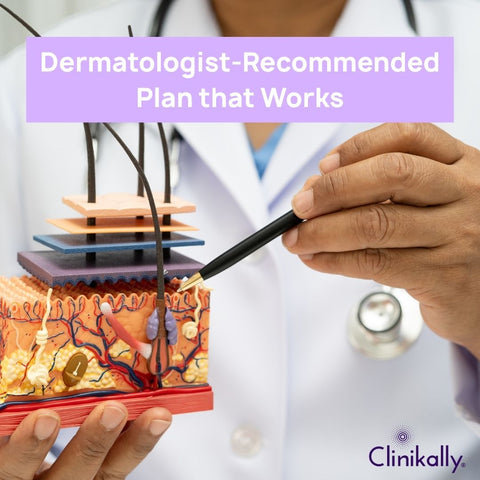
Tried on several patients and created by some of the very experienced dermatologists from Clinikally, this plan will surely be helpful for you, and you can start noticing tangible results within a few months for sure.
This 90-day strategy is designed to help you optimize your internal health and make your hair and scalp care plan feasible and healthy.
But, before we start, it’s highly recommended that you must consult a dermatologist so you’ll get a personalized hair growth treatment. Clinikally have made this easy, providing online consultation, helping you have a video chat with reputed doctors for a nominal fee, and once you’ve your prescription, you can start your daily hair care and hair treatment plan.
This hair care plan is divided into two parts, providing an effective and overall method of hair and scalp care.
Part 1: Foundation and Internal Support
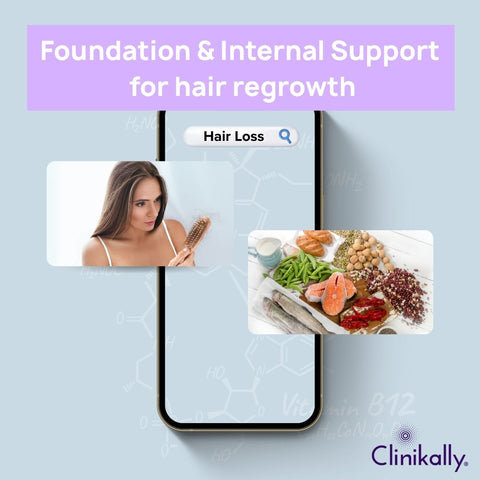
The dermatology hair growth treatment starts with the very essential part of the hair: the scalp. A healthy scalp supports hair growth better, and you can witness progressive and faster results.
We must start the hair care treatment from the very essential part, the scalp. A healthy scalp can optimise hair growth and provide a better base for your hair.
1. Foundational Nutrition & Blood Flow
-
Adequate Nutrition: The most important thing necessary for hair growth is a proper diet and nutrition. And to achieve that, you must consider key hair growth vitamins into your diet, including Iron, zinc, Protein, and biotin. You can also consider hair growth vitamins such as Follihair A tablet and the Clinikally Hair Regrow Nutraceutical Tablet that provide the essential building blocks for keratin synthesis and support follicle health.
-
Boosting Blood Flow: Daily scalp care massages stimulate blood circulation, ensuring proper oxygen and nutrient supply to weak follicles. Consistent and adequate massage helps enhance the growth of hair follicles.
2. Advanced Cyclical Nutritional Therapy
If you’ve one of the above-mentioned underlying conditions and you’re still focused on Home Remedies for hairfall and regrowth, you need a detailed, multi-phase program that is designed specifically according to gender and the complexity of the hair loss pattern. Several personalized hair care products and therapies, such as HairFact Fluence Advanced Cyclical Therapy (Women) F4 + O2 or HairFact Fluence Advanced Cyclical Therapy (Men) M4 + O2 can be helpful for maintaining density, especially in hereditary hair loss cases.
Part 2: Targeted Topical Treatment
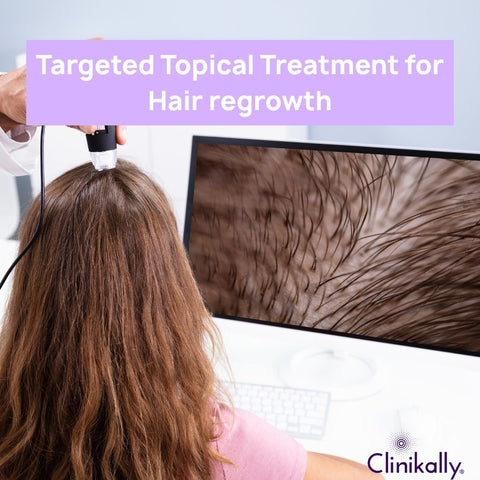
If you’re facing hair thinning and such hair problems, the dermatologist will suggest you targeted topical solutions that are essential for increasing blood flow and extending the hair growth phase. As these are prescribed medications, it’s essential to consult a dermatologist before starting this therapy.
Minoxidil is one of the few FDA-approved topical treatments that help stimulate blood flow directly to the follicles. Products such as Mintop Forte 2% Solution are very helpful and can lead to thicker hair in a very short time. But, taking these medications without consultation with a dermatologist can lead to several side effects, such as dandruff, irritation at the site of application, unwanted hair growth, and, if taken in high blood pressure, can also cause headache and dizziness.
Alongside, if you’re dealing with androgenetic alopecia, solutions containing minoxidil and Finasteride can be helpful for targeted hormone inhibition. Hair care products such as Morr F 5% Solutions are often recommended by experts. But without consulting a dermatologist, taking this medication can lead to several side effects, such as dry skin, impotence, decreased libido, ejaculation disorders, breast enlargement, breast tenderness in males, skin rash, and unwanted hair growth. While oral Finasteride is highly effective, topical alternatives aim to localise treatment and minimise systemic absorption and potential side effects.
In some cases, the dermatologist uses advanced cyclical therapy and targeted topical treatment altogether, depending on your conditions and recovery.
Now, when you have the treatment, you must need a dermatologist who guides you for the treatment. And, Clinikally is ready to ease this process for you.
Why trust Clinikally for Hair Care Products & Advice?
When we talk about personalized hair care treatment in India, the stats say there is 1 dermatologist per 100,000 patients. And, to counter that, we usually buy generic Hair Growth Serum or Hair Growth Pills that can result in wasted effort or unintended side effects.
Clinikally is working in this sector to help you in getting effective Skin and hair treatment from a reputed dermatologist, offering both video consultations with dermatologists and Skin & Hair care products on a platform. As committed to offering rigorously tested, authentic products, all the products available are dermatologist-certified.
Alongside, the personalized video consultation from a leading dermatologist helps you get products that are actually optimized for your problem and deliver efficient results.
How Clinikally helps?
Clinikally helps you in 3 methods, easing your skin and hair care treatment. Let’s have a look at each of them:
Expert Dermatologist Consultation: If you’re seeking expert skincare and healthcare diagnostics, Clinikally helps you by offering a video consultation with some of the best and experienced dermatologists at a very minimal cost. The licensed dermatologist practitioners suggest personalised haircare products and treatment to the user based on individual factors like prescription history, medical parameters, and family history.
AI-Driven Diagnostic: Clinikally has an AI-powered Skin & Scalp Care analyzer named Clara that scans a user’s scalp in seconds and recommends treatment plans based on over 25 parameters. This deep analysis tool helps in identifying the issue precisely and offers solutions for curing them.
Top Skin Care & Hair Care Products: Clinikally also works as an e-pharmacy and marketplace providing you access to some of the best Hair care products, including some of the self-developed products acknowledged for their efficient results in the industry, such as Clinikally Hair Regrow Serum, Clinikally Hair Regrow Nutraceutical Tablet, etc. With some of the best and comprehensive hair care products, such as Morr F 5% Solution; it’s a platform providing you with a one-stop solution for all your hair care needs.
Ready for thick & dense hair?
Hair is an essential part of human personality. And, who in this world doesn't want thick and dense hair?
And if you seek the best hair, it needs the best care.
Don’t ignore any hair loss indications or symptoms and timely seek a dermatologist consultation for personalized hair care products.
And as winters are arriving, if you need a specific winter hair care guide where you can find some of the best product recommendations from top dermatologists, go through this blog.
You can follow this A-Z hair care guide, to deep-dive in this topic.
Use Clinikally’s effective AI skin & hair analysis tool and consider a virtual consultation if you’re seeking any skin or hair-related problems.
Follow this Hair care guidance and incorporate it into your routine hair care for healthy hair. For top-quality skincare & hair care products, visit Clinikally’s website.
We wish you strong, thick, and dense hair.