Greens Powders or Real Foods: Making the Best Choice

Green powders are an easy way to get vitamins, minerals, and antioxidants from concentrated plants, making them great for people who lead busy lives. However, they lack the fiber, moisture, and vitamin synergy that entire fruits and vegetables naturally have. Real foods improve digestion, satiety, and long-term health. Powders can assist in filling nutritional shortages, but they should not be regarded as a replacement. They work best as complements to a well-balanced diet.
In this blog, we compare greens powders and whole foods, explore their benefits and limitations, and explain how to use them together for optimal nutrition.
Greens Powders vs Whole Food
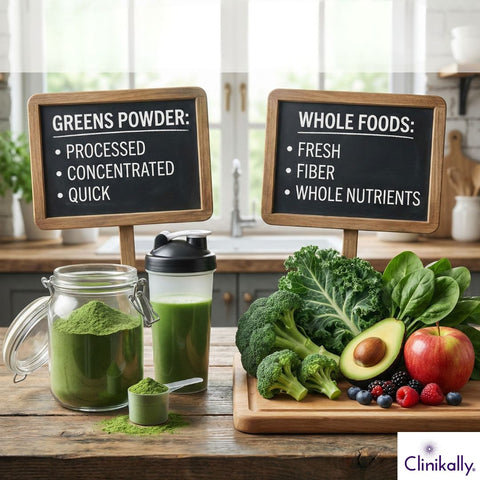
Many people ask if greens powders can compete with full foods in terms of daily nutrients. Both have distinct advantages, but there are also significant distinctions that determine how they promote overall health.
-
Nutritional content: Green powders are made of dried and crushed vegetables, algae, herbs, and grasses. They frequently incorporate antioxidants, adaptogens, or probiotics to provide a concentrated nutritional boost. While they provide vitamins and minerals fast, drying and processing can limit nutritional activity. In contrast, whole foods—fresh fruits and vegetables—provide nutrients in their natural, synergistic state. This means that the vitamins, minerals, antioxidants, and enzymes found in the whole product work together to improve absorption and function in the body.
-
Fiber and digestive support: One of the most notable differences is fiber content. Whole foods are naturally high in dietary fiber, which aids digestion, regulates blood sugar, promotes satiety, and feeds the gut microbiome. Green powders, on the other hand, often have little to no fiber, making them less beneficial to digestive health and long-term metabolic balance.
-
Convenience and lifestyle fit: Greens powders provide unparalleled convenience to busy persons. They can be mixed into water, smoothies, or shakes to help you maintain your nutrient intake while on the road. Whole foods, on the other hand, necessitate preparation, storage, and, in some cases, cooking, which might take time. However, eating real fruits and veggies promotes attentive eating and offers a variety of textures, flavors, and hydration that powders cannot match.
-
Cost and accessibility: Greens powders are frequently advertised as premium supplements, and the cost per serving can accumulate over time. Whole foods, particularly seasonal and locally grown produce, are typically more affordable and accessible in most areas.
-
Dietary role: Perhaps the most essential distinction is their position in the diet. Green powders are supplements, not substitutes. They are most effective as boosters when fresh produce is lacking or during travel. Whole foods, on the other hand, should always be the foundation of a well-balanced diet, providing comprehensive nutrition and long-term health benefits.
How Processing Affects Nutrient Value
The nutritional value of any food is shaped not only by what it contains, but also by how it is processed and how it fits into daily life. Drying, grinding, storage, and preparation methods can influence nutrient stability and absorption, while lifestyle factors such as time constraints, travel, and access to fresh produce affect consistency. Understanding these factors helps clarify when greens powders are useful and why whole foods remain nutritionally superior.
Nutrient Density and Bioavailability
When comparing greens powders to whole foods, two crucial elements frequently come into play: nutritional density and bioavailability. While both attempt to provide important vitamins and minerals, the body's absorption and utilization of these nutrients are not always consistent.
-
Nutrient density: Greens powders are made by drying and crushing vegetables, algae, and herbs to concentrate their nutrients. This method can give them the appearance of being particularly nutrient-dense because a single scoop may contain the equivalent of many servings of veggies. Certain heat- and light-sensitive vitamins, such as vitamin C, the B-complex, and several antioxidants, can be depleted during processing. In contrast, whole foods keep their native nutrient composition. Although they are less compact per serving, their nutrients are retained and balanced within the food matrix.
-
Bioavailability: It relates to how well the body absorbs and uses nutrients. Powders deliver a rapid dose of vitamins and minerals, but they frequently lack the synergistic chemicals found in whole foods. For example, vitamin C in fresh fruits improves plant-based iron absorption, but fiber slows digestion and regulates nutrient release. Whole foods include nutrients in the form of enzymes, water, and phytonutrients, which work together to maximize absorption and long-term benefits.
Fiber and Digestive Enzymes
Fiber and enzymes are two often-overlooked nutritional components that are critical for digestive health, vitamin absorption, and general wellness. While vitamins and minerals receive the most of the attention, fiber and enzymes are the quiet helpers that guarantee our food is correctly metabolized and our bodies get the most out of what we consume.
-
Fiber: Dietary fiber, found in fruits, vegetables, legumes, and whole grains, is necessary for proper digestion. Soluble fiber regulates blood sugar and cholesterol levels by slowing absorption, whereas insoluble fiber promotes regular bowel motions and prevents constipation. Beyond digestion, fiber promotes satiety, aids in weight management, and feeds good gut bacteria, which create short-chain fatty acids that are essential for immunological and metabolic function.
-
Enzymes: Digestive enzymes are primarily produced by the human pancreas and small intestine. While some raw and fermented foods contain natural enzymes, most dietary enzymes are inactivated by stomach acid and do not significantly contribute to digestion in healthy individuals. Their benefits are more indirect, supporting digestive comfort rather than replacing the body’s own enzymes. For example, amylase converts starch to sugars, protease converts proteins to amino acids, and lipase digests lipids. Natural foods such as pineapple (bromelain), papaya (papain), and fermented foods offer further enzyme help.
Convenience and Shelf Life
When deciding between whole meals and greens powders, ease and practicality are often as important as nutrition. While both options have value, their applicability in everyday life varies greatly.
-
Convenience: Greens powders are known for their ease of usage. A scoop mixed into water or blended into a smoothie delivers a fast nutrient boost without the need to wash, chop, or prepare veggies. Powders are a convenient option for busy professionals, tourists, and those who have limited access to fresh vegetables. Whole foods, on the other hand, require more preparation but provide greater variety, texture, and satiety, making them more gratifying as part of a balanced meal.
-
Shelf life: Shelf stability is another consideration. Green powders can last for months or even years if properly stored, with nutrients maintained by dehydration. This extended shelf life saves food waste and ensures availability when fresh produce is scarce. Whole foods, however, are perishable. Fruits and vegetables have a short shelf life and must be refrigerated or replenished on a regular basis. While this promotes healthier eating, it might be difficult in fast-paced environments or areas with limited supply chains.
In actuality, most people benefit from a combination of the two. Whole foods have more fiber, water content, and nutrient synergy, which aids digestion and satiety. Powders, on the other hand, act as dependable backups, replacing nutrient shortages when life becomes hectic. They should be viewed as a supplement, not a replacement, for fresh vegetables. The best way is to prioritize whole meals while employing powders for convenience during travel, busy schedules, or seasonal shortages.
Health Benefits of Greens Powders and Real Produce
Both greens powders and fresh produce have significant health advantages, but the effects differ depending on how nutrients are distributed, absorbed, and utilized by the body.
-
Greens powders: They are created by dehydrating and grinding vegetables, algae, herbs, and occasionally probiotics into a fine powder. They provide a rapid approach to increase micronutrient intake, frequently containing vitamins A, C, K, iron, and antioxidants like chlorophyll. Individuals who struggle to consume enough veggies on a daily basis can benefit from these powders by reducing vitamin gaps, supporting immunity, and providing anti-inflammatory chemicals. Some mixes also include adaptogens or digestive enzymes, which may support energy levels and digestive comfort, although evidence for stress resilience remains limited and ingredient-specific.
-
Real Produce: Whole fruits and vegetables offer a larger range of benefits. Aside from vitamins and minerals, they provide fiber, natural water content, and phytonutrients in their native form. Fiber not only regulates digestion and blood sugar, but it also nourishes beneficial gut bacteria, resulting in a more robust microbiome. The combination of nutrients in whole produce, such as vitamin C increasing iron absorption, enhances bioavailability, and long-term health benefits. Furthermore, the inherent fullness provided by chewing and bulk makes produce more helpful for weight management and hunger control.
Green powders provide concentrated nutrition and convenience, but they cannot match the entire richness of fresh produce. Powders frequently lack fiber, moisture, and the broad spectrum of antioxidants found in fresh fruits and vegetables. However, when accompanied by a produce-rich diet, they can be an effective supplement, particularly for busy lifestyles, travel, or seasonal gaps in access to fresh vegetables.
Immunity, Digestion, and Heart Health

Nutrition has a direct impact on improving immunity, digestion, and heart health. Both greens powders and entire produce contribute to these regions, albeit in slightly different ways.
-
Immunity boost: They are frequently high in vitamin C, vitamin A, and antioxidants such as chlorophyll and polyphenols. These substances serve to neutralize free radicals, reduce inflammation, and strengthen the body's immune system. Some powders contain probiotics or adaptogens to help maintain immunological balance. However, whole produce has a greater range of immune-supportive components, such as zinc from legumes, vitamin E from leafy greens, and phytonutrients from colored fruits and vegetables. The combination of these nutrients, together with fiber, boosts immunological resilience in ways that powders alone cannot.
-
Digestive health: It is one of the most significant advantages of the entire product. Dietary fiber, both soluble and insoluble, regulates bowel motions, maintains blood sugar levels, and feeds healthy gut bacteria. This results in better nutrient absorption and a healthy microbiota. Greens powders may contain digestive enzymes or prebiotics, which might aid digestion, but they typically lack the substantial fiber found in whole foods. Thus, powders help with digestion but do not replace the natural digestive advantages of food.
-
Heart health: Antioxidants, potassium, and dietary fiber all help to protect the cardiovascular system. Whole produce lowers cholesterol, blood pressure, and inflammation—all of which are beneficial to heart health. Green powders, while high in nutrients such as magnesium and potassium, can also help, especially when fresh produce is unavailable. Nonetheless, the cholesterol-lowering effects of fiber and the whole antioxidant diversity of fresh vegetables and fruits are unparalleled.
Antioxidants and Phytonutrients
Plants naturally create a wide spectrum of defensive chemicals that are also extremely beneficial to human health. Antioxidants and phytonutrients are particularly important in lowering oxidative stress, preventing cellular damage, and promoting long-term health. Both greens powders and entire vegetables contain these chemicals, but in differing forms and amounts.
-
Antioxidant power: Fruits and vegetables include an abundance of antioxidants such as vitamin C, vitamin E, carotenoids, and flavonoids. They function by neutralizing free radicals, which are unstable chemicals that accelerate aging and contribute to chronic disease. Greens powders frequently contain concentrated amounts of these antioxidants from sources such as spirulina, chlorella, wheatgrass, and leafy greens. While effective, drying and processing powders may lower the efficacy of heat- and light-sensitive antioxidants when compared to fresh food.
-
Phytonutrient diversity: Plants have color, flavor, and unique healing capabilities thanks to phytonutrients such as polyphenols, sulforaphane, and anthocyanins. These chemicals lower inflammation, control detoxification pathways, and may even benefit cardiovascular and brain health. Whole food has the richest and most diverse phytonutrient profile since each fruit and vegetable contains unique chemicals, such as resveratrol in grapes and lycopene in tomatoes. Greens powders include multiple plant sources in a single scoop, but they cannot reproduce the entire spectrum or synergistic effects of eating a diverse range of colorful vegetables.
While fresh fruits and vegetables are still the finest sources of antioxidants and phytonutrients, green powders can be an effective supplement. They provide a concentrated mix that increases daily intake, especially for people who do not consume enough vegetables. When combined, whole produce gives the full complexity and synergy of plant ingredients, whereas powders assure consistency and ease.
Taste, Cost, and Sustainability
When comparing greens powders to entire vegetables, practical considerations such as flavor, price, and environmental effect all influence purchasing decisions.
-
Taste: Whole fruits and vegetables provide a diverse range of flavors, textures, and culinary options. Their innate sweetness, crunch, or savoriness make them both tasty and flexible in recipes. Greens powders, on the other hand, frequently have an earthy or grassy flavor that some people dislike and must be blended into smoothies or beverages. While powders are easy, they lack the sensory delight that comes with preparing and eating fresh food, both of which contribute to mindful eating and satiety.
-
Cost: Greens powders can be a cost-effective way to provide concentrated nutrients per serving, especially in locations where fresh food is expensive or scarce all year. However, quality powders are expensive, and long-term use can add up. Whole produce costs vary according to season, but when purchased locally and in season, it can be less expensive while also providing additional fiber and moisture that powders do not.
-
Sustainability: Fresh produce benefits local agriculture and can have a smaller carbon footprint if sourced seasonally and locally. However, imported or out-of-season fruits and vegetables may have significant environmental consequences. Greens powders, while lightweight and long-lasting, necessitate extensive processing, packing, and transportation, which increases their environmental impact. Sustainable farming techniques, recyclable packaging, and conscientious sourcing can help to mitigate this impact, but consumers should carefully consider companies.
Common Myths About Greens Powders
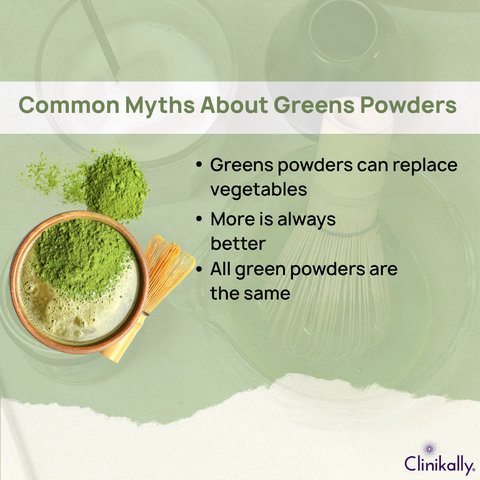
Greens powders have grown in popularity as an easy approach to increase nutritional intake. However, as their popularity grew, so did countless myths and misconceptions. Understanding these concepts allows you to make more balanced, educated decisions.
-
Myth 1: Greens Powders Can Replace Vegetables.
Fact: One common misperception is that greens powders may completely replace fresh fruits and vegetables. While they provide concentrated vitamins, minerals, and antioxidants, they lack fiber, water, and a diverse spectrum of phytonutrients found in whole food. They should be viewed as a supplement, not a substitute
-
Myth 2: More is always better.
Fact: Some assume that ingesting more greens powder may result in faster or greater health benefits. In actuality, overdose may result in intestinal pain or nutrient imbalances. Moderation and sticking to the suggested serving quantities are key.
-
Myth 3: All green powders are the same.
Fact: The grade of green powders varies greatly. Differences in sourcing, processing, added ingredients, and nutrient density mean that not all goods provide the same advantages. Some may contain fillers, sweeteners, or artificial additions, which impair purity. Choosing reliable, transparent brands is essential.
Can Greens Powders Replace Vegetables?
Greens powders are commonly regarded as a quick cure for achieving daily nutrient requirements, however they cannot completely substitute whole foods. These powders often contain high concentrations of vitamins, minerals, and antioxidants derived from plants, algae, and herbs. They are particularly high in vitamin C, vitamin K, iron, and chlorophyll, and some blends contain probiotics or enzymes to aid digestion.
However, they fall short in some important areas. Greens powders frequently lack appropriate protein, good fats, and fiber, which are required for energy, muscle function, and proper digestion. Processing also depletes some nutrients, particularly heat-sensitive vitamins such as vitamin C and some B vitamins. Most significantly, powders cannot replace the various phytonutrients and natural synergy found in entire fruits and vegetables.
Greens powders are best used as a nutritious supplement, particularly for people with hectic schedules, limited access to fresh produce, or dietary gaps. However, relying solely on them may result in shortcomings.
Do Greens Powders Keep You Full?
Satiety—the sensation of fullness and contentment following a meal—is an important aspect in maintaining energy balance and avoiding overeating. Greens powders have concentrated nutrients, but they do not provide the same amount of satisfaction as full fruits and vegetables.
One major reason is a lack of fiber. Whole vegetables and fruits are naturally high in soluble and insoluble fiber, which slows digestion, promotes stable blood sugar levels, and provides a sense of fullness. Greens powders, on the other hand, contain little or no fiber due to processing losses. As a result, they do not activate the same digestive systems that alert the body when it has eaten enough.
Another consideration is volume and water content. Whole foods add volume to meals because they contain natural water and fiber, which stretch the stomach and increase satiety signals. Drinking a scoop of greens powder combined with water will not produce the same effect. Greens powders, on the other hand, may promote satiety indirectly by balancing blood sugar levels or eliminating nutrient gaps that cause cravings. Nonetheless, they are best used as a supplement rather than a replacement.
How to Use Greens Powders With Real Foods
The healthiest approach to nutrition is to use greens powders and whole foods strategically, rather than selecting between the two. Whole fruits and vegetables contain fiber, water, enzymes, and a variety of phytonutrients that are necessary for digestion and satiety, whereas green powders have concentrated micronutrients and are convenient. Combining the two results in a more balanced intake that fills any gaps. One sensible idea is to incorporate greens powders into meals that already contain fresh produce. For example, combining a scoop into a fruit-and-vegetable smoothie increases the nutritious profile while retaining the natural fiber and texture of whole foods. This is especially beneficial for people who have hectic lifestyles and need extra nutritional insurance.
Greens powders are also useful in savory recipes such as soups and salad dressings and can even be sprinkled over roasted vegetables. When combined with fiber-rich foods like quinoa, beans, and green salads, the powders enhance the natural satiety and gut health advantages of whole produce. Another option is to utilize powders as a backup rather than a substitute. When fresh food is unavailable, such as while traveling, greens powders can help bridge the gap. At home, prioritize entire fruits and vegetables while using powders as a supplement.
Personalizing Nutrition: How to Choose What Works Best
Nutrition is never one-size-fits-all. The optimal dietary choices are determined by your individual lifestyle, health goals, and body demands. When determining whether to eat whole foods, supplements such as greens powders, or a combination of the two, personalization guarantees that you get the most out of your diet without going overboard. The first step is to define your goals. If you want better digestion, hunger management, and long-term illness prevention, prioritize whole fruits and vegetables because they include fiber, enzymes, and a variety of phytonutrients. On the other hand, if you are short on time, travel frequently, or have dietary restrictions that prevent you from eating fresh produce, greens powders can be an excellent source of micronutrients. Next, assess your health situation and nutrient deficiencies. Blood testing and professional advice can indicate deficiencies, such as low vitamin D, iron, or magnesium, which may necessitate replacement. Greens powders can assist in filling minor gaps, but they should not be your main method of correction. Personal tastes are also important. Some people live on fresh salads and vibrant fruits, while others like quick smoothies or powdered blends. The best sustainable plan is one that you will constantly follow.