How to Control DHT With Expert-Recommended Hair Treatment

Green tea, onion, pumpkin seeds, and edamame are among foods that may help reduce DHT levels and prevent hair loss. Dihydrotestosterone (DHT) is a hormone comparable to testosterone. It influences the growth of facial, pubic, and body hair during puberty. However, high levels of DHT may cause hair loss. Your body naturally turns approximately 10% of testosterone into DHT via an enzyme known as 5-alpha reductase. Some studies suggest that certain meals and nutrients help block this enzyme, reducing DHT synthesis and preventing hair loss. In this blog, we look at how to manage DHT with expert-recommended hair treatments.
Understanding DHT and Its Role in Hair Loss
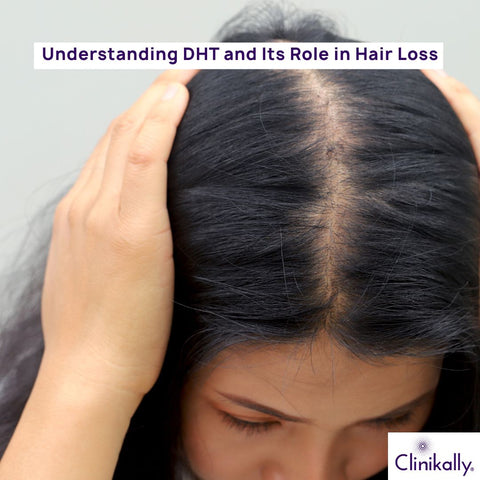
DHT is a naturally occurring hormone that shrinks hair follicles and disrupts the growth cycle, contributing significantly to pattern hair loss. Understanding and regulating DHT — whether through drugs, natural blockers, or lifestyle changes — is critical for effectively preventing and treating hair loss.
How DHT Affects Hair Follicles and Growth
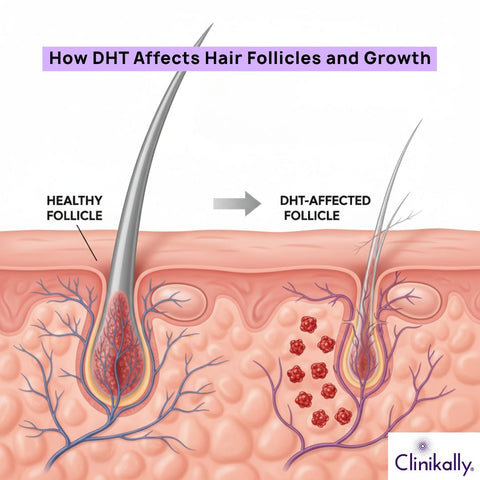
The enzyme 5-alpha reductase converts testosterone into DHT, a strong androgen hormone. While DHT is necessary for many body activities, it can harm hair follicles, especially in persons who are genetically susceptible to it.
-
DHT shrinks hair follicles: DHT reduces hair follicles by binding to androgen receptors in scalp follicles. This causes the follicles to gradually shrink, resulting in follicular shrinkage. Smaller follicles create finer, weaker, and shorter hairs. Follicles eventually shrink to the point where they no longer produce visible hair.
-
DHT shortens the hair growth cycle: A normal hair follicle goes through three stages: anagen (growth), catagen (transition), and telogen. DHT shortens the anagen phase while prolonging the telogen phase. This causes greater shedding, less regeneration, and thinner density over time.
-
Reduces blood and nutrition supply: DHT can block blood flow to the follicle by destroying nearby capillaries or causing inflammation. As a result, follicles receive less oxygen and nutrients, reducing their ability to produce healthy hair.
-
Location-specific sensitivity: DHT does not affect all hair follicles equally. DHT-sensitive receptors are concentrated in scalp locations such as the temples, crown, and frontal hairline. This is why hair loss typically begins in those areas, but beard and body hair are frequently untouched or even thicker under DHT's impact.
-
Genetic predisposition: People with androgenetic alopecia (male or female pattern baldness) have follicles that are prone to being impacted by DHT. Even at high levels, DHT may not cause hair loss in people who are not sensitive to it.
The Connection Between DHT and Male/Female Pattern Baldness
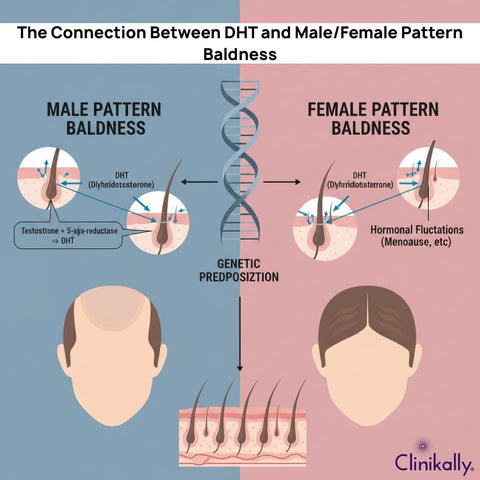
Dihydrotestosterone (DHT) is a key factor in both male and female pattern baldness. DHT promotes receding hairlines and crown hair loss in men, although it mostly causes scalp thinning in women. DHT, a consequence of testosterone, attaches to hair follicles, causing them to shrink and generate shorter, thinner hairs, ultimately resulting in hair loss. DHT's Impact on Male and Female Pattern Baldness:
- Male Pattern Baldness: DHT is a key factor in male pattern baldness, where it causes the hair follicles in the hairline and crown to miniaturize, leading to a receding hairline and thinning hair on top of the head.
- Female Pattern Baldness: While less common than in men, female pattern baldness is also linked to DHT. It typically results in overall scalp thinning rather than the distinct patterns seen in men.
Top Shampoos, Serums, and Supplements to Block DHT
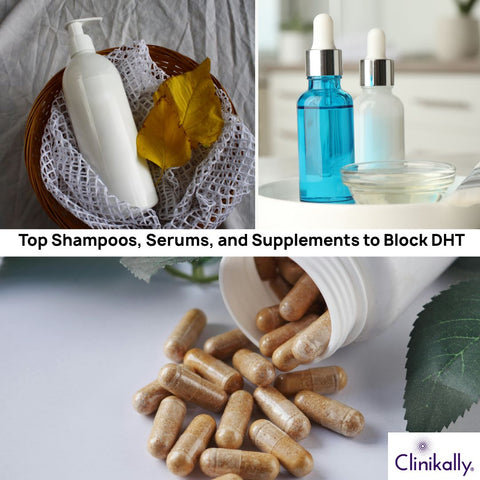
The best shampoos, serums, and supplements for blocking DHT and promoting healthy hair development. These products include clinically proven substances, including saw palmetto, caffeine, ketoconazole, and green tea extract, to battle DHT on both the scalp and systemic levels.
Shampoo
Serums
Supplements
Best DHT-Blocking Shampoos for Healthy Hair
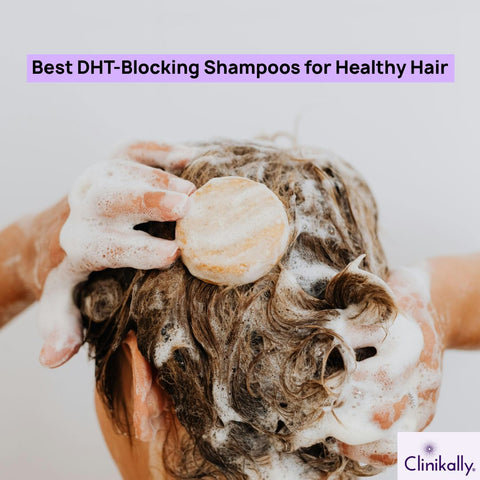
Dermatologists and trichologists prescribe the following DHT-blocking shampoos to promote healthy hair development and prevent androgen-induced hair loss:
Effective Serums and Supplements for Reducing DHT
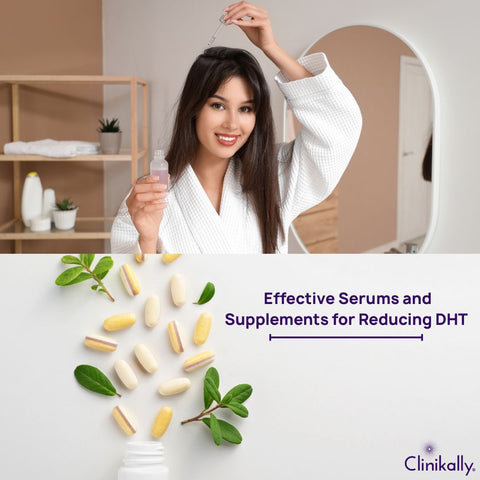
To effectively reduce DHT (dihydrotestosterone) and promote hair growth, experts prescribe a mix of serums (for topical scalp action) and supplements (for systemic hormone balance). The serums and supplements listed below are the most effective in lowering DHT, according to clinical trials and expert advice.
Serum
-
Clinikally Hair ReGrow Serum
Supplements
Natural Ways to Control DHT for Better Hair Health
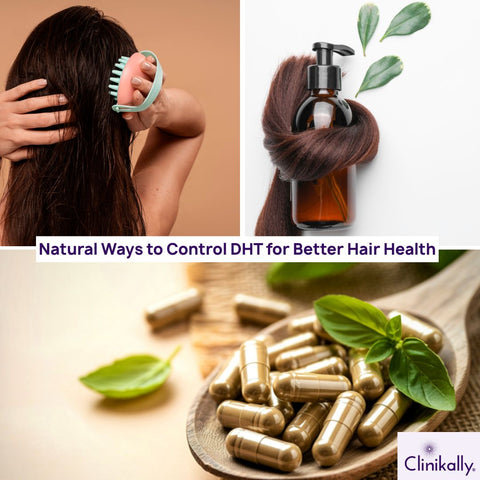
Natural DHT control is a safe and long-term solution for reducing hair loss and improving scalp health. While DHT is an important hormone, high levels—especially in genetically sensitive people—can shrink hair follicles and shorten the development cycle, resulting in thinning and baldness. Here's how to naturally reduce DHT and improve hair health:
-
Consume DHT-blocking foods: Certain nutrients and plant compounds can inhibit the 5-alpha-reductase enzyme, which converts testosterone to DHT. Pumpkin seeds (contains zinc and phytosterols that inhibit DHT), green tea (contains EGCG, a powerful DHT blocker), spinach and kale (rich in magnesium and antioxidants), tomatoes (lycopene may reduce DHT activity), nuts and seeds (especially flaxseeds and walnuts), and bananas (potassium and B6 support 5-alpha reductase inhibition).
-
Herbal supplements: Many plants have natural anti-androgenic qualities that lower DHT without causing prescription side effects. Saw palmetto, stinging nettle root, pygeum africanum, reishi mushroom, and spearmint tea are all effective remedies.
-
Scalp oils and massages: Natural oils can lower scalp DHT levels and improve follicle health by increasing circulation. The best oils for scalp application include rosemary oil, pumpkin seed oil, peppermint oil, and tea tree oil. Mix a few drops with a carrier oil (such as coconut or jojoba) and massage into your scalp three to four times a week.
-
Reduce stress naturally: Chronic stress raises cortisol levels, which can indirectly stimulate DHT production and exacerbate hair loss. To control hormone levels, try meditation and deep breathing, yoga or tai chi, regular physical activity (walking, strength training), and appropriate sleep (7–9 hours).
-
Maintain hormonal balance: Imbalanced hormone levels might boost DHT production. Natural balancing tips include zinc-rich foods (such as pumpkin seeds and shellfish) that help regulate testosterone, avoiding refined sugars and trans fats that increase insulin and androgen levels, limiting alcohol and caffeine, which can interfere with hormonal pathways, and consuming fiber-rich foods that support healthy estrogen and testosterone metabolism.
-
Try natural DHT-blocking shampoos: Look for a shampoo that is mild, sulfate-free, and contains botanical DHT inhibitors. Seek out components such as saw palmetto, caffeine, green tea extract (EGCG), pumpkin seed oil, and nettle extract. Use 2-4 times per week to keep the scalp clean and balanced.
Herbal Remedies and Ingredients for DHT Control
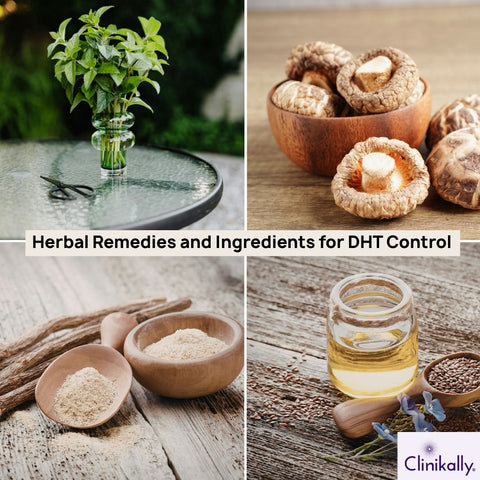
The most effective herbal therapies and plant-based compounds for naturally controlling DHT and encouraging healthy hair growth. These botanicals work by inhibiting 5-alpha reductase, blocking DHT at the follicle level, or controlling androgen activity in the body.
-
Serenoa repens: It also known as saw palmetto, inhibits the Type I and II 5-alpha reductase enzymes. Reduces the conversion of testosterone into DHT. Capsules, powders, teas, and topical serums/shampoos are among the available forms. Similar to Finasteride for mild to severe hair loss (no hormonal side effects).
-
Stinging nettle root (Urtica dioica): It inhibits DHT from attaching to follicle receptors. Prevents DHT from damaging hair follicles. Typically used in supplements or tea, but also found in shampoos. Anti-inflammatory; decreases scalp inflammation.
-
Pygeum africanum (African Plum Bark): It suppresses DHT and reduces scalp inflammation. It is frequently combined with saw palmetto to maximize benefits. Used in capsules or herbal mixes. It also boosts prostate health and regulates androgen levels.
-
Green tea (Camellia sinensis): It contains EGCG, which inhibits 5-alpha-reductase. Reduces DHT generation while increasing hair follicle cell viability. Use it as a tea, supplement, or topical serum. It has strong antioxidant and anti-inflammatory properties.
-
Reishi mushroom (Ganoderma lucidum): Lowers 5-alpha-reductase activity and regulates hormones. Supports scalp health and decreases high androgen levels. Capsules, powders, and adaptogenic mixtures are all options. It also helps reduce stress (lower cortisol).
-
Pumpkin seed oil (Cucurbita pepo): It contains beta-sitosterol, a natural DHT inhibitor. Reduces scalp DHT and increases hair thickness. Oral softgels or scalp oil. One study revealed a 40% increase in hair count after 24 weeks of usage.
-
Spearmint (Mentha spicata): It reduces free testosterone levels. Especially beneficial for ladies with high androgen levels or PCOS. Use 1-2 cups of spearmint tea every day. May also minimize acne and greasy scalp.
-
Licorice root (Glycyrrhiza glabra): It regulates testosterone and promotes adrenal function. DHT levels may be reduced indirectly through hormonal control. Used in teas or supplements (in moderation—may increase blood pressure).
-
Flaxseed (Linum usitatissimum): It contains lignans that inhibit DHT receptors. Inhibits DHT binding and promotes hormonal balance. Use ground flaxseeds in smoothies, salads, and cereals.
-
Equisetum arvense: It also known as horsetail. Silica-rich soil promotes follicular strength and flexibility. Frequently combined with DHT blockers for hair strengthening. Use as a herbal supplement or tea.
How to Incorporate DHT-Blocking Products into Your Routine
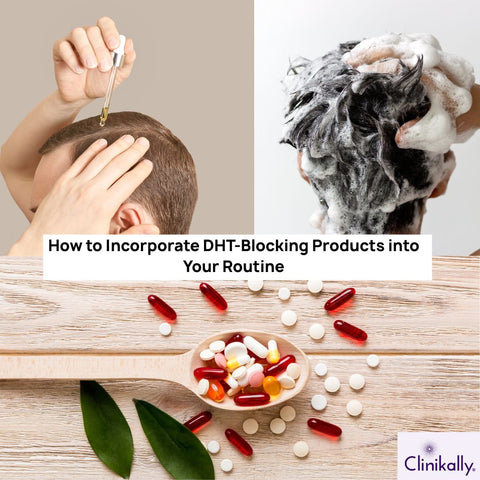
Incorporating DHT-blocking products into your hair care and wellness routine requires consistency, proper product layering, and a strategy that addresses both topical and internal DHT levels. Here's how to develop a daily and weekly routine that uses shampoos, serums, and vitamins to lower DHT and promote healthy hair development.
-
Step 1:
Use a DHT-blocking shampoo three to four times each week: Cleanses the scalp, reduces inflammation, and inhibits DHT at the surface level. Apply to damp hair and massage into the scalp for 2-3 minutes. Leave on for a further 2-5 minutes to allow active ingredients (such as ketoconazole or saw palmetto) to enter, then rinse well. Use 3-4 times per week, alternating with a gentle sulfate-free shampoo as needed. -
Step 2:
Use a DHT-blocking serum (daily or nightly): Delivers potent DHT-blocking chemicals directly to the follicles. Apply a few drops to the thinning regions or the entire scalp, massage gently with your hands for 2-5 minutes, and use once a day, especially at night for best results. - Step 3:
Take a natural DHT-blocking supplement daily: Reduces systemic DHT levels and promotes hormonal balance from within. Take with a meal (morning or afternoon) to maximize absorption. Maintain consistency for at least 90 days to observe results.
Conclusion: DHT Control for Healthier Hair Growth
Controlling DHT is critical for preventing and treating hair loss, especially in those with androgenetic alopecia. By addressing both internal and external DHT-influencing factors, you can significantly improve scalp health, strengthen hair follicles, and promote healthier hair growth.
-
DHT promotes hair follicle miniaturization, resulting in thinning and eventual hair loss.
-
Topical treatments such as ketoconazole shampoos and serums containing saw palmetto or caffeine help to block DHT directly on the scalp.
-
Herbal DHT inhibitor supplements (such as saw palmetto, stinging nettle, and pygeum) help to maintain hormonal balance on the inside.
-
Natural lifestyle habits, such as an anti-inflammatory diet, regular exercise, and stress management, improve long-term DHT control.
-
Consistency is key; results usually appear after 8-16 weeks of continuous use.
By combining the right products, habits, and professional assistance as needed, you can effectively lower DHT levels, protect your follicles, and enjoy stronger, thicker, and healthier hair over time.