What causes Hypervitaminosis & How to Avoid It?

Vitamins are essential nutrients, required for the well being of our body. But anything in excess can be harmful. And the same goes with vitamins. Hypervitaminosis is a clinical condition caused by excessive accumulation of vitamins in the body, leading to toxic effects. The fat soluble vitamins especially Vitamin A and Vitamin D are stored in the liver and fatty tissues, making them likely to reach toxic levels than water-soluble vitamins such as B or C that body flushes out. When these levels become too high, it significantly disrupts the biological processes that govern the renewal of skin cells and the growth cycles of hair. Vitamin A has traditionally been viewed as the most common form of hypervitaminosis due to its presence in potent acne medications and its tendency to store heavily in the liver. But, nowadays the surge of Vitamin D based hypervitaminosis has also been noted. In this blog, we’ll understand what hypervitaminosis is, how it happens, and how it impacts your skin and hair. Alongside, we’ll see how to take vitamins to avoid such underlying conditions. Let’s begin the discussion with understanding this disease.
Understanding Hypervitaminosis & Its Causes
Hypervitaminosis occurs when the body’s tissues absorb so much vitamins that it reaches a point of toxicity. It usually occurs due to the usage of high-potency dietary supplements rather than food intake alone. The main reason is the over-accumulation of fat-soluble vitamins A, D, E, and K, which unlike water soluble vitamins aren’t excreted through urine.
These vitamins can be stored in liver and fatty tissue for longer periods. This storage capability means that even a small daily excess of these vitamins can build up over weeks or months, disrupting the body’s metabolic balance. There are a variety of reasons that lead to these underlying conditions. We’ll talk about them as well, but let’s first understand the storage mechanism of these fat-soluble vitamins.
The Storage Mechanism of Fat-Soluble Vitamins
The fat-soluble vitamins require lipids for absorption and are stored in the liver and adipose tissue that the body can’t easily flush out in excess. Over time, these stores act like a reservoir that overflows, leading to systemic toxicity. This is why you can eat an orange (source of Vitamin C) everyday without any risk, but taking a high-dose of Vitamin A or D can lead to a toxic buildup. But, how much fat soluble Vitamin is good for you and how much is the excess limit? Let’s Understand!
Over Supplementation and Mega Dosing
It’s always important to know your body requirements and understand how and what suits your dietary system. One of the major reasons for hypervitaminosis is the intentional consumption of vitamins far beyond the Recommended Dietary Allowance (RDA). It’s a very common myth, and coincidentally one of the most practiced supplementary practices when it comes to vitamins that more is always better for immunity or skin health. In this practice, widely known as mega-vitamin therapy, people consume way more protein than the guided value and harm rather than benefitting their skin and health. For instance, while the RDA for Vitamin A is approximately 700-900 mcg, some skin-clearing supplements contain way higher amounts. Similarly, without a diagnosed deficiency, taking Vitamin D megadoses of 50,000 IU or more can lead to hypercalcemia, a dangerous buildup of calcium in the blood caused by excessive Vitamin D levels. Another, major reason for hypervitaminosis is its interaction with medical treatments. Let’s understand how!
Interaction with Medical Treatments
Beyond over-the-counter supplements, several prescribed medications can lead to hypervitaminosis symptoms. Synthetic derivatives of Vitamin A, widely known as retinoids (such as Isotretinoin used for severe acne), are chemically similar to the vitamin and lead to toxicity if not monitored by a dermatologist or professional. Additionally, some individuals unknowingly combine multiple sources such as daily multivitamin, a fortified energy drink, and specialized hair, skin, and nails supplements containing the same vitamins. It is known as Supplement Stacking and can also lead to accidental toxicity.
Effects of Hypervitaminosis on Skin & Hair
The impact of hypervitaminosis toxicity begins to appear from skin and hair. Because Vitamin A and E are deeply involved in cellular regeneration and sebum production, an excess of these nutrients over-activate these biological systems. This doesn’t result in extra health, but does the opposite. It breaks the structural integrity of the skin barrier and disrupts the delicate follicles that produce hair. Let’s understand these underlying conditions in more detail:
Damage to the Skin’s Protective Barrier

When the body stores excess Vitamin A, the process of cell turnover becomes hyperactive. It leads to the thinning of the outermost layer of the skin, which makes the skin incredibly fragile and prone to irritation. The patients with hypervitaminosis due to this reason, examine continuous shedding of dead skin cells, or mass peeling particularly on the palms and soles.
Furthermore, the toxicity can suppress the oil glands, leading to extreme dryness, medically known as Xerosis, and painful cracking of the lips, also known as cheilitis. In some cases, the skin may take on a yellowish-orange hue, an underlying condition medically known as carotenemia, if the toxicity happened due to the massive intake of beta-carotene. Let’s also learn about the effects of hypervitaminosis on hair.
Follicular Disruption and Hair Thinning
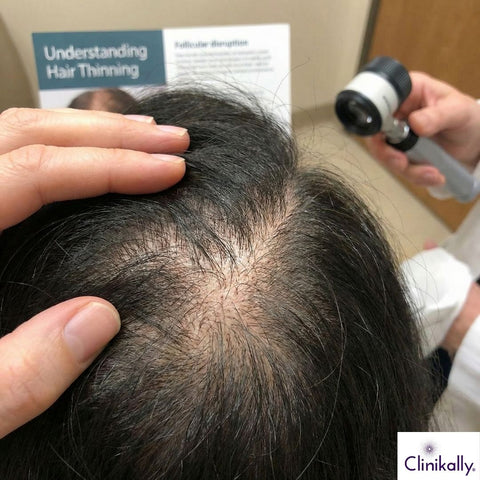
While vitamins are helpful in hair growth, taking them in excess can give the exact opposite effect. Taking high levels of Vitamin A and Selenium can interrupt the hair growth cycle, forcing hair follicles to prematurely enter the resting phase known as Telogen Effluvium. This can lead to hair thinning across the entire scalp. Over time, the hair loses their natural luster and starts breaking easily at the shaft. In severe cases of hypervitaminosis or toxicity, patients can also experience alopecia (hair loss) affecting not just their scalp, but eyebrow and body hair.
Inflammatory Responses and Sensitivity
Hypervitaminosis can also trigger systemic inflammation that can lead to cutaneous sensitivity. Taking excess of Vitamin B3 can lead to severe redness, itching, and burning sensation across the face and chest, known as Niacin Flush. Additionally, high levels of fat-soluble vitamins can increase photosensitivity, making the skin react violently to UV exposure. This will lead to an increased risk of severe sunburns and the development of itchy, red rashes or hives even after a minimal time spent in the sun.
Early Signs of Hypervitaminosis & Precautions
Detecting Hypervitaminosis or vitamin toxicity in its early stages can be difficult as the symptoms are often vague and often mimic a common cold, stress, or minor digestive issues. Though, if these symptoms persist longer, despite lifestyle changes, it can be a sign of systemic overload. Let’s quickly have a look at some of these key symptoms:
Early Gastrointestinal Distress
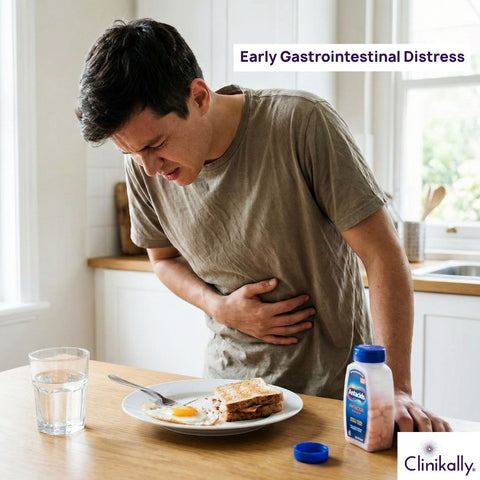
One of the earliest signs that can be noticed in hypervitaminosis patients can be digestive issues or stomach distress. The patient can experience nausea and loss of appetite common with excess Vitamin D, as the body starts struggling with rising calcium levels. Additionally, individuals with vitamin toxicity can experience frequent diarrhoea or cramping often noticed with the excessive intake of Vitamin C or Magnesium, leading to an osmotic effect in the gut.
Neurological and Sensory Shifts
Fat-Soluble Vitamins, specifically Vitamin A can impact intracranial pressure and nerve function quite early on. Let’s check out some of the very common symptoms:
-
Persistent Headaches: Often described as a dull, pressure sensation behind the eyes.
-
Irritability and Fatigue: Hypervitaminosis or Vitamin toxicity can lead to a paradoxical effect, leaving the nervous system overstimulated and eventually exhausted.
-
Blurred Vision: It’s a key early indicator that means that Vitamin A levels are reaching a critical threshold.
Musculoskeletal Discomfort

When your body cannot store or excrete excess vitamins properly, it begins to affect bone density and muscle tone. Some of the common symptoms, individuals with hypervitaminosis experience include:
-
Joint & Bone Pain: Consuming Vitamin A in excess can trigger bone loss stimulating cells that break down bone tissues.
-
Muscle Weakness: It’s often associated with the early stages of Vitamin E toxicity, that can disturb the natural way muscles utilize other nutrients.
Expert Recommended Precautions to Prevent Hypervitaminosis
As we discussed earlier, hypervitaminosis is mostly caused by supplement overconsumption rather than dietary intake. The first step for prevention is observing the nutritional intake, and consider these factors:
Make Food Your Source of Vitamin
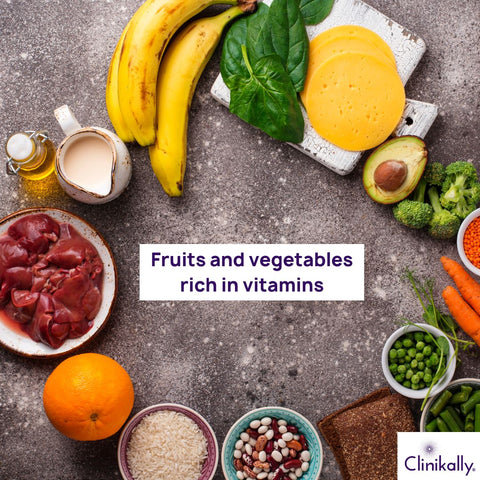
The most effective way to prevent vitamin toxicity is to get your nutrients from whole food sources. The human body is naturally equipped to regulate the absorption of vitamins from food, making it nearly impossible to reach toxic levels through diet alone. The nutrients in food come with fiber, enzymes, and phytonutrients that help your body process them correctly. Your body can often downregulate the absorption of certain vitamins when it has reached its threshold, a safety mechanism that high-dose synthetic supplements often bypass.
Understand RDA & Upper Intake Levels:
To ensure you get your supplement safely, there are two critical benchmarks found on clinical charts:
-
Recommended Dietary Allowance (RDA): There is a set average daily level of intake found sufficient to meet the nutrient requirements of nearly all healthy people, known as RDA.
- Tolerable Upper Intake Level (UL): This is the maximum daily intake levels that can’t cause any adverse health effects.
Exceeding this Upper Intake Limit for fat-soluble vitamins without direct medical supervision can lead to vitamin toxicity.
Monitor Your Supplement Stack
There are a variety of reasons that can lead to hypervitaminosis, one such reason is Supplement Stacking. Thus, it’s essential to check for overlap of vitamins. In many cases, patients accidentally take multiple products that contain the same vitamin. In several cases, patients take daily vitamins combined with a skin and hair gummy, energy drink, and a protein bar that can easily double or triple your intake of Vitamin A or Zinc. Always, read the label and look for the % daily Value. If multiple products in your pantry are providing 100% of the same vitamin, it can be a reason for toxicity.
Schedule Timely Vitamin & Blood Tests
If you’re taking high-dosage supplements to treat a specific deficiency or for any reason, it’s always recommended to keep monitoring that dosage. It’s best to get a blood test done every 3-6 months to ensure your vitamin levels have stabilized within a healthy range and haven’t crossed into the toxic range.
Take Expert Advice for Mega-Dosing
Mega-dosing, (process of taking significantly higher than the RDA) is sometimes used for specific medical conditions, but it should never be used on its own. Taking higher doses of Vitamin K can interfere with blood thinners such as Warfarin, and excess Vitamin E can increase the risk of bleeding. It’s always recommended to take regular consultation with a healthcare provider, if your body actually needs a concentrated dose of these vitamins.
Final Thought: Optimizing Your Routine For Proper Vitamin Intake
Your body needs essential nutrients required to nourish your skin, hair, and health. It’s essential to take them regularly but always within the limit. If you’re witnessing any symptoms of Hypervitaminosis, it’s a powerful reminder that you’re exceeding the limit and need to consider your vitamin intake. When we push our systems past their limits with mega-doses and unmonitored supplement stacking, our skin and hair are the first to start sending out distress signals. It can result in hair thinning, fragile skin barriers, and systemic inflammation. If you’re witnessing any such underlying conditions, it’s always recommended to consult a dermatologist and get your dietary and supplementation plan prepared by an expert. By prioritizing whole-food nutrition, respecting RDA, and following a balanced diet, you can avoid such health risks easily. Listen to your body’s signal, and follow a balanced approach, and stay healthy.