What Causes Malar Mounds & Festoons Under the Eyes?

Waking up with puffy eyes is a common experience. Usually, a good night of sleep or a cold compress helps reduce the swelling. However, some people notice persistent puffiness near the cheekbone instead of the eyelids. This type of swelling may appear around or just below the cheekbones and can become more noticeable with age.
If you have ongoing puffiness above cheekbone areas or sagging beneath the eyes, you may be dealing with malar mounds or festoons. These conditions are often confused with standard eye bags, but they are structurally different and may require different treatment approaches.
In this blog, we will discuss what malar mounds and festoons are, the causes of malar edema and malar bags on face, how these conditions differ from eye bags, available treatment options, and lifestyle tips that may help reduce puffiness on cheekbone areas.
What Are Malar Mounds and Festoons?
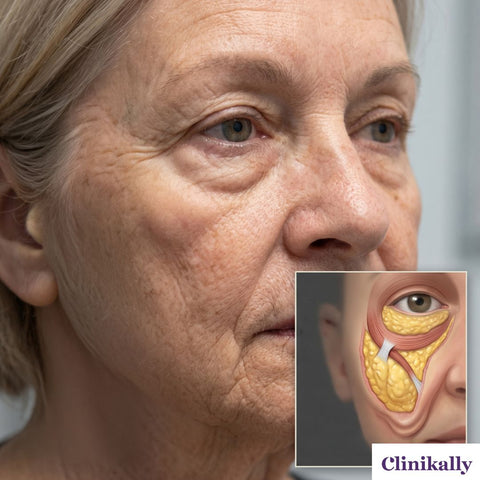
To understand these conditions, it helps to look at the anatomy of your midface. The term malar refers to the cheekbone area. When fluid buildup, skin laxity, or structural changes affect this region, it can change the smooth contour between the lower eyelids and cheeks.
Malar mounds and festoons are often confused with ordinary eye bags, but they develop lower on the face and involve different underlying causes. These conditions can create persistent puffiness near cheekbone areas and may make the face appear swollen, tired, or aged.
Malar Mounds
A malar mound is a visible swelling or raised area that develops directly over the cheekbone. It usually appears just beneath the lower eyelid and may look like puffiness on cheekbone regions. In some people, the swelling is mild and only noticeable in certain lighting or facial expressions, while in others it may remain visible throughout the day.
Malar mounds are commonly linked to fluid retention, weakening of facial tissues, muscle laxity, changes in lymphatic drainage, and aging related skin changes. This swelling can disrupt the smooth transition between the lower eyelid and upper cheek, making the under eye area appear heavier or longer.
In many cases, fluid accumulation in this region is referred to as malar edema. This type of swelling causes puffiness above cheekbone areas and may worsen after poor sleep, salty foods, allergies, or alcohol intake. Over time, persistent malar edema may contribute to the development of more noticeable malar mounds.
Festoons
Festoons are associated with chronic swelling and tissue laxity in the midface and are often more noticeable than malar mounds. The word festoon traditionally refers to a decorative chain or curved hanging fabric. In dermatology and plastic surgery, the term is used to describe sagging folds of loose skin and soft tissue that drape across the upper cheek and lower eyelid area.
Unlike mild puffiness, festoons tend to look like hanging pouches or hammocks beneath the eyes. They may become more noticeable with smiling, fatigue, aging, or fluid retention. Festoons often develop due to a combination of chronic swelling, skin laxity, weakening of connective tissues, sun damage, poor lymphatic drainage, and age-related collagen loss.
Because festoons involve deeper structural changes, they are usually more difficult to treat with skincare products alone.
What Causes Malar Mounds and Festoons?
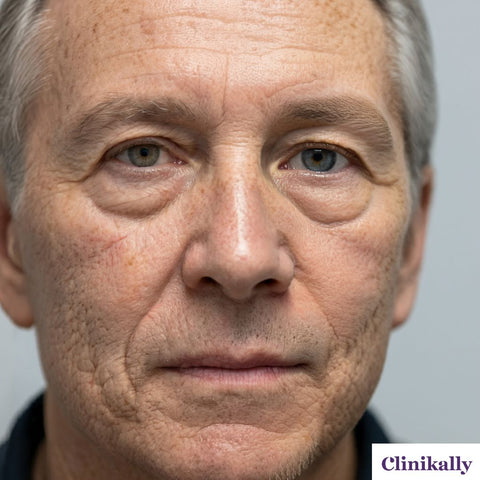
These conditions rarely happen due to just one factor. Usually, a combination of genetics, natural aging, fluid retention, and lifestyle habits causes puffiness above cheekbone areas to develop over time. In many people, several underlying changes happen at the same time, gradually affecting the skin, muscles, fat pads, and lymphatic drainage system around the eyes and cheeks.
-
Aging and Structural Changes: Loss of collagen, elastin, and muscle support can weaken the under eye and cheek area, allowing tissues and fat pads to shift downward over time.
-
Fluid Retention and Poor Lymphatic Drainage: Sluggish lymphatic drainage can cause fluid buildup around the upper cheeks and lower eyelids, leading to malar edema and puffiness near cheekbone areas.
-
Genetics: Family history, facial anatomy, skin thickness, and ligament strength can all influence the likelihood of developing malar mounds or festoons.
-
Sun Damage: Long term UV exposure breaks down collagen and weakens skin elasticity, making sagging and festoons more noticeable.
-
Chronic Inflammation and Allergies: Repeated swelling from allergies or sinus issues can stretch the skin and worsen persistent puffiness above cheekbone areas.
-
Lifestyle Habits: Smoking, alcohol, poor sleep, stress, dehydration, and high salt intake may worsen fluid retention and accelerate skin aging.
Malar Mounds vs Festoons vs Eye Bags
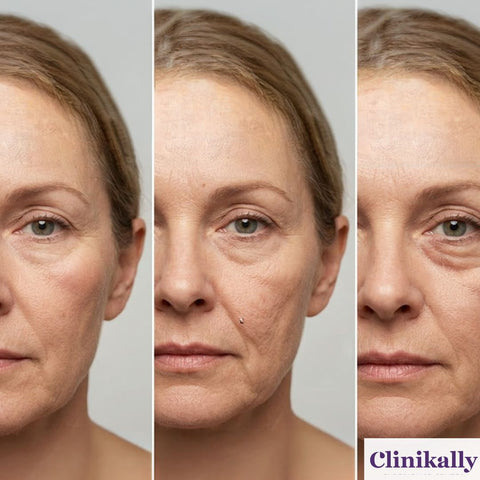
Because these conditions develop in the same general area of the face, they are often confused with one another. However, understanding the differences is important because treatments that work for standard eye bags may not improve malar mounds or festoons. The differences become clearer when comparing them side by side:
|
Feature |
Standard Eye Bags |
Malar Mounds |
Festoons |
|
Primary location |
Directly beneath the lower eyelid lash line |
Lower down on the cheekbone area |
Draping across the upper cheek and lower eyelid |
|
Main cause |
Bulging orbital fat and aging |
Fluid retention, tissue laxity, and malar edema |
Chronic swelling, loose skin, and muscle weakening |
|
Appearance |
Firm, rounded under eye bulges |
Soft puffiness on cheekbone tissue |
Hanging or hammock like folds of sagging skin |
|
Texture |
Firmer to touch |
Softer and mildly swollen |
Loose, heavy, and fluid filled |
|
Fluid fluctuation |
Usually stays consistent |
May worsen after salt intake or poor sleep |
Often fluctuates significantly throughout the day |
|
Severity |
Mild to moderate |
Moderate |
Usually more advanced and persistent |
The Touch Test
A simple way to differentiate an eye bag from a malar mound is by gently pressing on the swollen area with your finger. Standard eye bags usually sit directly above the orbital bone and often feel firmer because of the underlying fat pads.
Malar mounds and festoons sit lower on the face, directly over the cheekbone area. They generally feel softer or more fluid filled due to lymphatic fluid buildup and tissue laxity. Festoons may also appear looser or more sagging compared to malar mounds.
How Are Festoons Diagnosed?
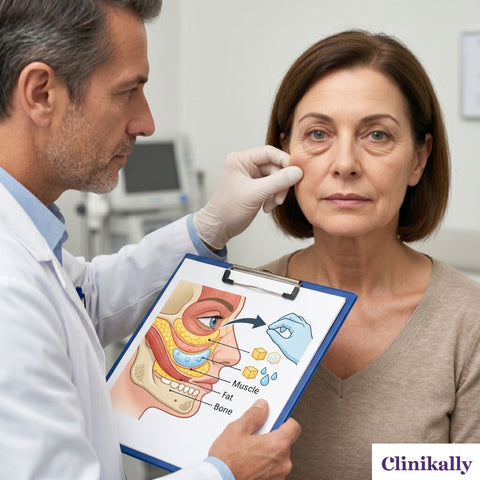
Diagnosing festoons and malar mounds usually requires a physical examination by a qualified dermatologist, oculoplastic surgeon, or facial plastic surgeon. Because these conditions can resemble ordinary eye bags or general facial puffiness, a professional evaluation helps identify the exact cause of the swelling and prevents ineffective treatment.
-
Visual Examination: The specialist assesses skin laxity, swelling, and puffiness around the lower eyelids and cheekbones.
-
Smile or Squinch Test: Facial movement helps distinguish eye bags from malar mounds and festoons.
-
Medical History Review: Your doctor may ask about allergies, sinus issues, thyroid conditions, fluid retention, previous fillers, sleep habits, and lifestyle factors that could contribute to persistent facial swelling.
Best Treatments for Malar Mounds and Festoons
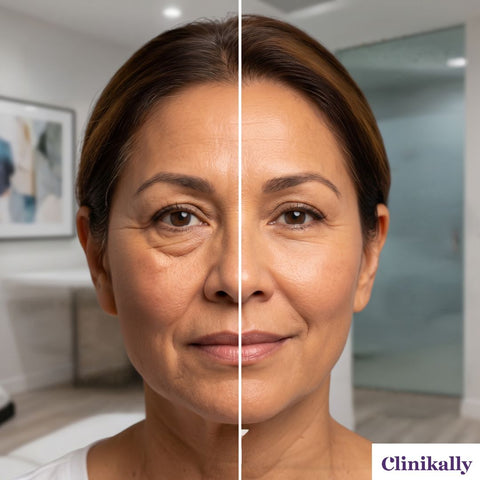
Malar mounds and festoons are difficult to treat with ordinary skincare products because the underlying issue usually involves skin laxity, weakened muscles, fat displacement, and fluid retention. The best treatment approach depends on the severity of the swelling and whether the problem is mainly caused by malar edema, loose tissue, or structural aging changes. In many cases, a combination of treatments provides the best results.
Treatment plans are highly individualized because no two cases look exactly alike. While non-surgical procedures may improve mild to moderate puffiness near cheekbone areas, severe festoons may require surgical correction. Early treatment and proper diagnosis often lead to better long-term outcomes. Treatment options may include:
Non-Invasive and Minimally Invasive Treatments
For mild to moderate malar mounds and festoons, non surgical procedures are often the first step. These treatments focus on tightening the skin, improving lymphatic drainage, stimulating collagen production, and reducing fluid retention. While results are usually gradual, they may significantly improve puffiness near cheekbone areas without surgery.
-
Lymphatic Drainage Treatments: Professional lymphatic massage and anti-inflammatory treatments may help reduce fluid buildup caused by malar edema and improve temporary puffiness.
-
Laser Resurfacing: Fractional CO2 and Erbium YAG lasers help tighten loose skin, stimulate collagen production, and improve mild to moderate festoons.
-
RF Microneedling: Radiofrequency microneedling delivers heat into deeper skin layers to tighten supportive connective tissues and improve skin texture around the cheekbone area.
-
Ultrasound Therapy: Treatments such as Ultherapy use focused ultrasound energy to tighten deeper facial support layers and improve mild tissue sagging.
Injectable Treatments
Injectable procedures may help selected patients, but they require careful evaluation and precise technique. Incorrect filler placement or overly aggressive treatment can worsen puffiness, especially in people with fluid retention or existing malar edema. Because of this, injectable treatments should only be performed by experienced specialists familiar with midface anatomy.
-
Corticosteroid Injections: In selected cases, diluted corticosteroid injections may help reduce inflammation and swelling inside fluid heavy festoons.
-
Dermal Fillers: Fillers must be used carefully because superficial filler placement can worsen puffiness. In some cases, deep filler placement around hollow areas may help improve facial contour.
-
Fat Reducing Injections: Certain advanced injectable treatments may help reduce localized fat or tighten loose tissue within the festoon area.
Surgical Treatments
For severe or long-standing festoons, surgery may provide the most effective and long-lasting improvement. Surgical procedures focus on correcting deeper structural problems such as sagging muscles, displaced fat pads, and excess loose skin. Recovery time is usually longer, but results are often more dramatic compared to non-surgical options.
-
Extended Blepharoplasty: This advanced form of lower eyelid surgery may reposition sagging fat pads, tighten muscles, and remove excess skin around the lower eyelid and cheek.
-
Direct Excision: Severe festoons may sometimes require direct removal of loose hanging skin and tissue to improve facial contour.
Because treatment outcomes depend heavily on anatomy and severity, consultation with an experienced dermatologist, oculoplastic surgeon, or facial plastic surgeon is important before choosing a procedure.
Can Home Remedies Help?
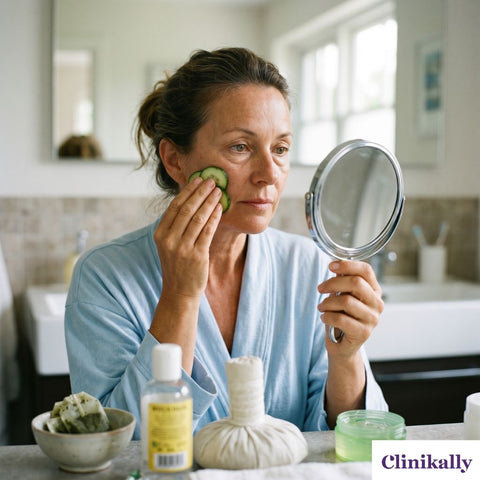
Although home remedies cannot completely remove malar mounds or festoons, some habits may temporarily reduce swelling and improve mild puffiness near cheekbone areas. These approaches mainly help with fluid retention and skin irritation rather than deeper structural changes. Here are some home treatments that may help in reducing face puffiness:
-
Cold Compresses: They may temporarily reduce morning puffiness and mild swelling by narrowing blood vessels.
-
Reducing Salt Intake: Lowering sodium intake may help reduce water retention and facial puffiness in some people.
-
Better Sleep Habits: Sleeping with the head slightly elevated may help prevent overnight fluid buildup around the eyes and cheeks.
-
Gentle Lymphatic Massage: Light facial massage may support lymphatic drainage and reduce temporary puffiness, but aggressive rubbing should be avoided.
-
Eye Creams: Products containing caffeine, peptides, or retinol may slightly improve mild puffiness and fine lines, but they usually cannot correct established festoons.
Prevention and Lifestyle Tips

Although not all cases can be prevented, healthy habits may help reduce worsening of malar edema, skin laxity, and under eye puffiness over time. Consistent lifestyle changes may also support the results of professional treatments. Certain lifestyle habits may help reduce worsening over time:
-
Protect Skin from Sun Damage: Daily sunscreen use helps protect collagen and reduce premature skin aging around the eyes and cheeks.
-
Stay Hydrated: Proper hydration may help maintain skin health and reduce fluid imbalance.
-
Limit Alcohol and Smoking: Smoking and excessive alcohol intake may worsen inflammation, collagen breakdown, and fluid retention.
-
Maintain Healthy Sleep Habits: Sleeping for 7 to 8 hours and keeping the head slightly elevated may help reduce morning puffiness.
-
Eat an Anti-inflammatory Diet: Foods rich in antioxidants and omega 3 fatty acids may support healthier skin and reduce inflammation.
When Should You See a Dermatologist?
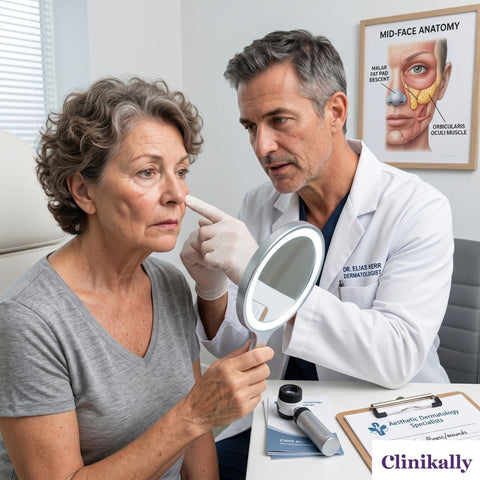
If the puffiness around your cheekbones does not improve with better sleep, reduced salt intake, or other lifestyle changes, it may be time to consult a dermatologist or facial plastic surgeon. Visible sagging, fullness around the cheekbones, or changes that continue to worsen over time may need professional evaluation, especially when malar mounds or festoons are involved.
You should also seek medical attention if the swelling appears suddenly, becomes painful, feels warm, or affects only one side of the face. Changes in vision, eye discomfort, or swelling that worsens after fillers or cosmetic procedures should never be ignored. A specialist can identify the underlying cause and help you understand which treatment options are most likely to work for your specific concerns.
Final Thoughts: Managing Malar Mounds and Festoons
Malar mounds and festoons are common causes of persistent puffiness around the eyes and upper cheeks. Although they are often mistaken for ordinary eye bags, they develop differently and may involve fluid retention, skin laxity, weakened tissues, and structural aging changes.
Factors such as aging, genetics, sun damage, allergies, and lifestyle habits can all contribute to puffiness near cheekbone areas and malar bags on the face. While mild swelling may improve with skincare and lifestyle changes, more noticeable festoons often require professional treatment and a proper diagnosis to determine the most effective approach.