Your Eczema Cream Might Be Causing You Perioral Dermatitis
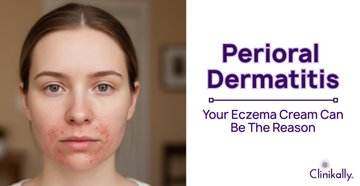
Sounds strange. But it’s true!
If you’re using acne cream and steroids for your persistent, bumpy rash circling your mouth and chin, you’re making them even worse.
Because what you’re assuming, it’s not! This condition isn’t a hormonal imbalance or monsoon change effect; it’s Perioral dermatitis.
What this is, how it happens, when to consult doctors, what its medication and cure are, etc., are some of the topics we’ll cover in this blog.
So, let’s begin the discussion by knowing this specific facial rash type.
Understanding Perioral Dermatitis, Its Types & Main Causes
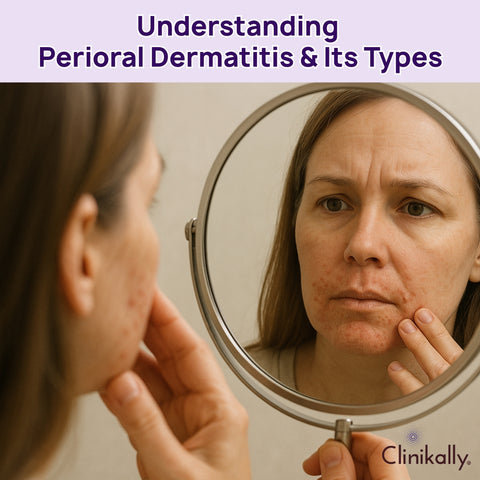
Perioral dermatitis is often mistaken for acne, and thus using face pimple treatment with standard products such as Benzoyl Peroxide often leads to painful failure. And thus, understanding it becomes more important. Let’s understand it more thoroughly so we can distinguish it from regular acne.
What is Perioral Dermatitis?
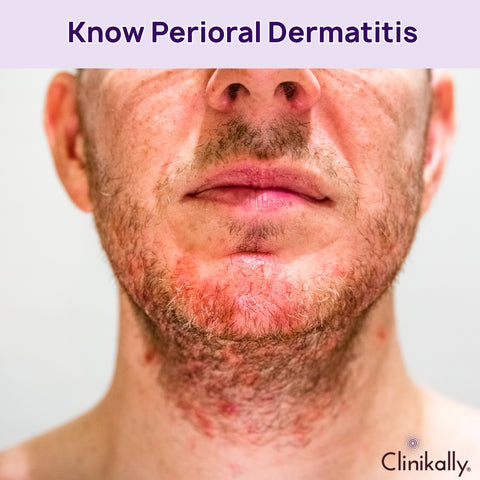
Perioral Dermatitis is a common facial skin rash condition that affects people, mostly women, between 20 and 50 years old.
The name is often misleading because it’s not a true form of dermatitis or eczema. According to medical research, it’s similar to rosacea and is often known as “steroid-provoked rosacea”. It’s also known as a benign eruption or a harmless rash. Let’s have a look at its key appearance:
-
It causes a stubborn redness known as erythema along with many small bumps (papules), and in some cases, pus-filled spots (pustules).
-
As the name suggests, it often appears on the lower face, around the mouth, known as the perioral region in medical terms.
-
It also spreads around the eyes and nose skin, and thus, is sometimes known as periorificial dermatitis.
-
One of the distinguishing features of this rash is that it usually spares a thin border of normal skin (somewhat around 3-5 mm wide) right next to the lips.
-
Some major symptoms that most patients experience are skin feeling sore and sometimes causing a burning and irritating sensation.
What are the main causes of Perioral Dermatitis?
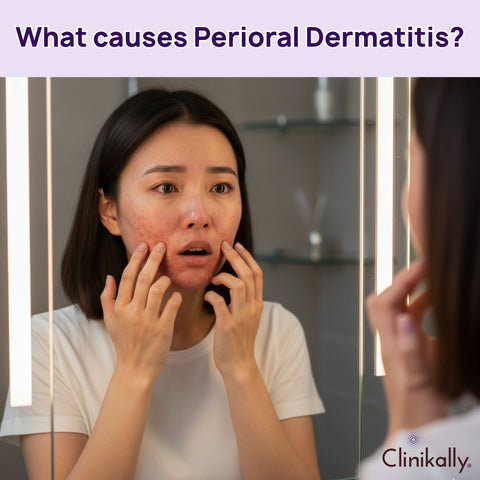
The main causes of Perioral dermatitis are generally unknown, but it’s often linked to the usage of topical steroid creams, including topical corticosteroids or TCS, on the face. Let’s have a look at a few more predominant reasons:
-
This rash often happens after a prolonged or inappropriate usage of moderate to high-strength steroid creams.
-
In the confusion of acne, when you use steroids to treat it, it sometimes improves, but once you stop using them, they come back even worse than before. This is why it’s also known as Topical Corticosteroid withdrawal or TCS Withdrawal.
-
Sometimes inhaled or nasal steroid sprays, several cosmetics or heavy face creams, especially those containing petrolatum or paraffin, and fluorinated toothpaste are considered as the triggering factors for this rash.
What are the types & variants of Perioral Dermatitis?
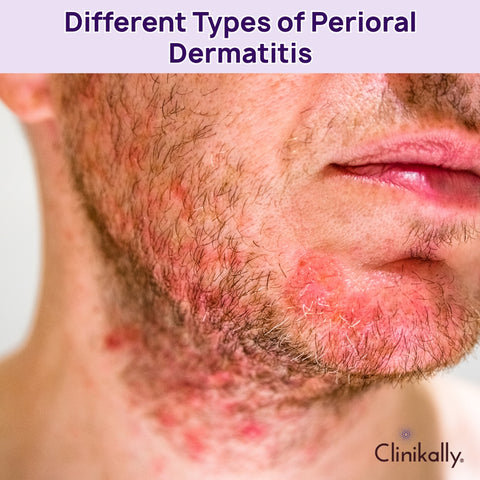
The types & variants of perioral dermatitis are often helpful in differentiating them from acne, eczema around the mouth, and other skin conditions. Since it’s closely related to rosacea and steroid misuse, the sources often describe types of rash seen during topical steroid withdrawal that overlap with PD:
1. Variants Linked to Topical Steroid Withdrawal
When PD is considered as a part of TCS withdrawal syndrome, there are two main types considered based on the patient’s history and symptoms:
-
Papulopustular Variant (Acne-like):
This type of variant is often recognized by the pus spots (pustules) and bumps (papules). It’s associated with patients who used topical steroid creams usually for cosmetic use, pigmentary disorders, or acne-like conditions. Patients affected with this type of variant often don’t experience the intense burning/stinging or swelling in comparison with other types.
-
Erythematoedematous Variant (Eczema-like):
This variant of PD is often characterized by intense redness, scaling, and swelling/puffiness. It’s associated with patients suffering from chronic skin conditions such as eczema or atopic dermatitis. Patients undergoing this condition often experience burning or stinging.
2. Specific Clinical Variants of Perioral Dermatitis
Based on the severity, condition, and origin where it appears, PD is further divided into two more variants:
-
Granulomatous Periorificial Dermatitis:
This is a rare variant mostly found in pre-teen children. It often appears as yellow-brown papules, specifically limited to the mouth, nose, and eyes.
-
Lupus-like PD (or Lupoid PD):
It’s the extreme condition of PD. The patient often experiences deep, intense inflammation. This specific variant is often diagnosed by the doctor using a diascopy technique. In its severe form, the inflammation is so deep or severe that the rash can leave behind permanent scars.
The Diagnosis of Perioral Dermatitis, Its Signs, Clues, & Tests
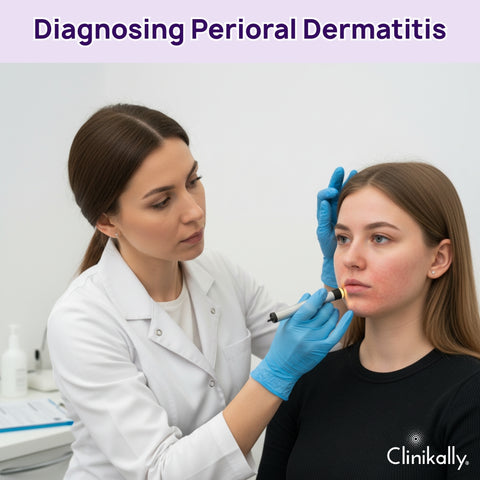
Perioral Dermatitis is usually diagnosed clinically by a doctor, often by simply examining the appearance and location of the rash on the face.
The Key Detection Clues for PD
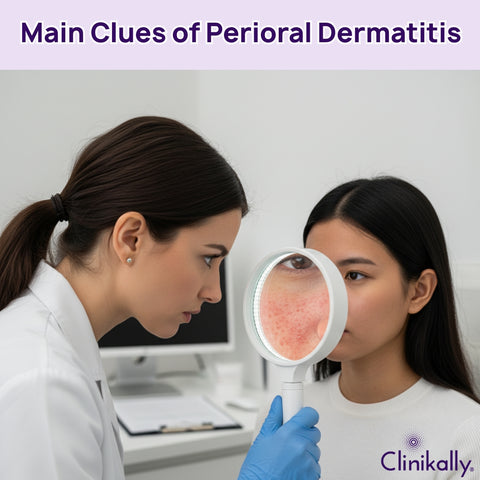
Sometimes, PD is simply diagnosed by the clinical examination of the patient.
-
Appearance: The dermatologist often looks for the characteristic pattern of red papules and pustules located around the mouth, sometimes with a clear ring of unaffected skin next to the lips.
-
Patient History: Often, dermatologists examine PD by using patient history. The most important clue is the prolonged usage of steroid creams on the face or contact with other triggering factors, such as steroid inhalers or certain cosmetics.
-
Worsening upon Stopping Steroids: PD is suspected if the rash worsens days or weeks after the patient discontinues using the topical steroid.
Is a laboratory test required to detect PD?
The diagnosis of Perioral dermatitis doesn’t require any routine testing, as no laboratory abnormalities are expected in the results. The biopsies or histopathology are also non-specific in this condition, as they usually don't help in differentiating PD or TCS withdrawal from other skin conditions, such as eczema. Though if a doctor suspects an overlap with contact allergies, they may perform patch testing to rule out an allergy to the steroid or any ingredients of the cream.
The dermatologists often use steroid withdrawal to confirm PD if they think the symptoms could be a flare-up of an underlying skin condition.
Signs a Clinician Favors Steroid Withdrawal

If the dermatologist wants to confirm the PD/steroid withdrawal from other conditions, such as eczema, they notice a few symptoms getting worse after the steroid withdrawal. Let’s have a look at some of these symptoms:
-
Burning around the affected region.
-
Visible Redness appears quickly within days to weeks after stopping the steroid.
-
The lack of blackheads and whiteheads (comedones) on the blemishes.
Now that we know that topical steroids won’t work in PD cases, let’s see what actually does.
The Recovery Roadmap from Perioral Dermatitis, No Steroids Included
First of all, it’s always suggested to get a dermatologist consultation to distinguish the disease severity, condition, and cure. Perioral Dermatitis treatment is less about adding harsh ingredients and more about a calculated and gentle reset to rebuild your skin barrier’s function. The dermatologists' recommended treatment plan that actually works includes 4 steps, and has been directed based on your conditions. Let’s have an elaborate look at these steps:
Step 1: The “Zero Therapy” Barrier Reset
If you’re suspecting or diagnosed with PD, it’s always recommended to start implementing the “Zero Therapy”. It’s a basic rule that you stop all active ingredients, oils, sunscreens, and heavy makeup immediately. This step will help your skin stabilize the irritated barrier. To help your skin, you must use non-stripping, non-comedogenic products that offer gentle cleansing to your skin.
One of the most recommended products for this purpose is Clinikally HydraSoft Gentle Skin Cleanser. This dermatologist formulated lotion-based cleanser is non-drying and free from harsh surfactants. It uses gentle ingredients such as Aloe Vera and Panthenol to clean skin without causing irritation or stripping. The gentle cleansing is the first and an essential step in calming the distressed barrier.
Step 2: The Azelaic Acid Treatment
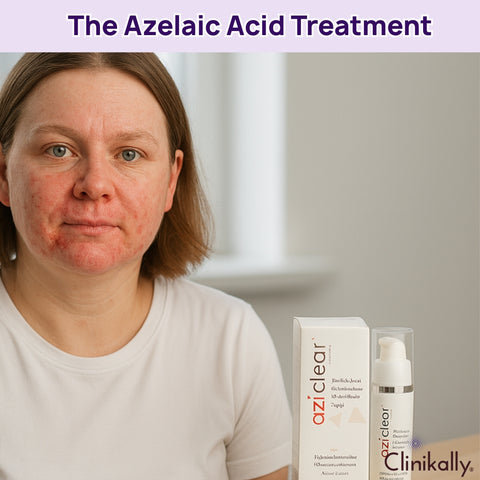
Once your skin is stabilized, a targeted, non-steroidal topical agent is necessary. One of the most effective ingredients for PD is Azelaic Acid. And, to make this step effective for you, the dermatologist often recommends Aziclear Serum. It’s an effective serum that manages pigmentation, acne scars, photo-damaged skin, and ageing skin. Enriched with a perfect blend of azelaic acid, resorcinol, ferulic acid, hyaluronic acid, and hydroxyphenoxy propionic acid, its advanced formula clears clogged pores, lightens dark spots, reduces wrinkles, and enhances skin tone, leaving your complexion clear, even, and refreshed. Also, with its anti-inflammatory and anti-microbial effects, it calms the bumps without the steroid dependency risk.
Alongside, you also need a lightweight moisturiser that doesn’t contain ingredients that trigger PD. One such recommendation for a targeted barrier support is Clinikally HydraSoothe Moisturiser that supports your skin. This dermatologist's recommended moisturiser soothes sensitive skin and relieves dryness, flakiness, and itching. Its special DMS (Derma Membrane Structure) technology creates a protective layer on the skin that locks moisture into the skin. Enriched with Aloe vera & Vitamin E, this moisturising lotion provides effective and deep nourishment to your skin. Its effective formula reduces skin sensitivity, heals the skin, and maintains the skin barrier, protecting it against irritants and allergens. And its powerful and anti-inflammatory properties help fight free-radical damage and ensure brilliant results.
Step 3: Morning & Evening Barrier Repair Routines

Along with the active treatment, maintaining a gentle and consistent skincare routine is essential for restoring the skin barrier and preventing flare-ups. And, thus, following a good morning and evening skincare routine ensures that your skin remains hydrated, protected, and supported when it heals. We’ve divided this routine into two parts, the morning one and the evening one. Let’s have a look at how it can be helpful for you:
-
Morning Routine: The morning routine includes 4 steps that ensure an active skincare regimen and smooth, hydrated skin. Start your skincare routine with a gentle cleanser such as Clinikally Hydrosoft Cleanser. It will clean your skin barrier, removing excess oil, dirt, and grease stuck there. After that, you’ve to apply the recommended topical such as Aziclear Serum. The very next step is lightweight moisturisation; you can use Clinikally Hydrasoothe Moisturiser. Finish up your morning skincare routine with a broad-spectrum, mineral-based SPF (zinc Oxide/ Titanium Dioxide), such as UV Doux Mineral Sunscreen Gel SPF 50 PA+++. It’s always recommended to avoid oils during initial flare-ups.
-
Evening Routine: Your evening routine will also start with a gentle cleansing; you can use the same products as well. Also, you will be applying a topical and a nourishing moisturiser to soothe your skin & remove the dryness. Additionally, if you’re facing a severe, persistent dryness on non-inflamed areas, your dermatologist may also advise a thin layer of a non-comedogenic occlusive, like a paraffin-based cream (e.g.: Olesoft Lite Face Moisturizing Gel) or pure petrolatum.
- Addressing Dryness (Doctor’s Note): If your skin is healed, but severely dry, your dermatologist may also recommend that you integrate a few drops of a non-comedogenic oil with a high linoleic acid content such as Rosehip Oil or Argan Oil, into your moisturiser. But this step is only followed in the maintenance phase and after the consultation with your dermatologist.
Step 4: Supportive Routine & Medical Escalation
As the steps we’ve talked about above work on the surface, supporting your body from inside will accelerate the healing process. Dermatologists often recommend an anti-inflammatory diet or nutraceuticals such as Azelia Biotin and Collagen Supplement Tablet containing omegas, biotin, and collagen. Additionally, Vitamin C supplements are also helpful in improving immunity and preventing infections. Also, reduction of internal irritants such as excessive alcohol or spices that support gut health helps in curing skin inflammation. Consistency and patience are vital for this condition.
But, it’s also important to know that non-steroidal topicals such as Azelaic Acid, metronidazole, clindamycin, etc., are often the first line of defence recommended by dermatologists. In mild to moderate cases, dermatologists often recommend non-steroidal topicals such as azelaic acid, etc., to remove irritants and simplify the skincare routine. But, if they don’t find any meaningful improvement after 8 to 12 weeks (or the disease gets more extensive), dermatologists may prescribe systemic antibiotics. Some of the commonly used medications in appropriate settings are doxycycline, minocycline, or erythromycin. In rare circumstances, when a secondary fungal infection is suspected or confirmed, a topical antifungal may be added; systemic antifungals are rarely used and only under careful supervision due to safety concerns.
Long-Term Prevention from Perioral Dermatitis & Lifestyle Changes
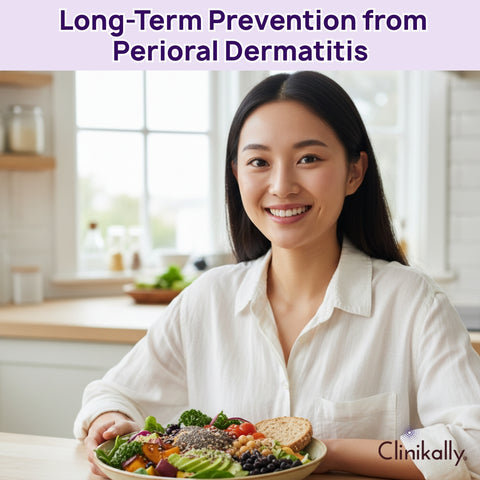
Perioral Dermatitis is a recurring condition, and if ignored, it can grow up again. Once an initial rash has cleared, you need to adopt a permanent and gentle lifestyle to prevent it from growing again.
Maintain a Healthy Skincare Routine
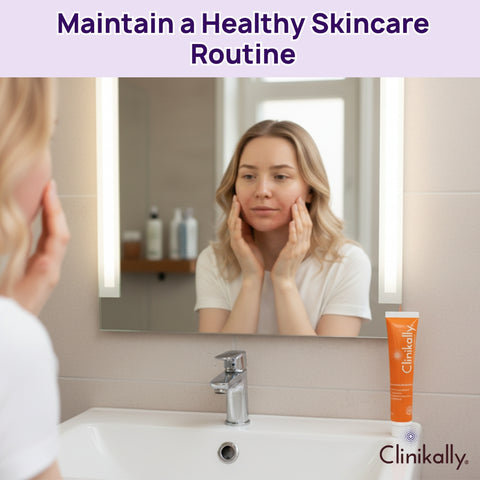
Once you’re recovered from Perioral Dermatitis, the best way to prevent it from growing again is by maintaining the simplicity of the “Zero Therapy” routine and avoiding using irritant-containing products.
-
Don’t use bad Products: Commit to permanently avoiding any topical steroids, including OTC hydrocortisone, on your face unless specifically directed by a dermatologist.
-
Product Ingredients to Avoid: Stay away from heavy creams, especially those that leave residues. Also, limit the usage of heavily fragranced or scented cosmetics and sunscreens that contain chemical UV filters. Though you can use mineral-based sunscreen.
-
Oral Hygiene Check: If you’re using toothpaste containing fluoride, swap it. Chewing gum has also been reported as a trigger for some individuals and should be avoided if suspected.
-
Keep it Clean: Regularly wash items that touch your face, including pillowcases, towels, and makeup brushes, using a hypoallergenic, fragrance-free detergent.
Identifying and Managing Internal Triggers

While PD is a skin condition, several internal factors, such as diet and stress, can trigger it. To avoid it from happening again, you must be self-aware and follow a mindful lifestyle.
-
The Gut-Skin Axis: Maintain an anti-inflammatory diet rich in vitamins, fibres, and antioxidants such as spinach, kale, nuts, beans, lentils, chickpeas, broccoli, peppers, tomatoes, etc. Avoid having high-sugar foods, highly processed items, excessive alcohol, spicy foods, and gluten while maintaining a healthy diet plan.
-
Stress Reduction: Stress is another major contributor to inflammatory skin conditions. Include healthy activities such as adequate sleep, regular moderate exercise, deep breathing techniques, etc., to calm down your nervous system. If you’re magnesium-deficient, you can also take a magnesium-rich diet or supplements.
-
Environmental factors: Protect your healing skin from extremes. Excessive sun exposure, strong winds, and extreme heat can also trigger PD. So, when you’re in the sun, you can add gentle mineral-based sunscreen as part of your permanent routine.
Monitor Your Skin Regularly & Know When to Act
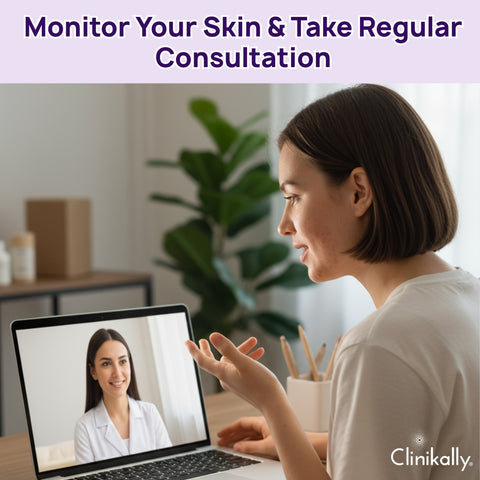
As Perioral Dermatitis is a recurring condition, having a flare-up is always expected. But recognizing the symptoms quickly ensures the best treatment for perioral dermatitis and helps you avoid marks and scars.
-
Early Detection: At the first sign of a persistent red patch or a cluster of papules around the mouth, start the “Zero Therapy” again. Stop all your chemical-containing makeup or products, and use only a gentle cleanser and moisturiser.
-
Immediate Consultation for Recurrence: Even after following the zero therapy for a week, if you’re not seeing improvement, it’s better to consult a dermatologist. Recurring PD often requires a short course of topical or oral medication to control or reduce the inflammation. Consistently adhering to a gentle routine is the best defense mechanism that can help you avoid this facial rash condition.
Let’s Sum it Up
Understanding and taking measures for any type of skin issue is an essential habit that we must include in our skin care routine.
Skin conditions such as Perioral dermatitis often need early detection & consideration to prevent it from becoming severe.
And, if you believe that your skin is prone to such conditions, or in general, you should follow a better skin care approach having minimal chemicals.
Maintain hygiene, have a good and fibrous meal, and do regular consultation with a dermatologist to maintain healthy skin.
Don’t try to be your doctor; take expert dermatologist suggestions before using any product to treat acne or any skin infection.
Skin is a sensitive part of the body and deserves special care. Give it what it deserves.
We wish you healthy, glowing skin.