Pityriasis Rosea Causes, Symptoms, Treatment
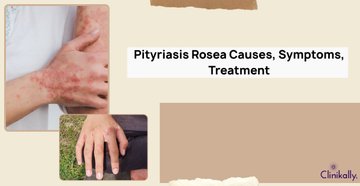
Skin diseases are a potential cause of confusion and anxiety, especially when they suddenly appear on the body and cover wide spans of it. Pityriasis Rosea is one such condition and is a common, temporary skin rash that, whilst it may appear alarming, is often benign. Others wrongly identify it as a fungus, such as ringworm, and also worry that it is a contagion. Knowledge of the symptoms of this type of rash, its causes, available treatments, and skincare advice can empower you against this type of rash problem, whether it affects you or someone you know.
This article will offer you essential knowledge about Pityriasis Rosea, clear patient-friendly tips, expert recommendations of dermatologists, and safe home remedies to guide you through this skin disorder with the highest and safest level of confidence.
Understanding Pityriasis Rosea
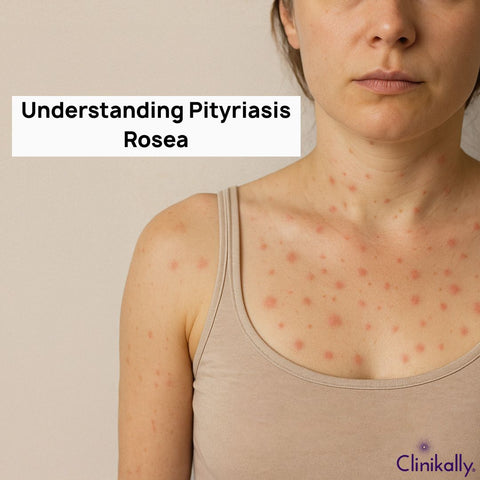
Pityriasis rosea is a temporary skin condition marked by a distinctive rash that often starts with a single large patch. While it may look alarming, it is usually harmless and self-healing. A deeper look into its symptoms, causes, and care is explained in the sections below.
What is Pityriasis Rosea and How Does It Affect the Skin?
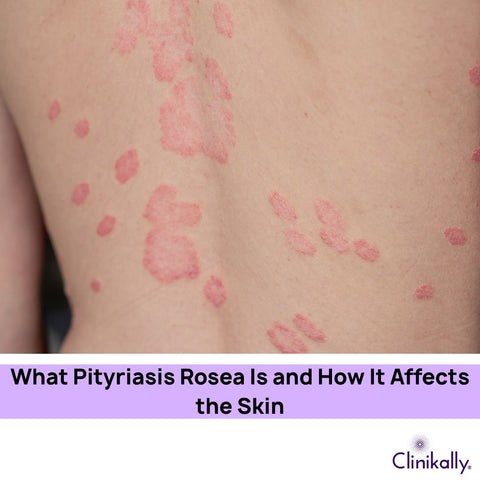
Pityriasis Rosea (pih-tuh-RY-uh-sis ROH-zee-uh), “Pityriasis” means “scaly,” and “rosea” means “pink.” It is a self-limiting dermatological condition that is characterized by the development of a prominent initial lesion, popularly referred to as the herald patch. The first patch, as opposed to the succeeding ones, is usually larger and has a scaly texture that, in most cases, would first show on the chest, back, or abdomen. In the days or weeks that follow, smaller patches will start to appear in and around the herald patch on different parts of the body, including the legs, arms, and torso.
The rash is color of pink or reddish-brown, and it also differs according to the skin tone of the individual, giving it a bright appearance. Though the patches in some cases cause mild to moderate itching, they do not especially cause much discomfort. Importantly, even though pityriasis rosea is a fearsome-looking disease, it is a benign disorder with the vast majority of cases clearing up entirely within a period of between 6 weeks and 12 weeks.
Possible Causes and Triggers of the Rash
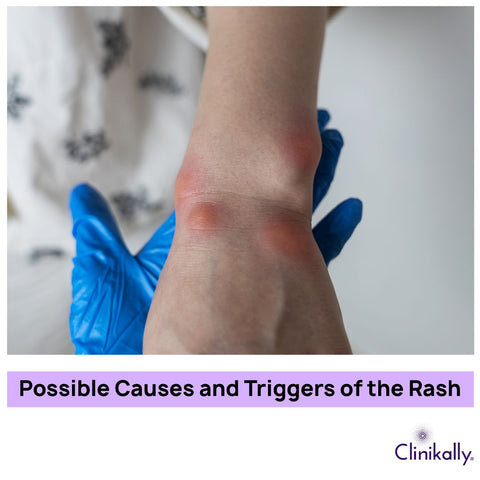
The exact pityriasis rosea is the medical fraternity, though many dermatologists believe in the potential identification of one with certain viral diseases, notably the human herpesvirus 6 (HHV-6) and human herpesvirus 7 (HHV-7). It has been found that these viruses might be contributing to the occurrence of this skin disorder, which raises the need to thoroughly examine the relationship to pityriasis rosea.
Besides the viral ones, there are other possible triggers of pityriasis rosea that have been identified. A weakened immune system is one of those factors; people with impaired immunity are at higher risk of developing it. Several seasonal changes, especially the ones into spring and fall, have also been shown to correlate with more cases of pityriasis rosea being noticed at these periods, which further suggests that an environmental factor may contribute to its occurrence.
In addition, stress and fatigue are potential causes and may worsen the condition or cause its development. Other medications have also been documented as causing pityriasis rosea in a few people, highlighting the complexity of the disease as well as the importance of an in-depth examination of the medical background of a patient.
Why is it often Confused with Other Skin Conditions?
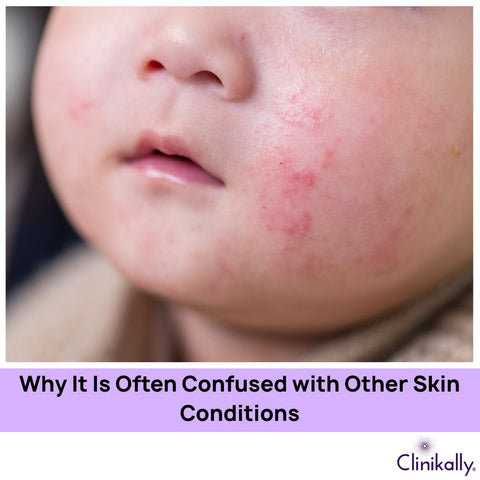
Its striking resemblance to a number of different skin disorders is one of the most difficult things about pityriasis rosea. Because the rash manifests as red, scaly, and occasionally irritating patches, it is frequently confused with psoriasis, eczema, or fungal infections. A closer examination could be necessary even for doctors to confirm the diagnosis.
Here’s how pityriasis rosea is often confused with other skin problems:
-
Ringworm (Tinea Corporis): This is one of the common fungal infections that results in the formation of the ring-shaped or circular lesions that have a clearer center and raised rims. Pityriasis rosea patches may look similar at a glance, particularly to the herald patch. Pityriasis rosea, however, is not spread by direct contact; it tends instead to form multiple patches and more of a pattern in the shape of a Christmas tree, as opposed to the distinct circles of ringworm.
-
Psoriasis: The symptoms of psoriasis are thick and silvery in color scales, which are more persistent and permanent than compared of pityriasis rosea. Both of the conditions might seem like red patches with scaling, but unlike psoriasis, the latter does not go away on its own and tends to target the scalp, knees, and elbows. Unlike pityriasis rosea, which subsides in weeks to months, with no subsequent recurrence throughout the lifetime.
-
Eczema (Atopic Dermatitis): Eczema is dry, itchy, and inflamed skin with a propensity to recur, which can be associated with allergies or asthma. Pityriasis rosea may resemble eczema in the initial stages, but eczema is usually located on skin folds (bends of the elbows, behind the knees), and is sufficiently long-term, while Pityriasis rosea has clear phases of initiation, development, and healing.
-
Drug-Induced Rash: Various drugs can also cause allergic conditions that look like pityriasis rosea. Such rashes can occur very quickly, and may involve the spread of the rash quickly and all at once, and other symptoms like fever or swelling can sometimes accompany the rash. Unlike pityriasis rosea, which has an allergic course developing in a predictable pattern and beginning with a herald patch, drug rashes may only disappear sequentially after the causative medication is discontinued.
Because of these overlaps, a correct diagnosis is very important. A dermatologist can distinguish pityriasis rosea from other skin conditions by examining the rash pattern, progression, and patient history. Misdiagnosis may lead to unnecessary antifungal treatments or strong steroid creams that won’t actually help and may even worsen skin irritation.
Symptoms and Diagnosis
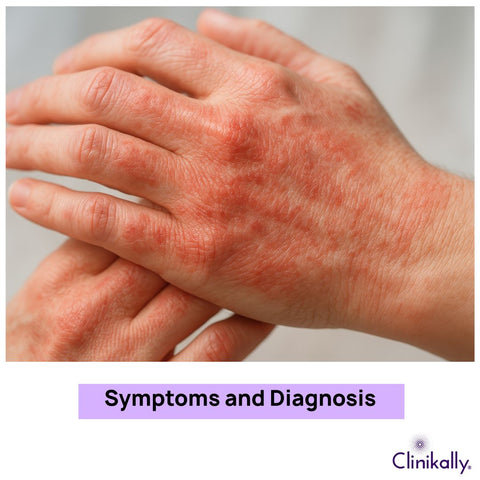
The symptoms of pityriasis rosea can sometimes resemble other skin issues, which makes diagnosis important. Here’s a closer look at how it typically appears and how specialists identify it.
Early Signs of Pityriasis Rosea You Should Notice
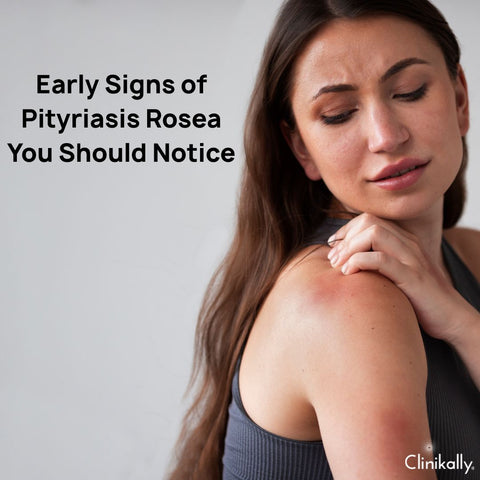
The pityriasis rosea symptoms typically occur when a so-called herald patch is found, the single, oval, or round patch that appears on the skin. This patch has an average skin color of pink in fair skin and reddish-brown in dark skin. It grows between 2 and 10 cm in diameter, and it frequently grows on the chest, abdomen, or back.
The patch of a herald may be similar to eczema or ringworm, which is why this condition is confused with others in the initial phases. But contrary to fungal infection, it lacks a raised edge and mostly lacks the scaly-feeling when it is touched.
In 1 to 2 weeks of emerging the herald patch, one can witness several smaller oval spots spreading all over the body. They tend to follow normal skin creases, giving the dermatologists the Christmas-tree pattern, a characteristic which helps to differentiate between pityriasis rosea and other rashes.
Alongside the rash, you might notice additional early symptoms, which can appear before or during the eruption stage:
-
Itching (mild to moderate): While not everyone affected will experience itching, those who do may find it becomes more intense with factors such as sweating, exposure to heat, or the friction caused by tight clothing.
-
Fatigue or low energy levels: Some individuals report a sense of exhaustion or a notable decrease in energy even before the rash becomes evident across the skin.
-
Headache, sore throat, or flu-like symptoms: A small subset of patients may contend with these mild but distressing systemic symptoms, which can closely resemble the onset of a viral infection, adding to their discomfort.
The Herald Patch and Rash Progression
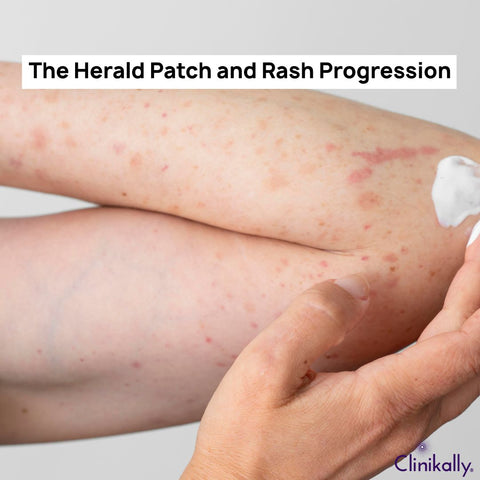
The disease is initially diagnosed by a herald patch- a large, isolated mark on the skin. This characteristic patch appears first, and secondary patches commence to pop up on the trunk, arms, and thighs, among other body parts. These additional spots are usually smaller and may have a fine and scale-like quality.
The stages that the rash more or less passes through are variable and depend on the cause of the rash:
-
Herald Patch Stage: This is the initial stage, which is a visible, giant patch of skin that is noticeably different than the rest with varying color and texture. As an indication of what awaits, this one patch often captures the attention at first.
-
Eruption Stage: Skin exhibits a change following the herald mark, and small lesions begin to appear. Arising out of these lesions is a more widespread and more vibrant rash, once the lesions spread slowly over the affected region. The development of these lesions can actually create a very attractive show that cannot be ignored, and this may either be stimulating or worrying.
-
Healing Stage: In this stage, healing, the rash remains quite obvious, but the inflammation is slowly healing, exposing skin, and slowly getting back to reality. One of the side effects of the condition that may persist even after it has disappeared completely is a little dulling of the skin tone.
How Dermatologists Diagnose Pityriasis Rosea?
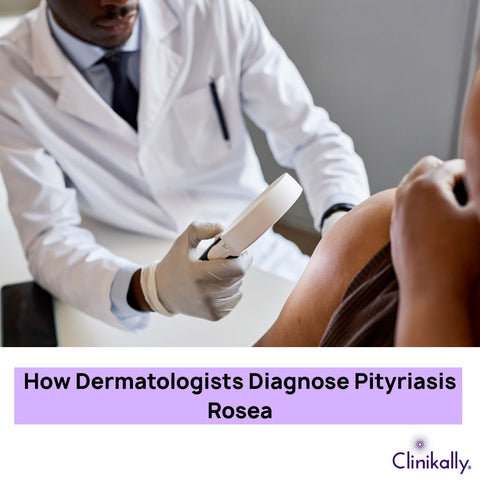
Pityriasis rosea is often diagnosed by a doctor just by looking at the rash. To make a confident diagnosis, one herald patch with various small lesions in a Christmas-tree pattern is normally enough. Nevertheless, since the rash tends to resemble several other skin diseases, clinicians may have to narrow down other possible causes before a diagnosis.
Here are the common steps dermatologists take during diagnosis:
-
Visual Examination: The initial one is a thorough inspection of your skin. The size, shape, color, and distribution of the patches are studied by the dermatologists. The peculiar course and distribution of pityriasis rosea usually contrast with fungal diseases, eczema, or psoriasis.
-
Skin Scraping or Biopsy (if needed): There are some uncertain situations where a doctor could scrape off a sample of skin or a small piece of skin under local anesthesia (called a biopsy). This aids in eliminating getting rid of ringworm (fungal infections), a drug reaction, or other rashes that replicate pityriasis rosea.
-
Review of Medical History and Medications: Certain rashes are induced by drugs or allergies. Your dermatologist will inquire about any recent prescription or over-the-counter medications or supplements you might be consuming, to verify that it is not an eruption caused by drugs.
-
Dermoscopy (Skin Magnification Tool): In some clinics, dermatologists use a dermoscope, a handheld device that magnifies the skin. This allows them to see subtle surface changes like scaling patterns or blood vessel distribution that confirm the diagnosis.
-
Lab Tests (Rarely Needed): Since pityriasis rosea is a clinical diagnosis, blood tests or lab investigations are usually unnecessary. However, in unusual cases, especially if symptoms overlap with secondary syphilis or other systemic conditions, your doctor may order a blood test to rule out serious causes.
Treatment and Skin Care Approaches
Managing pityriasis rosea usually focuses on easing discomfort rather than curing the rash, as it often clears on its own. Simple treatments and gentle skincare can help reduce itching and support faster recovery. Detailed approaches are discussed below.
Dermatologist-Recommended Treatments
In most cases, pityriasis rosea treatment is natural within 6 to 12 weeks, meaning it often does not require aggressive medical treatment. However, because the rash can be itchy, irritating, or cosmetically distressing, dermatologists usually focus on symptom relief and skin comfort.
Here are the most common medical approaches:
-
Antihistamines for itch relief: Oral or topical antihistamines (like cetirizine, loratadine, or diphenhydramine) can help reduce itching and discomfort, especially at night when itching tends to worsen. These medicines do not cure pityriasis rosea but improve the quality of life while the rash runs its course.
-
Topical corticosteroid creams for inflammation: Mild to moderate corticosteroid creams or ointments are often prescribed to calm redness, irritation, and swelling. They are especially useful if the rash is widespread or causing significant itching. Dermatologists generally recommend using them for a short duration to avoid side effects.
-
Calamine lotion or soothing creams: Over-the-counter calamine lotion and dermatologist-tested soothing moisturizers can provide a cooling effect and relieve skin irritation. These are safe for most patients, including children, and can be applied several times daily.
-
Antiviral medications (in severe cases): In rare, severe, or persistent cases, dermatologists may prescribe antiviral drugs such as acyclovir. Research suggests that antivirals may shorten the duration of the rash, particularly if started early. However, they are not necessary for mild cases.
-
Phototherapy (UV light therapy): Controlled ultraviolet B (UVB) phototherapy is sometimes used for patients with extensive rashes. This treatment can speed up healing and reduce itching. However, it must be done under professional supervision to prevent skin damage.
Since pityriasis rosea is self-limiting, dermatologists usually recommend a “watch-and-wait” approach, with treatment tailored only to relieve uncomfortable symptoms. The goal is to support the skin while allowing the condition to naturally resolve.
Home Remedies to Ease Itching and Irritation

Along with medical care, for pityriasis rosea treatment, some simple home remedies can provide comfort:
-
Lukewarm oatmeal baths: Colloidal oatmeal calms inflamed skin, reduces itching, and forms a protective barrier. Always use lukewarm water, not hot.
-
Aloe vera gel: Provides instant cooling, reduces redness, and hydrates the skin naturally. Best applied fresh or through a dermatologist's aloe vera gel.
-
Loose cotton clothing: Soft, breathable fabrics reduce friction and sweating, preventing further irritation on the rash.
-
Avoid hot showers and harsh soaps: Hot water strips skin oils and makes dryness worse. Use mild, fragrance-free cleansers to protect the skin barrier.
-
Gentle moisturizers: Hydrate the skin multiple times a day with non-comedogenic, fragrance-free creams containing ceramides, glycerin, or shea butter.
-
Stay cool and avoid sweating: Heat and perspiration can intensify itching. Keep your environment cool and dry.
-
Sunlight exposure in moderation: Limited, safe sun exposure may help the rash fade faster, but avoid overexposure that can damage the skin.
-
Hydration and balanced diet: Drinking enough water and eating antioxidant-rich foods support skin healing from within.
Lifestyle and Skincare Tips for Healing

Maintaining a robust skincare routine and incorporating healthy lifestyle habits can significantly enhance your recovery process from skin conditions.
Here are some key practices to consider:
-
Hydration is Key: Keep your skin well-hydrated by using fragrance-free moisturizers. These products not only replenish moisture but also create a protective barrier, preventing dryness and irritation.
-
Mindful Touch: It's essential to avoid scratching your skin, as this can lead to unwanted scarring. Instead, find gentle ways to relieve any itchiness, such as applying cool compresses or soothing lotions.
-
Sun Smart: Limit your exposure to the sun, as UV rays can exacerbate skin issues. Add the Sunscreen 50+ to your daily skincare. However, exposing your skin to controlled sunlight in short intervals may aid in the healing process, so find a balance that works for you.
-
Stress Management: Reducing stress levels is crucial for your overall health and skin recovery. Activities such as yoga, meditation, or simply taking time to rest can help calm the mind and body, promoting better skin health.
-
Nourishing Your Body: Adopt a balanced diet full of essential vitamins and antioxidants. Foods rich in these nutrients not only support overall health but also contribute to skin healing from within.
You can explore a selection of dermatologist-recommended soothing moisturizers, gentle cleansers, and protective sunscreens that are specially formulated for sensitive skin, making them ideal for caring for conditions like pityriasis rosea.
Final Thoughts on Managing Pityriasis Rosea

Pityriasis rosea is a cutaneous disease that can initially seem serious and life-threatening, but in fact, it has more benign qualities, being both transient and harmless. The majority of the people who develop this rash take 6 to 12 weeks to completely recover with no complication in most cases. The understanding of the disease, including the characteristic, scaly lesions, which often begin with a herald patch, brings some demystification to the experience. Learning some probable causes that might include viral infection and learning how to deal with them can help ease this period.
In order to relax any fears of the healing process, it is advisable to familiarize yourself with good skincare practices. This may involve the use of mild cleansers, keeping the patient's skin moisturized, and preventing irritants that may cause the rash to aggravate. In case you are not sure about the type of your rash, or a rash becomes more severe, it is important to see a specialist who can provide needed guidance, given your specific circumstances.
By adopting the right blend of calming skincare solutions, natural at-home solutions, and some patience, you can effectively deal with pityriasis rosea and, in turn, support your skin's innate healing capabilities. Understanding can largely help you to be at peace during this period of temporary illness.