Rhubarb in Skincare: A Natural Secret for Healthy, Glowing Skin
Doctor's Desk
Author
28 Jun, 2025
Rhubarb, which has historically been praised for its delicious role in pies and tarts, is also gaining favor in the beauty sector due to its skin-boosting benefits. Rhubarb, which is abundant in vitamins, minerals, and antioxidants, may be nature's solution to getting that elusive facial glow. This blog explains how including rhubarb in your skincare routine can boost shine and create healthier skin.
What Makes Rhubarb a Skincare Powerhouse?
Rhubarb, commonly known as a sour vegetable for pies and jams, is gaining popularity in the cosmetics industry for its significant effects in creating healthy, beautiful skin. Rhubarb, which is high in antioxidants, vitamins, and anti-inflammatory components, has numerous skin benefits, making it an essential ingredient in many current skincare regimens. Rhubarb is a skincare powerhouse because it contains antioxidants, anti-inflammatory properties, vitamin C for collagen production, a natural astringent for pore tightening, gentle exfoliation and brightening, antimicrobial and antifungal properties, hydration and moisturization, and supports skin regeneration.
The Science Behind Rhubarb’s Skin Benefits
Rhubarb's skin advantages have been scientifically verified, thanks to its antioxidants, organic acids, and anti-inflammatory qualities. Rhubarb cures a range of skin problems, including aging, dryness, acne, and uneven skin tone, by protecting against free radicals, boosting collagen synthesis, reducing irritation, and giving gentle exfoliation. This multi-purpose plant can renew, protect, and heal your skin, making it a perfect addition to any skincare routine.
Key Nutrients in Rhubarb for Skin Health
Rhubarb's main components for skin health are vitamin C, antioxidants (polyphenols and flavonoids), anthraquinones, vitamin K, malic acid (alpha hydroxy acid - AHA), citric acid, tannins, fiber, and potassium.
Rhubarb vs. Other Herbal Skincare Ingredients
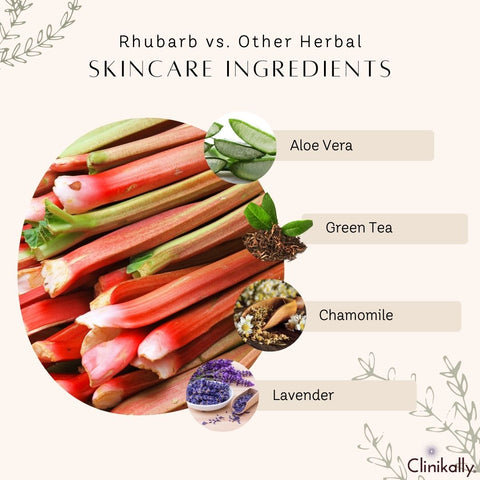
Some other popular herbal skincare ingredients to see how they stack up in terms of skin health benefits.
-
Rhubarb vs. aloe vera: Aloe vera is well-known for its soothing and therapeutic capabilities, and it is commonly used to treat sunburn, inflammation, and skin hydration. Aloe vera is high in vitamins, minerals, and amino acids and is well-known for its moisturizing and healing properties. It soothes sunburn, reduces inflammation, and moisturizes skin without clogging pores. Rhubarb, on the other hand, has better antioxidant capabilities because of its high concentration of vitamin C and polyphenols. While both aloe vera and rhubarb have anti-inflammatory properties, rhubarb also aids in exfoliating due to its high concentration of organic acids (such as malic and citric acid), making it more effective in lightening and removing dark spots over time.
-
Rhubarb vs. green tea: Green tea is another skincare powerhouse, recognized for its antioxidant, anti-inflammatory, and anti-aging properties. Green tea includes a high concentration of catechins, an antioxidant that protects the skin from free radical damage and UV radiation. It also possesses calming and anti-inflammatory effects, which aid in calming sensitive skin and minimizing redness. Rhubarb has a similar antioxidant profile, but it also contains organic acids that exfoliate and renew the skin. While green tea protects and soothes, rhubarb's high vitamin C concentration promotes collagen formation and enhances skin regeneration. This makes rhubarb more beneficial for people trying to brighten and improve their skin texture.
-
Rhubarb vs. chamomile: Chamomile is another well-known herb valued for its relaxing benefits on the skin, particularly in treatments for sensitive or irritated skin. Chamomile contains anti-inflammatory, antioxidant, and antibacterial effects. It is often used to relieve redness, minimize skin irritation, and treat eczema and rosacea. Chamomile contains flavonoids that protect the skin and promote healing. While chamomile is excellent for calming and healing, rhubarb has extra exfoliating and anti-aging properties due to its malic acid and vitamin C concentration. Rhubarb also has stronger antibacterial capabilities, making it ideal for treating acne and creating clear skin. Chamomile, on the other hand, is better suited to soothing and calming rather than addressing more advanced conditions such as skin texture or aging.
-
Rhubarb vs. calendula: Calendula (marigold) is another famous herb used in skincare due to its calming and healing effects. It is commonly found in creams and oils intended for sensitive skin. Calendula is widely recognized for its anti-inflammatory and wound-healing qualities. It relieves skin irritation, dryness, and eczema. Calendula can also promote the skin's natural healing process, reducing the appearance of scars. Rhubarb contains significant quantities of vitamin C and polyphenols, which provide extra antioxidant and anti-aging properties. Calendula is excellent for calming, but rhubarb offers more powerful skin renewal and exfoliating. Furthermore, rhubarb's ability to constrict pores and regulate oil production may make it better suited for oily or acne-prone skin.
-
Rhubarb vs. lavender: Lavender is a popular essential oil used in skincare due to its soothing, antimicrobial, and anti-inflammatory characteristics. Lavender is frequently used to encourage relaxation and relieve skin issues such as acne, eczema, and redness. Its antioxidant capabilities shield the skin from free radicals and can help minimize the appearance of scars. Rhubarb stands out for its antioxidant-rich composition and unique ability to brighten the skin. While lavender is great for calming and reducing irritation, rhubarb's organic acids and vitamin C give it an advantage when it comes to skin regeneration, exfoliation, and pigment reduction. Rhubarb's deeper skin-regenerating properties make it a more versatile component for combating aging and enhancing skin texture.
How Rhubarb Transforms Your Skin
Rhubarb is a sophisticated skincare ingredient that effectively treats a wide range of skin concerns. Rhubarb provides a comprehensive solution for bright, beautiful, and youthful skin due to its powerful antioxidants and organic acids, as well as its anti-inflammatory and antibacterial properties. Rhubarb can help prevent aging, reduce acne, improve skin texture, and increase moisture. Include this wonderful botanical in your products for a healthier, more luminous complexion.
Antioxidant Protection: Fighting Free Radicals
Antioxidants are your best line of protection against free radical damage, which is one of the main causes of skin aging and damage. Including ingredients high in antioxidants in your skincare regimen can help shield your skin from environmental aggressors, delay the onset of premature aging, and encourage a more radiant, healthy complexion. Vitamin C, green tea, resveratrol, and vitamin E are examples of antioxidants that are essential for maintaining firm, youthful, and glowing skin for many years.
Anti-Inflammatory Properties: Calming Irritated Skin
One of the main causes of skin irritation, acne, redness, and early aging is chronic inflammation. Incorporating anti-inflammatory ingredients into your skincare regimen can help reduce skin irritation, promote skin relaxation, and produce a more balanced, clear complexion. Aloe vera, chamomile, green tea, and other calming ingredients can be used to create anti-inflammatory skincare products that protect your skin from inflammation and encourage a calmer, healthier look.
Boosting Collagen for Youthful, Firm Skin
Maintaining smooth, firm, and young skin requires collagen. Adopting strategies that enhance and encourage collagen formation—whether through topical skincare, dietary adjustments, or more sophisticated therapies—becomes more and more important as we age. Collagen levels may be maintained, and a more youthful, radiant complexion can be encouraged for years by including the right nutrients, such as vitamin C, retinoids, peptides, and hyaluronic acid, and shielding your face from sun damage.
The Best Ways to Use Rhubarb in Your Skincare Routine
To incorporate rhubarb into your skincare routine, here's a guide to help you maximize its benefits:
-
Rhubarb-infused cleansers: Begin your skincare routine with a rhubarb-infused cleanser, which gently removes grime, oil, and makeup while providing calming effects. Rhubarb cleansers are typically designed to provide moisture while balancing the skin's natural pH. They are perfect for delicate skin that is easily irritated or dry.
-
Rhubarb toners: After cleansing, apply a rhubarb toner to balance the skin and prepare it for the rest of your routine. Rhubarb-based toners are packed with antioxidants and anti-inflammatory compounds that can help rejuvenate the skin, tighten pores, and leave it feeling fresh.
-
Rhubarb-infused serums: For a more targeted treatment, rhubarb-infused serums are ideal for giving concentrated quantities of nutrients to your skin. These serums are designed to combat skin issues such as hyperpigmentation, dullness, and uneven skin tone, thanks to rhubarb's high quantities of vitamins C and E.
-
Rhubarb moisturizers: A rhubarb-infused moisturizer is a wonderful way to seal in moisture and keep your skin soft, smooth, and plump. Rhubarb's high water content helps your skin retain hydration, while its antioxidants protect against oxidative stress and premature aging.
-
Rhubarb face masks: A rhubarb-based face mask is an excellent method to give your skin a healthy boost. Rhubarb contains vitamin C, which can aid promote skin renewal, and its antioxidant characteristics protect against free radical damage. Rhubarb extract face masks can also help to brighten and soothe the skin.
-
Rhubarb-infused eye creams: Rhubarb's ability to brighten and soothe inflammation makes it an ideal ingredient for eye treatments. If you have dark circles or swollen eyes, a rhubarb-based eye ointment can help provide immediate relief while gradually healing the skin around your eyes.
-
Rhubarb in exfoliators: Rhubarb extract can also be found in exfoliating treatments like scrubs and toners. Rhubarb's natural alpha-hydroxy acids (AHAs) gently exfoliate the skin, removing dead cells and promoting a smoother, brighter complexion.
Choosing the Right Skincare Products with Rhubarb
The following tips will help you select the best skincare products with rhubarb:
-
Identify your skin type: The first step in selecting the best rhubarb skincare products is to determine your skin type. Rhubarb has a variety of benefits that can be adjusted to specific skin conditions. Consider the following. Skin types include oily, dry, sensitive, and mixed.
-
Look for significant benefits of rhubarb in products: When choosing rhubarb-based remedies, evaluate which skin conditions you wish to address. Rhubarb has numerous skin advantages, including brightening, moisturizing, anti-aging, calming, and soothing.
-
Consider the formulation type: Rhubarb can be found in a variety of product types. Depending on your preference, you may want to choose such as cleansers, toners, serums, moisturizers, and masks.
-
Consider the formulation type: Rhubarb can be found in a wide range of products. Depending on your preferences, you may use such as cleansers, toners, serums, moisturizers, or masks.
-
Choose brands with high quality: To get the most benefit from rhubarb in your skincare, look for reputable brands that prioritize quality ingredients. Check if the rhubarb extract is sourced organically, as this ensures it is free from harmful pesticides and chemicals. Also, look for brands that offer clean and sustainable products, free from parabens, sulfates, and artificial fragrances, which can irritate the skin.
-
Choose high-quality brands: To maximize the benefits of rhubarb in skincare, search for reputed companies that prioritize quality components. Check to see if the rhubarb extract is organically obtained, as this means it is devoid of dangerous pesticides and chemicals. Also, seek out firms that provide clean and sustainable products free of parabens, sulfates, and artificial perfumes, which can irritate the skin.
-
Check reviews: Before purchasing a rhubarb-infused product, read internet reviews or ask for recommendations. Reviews from customers with comparable skin types and problems can provide useful information about the product's effectiveness.
-
Maintain consistency in your routine: Once you've found the ideal rhubarb-based products for your skin, consistency is essential. It may take a few weeks of consistent application to see obvious effects, so persist with your routine and let the ingredients work their magic over time.
DIY Rhubarb Skincare Recipes for Radiant Skin
Rhubarb isn't simply a potent ingredient in commercial skincare products; it may also make an excellent complement to your skincare routine. Rhubarb is high in vitamin C, antioxidants, and anti-inflammatory chemicals, which help brighten, moisturize, and soothe your skin. Here are a few simple DIY rhubarb skincare recipes that leave your skin glowing and revitalized.
-
Rhubarb & honey brightening face mask: Ingredients are 1/4 cup chopped fresh rhubarb, 1 tablespoon honey, and 1 teaspoon lemon juice (optional for extra brightness). In a small pot, boil the chopped rhubarb with a little water over medium heat until soft and mushy (approximately 5-7 minutes). Make it into a paste. Let the rhubarb cool before adding the honey and lemon juice. Stir thoroughly until you have a smooth paste. Gently apply the mixture to your face, avoiding the eyes. Allow the mask to sit for 10-15 minutes so that the chemicals can work. Remove the mask with lukewarm water and pat your skin dry. After that, apply moisturizer.
-
Rhubarb & yogurt hydrating face mask: The ingredients are 1/4 cup chopped rhubarb, 2 tablespoons plain yogurt (ideally Greek yogurt for thickness), and 1 teaspoon honey. Cook the chopped rhubarb in a small skillet with a splash of water until mushy, then crush it to a paste. Let the rhubarb cool before combining it with yogurt and honey. Apply the mixture evenly to your face and leave it on for 10-15 minutes. Wash your face with warm water and apply a light moisturizer.
-
Rhubarb & oatmeal soothing face scrub: Ingredients include 1/4 cup chopped rhubarb, 2 tablespoons oats (ground or whole), 1 tablespoon honey, and 1 tablespoon water or rose water. Cook the rhubarb with water until soft, then crush it to a smooth paste. Combine the rhubarb paste, ground oatmeal, and honey. Add water or rose water to reach the required consistency. Gently massage the scrub into your face in circular strokes, concentrating on dry or rough regions. Allow the scrub to rest on your skin for a few minutes before washing with lukewarm water.
-
Rhubarb & aloe vera soothing gel: Ingredients are 1/4 cup chopped rhubarb, 1/4 cup aloe vera gel (fresh or store-bought, but make sure it's pure), and 1 tablespoon honey (optional for added moisture). Cook the rhubarb until softened, then mash it into a paste. Once the rhubarb has cooled, combine it with the aloe vera gel and honey. Apply the mixture gently to your face or affected regions as a soothing gel. Allow the gel to rest for 15-20 minutes before washing with warm water.
-
Rhubarb & coconut oil nourishing night cream: Ingredients are 1/4 cup chopped rhubarb, 1 tablespoon melted coconut oil, and 1 teaspoon vitamin E oil (optional for extra nutrients). Cook the rhubarb till soft, then mash it to a smooth consistency. Combine the rhubarb paste, melted coconut oil, and optional vitamin E oil. Massage the mixture gently into your face and neck before going to bed. Leave the cream on overnight to let the ingredients nourish and hydrate your skin.
Myths and Facts About Rhubarb in Skincare
Some common misconceptions about rhubarb and its true benefits for your skin.
-
Myth 1: Rhubarb is too abrasive for fragile skin. Fact: Rhubarb is anti-inflammatory, which can help soothe sensitive skin. Rhubarb's natural antioxidants and polyphenols help to relieve redness and inflammation. While it may appear to be a strong substance, rhubarb is soothing enough for persons with sensitive skin when used in appropriate doses. It is frequently included in products designed to calm or soothe irritated skin, such as sensitive skin masks and moisturizers.
-
Myth 2: Rhubarb can be used as an exfoliant. Fact: Rhubarb includes natural acids (such as oxalic acid) with modest exfoliating effects, although it is not a harsh exfoliator. Its moderate astringent characteristics assist in balancing and toning the skin without causing abrasions. However, you should not use it as your primary exfoliator. If you wish to exfoliate, use rhubarb with a light scrub or AHA product to increase skin turnover while minimizing harm.
-
Myth 3: Rhubarb lightens skin and fades dark spots quickly. Fact: Rhubarb is known for its brightening qualities, owing to its high vitamin C concentration. However, while it does assist in balancing out skin tone and diminishing pigmentation over time, it is crucial to note that benefits take time. Rhubarb's antioxidant properties can help reduce dark spots and hyperpigmentation, but don't expect overnight results. Consistent use over several weeks or months is required to observe significant improvements.
-
Myth 4: Rhubarb is only suitable for oily or acne-prone skin. Fact: Rhubarb is suitable for all skin types. Its moisturizing, anti-aging, and anti-inflammatory characteristics make it ideal for both oily and dry skin. Rhubarb balances oil production in oily skin while it hydrates and nourishes dry skin. Furthermore, rhubarb's antioxidants protect the skin from environmental harm, making it suitable for aged skin.
-
Myth 5: Rhubarb should only be used fresh in skincare. Fact: While fresh rhubarb can be useful in DIY skincare preparations, rhubarb extract (which is commonly used in commercial skincare products) is just as effective. Rhubarb extract is processed to concentrate its active ingredients, which include antioxidants and vitamin C, allowing it to penetrate deeper into the skin and provide more obvious benefits. So you may reap the advantages of rhubarb both fresh at home and in high-quality skincare products tailored to your unique needs.
-
Myth 6: Rhubarb is not good for your skin because it is a plant. Fact: Rhubarb is totally safe for topical application, particularly when used in controlled, prepared preparations. While rhubarb contains oxalic acid, which can be unpleasant in large doses if consumed, topical applications of rhubarb extract are typically considered safe. Oxalic acid levels in skincare products are carefully controlled to ensure that they are safe for your skin. Always patch test new products to ensure there is no sensitivity, although rhubarb is generally safe and good for most skin types.
-
Myth 7: Rhubarb is only effective in treating skin irritations. Fact: Rhubarb is great for healing inflamed skin, but it also has anti-aging, brightening, and moisturizing properties. Its high antioxidant concentration aids in the battle against oxidative stress, a leading cause of premature aging. Rhubarb reduces fine lines and wrinkles, stimulates collagen synthesis, and gives your skin a healthy glow by encouraging an even skin tone.
Is Rhubarb the Future of Natural Beauty?
Rhubarb is already making waves in the cosmetics industry due to its antioxidant properties, anti-inflammatory benefits, and ability to work with a variety of skin types. Its sustainable sources and growing popularity make it a tempting option for eco-conscious beauty enthusiasts. As more people seek natural, plant-based, and effective skincare solutions, rhubarb's versatility, combined with its numerous benefits, make it a strong contender for the future of natural beauty.