Segmental vs. Non‑Segmental Vitiligo: Pinpointing the Distinct Paths of Pigment Loss
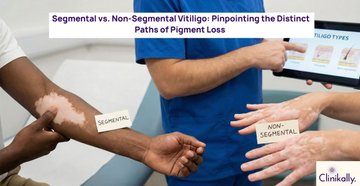
Vitiligo is not one-size-fits-all. Clinicians classify it into segmental and non-segmental types, each with its clinical behavior, immunological involvement, and therapy options. Understanding these distinctions is critical for appropriate diagnosis and individualized treatment. This blog explores the differences between segmental and non-segmental vitiligo.
Under the Microscope: Why Melanocytes Fail
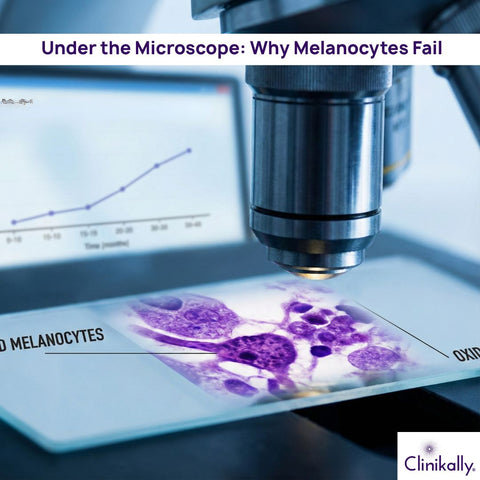
The melanocyte, the pigment-producing cell that gives skin its color, is at the heart of vitiligo. In vitiligo, these cells either die or stop working, resulting in the characteristic white patches. But why do they fail? According to research, the breakdown is multifaceted and includes immunological attack, oxidative damage, and intrinsic cell fragility.
-
Autoimmune assault: In non-segmental vitiligo, autoreactive CD8⁺ T-cells mistake melanocytes for foreign and destroy them. Cytokines such as IFN-γ and TNF-α increase the onslaught and create a hostile environment, preventing repopulation.
-
Oxidative stress overload: Melanocytes produce reactive oxygen species (ROS) as part of the melanin production process. In vitiligo, impaired antioxidant defenses (for example, reduced catalase activity) allow ROS to accumulate, resulting in melanocyte death or malfunction.
-
Neural variables and local stressors: Segmental vitiligo frequently has a dermatomal pattern, indicating that neurogenic mediators are involved. Stress-induced neuropeptides and regional sympathetic nerve stimulation may impair melanocyte survival.
-
Genetic susceptibility: Variants in immune-regulation genes (e.g., HLA, NLRP1, PTPN22) and melanocyte function genes (TYR, KITLG) raise risk. Family history increases the probability, yet penetrance varies.
-
Self-destruct pathways: Melanocytes with vitiligo are intrinsically fragile, with increased vulnerability to oxidative damage, ER stress, and impaired autophagy. This makes them more likely to die when exposed to environmental or immunological stresses.
Autoimmune Crossfire: T‑Cells vs. Pigment Cells
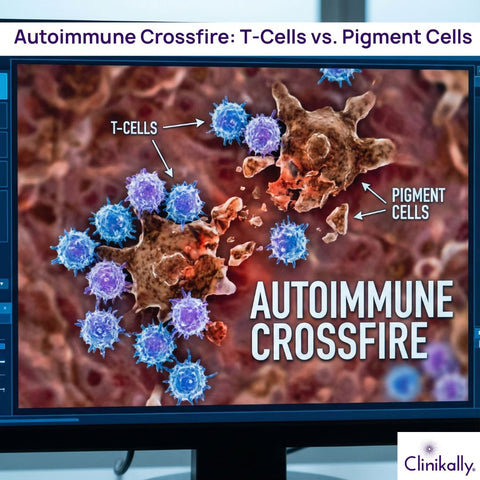
One of the most intriguing discoveries in vitiligo research is that the body's immune system attacks melanocytes. Instead of defending, it misidentifies pigment cells as adversaries, resulting in a targeted conflict.
-
CD8⁺ T-cell Attack: Cytotoxic T-cells invade vitiligo patches and release perforin and granzyme, which kill melanocytes. Inflammatory signals such as IFN-γ stimulate immune cell recruitment to the location, fueling their activity.
-
Cytokine cascade: IFN-γ triggers the JAK-STAT pathway, which produces CXCL9 and CXCL10 chemokines. These signals serve as "flare guns," attracting more T-cells and maintaining the onslaught.
-
Memory T-cells and Relapse: Even after effective treatment, resident memory T-cells remain in the skin. They "remember" melanocytes as targets, explaining why vitiligo frequently recurs in the same areas.
-
Regulatory T-cell imbalance: Normally, regulatory T-cells (Tregs) keep immunological responses under control. In vitiligo, decreased Treg activity permits autoreactive T-cells to act unchecked, accelerating pigment cell death.
-
Clinical implications: Topical or systemic steroids, calcineurin inhibitors, and JAK inhibitors all work to reduce the hyperactive T-cell response. Research is being conducted into medicines that can retrain immunological tolerance, preventing recurrence rather than simply reducing activity.
Neurogenic Influences: Nerve‑Derived Mediators
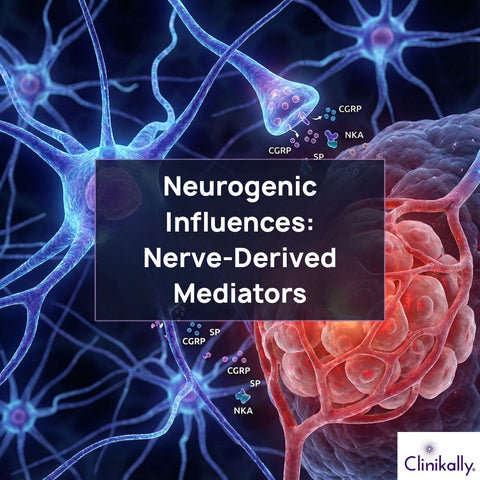
Beyond immune and oxidative stress, the neurological system plays an unexpectedly large role in vitiligo, particularly segmental vitiligo, which frequently follows dermatomal or nerve-related patterns. Researchers believe that nerve-derived mediators impair the delicate communication between melanocytes and their surroundings, paving the way for pigment loss.
-
Neurotransmitter imbalance: Nerve endings in the skin release substances like norepinephrine, acetylcholine, and neuropeptides. In excess, these can be toxic to melanocytes, either by generating oxidative stress or by disturbing melanin synthesis.
-
Neuropeptides as triggers: Some vitiligo lesions show higher levels of substance P, neuropeptide Y, and catecholamines. These chemicals promote local inflammation, attract immune cells, and may directly reduce melanocyte survival.
-
Sympathetic nervous system hyperactivity: Segmental vitiligo is frequently linked with elevated sympathetic tone in the afflicted skin. This can affect blood flow, oxygen supply, and local immune surveillance, resulting in a milieu hostile to melanocytes.
-
Stress connection: Emotional or physical stress can boost nerve signals in the skin. This could explain why many patients claim that stress triggers or worsens their vitiligo flare-ups.
-
Therapeutic implications: Antioxidants and stress-reduction therapy may assist in combating neurogenic causes. Researchers are looking for neuroimmune crosstalk blockers to protect melanocytes from nerve-mediated harm.
Oxidative Stress & Genetic Triggers: Setting the Stage
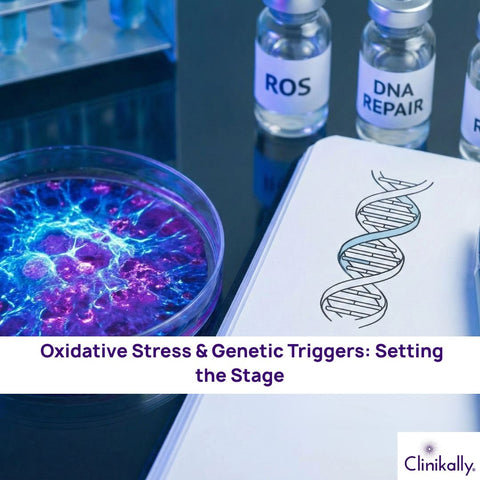
Long before white spots emerge, vitiligo is often the result of an internal imbalance. Two of the most important causes are oxidative stress and genetic predisposition, which prepare melanocytes for failure and make them more vulnerable to immunological attack.
-
Oxidative stress: Melanocytes produce reactive oxygen species (ROS) as a natural by product of melanin synthesis. In vitiligo, defective antioxidant defenses, such as poor catalase and glutathione peroxidase activity, prevent cells from neutralizing ROS. Accumulated oxidative stress harms proteins, DNA, and mitochondria, driving melanocytes to apoptosis.
-
Mitochondrial dysfunction: It occurs when the cell's energy hubs, mitochondria, become "leaky" due to oxidative stress. Excess ROS from defective mitochondria exacerbates local damage and can serve as a warning signal, activating immune cells.
-
Genetics: Vitiligo is associated with more than 50 genetic variations, the majority of which are found in genes that regulate immune response and melanocyte activity. Variants in genes such NLRP1, PTPN22, HLA, and TYR shift the balance toward autoimmunity or enhance melanocyte fragility. A family history of vitiligo or other autoimmune disorders (thyroid disease, type 1 diabetes) greatly increases vulnerability.
-
Stress meets genetics: Genetics loads the pistol, while oxidative stress fires the shot. In genetically predisposed people, ROS damage exposes melanocyte antigens, which the immune system misidentifies as threats, resulting in an autoimmune crossfire.
-
Clinical implications: This "oxidative-genetic" hypothesis explains why vitiligo frequently develops at places exposed to sunlight, chemicals, or trauma, all of which are powerful oxidative stressors. It also explains why antioxidant therapies (vitamins C and E, catalase mimetics, and polypodium leucotomos extract) are being investigated as supportive therapy.
Spot the Difference: Patterns, Pace, and Symmetry
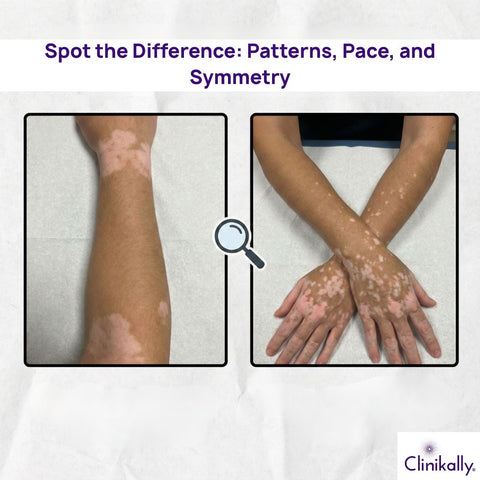
The distinction between segmental and non-segmental vitiligo is made by analyzing how pigment loss occurs across the skin. While both lead to white patches, their patterns, speed, and symmetry tell two distinct stories.
-
Distribution patterns: Segmental vitiligo (SV) is typically limited to a single location, frequently following a dermatomal or nerve-related course (for example, one side of the face, arm, or trunk). Patches rarely cross the midline. On the other hand, non-segmental vitiligo (NSV) develops in a bilateral, symmetrical pattern, such as on both hands, elbows, or knees. Typically spreads to several body locations.
-
Speed of progression: Segmental vitiligo (SV) spreads rapidly within the damaged segment and subsequently stabilizes. Once it "burns out," new patches typically stop appearing. On the other hand, non-segmental vitiligo (NSV) progresses more slowly but steadily, with flare-ups and remissions that last for years.
-
Symmetry factor: Segmental vitiligo (SV) is dramatically asymmetrical, generally affecting only one side. On the other hand, non-segmental vitiligo (NSV) is very symmetrical, with patches that frequently mirror each other across the body.
-
Age of onset: Segmental vitiligo (SV) usually occurs in childhood or adolescence and is occasionally related to trauma or stress in that area. On the other hand, non-segmental vitiligo (NSV) can arise at any age; however, it is more typically seen in young adults.
-
Clinical relevance: Segmental vitiligo (SV) is best treated with localized methods such as surgery (melanocyte transplants) and focused phototherapy. On the other hand, non-segmental vitiligo (NSV) necessitates a multifaceted strategy that includes immunomodulators, oral medications, and whole-body light therapy.
Segmental Characteristics: Early Onset, Unilateral Spread
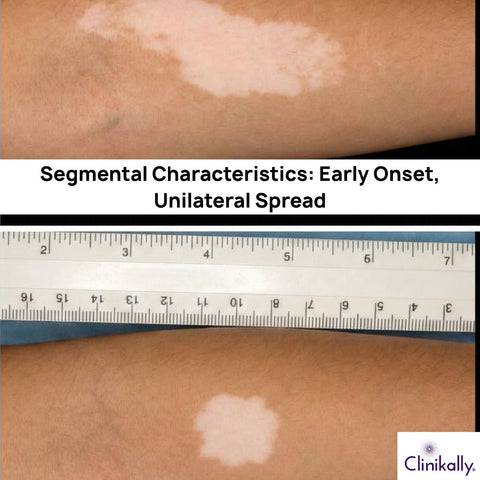
Segmental vitiligo (SV) has a distinct clinical identity, distinguishing it from the more prevalent non-segmental type. Its defining characteristics include timing, dispersion, and stability.
-
Early onset: SV generally manifests in childhood or adolescence, often before non-segmental vitiligo. Parents may observe a fast-growing pale spot on one side of the face, trunk, or limb. Early start is therapeutically important because management during the active phase can prevent persistent pigment loss.
-
Unilateral, confined spread: Unlike non-segmental vitiligo, which causes mirrored areas, SV often affects only one side of the body. The distribution frequently follows dermatomal or nerve-related lines, supporting ideas of neurogenic effect. It rarely crosses the body's midline, leaving a distinctive asymmetrical imprint.
-
Rapid yet self-limiting progression: Patches can grow swiftly within weeks or months, but the disease normally settles within 1-2 years. Once stable, SV rarely recurs or spreads elsewhere, which is an important diagnostic signal.
-
Associated features: Hair within patches may lose pigment (poliosis), particularly when the scalp, brow, or eyelashes are involved. Occasionally associated with local stressors such as trauma or stress in the affected area.
-
Treatment implications: Because SV stabilizes, surgical procedures such as melanocyte-keratinocyte transplantation or punch grafting are frequently more effective than in non-segmental cases. Targeted phototherapy can also be useful during the active early period.
Non‑Segmental Characteristics: Bilateral Patches & Koebner Phenomenon
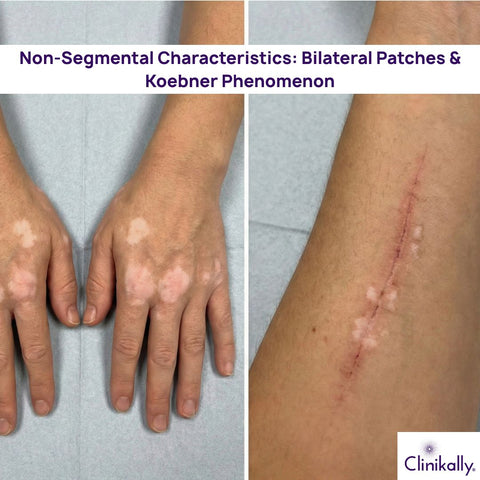
Non-segmental vitiligo (NSV) is the most frequent and well-known type, distinguished by its symmetry, durability, and systemic connections. Unlike segmental vitiligo, NSV progresses slowly but steadily, with a propensity to wax and wane over time.
-
Bilateral and symmetric distribution: NSV typically affects both sides of the body in a mirror-image manner. Common locations include the hands, elbows, knees, face, and body orifices (mouth, eyes, genitals). Patches may combine over time to cover greater areas.
-
Chronic, relapsing course: NSV has a chronic, recurrent course; it seldom "burns out." Instead, it develops in cycles of flare-ups and remissions. Disease activity might be unexpected, driven by stress, illness, or environmental factors.
-
Koebner phenomenon: NSV is distinguished by the formation of new lesions at sites of skin damage, such as scratches, burns, or friction, known as the Koebner phenomenon. This condition reflects the increased susceptibility of melanocytes to damage and immunological attacks.
-
Associated autoimmune links: NSV is frequently linked to systemic autoimmune disorders, particularly thyroid disease, type 1 diabetes, and alopecia areata. A family history of autoimmunity increases the risk even further.
-
Clinical relevance: Because NSV is extensive and chronic, systemic therapy is required, including topicals such as corticosteroids and calcineurin inhibitors. Phototherapy includes narrowband UVB and excimer laser. In refractory situations, consider systemic immunomodulators or JAK inhibitors. Early intervention can delay development and increase the possibilities of repigmentation.
Diagnostic Checklist: Wood Lamp Imaging, Labs, Differential Rules
A visual examination alone is insufficient to accurately diagnose vitiligo. Dermatologists use a standardized diagnostic criterion to establish pigment loss, rule out mimicking diseases, and identify systemic linkages.
-
Clinical examination: Age at onset, rate of progression, family history of autoimmune illness, and presence of triggers (trauma, stress, sunburn). Distribution and pattern that include Symmetry vs. unilateral spread, and segmental vs. non-segmental signals. Associated findings include poliosis (white hair), the Koebner phenomenon, and halo nevi.
-
Wood lamp imaging: Vitiligo patches appear chalky white with distinct boundaries under Wood's lamp. Helps identify vitiligo from post-inflammatory hypopigmentation, tinea versicolor, and pityriasis alba, which have duller or patchier fluorescence. Essential in early or subtle cases, particularly in pale skin, where pigment loss is less noticeable.
-
Laboratory: Although no single lab can prove vitiligo, tests can help identify systemic connections. The thyroid panel (TSH, T3, T4, anti-TPO antibodies)is used to screen for autoimmune thyroid illness. Fasting glucose / HbA1c levels rule out diabetes mellitus. Vitamin B12, folate, and iron testing to rule out dietary deficiencies that could exacerbate depigmentation. In certain circumstances, ANA and other autoimmune markers may be present.
-
Differential diagnosis: Conditions that mimic vitiligo must be excluded pityriasis alba (ill-defined, scaly hypopigmented patches in children), tinea versicolor (fungal infection showing yellow-green fluorescence under wood’s lamp), post-inflammatory hypopigmentation (after eczema, psoriasis, or injury, with less sharply defined borders), idiopathic guttate hypomelanosis (small, white “confetti-like” spots on sun-exposed limbs in older adults) and leprosy (hypopigmented anesthetic patches), and biopsy (reserved for atypical cases; histology shows absence of melanocytes in vitiligo vs. melanocyte preservation in other hypopigmented conditions).
Treatment Strategies Tailored to Type

Vitiligo treatment is never one-size-fits-all. Segmental and non-segmental vitiligo act differently, and treatments are tailored to the disease form, stability, and extent of involvement.
-
Segmental vitiligo (SV): Early onset, confined, unilateral, and usually stabilizes within 1-2 years. The main goal is to accomplish repigmentation in stable patches. Topical corticosteroids or calcineurin inhibitors for small, recent lesions, targeted phototherapy with excimer laser for resistant patches, and surgical options in stable, non-progressive cases, such as melanocyte-keratinocyte transplantation or punch grafting, frequently produce excellent results. Systemic therapy is usually unnecessary because SV rarely relapses or spreads.
-
Non-segmental vitiligo (NSV): Chronic, increasing, bilateral, and unpredictable activity. The main goal is to limit disease activity and induce repigmentation. Topical corticosteroids and calcineurin inhibitors are first-line treatments for limited disease. Phototherapy with narrowband UVB (NB-UVB) is the gold standard for extensive repigmentation. The excimer laser works well for localized patches. Systemic immunomodulators, such as oral steroids (short courses), methotrexate, or newer JAK inhibitors (tofacitinib, ruxolitinib), in resistant or quickly expanding illness. To minimize oxidative stress, add antioxidants (vitamins C, E, and alpha-lipoic acid). Surgical operations are only for stable NSV (≥12 months without new lesions or Koebner phenomena).
-
Supportive and cosmetic approaches: Camouflage cosmetics are particularly created makeup for noticeable lesions. Self-tanners, also known as dihydroxyacetone (DHA), give a transient skin tone blend. Counseling and psychological support are critical for quality of life, particularly in young patients.