Sunscreen Sticks: The Future of Effortless Sun Protection
Doctor's Desk
Author
16 Feb, 2026
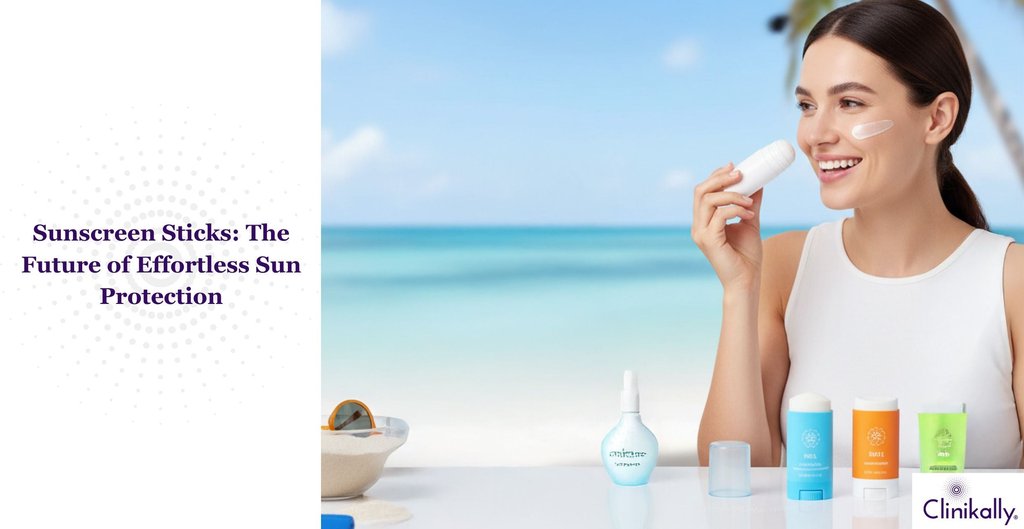
Sunscreens are now like phones; it is something you cannot afford not to put on in the morning and wear all day long. However, we all may admit that we have skipped it at some point in our lives, as it is too sticky, greasy, or spoils our makeup. What would happen if sun protection were fast, clean, and totally mess-free? And that is where sunscreen sticks come in. No dirty fingers or powdery residue anymore, just a swipe and you are good to go. Sunscreen sticks are making a difference in how we cover our skin, as they are compact, easy to carry, and can be reused at any time and place. Sunscreen sticks are a great choice for those looking for a convenient, mess-free way to protect their skin from the sun. They have made SPF a routine that is not only easy but also stylish, a fact that proves that being safe in the sun is easy and stylish at the same time. This blog explains why they might be your go-to sunscreen option and some dermatologist-approved picks to consider.
What is a Sunscreen Stick? Most Convenient SPF Option
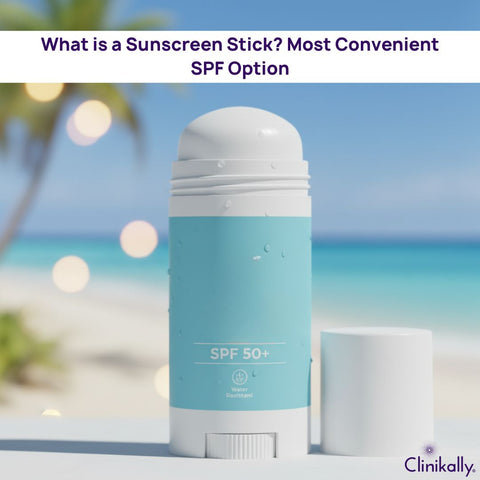
Solid and small, a sunscreen stick makes applying sunscreen easy and mess-free. In contrast to conventional lotions or creams, which may feel greasy or sticky, a sunscreen stick easily covers the skin, providing an imperceptible layer of defense. It typically comes in a twist-up tube that resembles a lip balm or deodorant, making it incredibly portable and hand-free to apply anywhere. Its accuracy, which allows you to target particular regions like your face, neck, or shoulders without overusing the product, makes it even better. Sunscreen sticks are the ideal combination of mobility, simplicity, and protection for modern sun care, making them suitable for quick touch-ups and reapplication throughout the day. This little stick offers a high SPF, whether you're traveling, at the beach, or running errands.
Why Traditional Sunscreens Don’t Always Work for Everyone?
Let’s be real, looking for the perfect sunscreen can feel like a never-ending search. Traditional sunscreens, whether in creamy or lotion form, do their work of protecting from Ultraviolet rays, but not always in the most user-friendly way. Many people skip applying them altogether because of how they feel rather than how they work.
For starters, most conventional sunscreens leave behind that sticky, greasy layer that makes your skin feel heavy, especially in humid weather. Then there’s the dreaded white cast that shows up on deeper skin tones, making you look more ghostly than glowy. If you have acne-prone or sensitive skin, the thick formulas can clog pores, trigger breakouts, or irritate.
And let’s not forget convenience, or rather, the lack of it. Reapplying traditional sunscreen every few hours means messy hands, smudged makeup, and a whole lot of effort most of us simply skip. That’s why many people are turning to smarter, cleaner, and easier alternatives, such as sunscreen sticks, that make daily SPF protection feel effortless rather than frustrating.
How Sunscreen Sticks Became the Game-Changer?
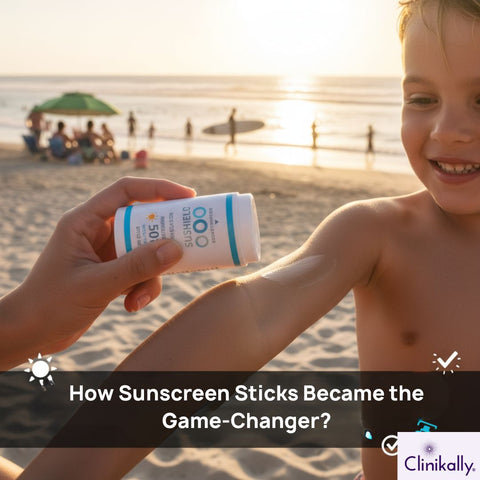
Using sunscreen over the years was a hassle, and it felt like an obligation I had to go through- the heavy creams, the stickiness of the feeling, and that horrible white cast that made all the pictures a little less enjoyable. Although we understood that SPF had to happen, it was not that convenient in our busy schedules. That is where sunscreen sticks came in and revolutionized the game.
Rather than using sticky creams as a popular method of protection, the sunscreen sticks offer protection in an easy-to-put-on, solid state, which does not leave a greasy palm or a mess. They are small enough and can be used to do minor touch-ups on the road, as well as on the way to the gym or to a certain destination. They have also addressed one of the largest sunscreen dilemmas, which is reapplication. You can cover your face or rub your hands with a stick instead of washing your hands or applying makeup, and you will be able to grab an instant refresh of SPF.
What began as a niche K-beauty trend soon reached the world, owing to the popularity of influencers, dermatologists, as well as skincare experts, who appreciated the combination of practicality and style. Sunscreen sticks are not a new form anymore; they are a smarter, more convenient method of protecting your skin daily.
Sunscreen Sticks vs. Lotions: What’s the Difference?
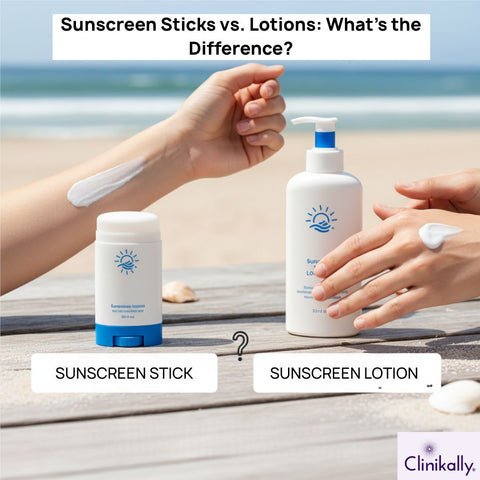
The two most prevalent types of sunscreen are sticks and creams. Both effectively shield dangerous UV rays, yet each has distinct advantages and disadvantages. Understanding the distinctions might help you decide which one is best for your skin type, lifestyle, and unique requirements. Here's a breakdown of the main distinctions between sunscreen sticks and sunscreen lotions.
-
Easy to apply: The most significant advantage of sunscreen sticks is that they are easy to apply. You can effortlessly glide the stick across your skin without having to rub it in with your hands. This is particularly useful for on-the-go use and easy reapplication throughout the day. Sunscreen lotions, on the other hand, must be applied and rubbed in, which may take longer than using a stick. While they can cover larger areas quickly, you must be extra careful to prevent missing spots.
-
Good Texture: Most sunscreen sticks have a dry-touch or matte feel, making them suitable for oily or mixed skin. They are less prone to leaving a sticky or shiny residue and provide a non-greasy, lightweight feel after application. Sunscreen lotions, on the other hand, are often lighter, creamier in texture, and spread more easily across the skin. This is an excellent option if you like a more hydrating sensation, as some lotions contain moisturizing substances such as aloe vera or glycerin. Lotion-based sunscreens can feel more moisturizing or dewy, which is ideal for dry skin, but they may leave you feeling greasy, particularly in hot or humid weather.
-
Travel-friendly: Sunscreen sticks are tiny, sturdy, and leakproof, making them ideal travel companions. They fit conveniently into your pocket, purse, or carry-on bag without spilling. Sunscreen lotions are often packaged in larger bottles or tubes, which might take up more space and make travel less practical. While smaller bottles can be purchased for travel, they still have the risk of spilling or leaking if not properly sealed.
-
All Skin types: Many sunscreen sticks contain minerals, such as zinc oxide or titanium dioxide, which are less prone to irritating sensitive skin. The matte finish is especially beneficial to persons with oily or acne-prone skin because it eliminates shine and keeps the face feeling dry. Sunscreen lotions, on the other hand, are more moisturizing and ideal for persons with dry or mixed skin. They frequently include hydrating elements that help keep your skin supple and healthy.
Common Myths About Sunscreen Sticks
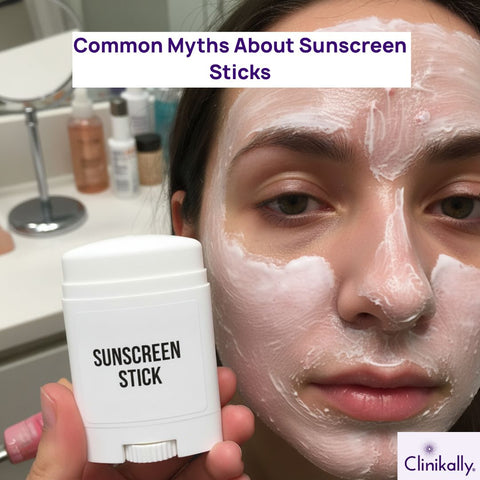
Today’s most trending skincare products, sunscreen sticks, come with their fair share of myths and confusion. Let’s clear the air so you can swipe on your SPF with full confidence.
-
Sunscreen sticks don’t protect as well as creams.
It's not true! Most sunscreen sticks offer the same SPF protection as lotions or gels; the difference lies in how they’re applied. As long as you use enough product and cover all exposed areas evenly, you’re getting the same level of defense. -
They’re only for touch-ups, not main protection.
While sticks are great for reapplication, they can absolutely be your primary sunscreen. Many are formulated with broad-spectrum SPF 30 or higher, making them strong enough for daily use. -
Sunscreen sticks clog pores and cause breakouts.
Modern formulas are lightweight, non-comedogenic, and packed with skin-loving ingredients. In fact, they’re often less greasy than creams, which can help prevent clogged pores. -
You can’t wear them under makeup.
Quite the opposite! Sunscreen sticks glide on smoothly and absorb quickly, creating a perfect base for makeup. Plus, they’re ideal for touch-ups without disturbing your look. -
They leave a white cast on the skin.
Transparent or tinted formulations, most sunscreen sticks now blend seamlessly into every skin tone, no chalky residue, no ghostly finish.
Benefits of Using a Sunscreen Stick
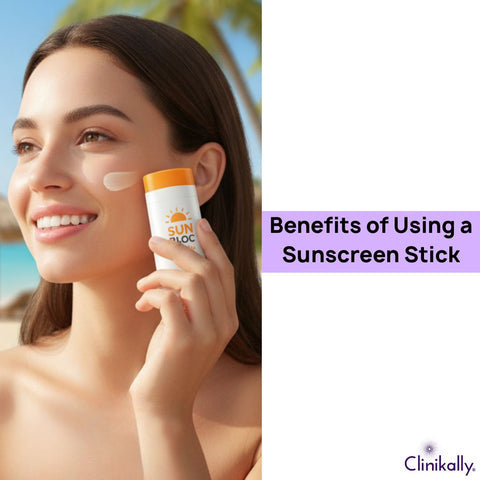
Sunscreen is vital for protecting your skin from dangerous UV rays, but how you apply it can make a significant impact on your daily routine. Sunscreen sticks are a popular choice because of their ease, portability, and effectiveness. Some major advantages of using a sunscreen stick are:
-
Quick and easy application: Sunscreen sticks are extremely simple to apply, making them an excellent choice for those on the go. Unlike lotions and sprays, which must be squeezed or sprayed and then rubbed in, sunscreen sticks can be applied straight to the skin. There is no mess, no need for extra tools, and no leftover product to clean up. It's an excellent choice for quick, effective protection.
-
Precision and focused coverage: The form of a sunscreen stick enables accurate application to certain parts of your body, such as your face, ears, and neck. Sunscreen can be easily applied to smaller or difficult-to-reach places such as around the eyes, along the jawline, or between fingers and toes. This careful application is especially critical for burn-prone areas like the nose and ears.
-
Travel-friendly: Sunscreen sticks are small, lightweight, and leak-proof, making them excellent for travel. They fit effortlessly into your luggage, pocket, or carry-on, and you won't have to worry about spills or messes. Unlike liquid sunscreens, which can leak in your luggage or be confiscated by the TSA, sunscreen sticks are ideal for flight travel since they do not count as liquids.
-
No greasy residue: Sunscreen sticks are frequently made with a dry-touch or matte finish, which means they absorb swiftly into the skin without leaving any greasy or sticky residue. This is especially useful for people with oily skin or who dislike the uncomfortable, thick feel of standard sunscreen creams.
-
Water-resistant and long-lasting: Most sunscreen sticks are designed to be water-resistant, which means they stay on your skin even when you sweat or are exposed to water for an extended period of time. This is ideal for outdoor activities such as swimming, hiking, or sports that require sunscreen to remain effective and undamaged.
-
Sensitive skin: Many sunscreen sticks contain mineral sunscreens, such as zinc oxide or titanium dioxide, which give physical protection by bouncing UV rays off your skin. These compounds are typically softer and less likely to irritate, making sunscreen sticks an excellent choice for persons with sensitive or acne-prone skin.
-
Reapplication: Reapplying sunscreen every two hours is essential for maintaining UV protection throughout the day; however, many people struggle to reapply standard sunscreens. Sunscreen sticks make reapplying quick, simple, and convenient, especially when you're out and about. Simply swipe the stick on the spots that need to be touched up, and you're done.
-
Avoid messy hands: Traditional sunscreen lotions frequently require you to apply and press the substance into your skin, which might result in excess sunscreen on your hands, clothes, or other items. A sunscreen stick eliminates the need to touch the product with your hands, making it much cleaner and easier to use.
-
Long-lasting protection: Sunscreen sticks frequently provide long-lasting protection due to their thicker consistency and water-resistant qualities. The product is more likely to stay on your skin throughout the day, offering long-lasting sun protection without the need to reapply frequently.
-
Suitable for all skin types: While some sunscreens may be formulated for specific skin types, sunscreen sticks can be found in a range of options to suit various needs. Whether you have dry, oily, or combination skin, there’s likely a sunscreen stick that caters to your skin’s unique requirements.
Travel-Friendly and Perfect for Busy Lifestyles
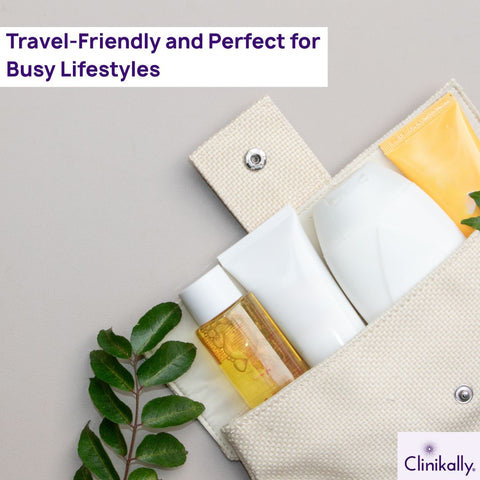
Sunscreen sticks should not slow you down when you need to get things done fast in your lifestyle, and that is why this product is fast becoming the new accessory of the multitasker and the traveler. They can be easily packed in a carry-on, gym pack, or a handbag with no concerns of leaks or the liquid restriction due to their small and spill-proof design. It is all you need to be secure, a simple swipe, be it on your way to a meeting, on a flight, or even a simple walk in the outside world.
You can apply the SPF to any area of your body when you are in your car, at your workplace, or even right before going outside, as opposed to the old lotions, which require careful application and clean hands. They are fast, small, and do not leave any traces or mess up your makeup. It is always portable, convenient, and strong to defend your skin anywhere the day takes you, hence it is the best lifestyle choice among those who are always on the run.
Water-Resistant & Sweat-Proof for All-Day Protection
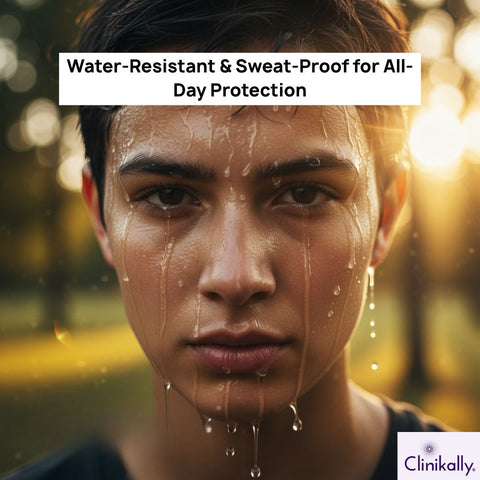
Among the most annoying things about normal sunscreen is the fact that it very easily watery, a drop of sweat, even going into the pool and not entering the water completely, can make your skin vulnerable. Sunscreen sticks are constructed to address all those issues. The vast majority of the high-quality sticks are provided with water and sweat-resistant formulas that stick more to the skin and create a more stable protective coating, which can not be easily moved.
You can go to the gym, go on a run, or just relax by the beach, and these sticks will be stuck, which means that you will always have good SPF protection and will not have to apply it every hour. They have a solid texture and are not likely to be washed away or drip off, so your skin is not exposed to these types of dangers when you are on the move. Therefore, you can go, sweat, or swim knowing that your SPF is as active as you are.
Easy Reapplication Without Ruining Makeup
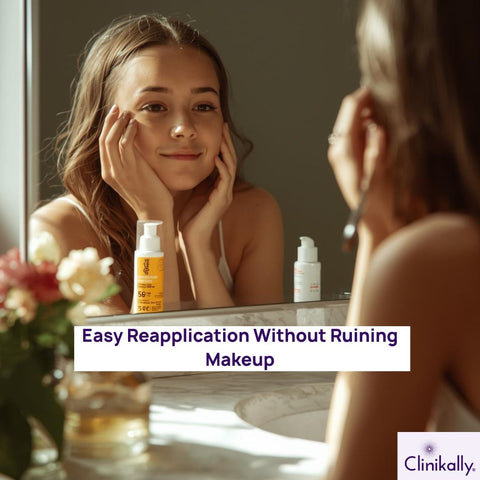
As we all know, there always comes the dilemma of skincare; you have invested time in doing your makeup, and then it’s time to no longer use your sunscreen. Conventional sunscreens, particularly creams or lotions, have a tendency to smear foundation, move concealer, and leave that terrible white cast. However, with the sun protection sticks, that fight is history.
Sunscreen sticks are easy to apply and will not disturb your base. Their firm texture makes them easy to apply; you can apply them to parts of your nose, cheeks, and forehead without messing up your appearance. A lot of them are created using light, non-greasy ingredients, which melt into the skin, lie perfectly over the makeup.
On top of that, as you are not required to use your fingers, it is fast, germ-free, and ideal when it comes to working on a touch-up during the day. Swipe to cover, shake lightly, and you are already saved without a patchy foundation, no gloss, and just SPF on demand.
Top Dermatologist-Recommended Sunscreen Sticks
Dermatologists frequently recommend sun protection lotions that are both broad-spectrum and mild on the skin. Sunscreen sticks are a popular choice due to their simplicity, ease of application, and non-greasy formulations. Here are some of the best dermatologist-approved sunscreen sticks that provide dependable sun protection while being soothing on the skin.
|
Product Name |
SPF / PA Rating |
Key Ingredients |
Benefits |
|
SPF 50+ PA++++ |
Mugwort, Camellia Japonica Seed Oil, |
Helps control excess oil, feels lightweight, good for reapplication, reducing redness and irritation |
|
|
SPF 50+ |
Zinc Oxide, Hyaluronic Acid, Ceramides Complex |
Combines mineral and chemical filters, Suitable for all skin types, prevents premature aging, sunburn and skin damage. |
|
|
SPF 50+ PA++++ |
Avobenzone, Octocrylene, Tinosorb S, Vitamin E |
Low white cast, strong UV protection, suitable for daily use |
|
|
SPF 50+ PA++++ |
Niacinamide, Ceramides, Vitamin E |
Hydrates the skin, adds glow, helps improve skin texture, no white cast, ideal for daily use |
|
|
SPF 50+ PA++++ |
Capric triglycerides, Beeswax, Castor Seed Oil |
Gentle on skin, moisturizing, good for sensitive skin, non-greasy formula |
Best Mineral-Based Sunscreen Sticks
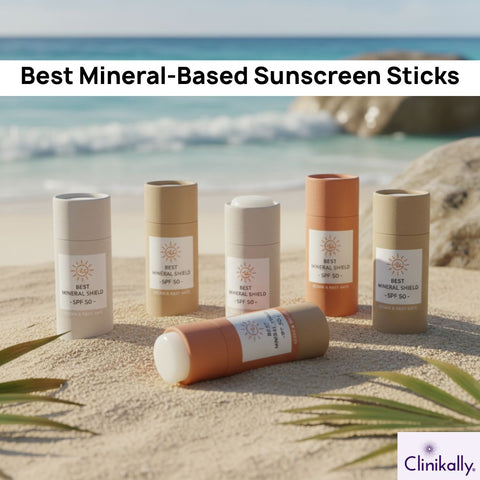
Choosing a mineral-based sunscreen stick ensures that you receive safe, efficient UV protection while also protecting your skin from irritation. Whether you have sensitive, oily, acne-prone skin or simply want a dependable, natural sunscreen, these options provide a range of benefits, including moisturizing formulations and long-lasting protection. With the extra convenience of a sunscreen stick, you can protect your skin while on the go, without having to worry about mess or irritation. If you're looking for a reliable formula to start with, these top-rated selections are excellent choices for daily wear:
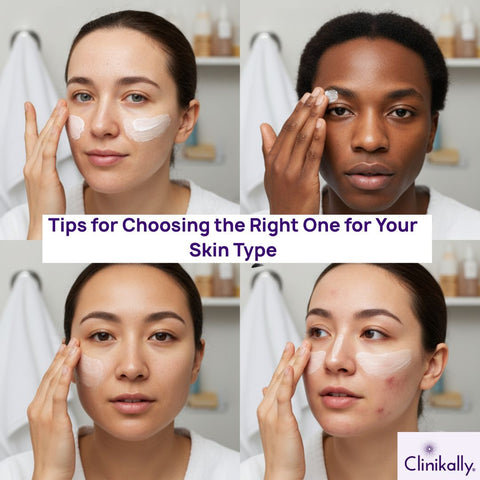
Tips for Choosing the Right One for Your Skin Type
-
Broad-spectrum & SPF: Always buy with both UVA + UVB protection and make sure at least SPF 30 or more.
-
Finish and texture: Will you carry it in your bag and reapply over makeup? Then, non-sticky, lightweight, and easy-to-blend sticks work best.
-
White cast: If you have a darker skin tone, check that the stick is labeled “sheer,” “tinted,” or uses micronized mineral filters so you don’t end up looking chalky.
-
Water/sweat resistance: For outdoor activity or a humid climate, a stick that holds up to sweat or light water contact is ideal.
-
Convenience and travel-friendliness: One of the big benefits of a stick is travel friendly and pocket-sized, no mess, and easy touch-ups on the go.
How to Use a Sunscreen Stick the Right Way?
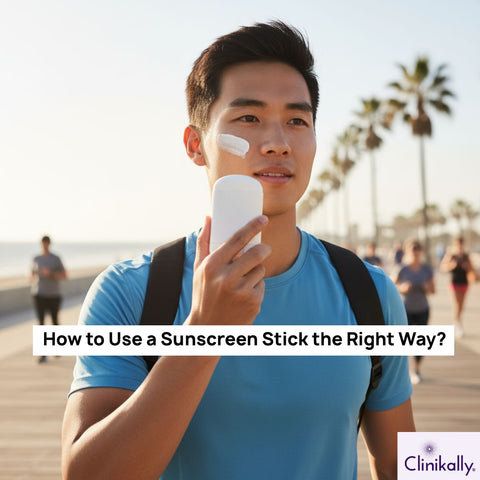
Using a sunscreen stick might look simple, just swipe and go, but a few small tricks can make all the difference between some protection and serious protection. Here’s how to do it right.
-
Start with clean, dry skin: Before applying, make sure your face (or body area) is clean and dry. Sunscreen adheres best to oil-free skin, so a quick blot or cleanse helps it stick better and last longer.
-
Swipe generously, not lightly: A common mistake is applying too little. Glide the stick over your skin in overlapping layers, covering every exposed area, cheeks, forehead, nose, ears, neck, and even the hairline. The goal is a visible layer before you blend.
-
Blend gently with clean fingers: Some sticks leave a slight sheen or residue; gently pat or blend it in using clean fingers. This ensures even coverage and prevents patchy protection.
-
Don’t forget the easy-to-miss spots: Your ears, around the eyes, and the back of your hands are often exposed and easily forgotten; make sure to swipe there, too.
-
Reapply every 2–3 hours: Even though sunscreen sticks are convenient, their protection fades just like creams. Keep your stick handy and reapply every few hours, especially after sweating or wiping your face.
-
Layer smartly with makeup: If you wear makeup, apply your stick sunscreen before foundation or use it as a touch-up SPF on top of makeup throughout the day. It won’t smudge or mess up your look.
Final Thoughts: The Future of Sunscreen Sticks Is Here
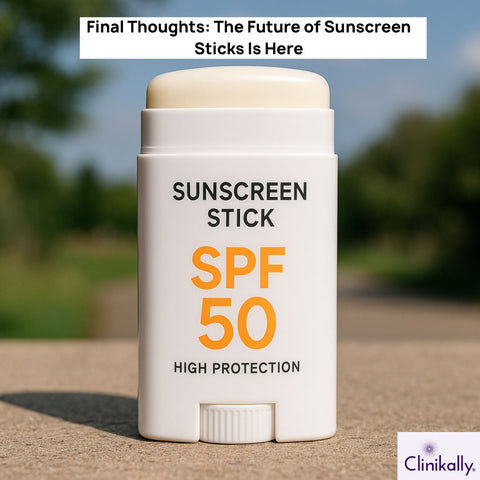
The sunscreen sticks have completely changed the way we perceive sun protection -the previously painfully disorganized and easily overlooked process has been turned into something fast, neat, and even fun. They are just the right fit in this hectic lifestyle, where there is a convergence in skin care and convenience. You need to brush your teeth before an appointment, you need to go out to run, you need to be on the beach under the sun, either way, a sunscreen stick will always be there to glide on your skin and save you.
Even beyond being easy, they symbolize innovation - small, portable, and full of healthy materials that do more than just protect your skin; they love it. No greasy fingers, no white cast, no excuses, just pure movable protection that works been it wherever you go in life.
Since skincare is in constant flux, sunscreen sticks are driving the transformation, and now we actually desire to reapply our SPF. It is the future of sun protection, and it is not in a bottle but in your pocket, just waiting to be swiped towards healthier and happier skin.