Choline’s Double Duty: Brain Fuel and Liver Defender
Choline, while being overshadowed by more well-known nutrients, has a key dual role in human health. Choline's importance cannot be emphasized, as it acts as a brain enhancer and liver defender. In this blog, we will look into choline's double duty.
What Is Choline and Why Haven’t You Heard Enough About It?

Choline is a water-soluble molecule that is neither a vitamin nor a mineral, yet it is commonly associated with the B-vitamin family due to its similar properties. Your body can create some choline in the liver, but not nearly enough to meet your daily needs; thus, dietary consumption is critical.
-
Choline is an important building block of acetylcholine, a neurotransmitter that regulates memory, emotion, and muscular control. It is particularly important throughout pregnancy and early childhood for fetal brain development.
-
Liver Function: Choline promotes fat removal from the liver. Even if you don't drink, a deficit can cause fatty liver disease.
-
Cell Structure: Choline is required for the production of phospholipids, which are needed for the development and maintenance of healthy cell membranes.
-
Metabolism and DNA Expression: It also contributes to methylation, which is involved in gene control and detoxification.
Defining choline as an essential nutrient
choline is essential because the body can’t make enough of it, and its roles in brain function, liver health, and cellular integrity are fundamental to life. Ensuring adequate intake is vital across all stages of life, especially during pregnancy, growth, and aging.
The hidden impact of choline deficiency

Choline shortage is frequently underestimated, yet the consequences for health can be widespread and severe. Because choline is essential for vital systems such as the brain, liver, muscles, and metabolism, even minor deficiencies can have serious implications.
-
Liver damage: One of the first and most well-documented indications of choline shortage is fat accumulation in the liver, which leads to non-alcoholic fatty liver disease (NAFLD). Without enough choline, the liver is unable to adequately package and export fats, allowing them to accumulate and potentially cause inflammation and liver injury.
-
Cognitive and neurological effects: Choline is the precursor to acetylcholine, a neurotransmitter required for memory, mood, and thought. A deficit can lead to memory loss, cognitive decline, and mood disorders like anxiety and irritability. Insufficient choline levels in children and growing fetuses can disrupt brain development, potentially influencing lifetime learning and behavior.
-
Muscular damage: Choline is essential for muscular function, and a lack of it can result in high levels of creatine kinase, an enzyme generated during muscle breakdown. This might lead to modest muscle weariness or, in severe situations, muscle injury.
-
Increased risk during pregnancy: Choline is essential for fetal brain and spinal cord development, preventing neural tube abnormalities and promoting proper placental function. Low maternal choline intake has been associated with long-term impacts on a child's memory, attention, and stress management.
-
Cardiovascular Implications: Choline has a role in homocysteine metabolism, which is vital for cardiovascular health. Without adequate choline, homocysteine levels can rise, increasing the risk of heart disease and stroke.
Why most diets fall short on choline
Despite its importance in brain function, liver health, and cellular integrity, choline is one of the most underutilized important nutrients—and many individuals are unaware they are lacking it. Here's why most diets lack choline.
-
Limited awareness and education: Choline is less well-known than other nutrients such as iron, vitamin D, and calcium. As a result, nutrition labels rarely include it, and public health messaging frequently ignores its significance, leaving most people ignorant of the need of incorporating choline-rich foods into their diets.
-
Changing food trends: Modern eating patterns and popular diets have contributed to reduced choline consumption. Low-fat and cholesterol-free diets frequently exclude egg yolks and organ meats, two of the greatest choline sources. Plant-based and vegan diets naturally eliminate animal products, which are rich in choline. While some plant meals include choline (such as soybeans, quinoa, and broccoli), the levels are much smaller. The reliance on processed foods dilutes nutrients; most ultra-processed foods are high in calories but low in choline.
-
Narrow range of high-choline foods: Choline is concentrated in only a few foods, including egg yolks, beef liver, chicken, fish, and dairy products. Without these foods, it is difficult to meet daily needs. For example, one big egg has approximately 147 mg of choline, while the daily sufficient intake for women is 425 mg and 550 mg for men, necessitating many meals of choline-rich foods.
-
Increased needs in certain populations: Certain populations require more choline, such as pregnant and lactating women (due to fetal brain development), athletes (because of increased muscle turnover), and persons with genetic abnormalities that affect choline metabolism. Many people in these categories are unaware of their higher nutritional requirements and may not modify their diets properly.
-
Inconsistent supplement use: While choline is available in some multivitamins and prenatal supplements, not all formulations contain it, and even when they do, the dosages are frequently insufficient to meet daily requirements.
The Brain Boosting Power of Choline
Choline may not be a household name, yet it is very necessary for brain function. Choline is one of the brain's most effective allies, helping with memory, mood, cognitive development, and age-related decline.
-
Acetylcholine production: Choline is the building block of acetylcholine, a neurotransmitter important in memory formation, attention, focus, learning, cognition, and muscle control. Without adequate choline, acetylcholine production decreases, potentially compromising mental clarity, mood, and cognitive performance.
-
Brain development in the womb and early life: During pregnancy, choline aids in the growth of the fetal brain and nervous system. Adequate maternal choline consumption has been related to increased memory and attention in children, less chance of neural tube abnormalities, and healthier stress control systems in the child.
-
Neuroprotection and cognitive aging: Choline supports cell membrane integrity and reduces inflammation, so preserving brain cell structure and function. According to research, it may protect against cognitive loss, reduce the progression of Alzheimer's disease, and assist older persons maintain mental sharpness.
Role in acetylcholine and cognitive performance

Choline serves a direct and fundamental role in brain function by acting as a precursor of acetylcholine, one of the brain's most important neurotransmitters. Because of this relationship, choline plays an important role in memory, learning, attention, and overall cognitive ability. Acetylcholine is a chemical messenger that carries signals between nerve cells and muscles. In the brain, it is necessary for memory encoding and retrieval, learning speed and adaptation, attention span and focus, and neuronal plasticity. According to research, enough choline intake promotes higher cognitive performance, such as greater working memory, faster processing speed, better attention control, and delayed cognitive aging.
Memory, focus, and learning enhancement

Choline is a potent supplement for cognitive development, having well-documented effects on memory retention, mental attention, and learning ability. Choline, the precursor of the neurotransmitter acetylcholine, helps the brain comprehend, store, and recall information efficiently.
-
Memory enhancement: Choline fuels acetylcholine, which is essential for encoding new memories, retrieving stored information, and consolidating short- and long-term memories. According to research, increasing choline intake is connected with improved verbal and visual memory, particularly in older persons. Adequate maternal choline intake throughout the prenatal and early life periods has been related to better offspring memory capacity throughout life.
-
Improved focus and attention: Acetylcholine regulates the brain's attention processes, allowing for prolonged concentration, decreased mental weariness, and improved task switching and cognitive flexibility. Low choline levels can cause distractibility, mental fog, and difficulties keeping focus, which are common complaints in both older persons and people who are under a lot of cognitive stress.
-
Learning and neuroplasticity: Neuroplasticity is the ability of the brain to establish and strengthen new neural connections, which is essential for learning. Choline helps with this by promoting synaptic signaling, maintaining neuronal membrane integrity, and facilitating the creation of new brain circuits. This makes choline extremely important for students, professionals, and elderly persons who want to maintain their mental sharpness and adaptability.
Nootropic buzz or scientifically backed?

Choline is one of the few nootropics that is both required and scientifically supported. It's more than simply a supplement for brain hackers; it's an essential ingredient for everyone trying to improve long-term cognitive performance.
Choline’s Role in Liver Health and Detoxification
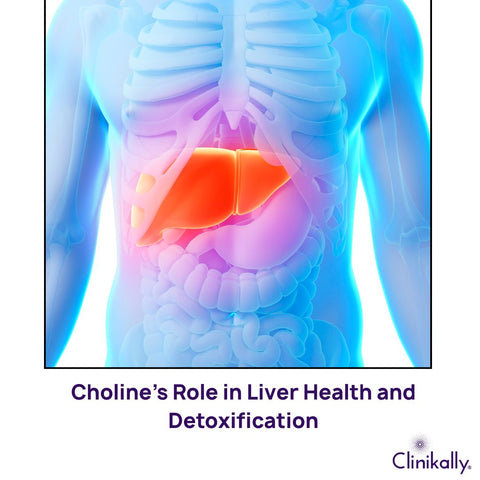
The liver is the body's primary detoxifying organ, filtering blood, digesting nutrients, and breaking down poisons, medications, and hormones. Choline is critical to these processes in multiple important ways:
-
Fat metabolism and transport: Choline is essential for the production of phosphatidylcholine, a component of very-low-density lipoproteins (VLDLs), which transport fat away from the liver. Without adequate choline, fat accumulates in liver cells, leading to non-alcoholic fatty liver disease (NAFLD), which can progress to inflammation, fibrosis, or even cirrhosis.
-
Methylation and detoxification: Choline contributes methyl groups to methylation, a process required for phase II detoxification (neutralizing harmful chemicals for excretion), homocysteine metabolism (preventing buildup linked to cardiovascular risk), gene expression, and DNA repair. Inadequate choline affects methylation, leading to increased oxidative stress and toxin burden, as well as impaired hormone metabolism.
-
Protecting against liver damage: Choline shortage has been associated with raised liver enzymes (which indicate liver cell damage), liver inflammation and fibrosis, and an increased vulnerability to toxins, alcohol, and drugs. People with low choline intake or higher requirements (such as pregnant women, frequent drinkers, or those with particular genetic variations) are more vulnerable.
How it prevents fat accumulation in the liver
Choline is essential in preventing fat buildup in the liver, often known as hepatic steatosis or non-alcoholic fatty liver disease (NAFLD). This is how it works.
-
Choline is necessary for phosphatidylcholine synthesis: Choline is required to produce phosphatidylcholine, a key phospholipid found in the membrane of very low-density lipoproteins (VLDLs). VLDLs are the vehicles used by the liver to package and export triglycerides (fat) into the bloodstream, from where they are carried to other tissues for energy or storage.
-
Enabling fat export from the liver: Without adequate choline, the liver cannot synthesize enough phosphatidylcholine. This reduces the liver's ability to form and produce VLDL. As a result, triglycerides build up within liver cells because they are not effectively transported out. Fat accumulates within the liver tissue, resulting in fatty liver disease.
-
Maintaining cell membrane integrity: Phosphatidylcholine contributes to the structural integrity and function of liver cell membranes. Healthy membranes are essential for normal liver metabolism and detoxifying processes.
-
Preventing liver inflammation and damage: Excess fat can cause inflammation and oxidative stress. This can lead to more severe liver disorders such as steatohepatitis, fibrosis, or cirrhosis. Adequate choline consumption helps prevent this cascade by keeping fat levels under control.
Detox enzyme activation and liver support
Aside from fat metabolism, choline is required for the liver's ability to eliminate toxic compounds and maintain general liver health. It promotes detox enzyme activation and many biochemical pathways that keep the liver working optimally.
-
Methylation and detoxification: Choline produces methyl groups (-CH3) via its metabolite betaine, which is essential for methylation processes. Methylation is an important process that activates and regulates numerous enzymes involved in liver detoxification, particularly Phase II detoxification. Toxins are made water-soluble and simpler to excrete by Phase II enzymes, which add chemical groups (such as methyl, sulfate, or glutathione).
-
Homocysteine regulation: Choline metabolism facilitates the conversion of homocysteine (a potentially harmful amino acid) into methionine by methylation. Elevated homocysteine levels are connected to oxidative stress and liver damage. By controlling homocysteine levels, choline indirectly protects the liver against oxidation.
-
Supporting glutathione production: Though choline does not directly create glutathione, it does assist appropriate methylation, which assures the availability of substrates and cofactors essential for glutathione synthesis. Glutathione, the liver's chief antioxidant, neutralizes free radicals and detoxifies toxic chemicals.
-
Cell membrane integrity and repair: Phosphatidylcholine, derived from choline, is an important component of cell membranes. Healthy membranes are critical to the liver's capacity to process toxins and maintain its barrier functions. It also helps liver cells regenerate and heal after harm.
-
Protection against liver damage: A lack of choline can impair the action of important detox enzymes. This can cause toxin buildup, increased oxidative stress, and liver inflammation. Adequate choline consumption promotes proper enzyme function and helps to prevent liver disorders such as fatty liver and fibrosis.
Choline for metabolic balance & choosing the right choline form

Choline is essential for maintaining metabolic balance, which includes fat metabolism, detoxification, and muscle function. Choosing the proper form depends on your health objectives—whether cognitive support, liver health, or overall wellness—and maintaining adequate intake helps keep your metabolism running smoothly.
How to Get Enough Choline in Your Diet

Adequate choline consumption is required for proper brain function, liver health, and metabolic balance. Here's how you can satisfy your daily choline requirements through diet and lifestyle:
-
Include choline-rich foods: The greatest way to receive choline is from natural foods. Some top choline-rich meals (approximate quantities per serving) are egg yolks contain approximately 125 mg per large egg. Beef liver contains approximately 420 mg per 3 ounces (cooked). Chicken liver contains ~140 mg per 3 oz. Salmon contains ~56 mg per 3 oz. Chicken breast contains approximately 72 mg per 3 ounces. Milk contains ~38 mg per cup. Soybeans contain ~107 mg per half cup (cooked). Broccoli contains ~40 mg per half cup (cooked). Brussels sprouts contain approximately 63 mg per half cup (cooked).
-
Set a daily target for the recommended intake: Adult men eat about 550 milligrams per day. Adult women ingest about 425 milligrams per day. Pregnant women need roughly 450-550 mg/day. Breastfeeding women eat roughly 550 milligrams per day.
-
Consider dietary patterns: Eggs are one of the most nutritious and bioavailable foods. If you eat meat, include organ meats such as liver, which are high in choline. If you adopt a vegetarian or vegan diet, balance it with plant-based foods such as soy, cruciferous vegetables, and nuts. Include fish and poultry for diversity and additional advantages.
-
Be aware of diets that may be low in choline: Vegan and vegetarian diets may fall short without proper planning. Highly processed and low-protein diets may also be deficient in choline.
-
Consider supplements if necessary: If you struggle to reach your needs through food, supplements such as citicoline, alpha-GPC, or phosphatidylcholine can assist. Before beginning to take supplements, consult with your doctor.
-
Cooking tips: To preserve the nutritional value of choline-rich meals, avoid overcooking them. Use moderate cooking methods, such as steaming or poaching.