Potassium Sorbate in Skincare: Preserving Beauty & Freshness

In the cosmetics industry, several components play the hero behind the scenes of each product. Potassium Sorbate is one such preservative, offering a benign alternative to harsh chemical additives. What more? Let us discover more about this unique preservative that has a significant impact on numerous self-care products.
Understanding Potassium Sorbate: What It Is & How It Works
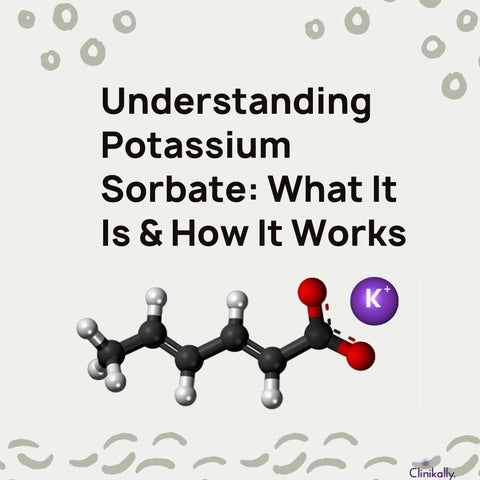
Potassium sorbate is a chemical additive. It is commonly used as a preservative in food, beverages, and personal care items. It is an odorless and tasteless salt made from sorbic acid and potassium hydroxide. Potassium sorbate increases the shelf life of foods by inhibiting the formation of mold, yeast, and fungi. The French found it in the 1850s and derived it from mountain ash tree berries. For the past fifty years, researchers have studied its safety and potential usefulness as a preservative. The Food and Drug Administration (FDA) of the United States considers it generally safe when used properly.
The Science Behind Potassium Sorbate: A Powerful Preservative
Potassium sorbate is an effective food preservative that inhibits the growth of microorganisms such as mold, yeast, and bacteria, increasing the shelf life of food goods. It is the potassium salt of sorbic acid, which is frequently utilized in food and personal care products. How it works:
-
Antimicrobial activity: Potassium sorbate inhibits microorganism growth by interfering with metabolic activities such as nutrition transport and energy synthesis.
-
Stability: It is a stable substance that retains its preservation characteristics even at higher temperatures and pH levels, making it suitable for a variety of food products.
-
Solubility: Potassium sorbate is very soluble in water, so it may quickly diffuse in food matrices and efficiently reach and inhibit microorganisms
Natural vs. Synthetic: The Origins of Potassium Sorbate
Potassium sorbate may be lab-created, but it is inspired by nature—and it brings the best of both worlds to your skincare.
-
Based on a natural compound.
-
Refined for current safety and performance
-
Keeps your products fresh, effective, and safe.
So, the next time you scan your skincare label, remember this: potassium sorbate may not be "natural" in the strictest sense, but it is a wise, skin-friendly decision based on science and nature.
How Potassium Sorbate Prevents Microbial Growth in Skincare
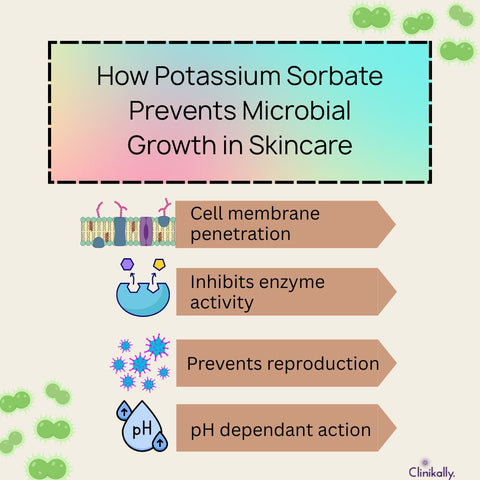
Potassium sorbate, the potassium salt of sorbic acid, inhibits bacteria' metabolic activity. Here's what happens.
-
Cell membrane penetration: Potassium sorbate penetrates microbial cells and disrupts the integrity of their membranes.
-
Inhibits enzyme activity: It reduces or stops the activity of enzymes that microorganisms require for energy production and reproduction.
-
Prevents reproduction: This inhibits the formation of microbial colonies, thereby stopping them in their tracks.
-
pH dependant action: It performs best in acidic environments (pH 4-6.5), which is consistent with many skincare formulas such as toners, serums, and moisturizers.
Potassium Sorbate Benefits: Why It’s Used in Skincare Products
Potassium sorbate may not be a well-known skincare component like hyaluronic acid or vitamin C, but it is very necessary for product effectiveness and safety. It acts as a preservative, ensuring that your skincare remains fresh, effective, and free of hazardous bacteria. Here's why this chemical is so widely accepted in the cosmetics business.
-
Protects against microbial contamination: The principal advantage of potassium sorbate is its ability to suppress the growth of mold, yeast, and some bacteria. This is especially crucial in water-based products (like creams, lotions, toners, and gels), as moisture can promote bacterial development. Without a preservative, even the cleanest product can become a breeding ground for skin-irritating organisms.
-
Gentle on sensitive skin: Potassium sorbate is less likely to irritate sensitive skin than harsher preservatives. It is commonly used in clean beauty and sensitive skin formulations since it is non-sensitizing at appropriate concentrations and does not clog pores or damage the skin barrier.
-
Effective in small amounts: Potassium sorbate is highly efficient, so a little goes a long way. It is often utilized in concentrations of 0.1% to 0.5% and does not add weight to the formulation or affect the product's texture or fragrance.
-
Eco-conscious & clean beauty friendly: Potassium sorbate, derived from sorbic acid, which originated in berries, is seen as a "nature-inspired" alternative to synthetic preservatives such as parabens and formaldehyde releasers. It is biodegradable and has a good safety record, according to global regulatory bodies.
-
Stable & versatile: It works efficiently across a wide pH range, particularly in acidic conditions (pH 4.0–6.5). Compatible with other substances, such as natural actives and emulsifiers. It helps to protect the overall integrity and shelf life of items.
Extending Shelf Life: Keeping Your Skincare Fresh & Effective
The shelf life of a skincare product refers to how long it remains.
-
Safe to use
-
Effective in performance.
-
Free of harmful microbial growth.
This can range from six months to three years, depending on the formulation, packaging, and storage conditions. A skincare product is only as effective as its stability. With clever preservation—thanks to chemicals like potassium sorbate your skincare remains safe, potent, and enjoyable to use from the first to the last drop.
Potassium Sorbate for Sensitive Skin: A Gentle Alternative to Parabens
Potassium sorbate is a gentler preservative that is often utilized in natural and sensitive-skin healthcare. Here's what makes it stand out:
-
Low irritation risk: It is non-sensitizing to most users and is significantly less likely to cause redness, itching, or flare-ups than harsher preservatives.
-
Effective microbiological protection: It inhibits the growth of mold, yeast, and some bacteria, thereby protecting your skin and extending product shelf life.
-
Clean beauty approved: Many "clean," "natural," and "organic" brands utilize potassium sorbate since it is environmentally and skin-friendly.
-
Safe in small doses: It is normally used at modest concentrations (0.1-0.5%), making it mild but effective without overburdening the skin.
The Role of Potassium Sorbate in Preventing Skin Irritations
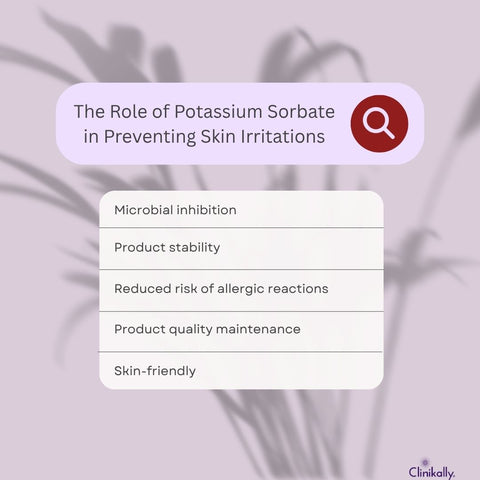
Potassium sorbate prevents skin irritations by acting as a preservative, inhibiting microbial growth and ensuring the stability and safety of skincare products. It protects against deterioration and contamination, lowering the risk of allergic reactions and other skin problems caused by bacteria. Here is a more detailed explanation.
-
Microbial inhibition: Potassium sorbate is effective at killing bacteria, fungi, and mold that can contaminate skincare products and cause skin irritation.
-
Product stability: By inhibiting microbial growth, potassium sorbate helps to maintain the integrity of skincare formulations, preventing them from degrading or becoming unsafe to use.
-
Reduced risk of allergic reactions: It did not cause skin irritation or allergic reactions in a group of test subjects.
-
Product quality maintenance: It guarantees that goods continue to function and behave as intended, enabling customers to enjoy them without worrying about contamination or spoiling.
-
Skin-friendly: Potassium sorbate is frequently used in products for sensitive skin types because, despite its capacity to eradicate microorganisms, it is thought to be mild on the skin.
Is Potassium Sorbate Safe? Understanding Its Impact on Skin
Potassium sorbate is a skin-safe preservative that gets the job done without fuss. It protects your products and your skin while remaining gentle and effective. If you want to avoid harsher preservatives yet still have items that stay fresh and stable, potassium sorbate is an excellent option.
Potential Side Effects & Precautions for Different Skin Types
Potassium sorbate is one of the gentler preservatives available, yet it is not without risk for everyone. By recognizing your skin type and taking a few easy measures, you may reap the benefits of this preservative without the negative side effects.
Comparing Potassium Sorbate with Other Preservatives
Potassium sorbate is frequently compared to other preservatives such as sodium benzoate and sodium propionate because of its efficacy and safety. It is generally recognized as safe (GRAS) and effective in suppressing mold, yeast, and bacterial growth in a variety of food products. While not a broad-spectrum preservative, it is frequently used in combination with other preservatives. Studies have indicated that potassium sorbate is more efficient than sodium benzoate in controlling some types of deterioration, particularly when used in tandem. Here is a more detailed comparison.
Potassium Sorbate:
-
Antimicrobial activity: Particularly effective in acidic environments against mold, yeast, and certain bacteria.
-
Safety: It is generally considered safe to consume.
-
Uses: It is commonly found in cheese, baked goods, beverages, and sauces.
-
Effectiveness: It may be more effective than sodium benzoate against certain spoilage organisms, particularly when combined with other preservatives.
-
Allergies: Although allergic reactions are uncommon, potassium sorbate in cosmetics and personal care products can cause skin irritation.
Sodium benzoate:
-
Antimicrobial activity: Effective against bacteria and yeast, but less effective against mold than potassium sorbate.
-
Safety: Although generally considered safe, high concentrations may cause hyperactive behavior in children when combined with certain artificial food colorings.
-
Uses: Commonly used in food and beverages, particularly acidic products such as fruit drinks and jams.
-
Effectiveness: It can be used either alone or in conjunction with other preservatives.
-
Allergies: Urticaria, rash, and asthma have all been reported.
How to Identify Potassium Sorbate in Your Skincare Labels
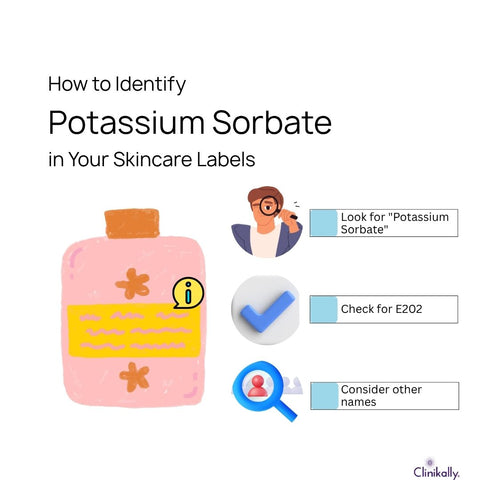
To find potassium sorbate on skincare product labels, look for the name "Potassium Sorbate" or its E number, E202. It is widely used as a preservative to improve shelf life by suppressing the growth of bacteria. Potassium sorbate is the potassium salt of sorbic acid, also known as "2,4-hexadienoic acid, potassium salt". Here's a thorough breakdown:
-
Look for "Potassium Sorbate": The ingredient list should clearly include "Potassium Sorbate" as one of the ingredients.
-
Check for E202: In some cases, the ingredient may be listed as E202, which is the E number for potassium sorbate.
-
Consider other names: While less common, it may also be listed as "2,4-hexadienoic acid, potassium salt" or other variations.
-
Understand its function: Potassium sorbate is used as a preservative to help cosmetic items last longer by inhibiting the growth of mold, yeast, and bacteria, which can cause spoilage and product degradation.
Final Thoughts: Should You Choose Skincare Products with Potassium Sorbate?
Potassium sorbate is a safe, effective, and gentle preservative that has earned a position in many skincare regimens, particularly for individuals with sensitive skin. It prevents items from microbial growth while keeping your skin healthy and irritation-free. However, as with any component, understanding your skin's sensitivity will always help you make the best selections.