Q-Switch Laser Treatment: Clear Pigment & Tattoos Safely
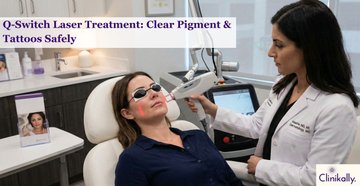
Q-switch laser treatment is at the forefront of skin rejuvenation, providing a new solution to a variety of skin concerns. Skinzest is glad to provide this cutting-edge therapy, which is well-known for its ability to rectify discrepancies in skin tone, fortify the skin, and reveal a more radiant complexion. In this blog, we will discuss Q-switched lasers.
Understanding Q‑Switched Technology: How Nanosecond Pulses Target Pigment
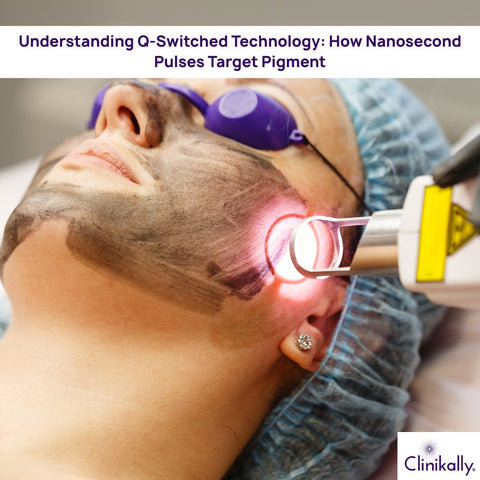
Q-Switched (QS) lasers produce nanosecond, high-intensity pulses. This quick energy supply is critical to their success. Unlike continuous-wave lasers, QS lasers emit energy in quick bursts that reduce heat dispersion into surrounding tissue, allowing for precision targeting of pigmented structures. QS lasers work on the idea of selective photothermolysis, which involves light energy being absorbed preferentially by chromophores—pigment-containing structures such as melanin in skin lesions or tattoo ink particles. The nanosecond pulse length produces a photoacoustic effect, fracturing pigment particles into small fragments without severely burning the surrounding tissue. The lymphatic and immune systems then work together to eventually eliminate these fragments. Different wavelengths target different pigment hues, such as 532 nm (green light), which works best with red, orange, and yellow pigments. 1064 nm (near-infrared) penetrates deeper, specifically targeting black and dark blue pigments. Other wavelengths can be mixed to create multi-colored tattoos or address complex pigmentation disorders.
Advantages:
-
Reduced Thermal Damage: Short pulses reduce the possibility of burns or scarring.
-
Effective Pigment Fragmentation: High peak power delivered quickly breaks down pigment.
-
Versatility: Can treat tattoos, freckles, sunspots, and other pigmented lesions with great accuracy.
Photomechanical Impact: Shattering Melanin and Tattoo Ink
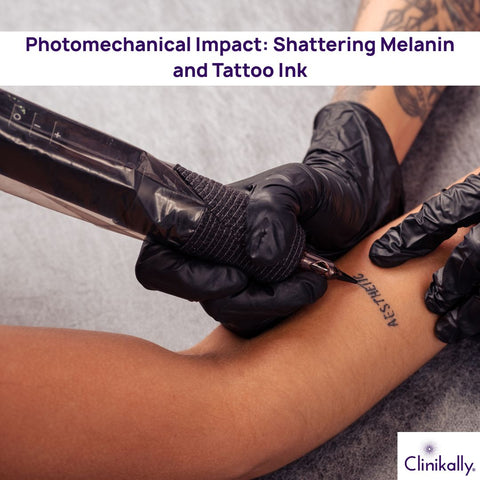
One of the most distinguishing features of Q-switched lasers is their photomechanical effect, which converts energy into intense shockwaves that break down pigment particles rather than generating heat.
Happens during the process:
-
Ultra-short pulses: Delivered in nanoseconds, these bursts do not cause tissue to heat up appreciably.
-
Shockwave generation: The abrupt release of energy causes minuscule acoustic waves.
-
Fragmentation: Melanin clumps or tattoo ink particles are fragmented into small pieces.
-
Immune clearance: These smaller fragments are gradually eliminated by macrophages and lymphatic circulation.
It works for pigment and ink:
-
Melanin: Natural pigment clusters that cause freckles, sun spots, and melasma absorb the laser's wavelength and fragment into smaller, less visible particles.
-
Tattoo ink: Different inks (black, red, blue, and green) absorb different wavelengths. The photomechanical force breaks them down into small enough pieces for the body to process.
Advantages:
-
Reduces thermal injury to the surrounding skin.
-
More precise than conventional heat-based lasers.
-
Effective even with deeply embedded pigments.
-
Keeps skin structure intact, allowing for faster recovery.
Selective Photothermolysis: Safeguarding Surrounding Tissues
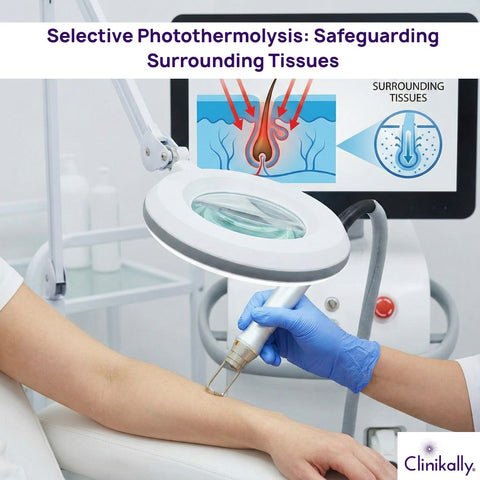
The notion of selective photothermolysis is a key achievement in Q-switched laser technology, as it ensures that only the target pigment absorbs laser energy while the surrounding skin structures are undamaged.
-
Selective: The laser wavelength is carefully selected to match the pigment's absorption spectrum (melanin in spots, tattoo ink in specific colors).
-
Photo: Laser energy is transmitted as light.
-
Thermolysis: The absorbed light energy is converted into heat, which destroys the pigment.
Because laser pulses are delivered in nanoseconds, the pigment is disrupted before heat can spread, reducing collateral damage.
It safeguards healthy skin:
-
Wavelength precision: Melanin, hemoglobin, and tattoo pigments absorb different wavelengths, so Q-switched lasers are tuned to the pigment rather than the skin.
-
Pulse speed: Extremely short exposure prevents significant heating of the epidermis or dermis.
-
Targeted action: Only pigment-containing cells (melanocytes or tattoo ink granules) absorb the majority of the energy.
Device Variants: Nd: YAG, Ruby, and Alexandrite Compared
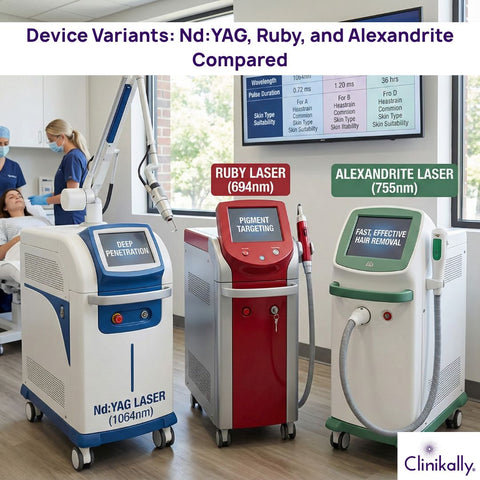
Not all Q-switched lasers are identical. The wavelength of the device influences how deeply it enters the skin and which pigments it most effectively targets. The three most widely utilized materials are Nd: YAG, Ruby, and Alexandrite.
-
Q-Switched Ruby Laser (694 nm): Ideal for dark blue and black tattoo inks, as well as superficial pigmentation (such as freckles and sun spots). Shallow penetration, primarily affecting the epidermis and upper dermis. Pros: Very effective for obstinate dark inks. Cons include an increased incidence of post-inflammatory pigmentation in darker skin tones.
-
Q-Switched Alexandrite Laser (755 nm): It works best with green, blue, and black tattoo inks, as well as some pigmented lesions. Moderate penetration. One of the few effective devices against green ink, which is normally quite resistant. Cons: It is not suitable for darker skin types (greater melanin absorption risk).
-
Q-Switched Nd:YAG Laser (1064 nm / 532 nm): Best for 1064 nm deeply ingrained pigments (black, blue), dermal melasma, and darker skin tones. 532 nm (frequency-doubled): red, orange, and yellow tattoo inks; superficial vascular lesions. Deepest penetration of the three. Pros: It is the safest solution for darker skin tones, with adaptable dual wavelengths.
Benefits & Drawbacks: Balancing Brilliant Results with Realistic Expectations
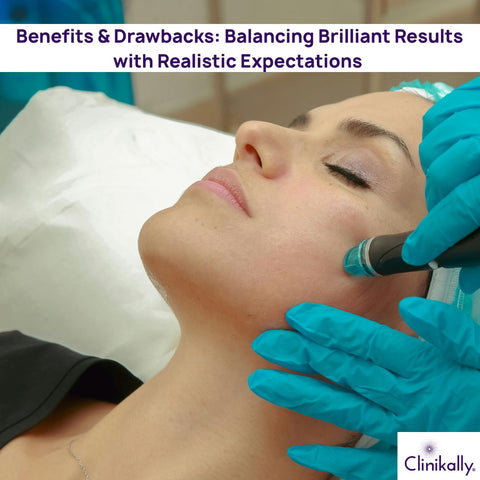
Q-switched lasers, like other modern treatments, have spectacular results when used properly — but they also have limitations. Knowing both perspectives helps to establish fair expectations.
Benefits:
-
Effective pigment clearance: Reduces melanin clusters and tattoo ink to tiny particles that the body eventually eliminates.
-
Non-invasive Precision: Selective photothermolysis targets pigment while preserving surrounding tissue.
-
Versatility: Targets tattoos, sun spots, freckles, melasma, post-inflammatory hyperpigmentation, and even vascular lesions using particular settings.
-
Minimal downtime: Most patients can resume normal activities within 24-48 hours, with only minimal redness or swelling.
-
Safe for all skin types (with the correct device): Nd:YAG provides safe options for darker complexions.
Drawbacks:
-
Multiple sessions are required: Depending on pigment depth, color, and skin type, complete clearance can often take 4-10+ sessions.
-
Possible incomplete results: Resistant tattoo inks (green, yellow, and pastel shades) may never completely disappear.
-
Temporary side effects: It's normal to experience redness, swelling, pinpoint bleeding, or a brief darkening of the pigmentation.
-
Risk of pigmentary changes: If energy levels are too high, darker skin types may experience hypopigmentation or hyperpigmentation.
-
Cost considerations: Treatment is an investment because several sessions add up.
-
Patience: Results are gradual, as the body clears pigment fragments over weeks.
Rapid Pigment Clearance for Tattoos, Melasma, and Age Spots
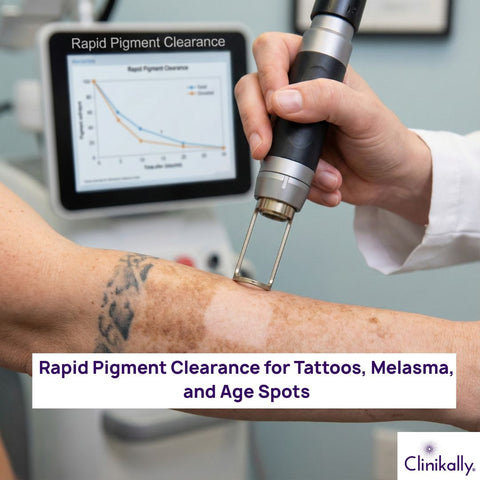
One of the most appealing aspects of Q-switched laser technology is its ability to provide rapid, visible pigment reduction across a wide range of applications. These devices use nanosecond energy bursts to break pigment particles nearly instantly, beginning a cleaning process that takes days or weeks.
Tattoo removal:
-
How it works: The ultra-short pulses break up tattoo ink into microscopic pieces, which the body's immune system eventually eliminates.
-
Best for: Black, dark blue, and red inks; Nd: YAG and Alexandrite devices can also handle more resistant greens and yellows.
-
Timeline: Fading usually begins after the first few sessions, but complete removal may require multiple treatments depending on the ink color, depth, and age of the tattoo.
Melasma and Hyperpigmentation:
-
How It works: Low-fluence Q-switched Nd:YAG softly disperses melanin clusters without causing excessive heat, reducing pigment overload and lowering the risk of rebound.
-
Benefits: Offers a non-invasive treatment option for patients who have not responded to topical agents or chemical peels.
-
Considerations: Melasma is a chronic, relapsing condition; lasers can control and lighten pigmentation, but they must be combined with strict sun protection and ongoing skincare.
Age spots and sun damage:
-
How it works: The laser targets the pigment in freckles, lentigines, and sun spots, causing them to darken temporarily before naturally shedding.
-
Results: Many patients see brighter, more even skin after just one session, with continued improvement during follow-ups.
-
Advantage: Quick treatment with little downtime makes it perfect for conspicuous regions such as the face, hands, and décolletage.
Collagen Kick‑Start: Texture Smoothing and Radiance Boost
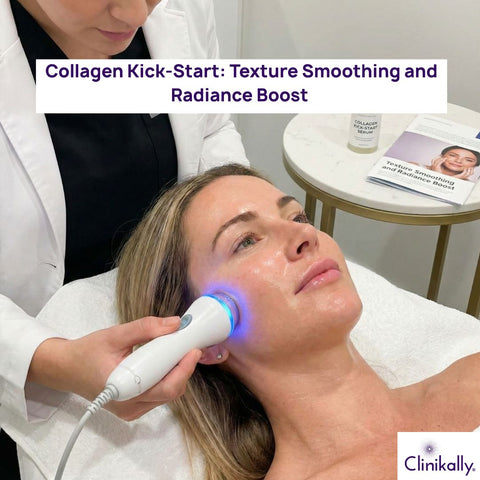
Q-switched lasers are more than simply pigment experts; their high-energy nanosecond pulses promote gradual regeneration beneath the skin. These therapies, which stimulate collagen remodeling, provide a texture-smoothing, radiance-enhancing impact that goes beyond pigment clearing.
How it works:
-
The rapid photomechanical action generates controlled micro-injury signals in the dermis.
-
Fibroblasts respond by producing new collagen and elastin fibers, which gradually increase skin density.
-
Over time, this renewal process reduces fine lines, enlarged pores, and rough patches while increasing overall glow.
Key benefits:
-
Refined skin texture: The replacement of old, damaged collagen results in a smoother, more even surface.
-
Radiance boost: Increased collagen and microcirculation improve skin luminosity.
-
Pore minimization: Strengthening follicular walls makes pores appear smaller and less noticeable.
-
Dual action: Treats pigmentation while rejuvenating, saving time and sessions.
Timeline of results:
-
Immediate: Following the first session, there is a slight tightening and brightening.
-
Short-Term (4–6 weeks): Improved clarity, smoother skin, and a noticeable decrease in pores.
-
Long-Term (3+ months): Constant collagen remodeling results in skin that is firmer, younger, and has a longer-lasting glow.
Potential Pitfalls: Pain, Downtime, and Hypo‑/Hyperpigmentation
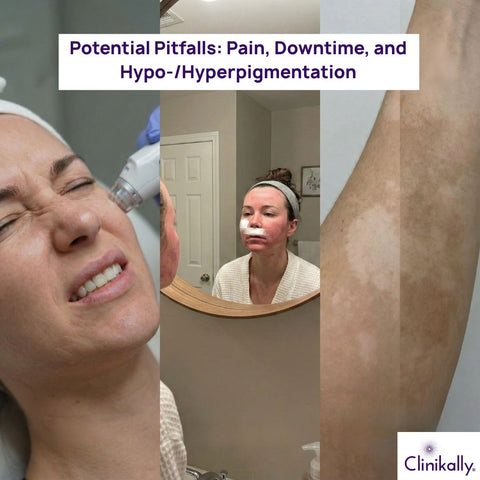
Q-switched lasers produce transformative outcomes, but they are not without risks. Like any high-energy therapy, the outcome is determined by device settings, practitioner experience, and skin type considerations. Understanding potential dangers allows patients to set realistic expectations and avoid difficulties.
Pain and discomfort:
-
What to expect: During treatment, patients frequently report sensations similar to snapping elastic bands or sharp pinpricks.
-
Management: Topical anesthetics, cooling devices, and air chillers can assist in alleviating discomfort. Pain is normally brief and manageable, but it is more severe during tattoo removal than during facial rejuvenation.
Downtime and healing:
-
Mild downtime: Following treatment, temporary redness, swelling, or tiny crusts are normal and often dissipate within hours to a few days.
-
Tattoo treatments: As pigment particles shed, treated areas may experience peeling, scabbing, and darkening for one to two weeks.
-
Precaution: To avoid complications during recovery, strict sun protection and mild skincare are crucial.
Pigment Changes:
-
Hyperpigmentation: More prevalent in darker skin tones (Fitzpatrick IV–VI), where excess melanin may be triggered by inflammation caused by lasers.
-
Hypopigmentation: Less common but possible, particularly in aggressive settings, resulting in light patches that can take months to normalize.
-
Prevention: Risk is decreased by conservative energy levels, test locations, and pre- and post-care procedures (such as using sunscreen, antioxidants, and anti-inflammatory topicals).
Treatment Blueprint & Aftercare Essentials
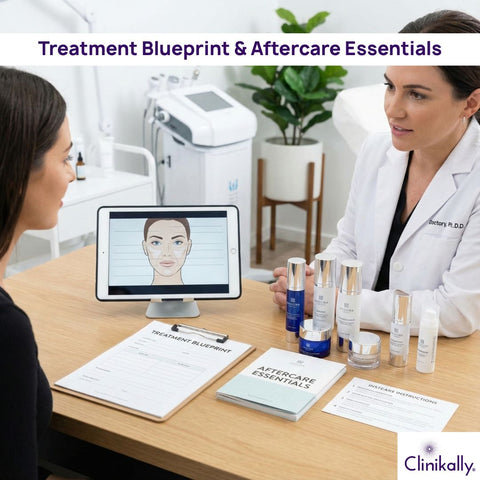
To get the best results from Q-switched laser treatments, adopt a planned treatment plan and adhere to aftercare practices that protect skin health while magnifying benefits.
Treatment blueprint:
-
Consultation and skin type: Your practitioner assesses skin type, condition, and goals. Test spots may be performed, particularly on darker skin types.
-
Session frequency: Usually, 6–12 sessions are spaced 6–8 weeks apart for tattoo removal. Melasma and age spots can be pigmented with three to six sessions spaced four to six weeks apart. 2–4 sessions of rejuvenation and texture, frequently in conjunction with other modalities.
-
Session duration: Each treatment lasts 15–45 minutes, depending on area size.
-
Pain management: Cooling devices, numbing creams, or local anesthesia (for tattoos) can ease discomfort.
Aftercare essentials:
-
Immediate care: To relieve redness, apply a cool compress or thermal water mist. Use bland, fragrance-free moisturizer to aid with healing.
-
Sun protection: Avoid direct sunlight for at least two weeks after treatment. To avoid rebound pigmentation, apply broad-spectrum SPF 30 or higher on a daily basis.
-
Dos and don'ts: Keep treated areas clean and mildly moisturized. Allow natural scabbing/peeling; avoid picking. Use gentle scrubs, retinoids, and active acids until the skin has calmed. Do not expose your skin to saunas, hot yoga, or chlorine pools for 48 to 72 hours.
-
Supportive boosts: Topicals such as aloe vera, niacinamide, and Centella asiatica can alleviate inflammation. Oral antioxidants (vitamin C, glutathione, and polypodium leucotomos) may aid in healing and pigmentation equilibrium.
Recovery timeline:
-
Day 1–3: Swelling, redness, and slight crusting.
-
Weeks 1-2: Scabbing or darkening of the pigment (tattoo or spots) followed by a slow removal.
-
Weeks 4–6: Clearly better clarity, smoother texture, and noticeable brightening.
-
Long-term: When accompanied by appropriate skincare and sun protection, results increase with each session and last longer.