When & How to Safely Exfoliate After Microneedling
After microneedling, your skin enters a sensitive healing phase where barrier recovery and collagen remodeling take place. Exfoliating too soon can cause irritation, disrupt healing, or even lead to post-inflammatory hyperpigmentation (PIH). This blog is a detailed guide on when and how to safely exfoliate after microneedling.
Understanding Skin Recovery: Why Timing Is Everything for Exfoliation

Your skin goes through very precise healing stages, and exfoliating can either help or hurt that process. An understanding of skin recovery is provided below:
-
Repair is progress: Microneedling causes regulated micro-injuries. Your skin is in an inflammatory state, in which blood flow increases and growth factors stream in to initiate repair. The barrier is damaged; exfoliation would remove protective lipids, exacerbate irritation, and increase the risk of infection. Hydration (with hyaluronic acid), gentle washing, and barrier support.
-
Natural rejuvenation begins: The proliferation phase begins. Fibroblasts that produce collagen are triggered, and old cells may shed, resulting in flaking or peeling. This natural exfoliation is the skin's regeneration process. Using acids or washes too early may impair fibroblast function and cause post-inflammatory hyperpigmentation. Allow skin to shed on its own. Apply soothing moisturizers and use SPF to protect your skin.
-
Stronger barrier, moderate exfoliation: The barrier progressively recovers, new cells emerge, and collagen networks develop. At this point, modest enzymatic or chemical exfoliation (such as PHAs or low-strength lactic acid) might assist in improving texture without impeding the healing process. Hydration and gentle exfoliation (once every week), always with moisturizer. Safe return to normal activities: collagen remodeling and skin thickening continue. The skin recovers resilience and normal tolerance. If your skin is calm and even-toned, you can slowly reintroduce stronger AHAs, BHAs, or retinoids. Progressively return to your normal schedule, never hurrying the activities.
Barrier Rebuild: From Micro‑Channels to Intact Stratum Corneum
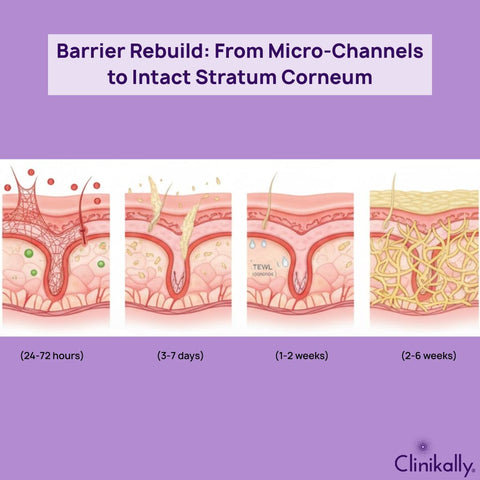
Let us break it down into a clear progression for "barrier rebuild" as shown below:
-
Immediate disruption (0–24 hours): Microneedling creates thousands of controlled micro-channels through the stratum corneum into the epidermis and sometimes dermis. The barrier status is severely compromised. Water loss (TEWL) increases, and the skin feels tight, flushed, and extremely sensitive. Platelets release growth factors, which initiate clotting and signal repair. Care recommendations include gentle cleanser, sterile hydration (hyaluronic acid), and a strict avoidance of actives, exfoliants, and harsh products.
-
Early barrier response (24–72 hours): Keratinocytes begin migrating to seal the micro-channels, while fibroblasts prepare to produce collagen. The barrier status remains unstable, and the skin may appear red, puffy, or burnt. The inflammatory cascade is activated; immune cells fight infection, and repair proteins build scaffolding. Concentrate on soothing hydrators, barrier-building creams, and sunscreen (if exposure is unavoidable). There is no exfoliation yet.
-
Natural renewal and shedding (Days 3–7): Damaged corneocytes loosen, resulting in apparent dryness or flaking. This is normal desquamation, not something to be scrubbed off. Microchannels are closing, and the stratum corneum is regenerating, albeit unevenly. Proliferation phase—new keratinocytes appear on the surface, while fibroblasts deposit early collagen and elastin. Hydration and barrier repair chemicals (ceramides, panthenol) are the primary care emphasis. Allow for natural peeling, but avoid mechanical or chemical exfoliation.
-
Barrier reconstitution (Weeks 1-2): The stratum corneum reestablishes continuity, TEWL reduces, and the skin regains resilience. Barrier status is stronger yet still developing. Collagen remodeling continues in deeper layers, while the epidermis regains its functional integrity. Exfoliation with gentle enzymatic or low-strength PHA/lactic acid can be employed if tolerated. Always use an SPF moisturizer.
-
Full functional recovery (2–6 weeks): The barrier functions normally, with increased density and durability due to dermal remodeling. Barrier status is intact, equivalent to or better than baseline. Collagen and elastin fibers restructure to reinforce the dermis. Stronger exfoliants (AHAs, BHAs, retinoids) and actives will be gradually reintroduced. The skin is ready for routine turnover support.
Inflammation Cascade: Managing Redness and Sensitivity

The redness and sensitivity following microneedling are direct outcomes of the inflammation cascade, and recognizing this allows for more effective aftercare. A systematic deep dive into the inflammatory cascade is provided below.
-
Inflammation cascade: Microneedling causes controlled micro-injuries, which cause platelets to rupture and release growth factors such as PDGF, VEGF, and TGF-β. Vasodilation causes blood vessels to widen, increasing circulation and immune cell recruitment, resulting in visible redness and warmth. Neutrophils and macrophages clear debris and protect against infection but also release inflammatory mediators (cytokines, histamines, and prostaglandins), resulting in sensitivity, swelling, and mild stinging. Typically peaks within the first 24-48 hours, then gradually decreases as the proliferation phase begins.
-
Redness and sensitivity are important: This short-term inflammation is necessary for collagen production and wound healing. Over-soothing with the wrong actives (e.g., steroids, harsh exfoliants) might reduce collagen activation, while neglecting inflammation can exacerbate irritation or PIH or impede healing.
-
Smart management strategies: To relieve heat, utilize thermal spring water sprays or cold compresses (rather than ice). Aloe vera gel, centella asiatica, and panthenol serums all help to alleviate discomfort. Use ceramide-rich moisturizers to reduce TEWL and enhance the skin's protective layer. Use fragrance-free, non-irritating products. Hydration boosters (hyaluronic acid serum) help to replace water loss. To prevent UV-triggered pigmentation on sensitized skin, avoid direct sun exposure for at least 48 hours before using broad-spectrum SPF 30+.
-
Avoid during the inflammatory phase: During the inflammatory phase, avoid active exfoliants (AHAs, BHAs, retinoids, and vitamin C), alcohol-based toners or astringents, abrasive scrubs or cleansing brushes, and heat exposure (saunas, hot yoga, and steam) because they might prolong redness.
-
Recovery timeline: Day 1-2 redness, warmth, and sensitivity can be managed with cooling, hydration, and barrier creams. Redness goes away on days three to five, and flaking may start; stay hydrated and soothing. After a week, if the skin feels stable, gentle actives can be gradually reintroduced. Day 5+ sensitivity decreases, and the barrier strengthens.
Ingredient Watchlist: Actives to Skip vs. Soothe
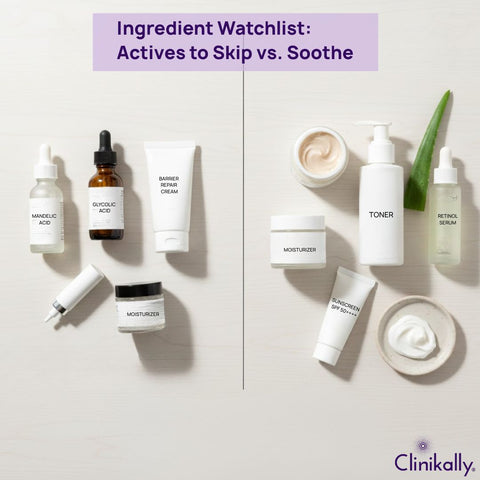
Excellent point: following microneedling, the skin is extremely permeable and fragile; therefore, the improper substance can cause irritation, burning, or post-inflammatory hyperpigmentation (PIH). A clear ingredient watchlist of actives to skip vs. soothe is provided below:
-
Actives to skip (at least 7–14 days post-microneedling): These produce irritation and stinging in open micro-channels and can interfere with collagen remodeling. Strong acids like glycolic, salicylic, and mandelic can be too harsh on sensitive skin. Retinoids, including retinol, tretinoin, and adapalene, can induce peeling, redness, and persistent sensitivity. High-strength vitamin C (L-ascorbic acid > 10%) is acidic, stings, and causes PIH. Benzoyl peroxide causes severe irritation and impairs barrier healing. Exfoliating powders and physical washes cause microtears in already delicate skin. Alcohol-based toners and astringents deplete lipids and exacerbate TEWL. Undiluted essential oils can cause sensitization and inflammation.
-
Ingredients (to soothe and support recovery): Hyaluronic acid (HA) provides deep hydration, plumping, and tightness relief while also calming inflammation, reducing TEWL, and promoting healthy barrier rebuilding. Pro-Vitamin B5, or panthenol, has anti-inflammatory and repair-enhancing properties. Centella Asiatica (Cica)reduces redness and increases fibroblast activity. Aloe vera is cooling and soothing, and it hydrates without feeling heavy. It is best to introduce niacinamide (low strength, 2–5%) after 5–7 days. It strengthens the barrier and lessens redness. Ceramides and cholesterol help to rebuild the stratum corneum and restore barrier lipids. Peptides (e.g., copper peptides, signal peptides) help collagen and tissue repair. Thermal spring water or oat extracts can relieve itching and sensitivity.
-
Safe Routine Blueprint (Days 0–7): Cleanser (gentle, sulfate-free, pH balanced), hydrator (pure hyaluronic acid serum), barrier cream (ceramide-rich, fragrance-free moisturizer), soothing layer (panthenol or centella serum), and SPF (mineral sunscreen, broad spectrum).
Crafting a Safe Exfoliation Plan: Methods, Intervals, and Ideal Products
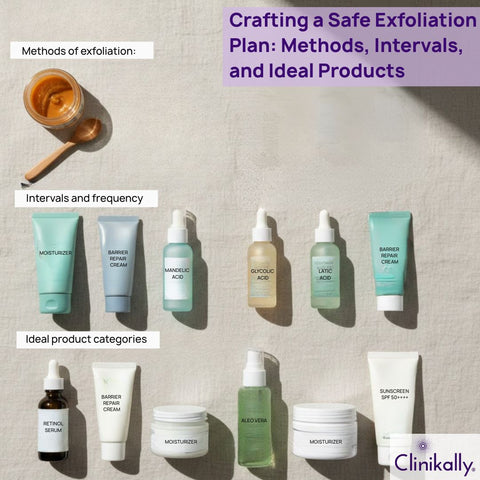
To create a safe exfoliation plan following microneedling, include:
Methods of exfoliation:
-
Enzymatic Exfoliation (Safest Start, Week 1–2): Uses fruit enzymes (papaya, pumpkin, pineapple) to gently dissolve dead cells. Non-acidic, non-abrasive—ideal as the first step back into exfoliation.
-
Chemical Exfoliation (Gradual Reintroduction, Week 2+): Mild options include PHAs (gluconolactone, lactobionic acid) and low-strength lactic acid (<5%). Later options (Week 3+) include AHAs (glycolic, mandelic) and BHAs (salicylic), but only after the skin has fully recovered.
-
Physical exfoliation (avoid for 3-4 weeks): Scrubs, brushes, and dermaplaning can all result in micro-tears and irritation. It should only be reintroduced after a month, and then with extreme caution.
Intervals and frequency:
-
Week 1 (Days 0–7): No exfoliation—the barrier is still repairing.
-
Week 2 (Days 8-14): Once a week, use enzyme-based or PHA exfoliation; patch test first.
-
Weeks 3-4: Use mild lactic or mandelic acid once or twice per week.
-
1 month later: Depending on your skin's tolerance, resume your regular exfoliation routine two to three times per week at most.
Ideal product categories:
-
Best for early stages (Week 2): For early phases (Week 2), try enzyme masks (papaya, pineapple, and pumpkin), PHA toners (gluconolactone and lactobionic acid), and light lactic acid serums (≤5%).
-
Best for later stages (Week 3+): Glycolic acid (≤5-7%) for texture refinement, mandelic acid (a gentler AHA, suitable for pigmentation-prone skin), and salicylic acid (≤2%) for acne-prone skin, only after a strong barrier.
-
Barrier-friendly pairings (always use after exfoliation): Hyaluronic acid, panthenol, soothers (Centella asiatica), aloe vera, barrier repair (ceramide-rich moisturizers), and protection (mineral sunscreen SPF 30+).
Chemical Options: Mild AHAs, PHAs, and Enzyme Formulas
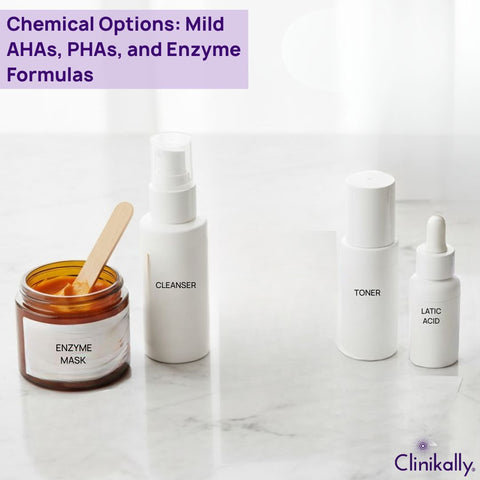
The chemical options for post-microneedling exfoliation, with an emphasis on safety, timing, and benefits, include:
-
Enzyme formulas: These are derived from fruits such as papaya (papain), pineapple (bromelain), and pumpkin. They gently digest the keratin bonds that hold dead skin cells together, more like "dissolving" rather than peeling. It is not acidic or abrasive and will not penetrate deeply into newly remodeled skin. Ideal for the first exfoliation after flaking begins (Days 7–10). Example formats include enzyme gels, powder-to-foam cleansers, and gentle enzyme masks.
-
PHAs (Polyhydroxy Acids): Examples include gluconolactone and lactobionic acid. They exfoliate similarly to AHAs but have a larger molecular size, resulting in slower penetration and less irritation. Additional benefits include humectant properties (which attract water), antioxidant activity, and support for barrier recovery. Ideal for sensitive, post-procedure skin that cannot yet withstand stronger acids. Best suited for the transition phase (Days 10-14), when the barrier shows signs of recovery. Example formats include PHA toners, hydrating exfoliant serums, and gel-lotion hybrids.
-
Mild AHAs (Low-strength): Lactic acid (≤5%) is a hydrating and mild AHA that is ideal to begin with after a procedure. Mandelic acid (≤5%) is a larger molecule that penetrates slowly, making it ideal for pigmentation and acne-prone skin types. Glycolic acid (≤5%) is effective but can cause irritation. Use after full recovery (~3-4 weeks) and with caution. AHAs are stronger acids that can sting sensitive skin and increase the risk of PIH if used prematurely. Best suited for refining texture, increasing glow, and maintaining collagen stimulation once skin has stabilized. Example formats include low-AHA serums, lactic acid masks, and mandelic acid peels.
-
Pairing and protection: Always use hydrating serums (HA, panthenol) and barrier-repairing moisturizers (ceramides, cholesterol, fatty acids). Broad-spectrum SPF 30+ is a daily necessity because microneedling and exfoliation both increase sensitivity to UV rays. Begin once weekly and increase to no more than twice a week during the first month following the procedure.
Physical Alternatives: Ultra gentle Powders and Soft Microfibers
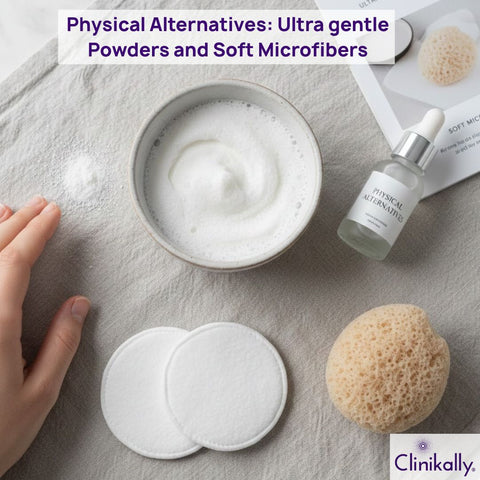
The following is a detailed guide to safe physical exfoliation options following microneedling:
Ultra gentle exfoliating powders:
-
What they are: Finely milled cleansing powders derived from rice, oats, or enzyme blends that, when combined with water, form a soft, creamy foam.
-
How they work: They provide low-friction polishing of dead cells; some formulas include enzymes or PHAs for a more gentle effect.
-
Why they're safer: The particle size is micro-fine, lowering the risk of scratching delicate post-procedure skin.
-
When to use: About 3 weeks after microneedling, when the stratum corneum is intact and redness has subsided.
Pro tips:
-
Add more water to thin the texture into a slurry.
-
Use your fingertips to make feather-light circular motions.
-
Rinse thoroughly and follow with hydrating serum and moisturizer.
Soft microfiber cloths and konjac sponges:
-
What they are: Ultra-soft microfiber pads or natural konjac sponges used to gently remove surface flakes.
-
How they work: They provide mechanical surface exfoliation by trapping loosened corneocytes and debris in the absence of chemical agents.
-
Why they're safer: Fibers are thinner than hair, which reduces drag and irritation risk.
-
When to use: As early as Week 2, but only to remove visible flaking; do not rub vigorously.
Pro tips:
-
Always dampen before use to reduce friction.
-
Combine with a gentle, pH-balanced cleanser.
-
Limit to once or twice per week until skin resilience returns.
Professional Touch‑Ups: When to Book a Clinic‑Grade Peel

A clinic-grade peel is best performed 4-6 weeks following microneedling, when your skin has fully recovered. Consider it a professional "polish" that compliments deeper collagen remodeling — but only under the supervision of a licensed practitioner. This is a guide for professional touch-ups following microneedling.
Timing matters
-
Immediately after microneedling: A peel would penetrate too deeply through open micro-channels, increasing the risk of chemical burns, infection, or serious PIH.
-
Within two weeks: The skin is in the early stages of inflammation and repair; the introduction of chemical stress disrupts the remodeling of collagen and the rebuilding of the barrier.
-
Safe time frame: 4–6 weeks after microneedling. At this point, the redness has subsided, the stratum corneum has returned, and collagen synthesis has started. Without sacrificing healing, a peel here can improve texture and pigmentation outcomes.
Benefits of adding a peel:
-
Concerns about pigmentation include melasma, sunspots, and post-inflammatory hyperpigmentation.
-
Texture refinement refers to persistent roughness, enlarged pores, or uneven tone following initial healing.
-
For acne-prone skin, gentle salicylic or mandelic peels can help regulate oil once the barrier strength has returned.
-
In order to maximize glow and "reset" the surface, patients undergoing a series of microneedling sessions may benefit from a peel in between treatments.
Peel Types to Discuss with Your Provider:
-
Gentle, clinic-grade options (safe post-needling): Gentle, clinic-grade choices (safe post-needling) include lactic acid (hydrating, light resurfacing), low-strength salicylic acid (oil control, acne management), and enzyme-based professional treatments (papaya, pumpkin, and bromelain mixes).
-
Avoid the following in the first few months after needling: Medium-depth TCA peels. High-strength glycolic (>20%) or Jessner's solutions. Any peel designed for severe resurfacing.
Key Takeaways & Dermatologist‑Approved Aftercare Guidelines
The main takeaways and dermatologist-approved aftercare guidelines for microneedling and exfoliation are:
-
Microneedling causes microchannels that temporarily weaken the skin barrier; exfoliating too quickly may result in irritation, infection, or PIH.
-
Exfoliation is not recommended for the first 5-7 days; enzymes/PHAs should be introduced after Week 2; moderate AHAs or salicylic acid should be used after 3-4 weeks, once the skin has calmed down completely.
-
Exfoliation should be gentle, not aggressive; overdoing it can reverse the benefits of microneedling.
-
Exfoliation should always be combined with hydration, barrier repair, and sun protection to achieve the best results and avoid complications.
Dermatologist-approved aftercare guidelines:
Do’s:
-
Gently cleanse with a mild, sulfate-free cleanser.
-
To relieve tightness, use hydrating serums such as hyaluronic acid and panthenol.
-
Moisturize with ceramides, cholesterol, or shea butter to help rebuild the barrier.
-
Beginning on Day 2-3, apply a broad-spectrum SPF 30+ daily.
-
Allow natural peeling to occur — do not pick, peel, or scrub.
-
Schedule professional follow-ups (peels, additional microneedling) only after your provider confirms recovery.
Don’ts:
-
For at least two weeks, avoid using active exfoliants such as AHAs, BHAs, retinoids, and high-strength vitamin C.
-
Skip physical scrubs, cleansing brushes, and harsh washcloths for 3-4 weeks.
-
Do not expose the skin to direct sunlight, saunas, or hot yoga during the first week.
-
Avoid using alcohol-based toners or heavily fragranced products.
-
Never exfoliate daily right after microneedling; instead, begin once a week and gradually increase as tolerated.