The Truth About Alcohol in Skincare: Expert Insights and Advice
Alcohol in skincare products often sparks debate, with some hailing its benefits and others cautioning against its use. While alcohol in skincare products can enhance product absorption and provide a quick-drying finish, it can also lead to dryness and irritation. Understanding the types of alcohol and the effects of alcohol on skin is crucial for making informed choices. In this article, Clinikally sheds light on the role of alcohol/ ethanol in skincare, thereby offering valuable and practical insights and advice to help you navigate this complex ingredient for healthier, more radiant skin.
Understanding Alcohol in Skincare Products
Alcohol in the skincare products can perform various roles, such as :
-
being a preservative.
-
providing a quick-drying & matte finish.
-
enhancing and improving the product absorption.
While some alcohols can help the major active ingredients penetrate the skin more efficiently, others can strip natural body oil, leading to dryness, dehydration and irritation. It is essential to distinguish between different types of alcohol to know about their merits and demerits. Understanding these differences helps in making informed choices for your skincare routine.
Types of Alcohol Used in Skincare: What You Need to Know
Alcohols in skincare can be broadly categorized into three types:
-
Simple Type Alcohols
These are often used as solvents or preservatives in skincare products. They have a low molecular weight and can be drying to the skin if used in high concentrations. Various examples are:
-
Ethanol
-
Isopropyl Alcohol
-
Methanol
-
Fatty Type Alcohols
These are derived from fats and oils, and they have a higher molecular weight. They are often used as emollients and thickeners in skincare products, providing a moisturizing effect. Common examples are:
-
Cetearyl Alcohol
-
Stearyl Alcohol
-
Aromatic Type Alcohols
These alcohols are often used for their fragrance and preservative properties. They are generally considered safe and are found in various natural sources. Examples are:
-
Benzyl Alcohol
-
Other Alcohols
Various other alcohols commonly used in skincare products are:
-
Propylene Glycol: Though not a traditional alcohol, it is a potent humectant as it draws moisture from the environment, and a solvent; and is often included in skincare formulations.
-
Denatured Alcohol: Denatured alcohol in skincare is a type of ethanol that is adulterated with various additives to make it non consumable. It is usually used for its antiseptic action.
Understanding the different types of alcohol and their functions can help in choosing the right skincare products for your skin type and concerns.
How Alcohol Affects Your Skin: The Science Behind It
Alcohol in skincare can have a range of effects on the skin, depending on the type of alcohol used and the formulation of the product. Understanding the science behind how alcohol interacts with the skin can help consumers make informed choices about their skincare routines.
1. Simple Alcohols like Ethanol, Isopropyl Alcohol, Methanol
These are often used in skincare for their antiseptic properties. They are effective at killing bacteria and are commonly found in products like hand sanitizers and acne treatments. These can have a profound effect on Skin:
-
Simple alcohols can strip the skin of its natural oils, thereby causing dryness as these evaporate quickly and draw moisture away from the skin.
-
Frequent usage of these alcohols can cause irritation and sensitivity, especially in those having dry or sensitive skin, thus causing redness, flaking, and a compromised skin barrier.
-
Alcohols can increase the penetration of other ingredients into the skin. While this can be beneficial for active ingredients, it can also lead to irritation if the skin barrier is compromised.
2. Aromatic Alcohols like Benzyl Alcohol, Phenoxyethanol, and Farnesol
These are often used for their preservative and fragrance properties. They help extend the shelf life of products and impart a pleasant scent. Aromatic alcohols also exhibit a great effect on skin:
-
Benzyl alcohol and phenoxyethanol are effective preservatives that aid in preventing the growth of bacteria and fungi in skin care products.
-
These add a pleasant fragrance to the skincare products. However, some aromatic alcohols can cause allergic reactions or irritation in sensitive individuals.
-
Continuous use of products containing aromatic alcohols can lead to sensitization in some people. However, these are generally considered safe in low concentrations.
3. Fatty Alcohols like Cetyl Alcohol, Stearyl Alcohol, and Cetearyl Alcohol
Fatty alcohols are derived from natural fats and oils and are used as emollients, emulsifiers, and thickeners in skincare products. These also exhibit a great effect on Skin:
-
Fatty alcohols help to lock in the skin moisture, making it soft and supple. It also improves the texture of skincare products. These form a protective layer on the surface of the skin, thereby reducing TEWL (transepidermal water loss).
-
Fatty alcohols support the natural barrier of the skin. This makes it suitable for dry and sensitive skin types.
-
These alcohols aid in stabilizing skincare formulations, thereby ensuring that the active ingredients remain effective over time.
The Role of Alcohols in Different Skin Types
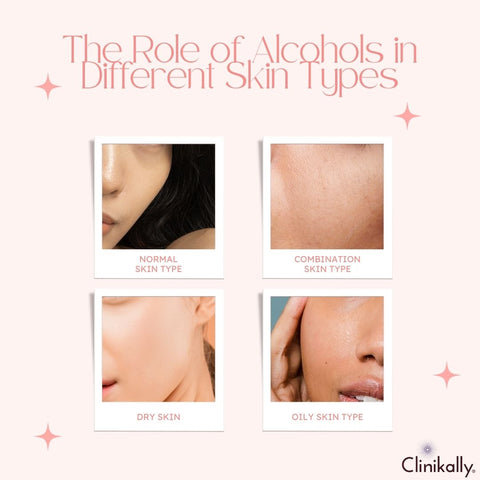
Various alcohols exhibit different reactions on different skin types as below:
-
Oily and Acne-Prone Skin:
Simple alcohols, in small amounts, are extremely useful because of their antiseptic properties, as these help in reducing excess oil and control acne-causing bacteria. -
Dry and Sensitive Skin:
Fatty alcohols are ideal for dry and sensitive skin as they support the skin barrier health by maintaining moisture content. -
Combination Skin:
People having combination skin should look for balanced formulations that use fatty alcohols to hydrate dry areas and simple alcohols sparingly in oilier zones.
The Scientific basis behind different skin properties are:
-
Skin Barrier Function: The skin barrier, or the uppermost layer of skin called stratum corneum, is extremely crucial for maintaining hydration and protecting against external irritants.
-
pH Balance: Alcohols can alter the natural pH of skin. This can affect the microbiome of the skin, thus potentially leading to issues like acne and dermatitis. Fatty alcohols tend to be more pH-neutral and less disruptive.
-
Cellular Impact: Simple alcohols can induce oxidative stress at a cellular level, leading to premature ageing and inflammatory responses and breakdown of collagen and elastin.
The impact of alcohol on the skin is multifaceted, with both positive and negative effects depending on the type of alcohol and the individual’s skin type. While simple alcohols can offer benefits like bacterial control and enhanced ingredient penetration, they also pose risks of dryness and irritation. Fatty and aromatic alcohols generally provide supportive and protective benefits, making them valuable in skincare formulations. Understanding these effects helps in making informed decisions to maintain healthy, balanced skin.
Common Myths About Alcohol in Skincare Debunked
Debunking some common myths surrounding alcohol usage in skincare products:
-
“All Alcohols Are Bad for Your Skin”
Not all alcohols are bad for the skin. Some are drying and irritating, like SD Alcohol (alcohol denat), Ethanol (ethyl alcohol), and Isopropyl Alcohol (isopropanol) that can prove to be irritating for skin as these can strip your skin's natural oils, leading to dryness, redness, and irritation whereas there are fatty alcohols like Cetyl Alcohol, Stearyl Alcohol, Cetearyl Alcohol, and Lanolin Alcohol that actually benefit your skin. -
“Alcohol-Free Products Are Always Better”
Undoubtedly, alcohol-free products are often gentler and better suited for sensitive skin, however some products with good alcohols can also be beneficial. These alcohols can help certain ingredients penetrate the skin more effectively and improve product texture. -
“Since Alcohol Evaporates Quickly, It's Safe”
While alcohol does evaporate quickly, the drying effects can still linger. Even short-term exposure can disrupt your skin's natural moisture barrier, especially for sensitive skin. -
“Alcohol is Necessary for Product Penetration”
There are various alternative ingredients that can achieve similar results without the drying side effects. Latest skincare formulations often don't rely on alcohol for penetration.
The Effects of Alcohol on Your Skin
Skin dehydration and alcohol presence in skincare products often go hand-in-hand. Alcohol is a common ingredient in many skincare products due to its quick-drying properties and ability to enhance the penetration of other ingredients. However, its presence can have several negative effects on the skin, particularly when used in high concentrations or by individuals with sensitive skin. Also, Alcohol sensitivity is quite common. Understanding these effects such as Skin irritation from alcohol, and alcohol and skin ageing connection etc. is important and vital for making informed and relevant skin care choices.
-
Alcohol can strip the skin of its natural oils, leading to dryness and dehydration. This can result in a tight, flaky, and uncomfortable skin texture.
-
Alcohol can compromise the skin's protective barrier, making it more susceptible to environmental aggressors and moisture loss. This can lead to increased sensitivity and vulnerability to irritation.
-
In response to the drying effects of alcohol, the skin may produce more oil to compensate, potentially leading to clogged pores and acne breakouts. Alcohol and acne-prone skin, thus don’t go together.
-
Alcohol can cause inflammation and redness, particularly in individuals with sensitive skin or conditions like rosacea. This can exacerbate existing skin issues and lead to long-term damage. Presence of Alcohol and sensitive skin are a bad combination.
-
Chronic use of alcohol-containing skincare products can accelerate the appearance of fine lines, wrinkles, and other signs of ageing by damaging the skin's structure and reducing its elasticity.
-
Immediate reactions to alcohol in skincare products can include stinging, burning, and discomfort, particularly in sensitive or damaged skin.
-
By disrupting the skin barrier and causing inflammation, alcohol can impair the skin's natural healing processes, making it harder for wounds and blemishes to recover.
While alcohol can offer benefits like quick absorption and a non-greasy finish, its potential to dehydrate, irritate, and damage the skin often outweighs these advantages. Opting for alcohol-free skincare products with hydrating and barrier-supporting ingredients can help maintain a healthy and resilient complexion.
Dehydration and Skin Barrier Damage: The Impact of Alcohol
When it comes to skincare formulations, the presence of alcohol is a contentious topic. Alcohol is often included for its quick-drying properties, aiding in product absorption and preservation. However, its impact on skin health, particularly concerning dehydration and skin barrier damage, raises significant concerns.
Simple alcohols can strip the skin of its natural oils, leading to a compromised lipid barrier. This lipid barrier is crucial for retaining moisture and protecting the skin from external aggressors. When disrupted, the skin becomes more susceptible to dehydration. It is often visible as following symptoms:
-
Loss of moisture leads to visibly dry and flaky skin.
-
Dehydrated skin often feels tight and uncomfortable.
-
A compromised barrier makes the skin more reactive to environmental stressors and other skincare ingredients.
The skin barrier acts as the first line of defence against environmental irritants and pathogens. Alcohol disrupts this delicate balance, thereby weakening the barrier function. This can lead to various bad results as enumerated below:
-
A damaged barrier leads to higher rates of water loss from the skin, exacerbating dryness.
-
Barrier impairment can trigger inflammatory responses, resulting in redness and irritation.
-
Chronic barrier damage can lead to premature ageing signs, such as fine lines and wrinkles.
While alcohol in skincare formulations can offer short-term benefits like quick absorption and a non-greasy finish, its long-term effects on dehydration and skin barrier damage are concerning. Opting for products with nourishing and hydrating ingredients can help maintain skin health and integrity, ensuring a well-moisturized and resilient complexion.
Alcohol and Acne: How Alcohol Can Aggravate Acne-Prone Skin
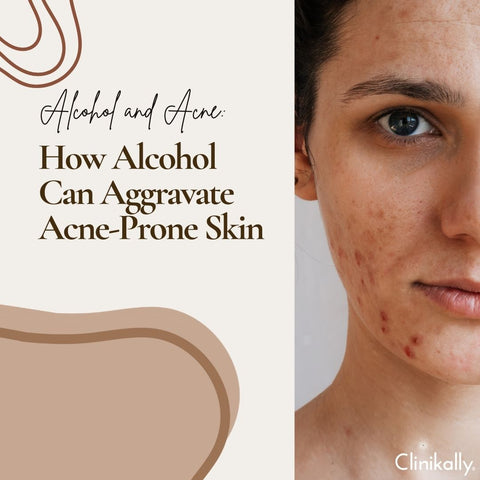
Alcohol is a common ingredient in many skincare products due to its quick-drying properties and its ability to deliver other ingredients more deeply into the skin. However, for those with acne-prone skin, alcohol can be a double-edged sword, often leading to more harm than good.
-
Simple alcohols can strip the skin of its natural oils, leading to dryness. While this might seem beneficial for oily, acne-prone skin, it can actually trigger the skin to produce more oil (sebum) to compensate for the dryness, exacerbating acne conditions.
-
The skin barrier is essential for protecting against environmental stressors and maintaining moisture. Simple alcohols can disrupt this barrier, making the skin more vulnerable to irritants and bacteria that can cause or worsen acne.
-
Alcohol can cause irritation and inflammation, especially in sensitive or acne-prone skin. This can lead to redness, peeling, and an overall worsening of acne symptoms.
While alcohol can provide some immediate benefits in skincare products, its long-term effects on acne-prone skin can be detrimental. The drying and irritating properties of simple alcohols can lead to increased oil production, barrier disruption, and exacerbation of acne. Opting for alcohol-free products with hydrating, non-comedogenic, and anti-inflammatory ingredients can help manage acne without the adverse effects associated with alcohol. Always choose skincare products that support your skin’s health and work with your unique skin type to promote clear, healthy skin.
Sensitivity and Irritation: Understanding Your Skin's Reaction to Alcohol
Alcohol is a widely used ingredient in many skincare formulations. While it serves various purposes, such as enhancing product absorption and acting as a preservative, its presence can lead to sensitivity and irritation for some individuals. Understanding how alcohol affects the skin can help you make informed choices about the products you use.
-
Simple alcohols disrupt the skin barrier causing increased sensitivity and a heightened reaction to other skincare ingredients.
-
Alcohol's astringent properties strips natural oils off the skin thereby leading to dryness and dehydration, which leads to exacerbation of various skin conditions like eczema and rosacea, causing flare-ups and increased discomfort.
-
Alcohol can cause inflammation and redness, particularly in sensitive skin types. This inflammatory response can make the skin more reactive and prone to irritation from other products and environmental factors.
-
For individuals with pre-existing skin conditions, such as acne or rosacea, alcohol can worsen symptoms by increasing irritation and promoting further inflammation.
While alcohol in skincare products can offer benefits like quick absorption and preservation, it can also lead to sensitivity and irritation, especially in individuals with sensitive skin. Understanding the impact of alcohol on your skin and choosing gentle, hydrating alternatives can help maintain a healthy, resilient complexion. Always be mindful of the ingredients in your skincare products and prioritize those that support your skin’s health and well-being.
Choosing Alcohol-Free Skincare Alternatives
Choosing the right skincare products can be a daunting task, especially with the overwhelming variety of options available. One crucial consideration is the presence of alcohol in these products, which can often lead to dryness and irritation. Opting for alcohol-free skincare alternatives is a wise choice for maintaining healthy, hydrated skin. Continue reading to know about the tips on choosing alcohol-free skincare products.
-
Look for ingredients such as ethanol, isopropyl alcohol, methanol, benzyl alcohol, and SD alcohol. These are common alcohols that can dry out the skin.
-
Choose products with ingredients like hyaluronic acid, glycerin, aloe vera, and ceramides. These ingredients help to keep the skin hydrated and maintain its natural barrier, thereby moisturizing without alcohol.
-
Many natural and organic skincare brands avoid using harsh alcohols and instead use plant-based alternatives that are gentler on the skin.
-
If you have dry or sensitive skin, alcohol-free products are especially beneficial as they minimize the risk of irritation and dryness.
-
Even alcohol-free products can contain other ingredients that might trigger allergic reactions. Always do a patch test before fully incorporating a new product into your skincare routine.
-
Ingredients like chamomile, green tea, and calendula are known for their soothing properties and can help calm irritated skin.
-
Products labelled as "alcohol-free" should be certified or have a reliable source confirming the absence of alcohol. Certifications from dermatologists or reputable skin care organizations can be a good indicator.
-
Look for reviews from people with similar skin types and concerns. User reviews can provide insights into how the product performs and whether it’s truly free of alcohol.
-
For personalized advice, consider consulting a dermatologist who can recommend the best alcohol-free products suited to your specific skin needs.
-
Even alcohol-free products can have fragrances that might irritate the skin. Opt for fragrance-free or naturally scented products to avoid potential issues.
-
Products with a balanced pH level (around 5.5) are less likely to irritate the skin. Many alcohol-free products maintain a balanced pH to support skin health.
-
Not all alcohols are bad for the skin. Fatty alcohols like cetyl alcohol, stearyl alcohol, and cetearyl alcohol are actually beneficial as they act as emollients and help to moisturize the skin.
By following these tips, you can find effective alcohol-free skincare alternatives that keep your skin healthy, hydrated, and irritation-free.
Benefits of Alcohol-Free Skincare: What to Look for in Products
Alcohol free skincare products offer a plethora of benefits to the skin. Continue reading to know more in detail:
-
Reduced Irritation
Using alcohol free products significantly decrease irritation to the skin as the skin barrier is preserved, thus preventing redness, burning or stinging sensations. -
Better Hydration
Using alcohol free skincare prevents moisture loss, and maintains skin natural moisture balance, thus keeping the skin soft and supple. -
Decreased Risk of Breakouts
Using alcohol free skincare products significantly reduce the overproduction of sebum, thus preventing acne breakouts. -
Improved Long-Term Skin Health
Using the products that are devoid of alcohols, makes the skin resilient and stronger over time, as the moisture is preserved. -
Enhanced Skin Barrier
Using alcohol free skincare reduces TEWL significantly, thereby preserving the natural skin barrier. -
Suitable for All Skin Types (dry, oily, combination, and sensitive skin types)
Being gentle, alcohol free products are suitable for all skin types. -
Less Sensitivity
Alcohol free products are usually gentler and hence prevent any acute exacerbations of skin conditions like eczema, rosacea etc. -
Youthful Appearance
Alcohol free products preserve hydration and maintain the skin barrier. This results in delayed appearance of wrinkles and fine lines, thus ensuring a youthful look.
Choosing alcohol-free skincare products can significantly improve your skin's health and appearance, offering a gentler and more effective approach to daily skincare.
Natural Alternatives: Alcohol-Free Ingredients for Healthy Skin
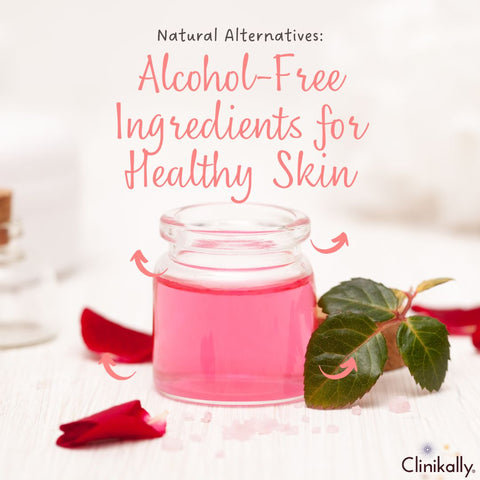
Look for and incorporate the below mentioned ingredients as alternatives to alcohol in skincare. Natural alternatives to alcohol in skincare are:
-
Rose Water
-
Witch Hazel
-
Green Tea Extract
-
Honey
-
Cucumber Extract
-
Glycerin
-
Chamomile Extract
-
Calendula Extract
-
Lavender Oil/Water
-
Coconut Oil/ Water
-
Oat Extract
-
Sea Buckthorn Oil
The above mentioned alternatives are gentler, more hydrating and nourishing for the skin as opposed to the drying and irritation causing alcohols. Using these ingredients not only mitigates the irritation and sensitivity issues, but also provides ample nourishment and other benefits to the skin.
Tips for Moisturizing and Nourishing Your Skin Without Alcohol
Follow the below mentioned tips and tricks to keep the skin nourished and moisturized without using alcohol based skincare:
-
Choose alcohol-free moisturizers and serums.
-
Look for ingredients like Hyaluronic Acid, Glycerin and aloe vera to maintain moisture.
-
Opt for oils like jojoba, coconut and argan oil or butters like mango butter and cocoa butter to nourish the skin.
-
Do not wash your face more than twice daily.
-
Use gentle exfoliants to remove dead skin.
-
Apply moisturizers on slightly damp skin to lock in the hydration.
-
Stay hydrated.
-
Use a humidifier.
-
Eat a balanced diet.
-
Use a broad spectrum SPF.
Best Practices for Using Alcohol-Based Products
Adhering to best practices when using alcohol-based skincare products is essential to minimize potential dryness and irritation. By using these alcohol containing products sparingly, by selecting formulations with soothing ingredients, and always following up with a hydrating moisturizer, you can safely incorporate them into your routine. This is referred to as balancing alcohol in skincare. Continue reading to know more in detail as this approach ensures that you benefit from the products' advantages while maintaining your skin's natural moisture balance and overall health.
How to Incorporate Alcohol-Based Products into Your Skincare Routine Safely
To safely incorporate alcohol-based products into your skincare routine, follow the below mentioned guidelines.
-
Use alcohol based products with caution and in less quantity.
-
Use a hydrating moisturizer afterwards to counteract potential dryness.
-
Opt for lower alcohol concentrations in products.
-
Ensure alcohol based skincare products also contain nourishing and soothing ingredients like aloe vera or glycerin.
-
Always perform a patch test before.
-
Use alcohol-based products only a few times a week.
Balancing Act: How to Use Alcohol-Based Products Without Damaging Your Skin
The key to minimizing the damage caused by alcohol based products lies in the cautious usage. While refraining from using alcohol based products is highly advocated, it is not entirely possible. Hence, it is recommended to balance out the ill effects of alcohol. It can either be done by looking for the calming and soothing ingredients in the alcohol based skincare products, or by incorporating soothing aloe vera gel like Sesderma Hidraloe Aloe Gel to reduce the inflammation. Also incorporating ceramide rich cream is also advised as it helps in restoring the skin barrier. Brinton Atomist Skin Barrier Repair Cream and Aveeno Dermexa Daily Emollient Cream are some excellent recommendations.
Personalized Skincare: Choosing the Right Products for Your Skin Type
Personalized skincare is crucial for maintaining healthy, radiant skin, as it ensures that the products you use cater specifically to your skin's unique needs. Different skin types—such as oily, dry, combination, and sensitive—require tailored ingredients and formulations to address their specific concerns effectively. By choosing products designed for your skin type, you can target issues like acne, dryness, or sensitivity more efficiently, leading to better results and overall skin health. Personalized skincare helps in avoiding adverse reactions and promotes a more balanced, nourished complexion, making it an essential aspect of any skincare routine.
Conclusion: Making Informed Choices for Healthier Skin
In conclusion, making informed choices about your skincare products is essential for achieving and maintaining healthier skin. Understanding your skin type and its specific needs allows you to select products that effectively address your concerns without causing irritation or imbalance. Prioritizing alcohol-free and personalized skincare options can significantly enhance your skin's health and appearance. By staying informed and choosing wisely, you can enjoy a radiant, balanced complexion and long-term skin wellness.