Decoding Nutrition Labels: The Smart Way to Choose Food

Understanding nutrition labels is critical for making informed choices about the foods we consume. Learning how to read these labels gives you the ability to choose meals that promote your health and well-being. This guide simplifies nutrition labels, allowing you to confidently traverse the grocery aisles.
What Are Nutrition Labels and Why They Matter
Nutrition labels are standardized panels that appear on packaged foods and contain precise information on the product's nutrient content, ingredients, and serving size. They are intended to assist consumers in making informed dietary decisions, regulating calorie intake, measuring macronutrients, and ensuring appropriate vitamins and minerals for overall health. The key elements of nutrition labels include:
-
Serving size and servings per container: The serving size and number of servings per container define the amount of food to which the nutritional information applies. Comparing actual consumption to serving size allows for more precise calorie and nutrition management.
-
Calories: Shows the amount of energy delivered per serving. Useful for keeping a healthy weight and matching energy requirements with exercise levels.
-
Macronutrients: Carbohydrates consist of total carbohydrates, dietary fiber, and sugars. Fiber promotes digestion, gut health, and fullness. Protein is needed for muscle maintenance, hair growth, and skin regeneration. Fat labels differentiate between saturated, trans, and unsaturated fats; prioritize good fats for cardiovascular and cellular health.
-
Micronutrients: It include vitamins and minerals like A, C, D, calcium, and iron. An adequate consumption promotes immunological function, energy metabolism, skin vibrancy, and hair strength.
-
% Daily Value (%DV): The % Daily Value (%DV) represents the nutritional contribution per serving based on a 2,000-calorie diet. Helps detect foods high in key nutrients or high in components to avoid, such as sodium, added sugars, or saturated fat.
-
Ingredients: Lists all ingredients in descending order of weight. It is critical to detect allergies, gluten-containing products, and additives.
Serving Size and Calories
Serving Size: The serving size stated on a nutrition label indicates how much food the nutritional information corresponds to. It serves as the foundation for comprehending the other data on the label, such as calories, macronutrients, and micronutrients. Serving sizes are frequently smaller than what people consume, so to accurately measure nutrient intake, compare the serving size on the label to the portion you actually eat. It helps with portion control and serves as a reference for calories and nutrient intake. Improves comparison between similar items.
Calories: Calories are the amount of energy that a food offers per serving. They are derived from macronutrients, which include carbs (4 calories per gram), proteins (4 calories per gram), and fats (9 calories per gram). Balances energy intake and daily activity. Promotes weight management and overall metabolic health. It helps you understand how nutrient-dense a food is in relation to its calorie level.
Ingredients List
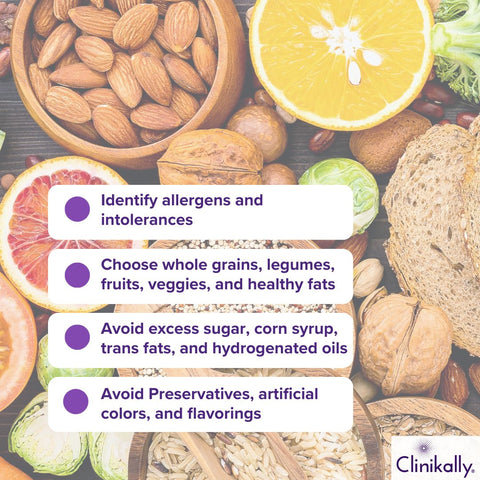
A food label's ingredients list provides a complete breakdown of the product's contents, given in descending order by weight. The first few ingredients make up the majority of the product, whereas those listed subsequently are in lower quantities. Understanding this list is essential for making sound decisions about nutrition, allergens, chemicals, and overall food quality.
-
Identify allergens and intolerances: Gluten, dairy, nuts, soy, and shellfish may emerge in unexpected goods. Individuals suffering from celiac disease, gluten intolerance, or food allergies must carefully read the ingredients list.
-
Evaluate nutritional quality: Ingredients show whether a food is created with whole, nutrient-dense ingredients or highly processed additions. Look for entire grains, legumes, fruits, veggies, and healthy fats as the main constituents.
-
Look for added sugars and unhealthy fats: Ingredients like sugar, corn syrup, hydrogenated oils, or trans fats indicate foods that may contribute to inflammation, weight gain, or poor metabolic health.
-
Avoid using unneeded ingredients: Preservatives, artificial colors, and flavorings can be avoided by selecting foods with short, easily identifiable ingredient lists.
Percent Daily Value (%DV)
The percent daily value (%DV) on a nutrition label indicates how much a nutrient in one serving of food contributes to the daily recommended intake, based on a 2,000-calorie diet. It allows you to quickly determine whether a food is high or low in a specific nutrient, directing healthier choices without requiring complex computations.
-
High or low indicators: 5% DV or below indicates a low level of nutritional presence. 20% DV or higher indicates a high nutritional content. Use this to boost good nutrients (fiber, vitamins, minerals) while reducing undesirable ones (saturated fat, salt, and added sugars).
-
Nutrient prioritization (Fiber, protein, vitamins, and minerals): Look for higher %DV to help with digestion, skin, hair, and overall health. Lower your added sugar, sodium, and saturated fat intake to reduce inflammation, weight gain, and cardiovascular risk.
-
Serving size matters: %DV is calculated depending on serving size, so adjust your interpretation to reflect the portion you actually consume.
Key Nutrients That Impact Your Health
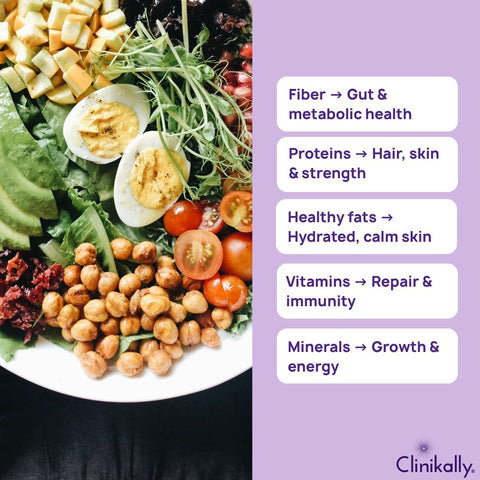
The foods we eat contain both macronutrients (carbohydrates, proteins, and fats) and micronutrients (vitamins and minerals), which are required for energy maintenance, immunity support, and overall health. Certain nutrients are particularly important for skin health, hair growth, digestive function, and overall well-being. The necessary nutrients have the following roles:
-
Proteins: They are the building blocks for muscles, skin, hair, and enzymes. Amino acids promote collagen and keratin formation, which boosts skin elasticity and hair strength.
-
Healthy fats: Omega-3 and monounsaturated fats help to protect cell membranes, produce hormones, and inhibit inflammatory pathways. Promote smooth, moisturized skin while reducing inflammatory skin disorders.
-
Vitamins: Vitamin A promotes skin cell regeneration and eyesight. Vitamin C is necessary for collagen formation, antioxidant protection, and immunological support. Vitamin D regulates immunity, promotes bone health, and improves skin health. B vitamins promote metabolism, energy production, and strong hair and nails.
-
Minerals: Zinc promotes immunological function, wound healing, and hair growth. Iron protects against anemia, tiredness, and brittle hair. Calcium and magnesium promote bone health, muscle function, and nerve signaling.
-
Fiber: It promotes digestive health, gut microbiota balance, and toxin removal. Helps to maintain consistent energy levels and weight management.
Macronutrients
Many packaged and processed foods have hidden fats, added sugars, and sodium that are not immediately apparent. Even if the meal appears healthy, consuming too much of it might cause inflammation, weight gain, high blood pressure, and skin or hair problems. Learning to recognize these hidden components is critical for overall well-being, intestinal health, and nutrient balance.
-
Hidden fats: Trans fats and hydrogenated oils are widely utilized in processed foods, baked products, and snacks. It can raise cardiovascular risk, cause inflammation, and lead to poor skin health. Look for terms like partly hydrogenated oil on the ingredient list.
-
Hidden sugars: Added sugars have several forms, including sucrose, corn syrup, high-fructose corn syrup, cane sugar, maltose, and dextrose. Excess sugar leads to weight gain, blood sugar increases, acne, and inflammation. Look at both the Nutrition Facts panel (total and added sugars) and the ingredients list.
-
Hidden sodium: This ingredient is commonly found in canned, packaged, and restaurant foods. Excess sodium can cause fluid retention, elevated blood pressure, and puffiness. Check labels for salt levels per serving, and keep an eye out for hidden sources such as baking soda, monosodium glutamate (MSG), or sodium nitrite.
Micronutrients
Micronutrients, which include vitamins and minerals, are necessary nutrients that must be consumed in little amounts but have a significant impact on overall health, skin vitality, hair strength, and gut function. Micronutrients, unlike macronutrients, do not contain calories; yet, shortages can cause weariness, hair thinning, brittle nails, decreased immunity, and impaired digestion. Understanding their responsibilities allows you to make more informed food choices for overall wellness.
-
Vitamins: Vitamin A promotes skin cell regeneration while also maintaining good vision and immunity. Adequate consumption can alleviate dryness and create a radiant complexion. Vitamin C is essential for collagen formation, improving skin suppleness, wound healing, and functioning as a powerful antioxidant. Vitamin D regulates immunological responses, strengthens bones, and enhances skin barrier function, making it less prone to inflammation. The B-complex vitamins, which include B1, B2, B6, B12, folate, and biotin, promote energy metabolism, red blood cell formation, and healthy hair and nails. Vitamin E, a potent antioxidant, protects cells from oxidative stress while also maintaining skin smoothness and elasticity.
-
Essential minerals: Iron is required for oxygen transport; insufficient amounts can result in fatigue and hair loss. Zinc promotes immune function, tissue repair, and hair follicle health. Calcium and magnesium are essential for bone strength, muscle function, and nerve communication, whilst selenium serves as an antioxidant, preserving cells from damage. Electrolytes such as potassium and sodium maintain fluid balance and correct muscular function, which indirectly benefits skin and cellular health.
Food Additives and Allergens
Processed and packaged foods frequently include undetectable chemicals and allergens. While most chemicals are harmless, some can cause allergic reactions, digestive issues, inflammation, or skin problems, especially in sensitive individuals. Reading labels and understanding these ingredients is essential for gut health, immune balance, and overall well-being.
Common food additives:
-
Preservatives: Increase shelf life, however they may induce gastrointestinal irritation or allergic reactions in sensitive persons. Examples include sodium benzoate, sulfites, nitrates, and nitrites.
-
Artificial colors and flavors: They are found in candy, beverages, and packaged snacks. Some may cause hyperactivity, rashes, or allergies.
-
Emulsifiers and thickeners: It improves the texture and stability of processed meals. Certain emulsifiers may modify the gut flora, influencing digestion and immunological response.
-
Common dietary allergens: It includes gluten, which is present in wheat, barley, and rye and causes celiac disease and gluten sensitivity. Dairy can produce intolerance or allergic reactions, resulting in stomach problems. Nuts and peanuts are significant allergens that trigger severe immunological responses in certain people. Other common allergies include soy, shellfish, eggs, and sesame, which can cause mild to severe reactions.
Reading Labels Like an Expert

Nutrition labels contain important information regarding calories, macronutrients, micronutrients, substances, and additives. Misinterpreting labels or failing to notice hidden ingredients can lead to bad dietary choices, even when choosing "healthy" items. Learning expert tactics promotes digestive health, skin vitality, hair strength, and overall well-being.
-
Ignoring serving size: Many people forget that all nutrient values are based on a single portion. Consuming more than the recommended serving size can result in unanticipated calorie, sugar, fat, or salt intake.
-
Focusing solely on calories: Low-calorie foods are not usually nutrition dense. Check for fiber, protein, vitamins, and minerals to ensure that the food is beneficial to your overall health.
-
Overlooking hidden carbohydrates and fats: Added sugars can include corn syrup, maltose, dextrose, and cane sugar. Unhealthy fats such as trans fats and partially hydrogenated oils may be hidden in processed foods.
-
Neglecting the ingredients list: The sequence of the ingredients is important—the first ones are the most abundant. Avoid meals with a long list of artificial additives, preservatives, and unidentifiable compounds.
-
Misinterpreting the percentage daily value (%DV): The %DV is based on a 2,000-calorie diet; your individual needs may differ. Use percent daily value as a recommendation rather than a rigorous measure, particularly for sodium, sugar, and micronutrients.
Comparing Products and Serving Sizes
When shopping or planning meals, it is critical to recognize product distinctions and portion amounts. The nutrient value of two comparable foods can vary greatly depending on portion size, ingredients, and fortification. Accurate comparison aids in the management of calories, nutrients, and additives, so promoting intestinal health, skin vibrancy, hair strength, and general wellness.
-
Serving size: Always start by verifying the serving size on the label. Products may appear to be similar, yet each serving may differ in weight or volume, altering calorie and nutrient consumption.
-
Calories and macronutrients: Compare the number of calories, proteins, fats, and carbohydrates in each serving. Concentrate on nutrient density—higher protein, fiber, and healthy fats are often preferable than empty calories.
-
Micronutrients: Check the vitamins and minerals to find which product contains more of what you require. The %DV helps evaluate which option contributes more to daily nutritional goals.
-
Ingredients list: Compare ingredients' whole-food content to additives, preservatives, and sugars. Prioritize items with brief, recognized ingredient lists.
-
Hidden components: Check for added sugars, salt, and trans fats, which might vary by brand. If you have sensitivity, consider the allergen content or gluten present.
Quality Seals and Third-Party Certifications
Quality seals and third-party certificates are effective indicators of product safety, purity, and dietary compliance. When combined with careful label reading, they help you choose nutrient-dense, safe foods that promote gut health, immunological function, skin and hair vitality, and general well-being.
Marketing Claims vs. Nutrition Facts
Marketing claims can be deceptive or incomplete, thus depending only on them may result in unbalanced nutrition or concealed dangerous ingredients. By carefully reviewing nutrition information and ingredients, you may make informed food choices that promote gut health, skin radiance, hair strength, and general well-being.
Personalizing Your Nutrition Choices
No one diet works for everyone. Nutritional requirements vary according to age, exercise level, health status, and lifestyle goals. Reading and interpreting food labels allows you to personalize your meals, ensuring that they promote gut health, skin vitality, hair strength, and general wellness.
-
Start with the serving size: Compare the serving size on the label to the amount you actually consume. Adjust the calories and nutritional values to fit your portion.
-
Prioritize nutritious foods: Look for foods that are high in protein, fiber, vitamins, and minerals in relation to their calories. Concentrate on nutrients that support your specific health goals (e.g., collagen for skin, iron for hair, fiber for gut health).
-
Look for hidden components: Identify added sugars, sodium, trans fats, and allergies that may impact energy, inflammation, or digestive health. Ingredient lists reveal information regarding quality and processing level.
-
Leverage % Daily Value (%DV): Use % Daily Value (%DV) as a guide to determine whether a food is high in important nutrients or high in components to avoid. Instead of following the typical 2,000-calorie guideline, tailor your options to your own needs.
-
Align with your specific health goals: If you have gluten sensitivity, diabetes, or high blood pressure, look for labels that emphasize safe and healthy nutrient profiles. Incorporate whole, less processed foods to promote long-term health.