Vitamin C + Kojic Acid: Brighten Your Skin & Reverse Ageing
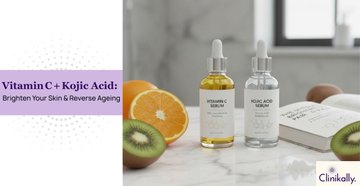
Skincare is changing at a quick pace today. Every day, new compounds are introduced to treat a different skin disease. Certain components 'trend' for a short period, whilst others last a long time. One of these compounds is vitamin C. It has been in the skincare market for decades and is still considered an 'all-rounder' ingredient. Another ingredient that has gained popularity over time is kojic acid and vitamin C. Although it is a relatively new product in the beauty industry, it has long been known for its antioxidant properties.
This blog will delve further into the science of these chemicals and how they affect our skin. We'll also look at what happens when we combine these two potent chemicals in our skincare routine, as well as the dos and don'ts of doing so. So, join us on this informative journey as we uncover the secrets of this powerful combination and embrace the glowing potential hidden behind each delicious jar of cream and bottle of serum.
Understanding the Actives: How Vitamin C and Kojic Acid Work Together
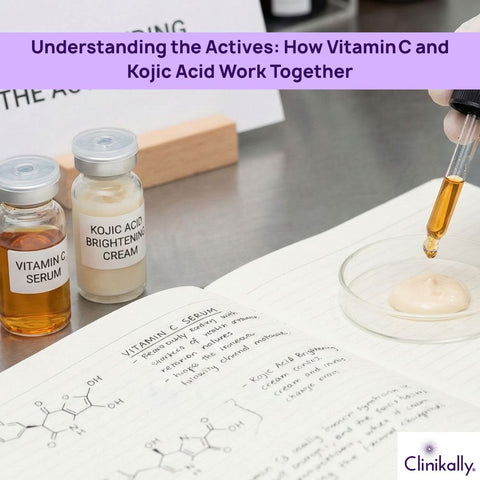
The combination of Vitamin C and Kojic Acid has become a popular brightening skincare technique because, while their mechanisms are separate, they work together to offer better results against hyperpigmentation and uneven tone.
-
Vitamin C (ascorbic acid) acts as an antioxidant and a pigment modulator. By neutralizing free radicals, it minimizes oxidative stress, which would otherwise cause excessive melanin formation. It also lowers oxidized melanin levels in the skin, making dark spots seem lighter. Vitamin C also reduces the activity of tyrosinase, the primary enzyme that promotes melanin formation; however its effect is less potent than kojic acid's. Collagen activation is an extra advantage that enhances general skin clarity and firmness, thereby adding to a brighter appearance.
-
Kojic Acid, a natural metabolite produced by fungus during fermentation, is more specific. Its major function is to directly block tyrosinase, slowing the actual formation of melanin. This makes it very useful for obstinate pigmentation problems like melasma and sunspots. Kojic acid also has minor antioxidant and antibacterial properties, but it is most known for its ability to fade spots and even out skin tone.
-
Vitamin C and kojic acid work together to produce a dual-action approach: vitamin C decreases oxidative triggers of hyperpigmentation while brightening existing discolouration, and kojic acid directly inhibits new melanin synthesis. This synergy produces faster and more obvious outcomes than each component alone.
However, both are active substances that might cause discomfort, particularly at greater quantities. Stable formulations, gradual introduction, and daily sun protection are critical for maximizing their combined benefits safely.
Tyrosinase Targeting: Kojic’s Direct Melanin‑Blocking Action
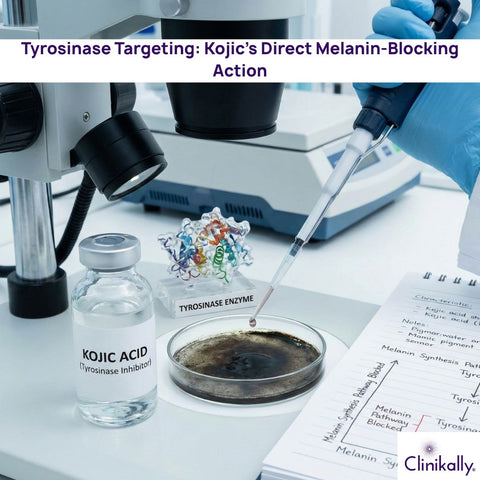
Kojic acid's brightening power is based on its ability to directly block tyrosinase, the rate-limiting enzyme in melanin formation. Tyrosinase regulates the conversion of the amino acid tyrosine into melanin pigments via a sequence of oxidation processes. By disrupting this route, kojic acid efficiently reduces melanin overproduction, which causes hyperpigmentation, dark patches, and uneven tone.
Kojic acid inhibits the tyrosinase enzyme by chelating copper ions at its active site. Tyrosinase requires copper as a cofactor for catalytic activity; hence, binding these ions hinders the enzyme from working properly. This interruption lowers the production of dopachrome and downstream melanin intermediates, resulting in decreased pigment yield. Unlike vitamin C, which decreases oxidized melanin and indirectly suppresses tyrosinase, kojic acid has a direct and focused activity.
This process makes kojic acid very useful in cases of localized hyperpigmentation, such as melasma, post-inflammatory dark patches, and sunspots. Clinical investigations have shown considerable decrease in pigmentation with persistent use. However, the potency of kojic acid has significant drawbacks—overuse or high doses may irritate delicate skin, causing redness or dermatitis in certain people.
To achieve the best effects safely, kojic acid is typically used in synergistic formulations with additional actives such as vitamin C, arbutin, or niacinamide. Together, these combinations improve pigment removal while minimizing discomfort.
Antioxidant Powerhouse: Ascorbic Acid’s Free‑Radical Defense
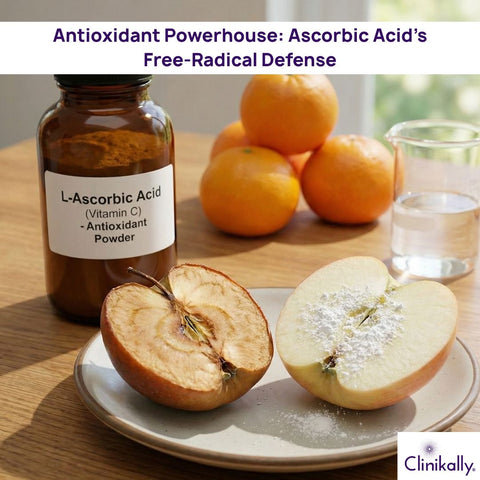
Ascorbic acid, the purest form of vitamin C, is one of dermatology's most powerful antioxidants, known for its ability to neutralize free radicals and protect the skin from oxidative stress. UV light, pollution, and normal metabolic activities all produce free radicals, which damage cellular components such as lipids, proteins, and DNA. This oxidative damage hastens premature aging, impairs the skin barrier, and increases excessive melanin production, which frequently manifests as wrinkles, dullness, and hyperpigmentation.
Ascorbic acid acts as an electron donor, preventing reactive oxygen species (ROS) from attacking skin cells. By stabilizing these radicals, it stops the chain reactions that would otherwise break down collagen and elastin, so preserving skin firmness and elasticity. When combined with sunscreen, its antioxidant activity protects against UV-induced photoaging, resulting in a dual defensive system that prevents and neutralizes detrimental effects.
Aside from its protective role, ascorbic acid is active in repair and rejuvenation. It is a necessary cofactor for proline and lysine hydroxylase enzymes in collagen synthesis, therefore, it not only prevents collagen breakdown but also stimulates new collagen creation. This dual action causes skin to appear smoother, plumper, and more resilient with time. In pigmentation control, its antioxidant defense inhibits oxidative causes of melanin overproduction while directly lightening oxidized melanin, resulting in a brighter, more even complexion.
Overall, ascorbic acid acts as an antioxidant powerhouse, protecting skin at the cellular level, delaying visible aging, and increasing radiance by maintaining balance in the face of daily environmental assaults.
pH & Stability: Formulation Challenges and Encapsulation Solutions
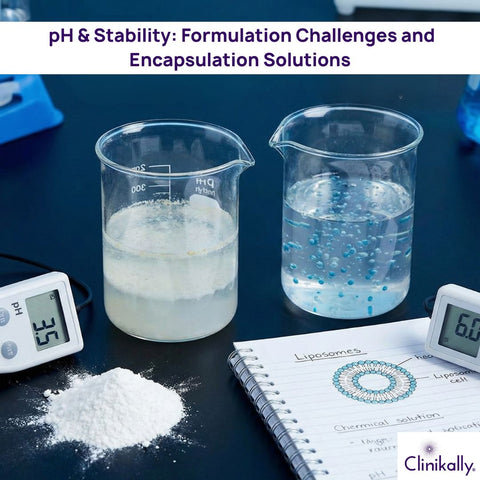
One of the most significant challenges in formulating with vitamin C and kojic acid is their volatility. Both are potent skin actives, but they are extremely susceptible to environmental influences such as light, heat, oxygen, and pH changes. Without adequate stability, they decay quickly, losing efficacy and perhaps causing skin irritation.
Vitamin C, often known as ascorbic acid, is notoriously unstable. It needs a low pH (about 3-3.5) to work properly and permeate the skin; however, this acidic environment might irritate delicate skin. At higher pH values, it oxidizes quickly, turning brown and losing effectiveness. Exposure to air and UV promotes decomposition, which is why many vitamin C serums darken with time.
Kojic acid has unique obstacles. It is water-soluble but oxidizes easily and can discolor compositions, limiting their efficiency. It also has a narrow pH stability range (about 4-7), making it difficult to combine with extremely acidic substances such as pure ascorbic acid. This pH discrepancy makes co-formulation difficult unless advanced stabilizing techniques are applied.
To address these challenges, formulators use encapsulation technologies like liposomes, microspheres, and nanocarriers. Encapsulation protects active ingredients from oxidation, regulates their release into the skin, and enables them to function at skin-friendly pH levels. Stabilized vitamin C derivatives (e.g., sodium ascorbyl phosphate, ethyl ascorbic acid) and kojic acid dipalmitate are also utilized to extend shelf life and minimize irritation while maintaining performance.
Skin Benefits & Ideal Candidates

The combination of Vitamin C and Kojic Acid provides a comprehensive approach to skin whitening, anti-aging, and complexion refining. They work together to address both the underlying reasons and outward indicators of pigmentation, improving overall skin health.
Skin benefits:
-
Brightening and Even Tone: Vitamin C decreases oxidized melanin and prevents UV-induced darkening, but kojic acid directly inhibits tyrosinase, which stops melanin formation. Their combination reduces obstinate hyperpigmentation, melasma, acne scars, and sunspots more efficiently than either alone.
-
Antioxidant and UV Defense: Vitamin C neutralizes free radicals and increases the effectiveness of sunscreen, protecting against photoaging. Kojic Acid provides modest antioxidant protection, which further reduces oxidative stress.
-
Collagen and texture support: Vitamin C promotes collagen synthesis, which improves firmness, fine wrinkles, and overall smoothness. Kojic Acid compliments this with an evening tone that boosts luminosity.
-
Redness and post-inflammatory marks: Both reduce pigment irregularities after breakouts, allowing the skin to recover a clearer, calmer appearance.
Ideal candidates:
-
Individuals with hyperpigmentation: People who have dark spots, uneven skin tone, melasma, or post-acne discoloration.
-
Dull or sun-damaged skin: Those looking for brighter, more luminous skin with more antioxidant protection.
-
Early signs of aging: Vitamin C's collagen-boosting properties make this duo ideal for those who are noticing fine lines or loss of elasticity in addition to pigmentation.
-
Not suitable for: Extremely sensitive or barrier-compromised skin, as combining two actives may cause irritation. Such users should begin with low concentrations or derivatives.
This combination is appropriate for people who seek instant, obvious brightening with long-term tone correction and anti-aging advantages, as long as they can manage active formulations and wear sunscreen on a regular basis.
Fading Dark Spots: Tackling Melasma, PIH, and Sun Damage
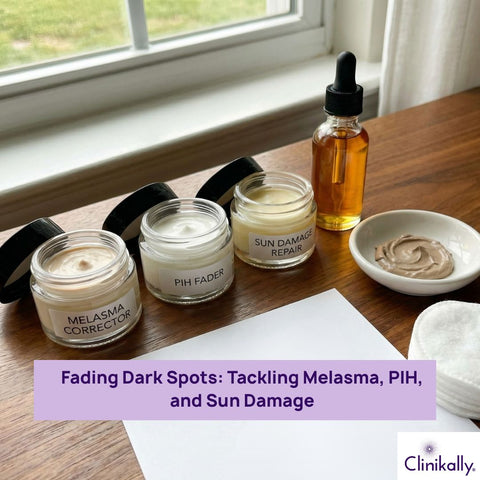
Melasma, post-inflammatory hyperpigmentation (PIH), and sun exposure all cause dark spots due to excessive melanin production. The combination of vitamin C and kojic acid is a potent treatment for eliminating discoloration and restoring an even skin tone.
-
Melasma: Often hormonally induced and exacerbated by UV exposure, melasma is famously difficult to treat. Kojic acid inhibits tyrosinase, the primary enzyme responsible for melanin formation, hence decreasing pigment overproduction. Vitamin C provides a second line of defense by neutralizing free radicals that increase melanin activity and decreasing oxidized melanin deposits. They work better together to lessen the intensity of melasma patches than individual medicines.
-
Post-inflammatory hyperpigmentation (PIH): Acne or skin damage causes localized melanin overproduction. Vitamin C's collagen-boosting qualities aid in lightening existing pigment and speeding up healing, decreasing scarring and uneven texture. Kojic acid minimizes lasting stains by inhibiting future melanin accumulation. Their anti-inflammatory and antioxidant properties make them very effective at fading acne-related dark patches.
-
Sun damage: Prolonged UV exposure causes solar lentigines ("sun spots") and dull, uneven skin. Vitamin C improves skin defense by counteracting free radical damage and increasing sunscreen efficacy, whilst kojic acid directly decreases UV-induced pigmentation. With regular usage and sun protection, this combo can help restore clarity and brightness to photoaged skin.
Vitamin C and kojic acid operate on numerous fronts, neutralizing oxidative triggers, lowering melanin synthesis, and erasing existing pigment, making them an ideal combination for anybody looking to combat obstinate dark spots and uneven tone.
Collagen Support & Overall Glow Boost
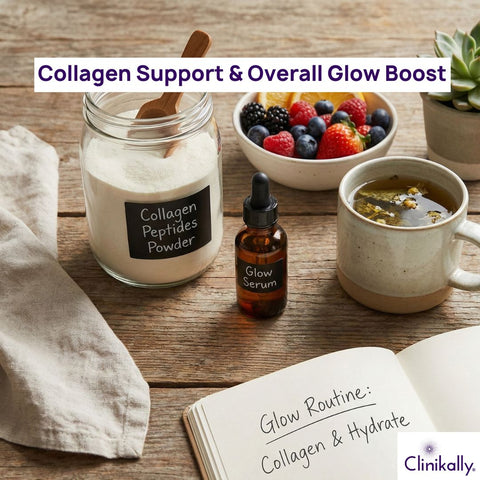
Beyond their well-known pigment-reducing properties, vitamin C and kojic acid improve skin structural health and apparent radiance, making them useful for overall rejuvenation.
-
Collagen support: Vitamin C is needed for collagen synthesis. It acts as a cofactor for proline and lysine hydroxylase enzymes, stabilizing and cross-linking freshly generated collagen fibers to ensure dermal matrix strength and durability. This technique minimizes fine wrinkles, increases suppleness, and aids in the restoration of photoaging damage. Vitamin C prevents free radical-induced collagen breakdown, which not only promotes new collagen production but also protects existing fibers. While not directly involved in collagen formation, kojic acid enhances vitamin C's action by lowering chronic oxidative stress and pigmentation. This indirectly promotes a healthier skin environment, making collagen renewal more effective and the benefits more visible.
-
Glow boost: A brighter complexion involves not just reducing dark spots but also increasing skin vitality. Vitamin C combats dullness by neutralizing oxidative stress, increasing microcirculation, and lightening oxidized melanin, making the skin appear more radiant. Kojic Acid works synergistically to prevent new pigment deposits, enabling natural brilliance to shine through without blotchy interference. Their combined effects produce a smoother texture, an even tone, and a clearer light-reflecting surface—all characteristics of a natural glow.
For individuals looking for more than just spot repair, this combination offers two benefits: firming through collagen support and radiance through tone evening. With regular use and sun protection, the outcome is not just fewer black spots, but also fresher, plumper, and visibly glowing skin.
Sensitivity Considerations: Irritation Thresholds and Patch Testing
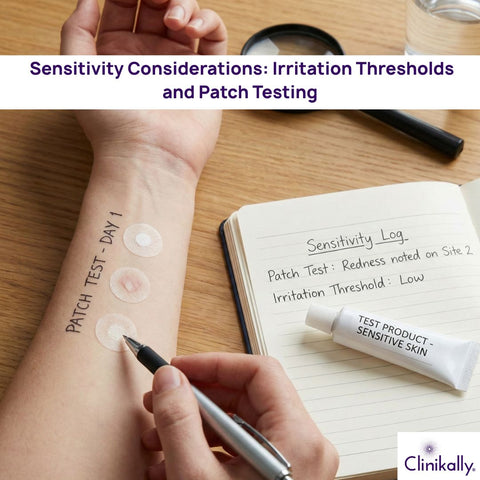
While both vitamin C and kojic acid are helpful at brightening and correcting pigmentation, they can cause irritation, particularly in delicate or weakened skin. Understanding thresholds and safe introduction is critical to optimizing benefits while minimizing discomfort.
-
Vitamin C (ascorbic acid): It requires a low pH (about 3-3.5) for stability and absorption. This acidity, along with its reactive antioxidant properties, can produce tingling, stinging, and redness in sensitive skin. Higher concentrations (15-20%) produce better effects but increase irritation risk. Gentler derivatives, such as sodium ascorbyl phosphate or magnesium ascorbyl phosphate, may be tolerated better by beginners or those with sensitive skin.
-
Kojic acid: It also has a narrow therapeutic window. While effective at 1-4%, excessive use might cause contact dermatitis, dryness, or redness, especially in fair or hypersensitive skin. Kojic acid dipalmitate, a more stable form, is less irritating while providing brightening advantages.
-
Patch testing and gradual introduction: Before applying to the face, apply a little amount of product to the inner arm or behind the ear and leave for 24-48 hours. Introduce the active into your regimen gradually—2-3 times per week at first, then daily if tolerated. Because both actives might exacerbate photosensitivity, always use a moisturizing serum or moisturizer before applying SPF in the morning.
While Vitamin C and Kojic Acid can produce significant results, their irritation thresholds differ. Careful formulation selection, gradual introduction, and patch testing ensure a safer use, particularly for sensitive or pigmentation-prone skin.
Application Guide & Safety Takeaways

For optimal results, use the duo in the morning, after cleansing and before sunscreen. Vitamin C, as an antioxidant, works best during the day to combat free radicals and UV-induced oxidative damage. Kojic Acid can be used in the morning or evening, but combining it with Vitamin C in a stabilized formulation enhances the brightening effects. If using different products, use Vitamin C serum first (on clean, dry skin) and let it absorb before layering Kojic Acid serum or cream. Follow with a moisturizer to prevent dryness, and always finish with a broad-spectrum SPF 30 or higher.
Begin with 2-3 applications per week, increasing to daily as tolerated. For sensitive skin, use softer Vitamin C derivatives (such as sodium ascorbyl phosphate or ethyl ascorbic acid) or kojic acid dipalmitate to decrease irritation.
Tips for safety at work:
-
First, conduct a patch test: Apply to a small area and observe for redness, itching, or irritation for 24-48 hours before using on the face.
-
Concentrations should be monitored: effective ranges for Vitamin C (ascorbic acid) are 10-20% and 1-4% for Kojic Acid. Higher strengths may not produce better results, but they can increase irritation risk.
-
Moisturize generously: Both actives can disrupt the barrier if used excessively; layering hydrating serums or creams reduces dryness.
-
Never forget sunscreen: Without UV protection, pigmentation will persist and potentially worsen, undermining the results.
-
Avoid harsh pairings: Unless advised by a professional, do not use this product in conjunction with other strong exfoliants (such as glycolic acid or high-strength retinoids).
With proper layering, sun protection, and concentrations, Vitamin C + Kojic Acid can be safely integrated into most routines, providing tremendous brightening and protective benefits.