Essential Foot Care Routine: Steps for Healthy & Happy Feet
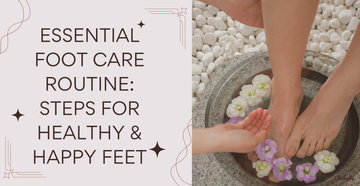
Feet are sometimes overlooked in our skincare routine, despite the fact that they carry us through each step of life. With a little more care, you can make rough, tired feet smooth, healthy, and joyful. Regular foot care can help your feet feel refreshed and invigorated. This article will go over a foot care routine to keep your feet feeling and looking their best all year.
Understanding the Basics of Foot Care

The fundamentals of foot care—because healthy feet are the cornerstone of your entire health. Whether you're walking, running, standing, or simply reclining, your feet go through a lot every day, and a little care can go a long way. The fundamentals of foot care are cleanliness, trimming and caring for toenails, exfoliating rough areas, moisturizing on a regular basis, wearing suitable footwear, using breathable socks, and treating concerns as soon as possible.
Why Foot Care Matters for Overall Health

Foot care is more important than most people know. Your feet are the basis of your body, and maintaining them is critical to your general health, mobility, and quality of life. Foot care is much more than a cosmetic routine; your feet carry you, foot problems can affect posture and alignment, feet are prone to infections and skin conditions, foot health reflects chronic conditions, pain-free feet support active living, foot hygiene boosts confidence, and foot care is preventative care.
Common Foot Problems and Their Causes

Common foot disorders can affect anyone, whether they are on their feet all day or spend most of their time sitting. Understanding these disorders and their causes is the first step toward keeping your feet healthy and pain-free. Common foot ailments and their causes include plantar fasciitis, athlete's foot (tinea pedis), corns and calluses, bunions, ingrown toenails, heel spurs, toenail fungus (onychomycosis), blisters, cracked heels, and neuropathy. The following are some prevention tips for common foot issues:
-
Wear well-fitting, supportive shoes.
-
Practice good hygiene—wash and dry your feet thoroughly.
-
Keep feet moisturized, but avoid excess moisture between the toes.
-
Trim the nails straight across.
-
Exfoliate gently to prevent buildup.
-
Do not ignore pain; early intervention is essential!
Essential Ingredients for Foot Care

The key components to look for in foot creams, washes, soaks, and sprays—each picked for its own benefits.
-
Urea: Deeply moisturizes and softens thick, dry, or cracked skin. Gently exfoliates and moisturizes. Richly hydrates and protects the skin's barrier. Packed with fatty acids and vitamins A and E. Ideal for daily hydration and easing rough spots.
-
Glycerin: Draws moisture to the skin and keeps it there. Lightweight and non-greasy hydration enhancer. Ideal for dry, flaky feet and light foot creams.
-
Epsom salt (magnesium sulfate): Reduces pain and inflammation. Excellent for soaking your feet after a long day. Best for fatigued, swollen, or aching feet.
-
Tea tree oil: Antifungal, antibacterial, and anti-inflammatories. It helps to prevent athlete's foot and odors. Ideal for fungal infections, sweaty feet, and odor management.
-
Peppermint oil: Cools and refreshes your feet. Relieves weary feet and boosts circulation. Ideal for foot sprays, balms, and refreshing soaks.
-
Aloe Vera: Soothes, cools, and helps skin heal. Lightweight hydration with anti-inflammatory properties. Best for sensitive or sunburned feet, especially after exfoliation.
-
Lactic Acid / Alpha Hydroxy Acids (AHAs): Gently exfoliates dead skin. Smoothes rough textures without hard scrubbing. Ideal for calluses, dry patches, and dull skin.
-
Honey: Natural humectant and antimicrobial agent. Heals and moisturizes concurrently. Healing damaged heels and retaining moisture.
-
Lanolin: Intensely hydrates and forms a protective barrier. Ideal for extremely dry or sensitive skin. Overnight heel creams and foot masks.
Step-by-Step Guide to a Healthy Foot Care Routine
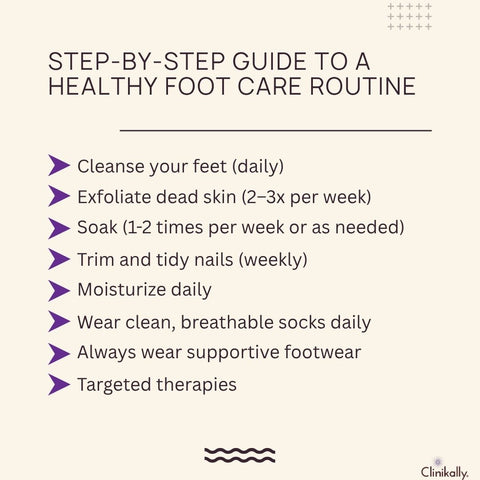
A constant foot care practice not only maintains your feet soft and smooth, but it can also help you avoid pain, odor, cracked heels, and fungal infections. Here's a step-by-step approach for developing a healthy foot care routine that you may follow on a daily or weekly basis.
-
Step 1: Cleanse your feet (daily): Use warm (not hot) water and a light cleaner. Removes sweat, germs, and dead skin, which can cause odor or infection. Use a gentle brush or washcloth, and don't forget between the toes!
-
Step 2: Exfoliate dead skin (2–3x per week): Exfoliate dead skin 2–3 times a week with a pumice stone, foot file, or exfoliating scrub for tough regions. Prevents hard skin, calluses, and cracking. Exfoliate in the shower or after soaking—the skin should be wet but not saturated.
-
Step 3: Soak (1-2 times per week or as needed): Soak feet in warm water containing Epsom salt, aromatic oils, or a moisturizing soak mixture. Soothes pain, softens skin, and minimizes swelling. To avoid over-drying the skin, limit soaks to 10-15 minutes.
-
Step 4: Trim and tidy nails (weekly): Cut toenails straight across with clean clippers. It prevents ingrown toenails and infections. Use a file to smooth the edges. Don't trim your nails too short.
-
Step 5: Moisturize daily: Apply a rich, foot-specific cream or balm after cleansing or before going to bed. Prevents dryness, flaking, and unpleasant cracks, particularly on heels. Avoid applying lotion between your toes to prevent the chance of fungus.
-
Step 6: Wear clean, breathable socks daily: Choose moisture-wicking, cotton, or bamboo socks. Keeps feet dry while preventing odor and fungal problems. Change your socks whenever your feet become sweaty or moist during the day.
-
Step 7: Always wear supportive footwear: Wear shoes that fit comfortably and support your arch and heel. Prevents foot discomfort, bunions, and postural problems. Change your shoes every day and let them air out.
-
Step 8: Targeted therapies: Use a lotion containing urea or lactic acid. Apply tea tree oil, antifungal sprays, or powders. Try foot powders with zinc oxide, menthol, or charcoal.
Cleansing and Exfoliation for Soft Feet
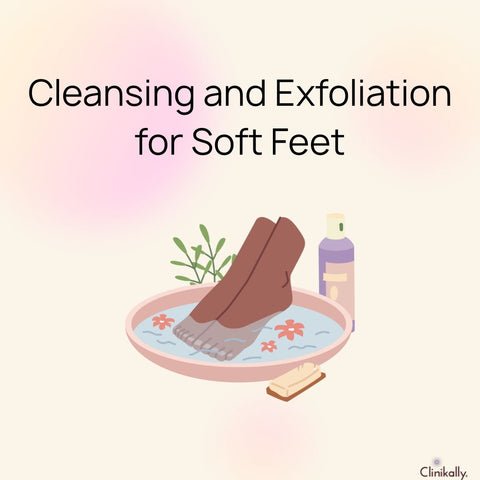
You've got this! Cleansing and exfoliating are vital for keeping your feet nice, smooth, and healthy. Skipping this step may result in buildup, dryness, calluses, and stench. Here's everything you need to know to improve your foot care routine and get baby-soft soles.
-
Step 1: Cleansing: Your feet sweat, acquire dirt, and spend most of the day confined in socks or shoes, so cleansing is essential for hygiene and suppleness. Use lukewarm water and a gentle soap or foot cleaner. Clean all around the toes and beneath the nails. Rinse thoroughly and dry fully, particularly between the toes (moisture can promote fungal infections).
-
Step 2: Exfoliation: Dead skin accumulates quickly on the feet, particularly the heels and ball of the foot. Regular exfoliation helps to avoid cracking, heavy calluses, and dull skin. To gently buff away rough patches, use a pumice stone or foot file on damp skin. Sugar, salt, or crushed walnut shell scrubs can polish your feet like they're at the spa. Chemical exfoliants (AHAs or urea) remove dead skin without scrubbing, which is good for sensitive or excessively dry feet. Physical exfoliation (stone/scrub) is performed 2-3 times each week. Daily or every other day for light chemical exfoliants (in creams/lotions).
Hydration and Moisturization Techniques
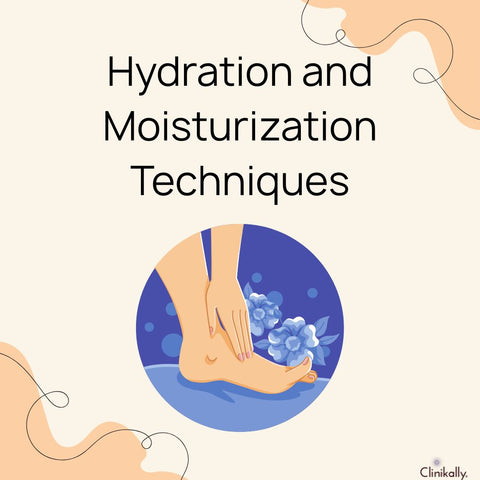
Keeping your feet hydrated is essential for maintaining soft, smooth, and healthy soles, especially if you have dry skin, cracked heels, or rough patches. The best hydration and moisturization treatments for keeping your feet looking and feeling wonderful all year.
-
Start with clean, damp skin: Start with clean, damp skin and apply moisturizer immediately after bathing or exfoliating. Pat your feet dry, but leave them slightly damp to trap moisture.
-
Use the correct product: Choose a foot cream or balm based on your skin type, such as the ideal component for dry skin (glycerin, hyaluronic acid, aloe vera), cracked heels (urea (10-25%), lactic acid, lanolin), sensitive skin (shea butter, chamomile, oat extract), and hard calluses (salicylic acid, urea, AHAs).
-
Layer products like a pro (optional): Apply a moisturizing serum or gel containing humectants like glycerin or aloe. Apply a heavier cream or balm to lock it in.
-
Use an overnight foot mask or wrap: Apply thick foot cream or petroleum jelly. Put on cotton socks and leave them overnight. Wake up with baby-soft feet!
-
Use moisturizing foot soaks every week: Hydrating soaks help the skin absorb moisture better. To produce a calming soak, add warm water, 1 tablespoon honey, 1 tablespoon olive oil, and a few drops of lavender oil. Soak for 10-15 minutes, then wipe dry and apply moisturizer immediately.
Toenail Care and Hygiene Tips
The best toenail care and hygiene tips to keep your toes healthy, clean, and strong.
-
Trim your toenails properly: Straight across, not rounded or angled. Leave a little white at the tip; don't trim too short. Clean, sharp nail clippers designed exclusively for toenails (bigger and more durable than fingernail clippers). Use a nail file to smooth the edges and prevent snagging.
-
Clean under and around the nails: Clean under and around the nails with a gentle nail brush or an orangewood stick. Soak feet in warm water first if necessary to release buildup. Do not dig aggressively because your nail bed is delicate!
-
Keep nails dry and breathable: After showering, dry thoroughly, paying specific attention to the areas between your toes and under your nails. Change your socks every day, and use moisture-wicking fabrics. Allow your feet to breathe—don't wear tight, non-ventilated shoes for extended durations.
-
Avoid using too much nail polish or acrylics: Allow your toenails to rest between pedicures so they may breathe. Use non-toxic or breathable polish wherever feasible. To prevent stains, always apply a base coat.
-
Moisturize cuticles and nail beds: Moisturize cuticles and nail beds with a small amount of cuticle oil or natural oil (coconut, jojoba, or vitamin E) every day. Keeps cuticles moist and prevents hangnails and cracking. After a shower or foot bath, gently push back your cuticles rather than cutting them.
-
Watch for indicators of nail problems: Keep a watch out for discoloration (yellow, white, or dark blotches), stiffened or disintegrating nails, pain, swelling, or pus (infection alert). Nail lifts from the bed. These could indicate fungal infections, trauma, or other medical problems.
-
Keep toenail tools clean: After each usage, disinfect the clippers and files with alcohol. Do not share nail tools, as this spreads bacteria and fungus. Replace worn or rusty tools.
Home Remedies and Advanced Foot Care Tips
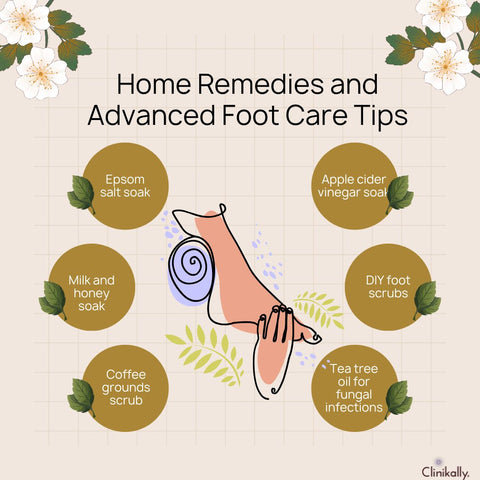
A combination of practical home cures and modern foot care methods will keep your feet healthy, supple, and pain-free.
Foot soaks for softness & relaxation:
-
Epsom salt soak: reduces soreness and softens rough skin.
-
Apple cider vinegar soak: combats odor and fungus. (1 part ACV + 2 parts warm water + 10-15 minute soak).
-
Milk and honey soak (moisturizing and antimicrobial): In warm water, combine 1 cup milk and 2 tablespoons honey.
-
DIY foot scrubs (sugar and olive oil): Scrub exfoliates dead skin. 1/2 cup sugar + 2 tbsp olive oil + a few drops essential oil).
-
Coffee grounds scrub (to stimulate circulation): used coffee grounds + coconut oil. Scrub 2-3 times each week, focusing on heels and tough regions, then apply homemade heel balm (Shea Butter, Coconut Oil, and Beeswax). Melt and combine equal amounts to create a super-rich balm. Apply at night and wear cotton socks.
-
Tea tree oil for fungal infections: A natural antifungal and antibacterial. Apply diluted tea tree oil (in a carrier oil) to your nails or skin every day. Banana foot mask for dry feet (mash one ripe banana and apply to the feet). Leave it on for 15-20 minutes, rinse, and moisturize.
Advanced Foot Care Tips
-
Rotate Shoes and Insoles: Rotate shoes and insoles to prevent moisture buildup and bacteria. Allow shoes to air out between uses. If necessary, use antimicrobial or charcoal-based insoles.
-
Use moisturizing socks or silicone heel sleeves: Great for broken heels or deep hydration overnight. Lock in moisture and soften skin while sleeping.
-
Try foot peeling masks every month: It contains fruit acids (AHAs) to help remove dead skin. Expect to see peeling after 3-5 days, with baby-soft feet underneath.
-
Use foot powder or spray in summer: Use foot powder or spray in the summer to avoid sweat, stink, and fungus. Look for components such as zinc oxide, baking soda, and kaolin clay.
-
Strengthen feet with stretches: Stretches and foot massages help to strengthen and relax the feet. Try rolling a tennis ball beneath your foot every day.
DIY Foot Soaks for Relaxation and Healing
There are several spa-worthy soaks you can make at home using things you probably already have in your kitchen or bathroom.
-
Epsom salt soak: Epsom salt soak is ideal for tired, aching feet, irritation, and slight swelling. Ingredients: 1/2 cup Epsom salt and warm water to cover your feet. Optional: Several drops of lavender or eucalyptus essential oil. Soak your feet for 15 to 20 minutes. After that, apply moisturizer. Epsom salt (magnesium sulfate) relieves pain and removes toxins from the skin.
-
Apple cider vinegar soak: Apple cider vinegar soak is ideal for odor, athlete's foot, and fungal prevention. The ingredients are one part apple cider vinegar and two parts warm water. Optional: Add 1 tablespoon of baking soda or a few drops of tea tree oil. Soak for 10–15 minutes. Rinse and dry completely. ACV regulates skin pH and has antibacterial and antifungal properties.
-
Milk & honey soak: Ideal for dry, cracked feet and rough heels. Ingredients include 1 cup whole milk, 2 tablespoons raw honey, and warm water to dilute as needed. Optional: Add a couple of drops of vanilla extract or coconut oil. Soak for 15–20 minutes. Rinse well and gently exfoliate with a pumice stone. Milk's lactic acid gently exfoliates, while honey hydrates and heals.
-
Sea salt + baking soda soak: Sea Salt + Baking Soda Soak is ideal for rough skin, calluses, and foot odor. The ingredients are 1/4 cup sea salt, 1/4 cup baking soda, and warm water. Optional: Add lemon slices for a refreshing aroma and natural antibacterial properties. Soak for 15 minutes, then exfoliate using a scrub. This soak softens skin and neutralizes odors while providing a gentle detox effect.
-
Herbal chamomile + mint soak: Herbal chamomile + mint soak is ideal for hot, weary, or irritable feet. 2–3 chamomile tea packets. One handful of fresh mint leaves or three to four peppermint tea bags. 6 cups of boiling water, steeped and chilled briefly. Soak for 15-20 minutes and inhale the pleasant smell. Chamomile reduces inflammation, whereas mint offers a cooling and refreshing effect.
Natural Remedies for Cracked Heels and Dry Skin
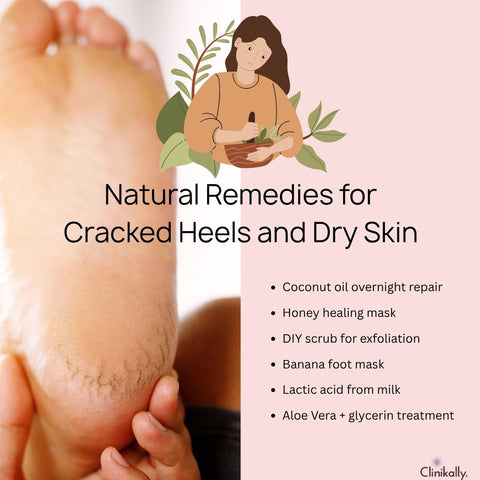
Some tried-and-true natural remedies you can use at home to heal, hydrate, and restore your soles.
-
Coconut oil overnight repair: Coconut oil is extremely emollient and contains antibacterial and antifungal qualities. Soak your feet in warm water for 10–15 minutes. Pat dry and then apply a heavy layer of virgin coconut oil. Put on cotton socks and leave them overnight.
-
Honey healing mask: Honey is both a humectant (it draws moisture into the skin) and antibacterial. Combine 2 tablespoons of raw honey with 1 tablespoon of milk or yogurt. Apply the paste on the heels. Leave it on for 20-30 minutes, then rinse and moisturize.
-
DIY scrub for exfoliation: Exfoliating with a DIY scrub removes dead skin cells and improves the absorption of hydrating substances. DIY scrub recipes include 2 tablespoons coconut oil, 1 tablespoon brown sugar or sea salt, and 1 tablespoon lemon juice (optional for brightness). Massage the heels for a few minutes, then rinse and apply a heavy cream or oil.
-
Banana foot mask: Bananas contain vitamins and have a natural hydrating effect. Mash 1–2 ripe bananas until smooth. Apply to clean, dry feet and leave for 20 minutes. Rinse and moisturize.
-
Lactic acid from milk: Lactic acid softly exfoliates and moisturizes. Soak your feet in warm milk (or a milk/water combo) for 15-20 minutes. Pat dry and then apply moisturizer. Ideal for sensitive skin and mild cracking.
-
Aloe Vera + glycerin treatment: Aloe vera soothes and restores, while glycerin seals in moisture. Combine equal amounts pure aloe vera gel and glycerin. Apply to the heels and wear socks overnight.
Foot Massage Benefits and Techniques

The advantages and some simple techniques you can try at home.
-
Improves circulation: Stimulating your feet increases blood flow, which is especially helpful if you have cold feet, diabetes, or sit for extended periods of time.
-
Reduces stress and promotes relaxation: Massaging the feet triggers nerve endings, which tell the brain to release endorphins, your body's natural feel-good chemicals.
-
Better sleep: A 10-15 minute foot massage before bed relaxes the nerve system, making it easier to fall into deep, comfortable slumber.
-
Eases aches and pains: Whether you have plantar fasciitis, heel discomfort, or fatigued arches, foot massage will loosen tight muscles and relieve soreness.
-
Supports mental health: Massages alleviate anxiety and depression symptoms by reducing cortisol and raising serotonin.
-
Stimulates nerve function: Reflexology stimulates nerve function by rubbing certain points on the foot, which can affect many organs and systems in the body.
DIY foot massage techniques.
-
Warm up: Sit comfortably and rub your hands over one foot to warm it up.
-
Thumb press: Press your thumbs into the sole of your foot, from heel to toe.
-
Kneading motion: Make circular motions with your knuckles or thumbs on the arch and heel.
-
Toe squeeze: Pull, twist, and massage each toe individually.
-
Top of the foot: Massage it with your fingers in slow, smooth strokes.
Final Thoughts: Maintaining Healthy Feet for the Long Term

Caring for your feet does not have to be complicated; it simply requires consistency. With a combination of basic cleanliness, smart footwear choices, hydration, and regular care, you can keep your feet looking and feeling great for years.