Fraxel Laser Treatment for Acne Scars: Results, Recovery & More
Laser treatment for acne scars tries to reduce the appearance of scars from previous acne outbreaks. Ninety-five percent of acne sufferers have some persistent scars. The laser therapy for acne scars focuses light on the top layers of your skin, breaking up scar tissue. At the same time, the treatment promotes the growth of new, healthy skin cells, which eventually replace scar tissue. While this treatment may not fully eliminate acne scars, it can lessen their appearance and alleviate the pain associated with them. If you have active acne, a darker skin tone, or severely wrinkled skin, you may not be a good candidate for this treatment. Only a physician can determine whether laser treatment for acne scars is appropriate for you.
Understanding Fraxel Technology: What It Is and How It Targets Scars
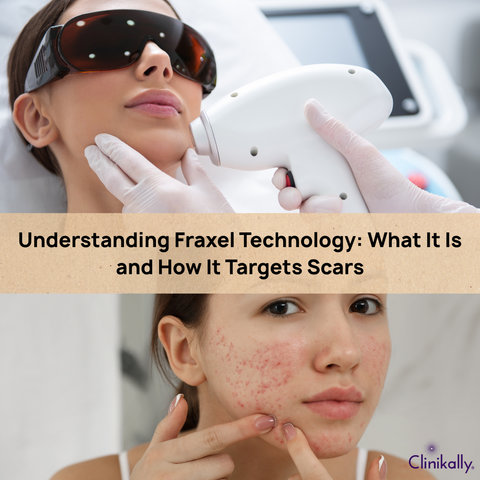
Fraxel is a fractional laser technology that is used to resurface skin and repair scars. It works by causing microscopic injuries in a small area of the skin, which stimulates the body's natural healing process and results in the formation of new, healthy tissue. This procedure helps to restructure scar tissue and improves overall skin texture and tone.
-
Fractional technology: Fraxel lasers do not target the entire skin surface at once. Instead, they cause tiny, controlled columns of heat damage while leaving the surrounding skin unaffected.
-
Collagen stimulation: Microscopic injuries cause the body's normal healing response, which includes collagen creation.
-
Scar remodeling: As new collagen is created, it contributes to the remodeling of scar tissue, filling in indentations and smoothing the skin's surface.
-
Targeting multiple depths: Fraxel lasers may be programmed to target different levels of the skin, allowing for tailored treatment based on scar form and severity.
The Science of Fractional Lasers and Skin Regeneration
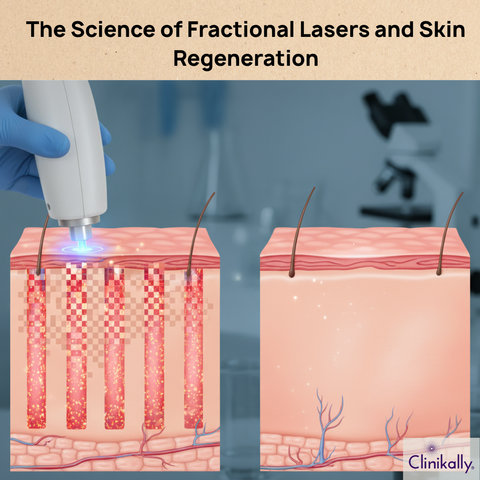
Fractional lasers function by causing small columns of thermal damage in the skin, which triggers a natural wound healing response that results in collagen formation and skin regeneration. This approach, known as fractional photothermolysis, leaves the surrounding skin unaffected, allowing for speedier healing and fewer side effects than typical resurfacing techniques. Key features of fractional laser treatment:
-
Fractional vs. traditional resurfacing: Unlike traditional ablative resurfacing, which treats the entire area, fractional lasers only treat a portion of the skin, leaving the surrounding tissue intact for faster healing.
-
Ablative vs. non-ablative: Fractional lasers can be ablative (remove tissue) or non-ablative (heat tissue without removing it), with various penetration depths and downtime.
-
Skin tightening: Fractional lasers promote collagen activation and remodeling, which can result in substantial skin tightness.
-
Wide variety of applications: Fractional lasers are used to address uneven skin pigmentation, acne scars, UV damage, fine lines and wrinkles.
Types of Acne Scars Best Treated with Fraxel
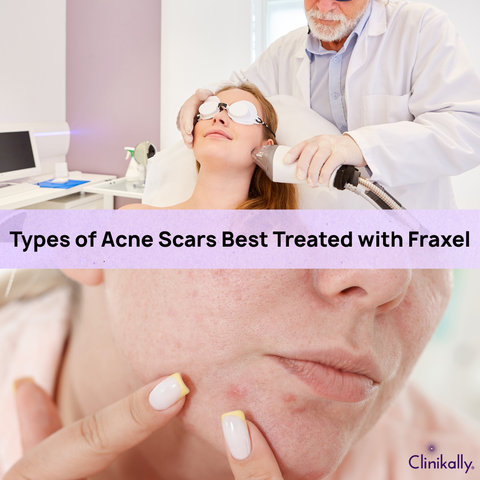
Fraxel works best for mild to moderately deep textural and pigment-related acne scars. It works by resurfacing the skin and increasing collagen formation deep within the dermis.
-
Boxcar scars: Broad, sharp-edged depressions with distinct edges. Depth ranges from medium to deep, with flat bottoms. The fractional laser smoothes the edges and stimulates collagen, which raises the depressed area. Excellent for shallow to moderate boxcar scars.
-
Rolled scars: They are wavy, undulating depressions that give the skin a "dented" or "rolling hills" texture. Depth which incorporates Fibrous bands that bind the skin frequently cause them to extend deeper into the dermis. Texture improves with time by breaking up fibrosis and stimulating new dermal matrix. It is frequently paired with subcision for improved outcomes.
-
Post-inflammatory hyperpigmentation (PIH): It is brown, red, or reddish discoloration that occurs after acne lesions have healed. Depth comprises epidermal and superficial dermis layers. Fraxel Dual is ideal for pigment correction. It can dramatically reduce pigmentation in 1-3 sessions.
-
Mild atrophic scars: They are shallow depressions with soft edges. Depth ranges from superficial to mid-dermis. The best outcomes come from numerous sessions. It can gradually smooth out minor atrophic scarring.
How Fraxel Stimulates Collagen for Skin Remodeling
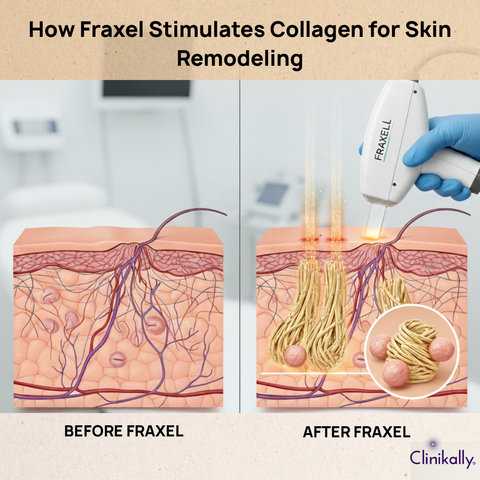
Collagen remodeling is the process of breaking down damaged collagen and regenerating new, well-organized collagen fibers. This is the basis of Fraxel's efficacy: it converts the damaged, disordered dermal matrix into stronger, smoother tissue.
-
Creation of microthermal zones (MTZs): Fraxel creates microthermal zones by delivering hundreds of tiny columns of heat into the dermis. These micro-injuries reach the mid-to-deep dermis, where collagen is found, and the presence of healthy tissue promotes recovery.
-
Laser-induced "wounds" imitate skin trauma, triggering a three-phase healing response: Inflammation (Days 1-3), proliferation (Days 4-10), and remodeling (Weeks to Months).
Benefits of Fraxel Laser for Acne Scar Removal
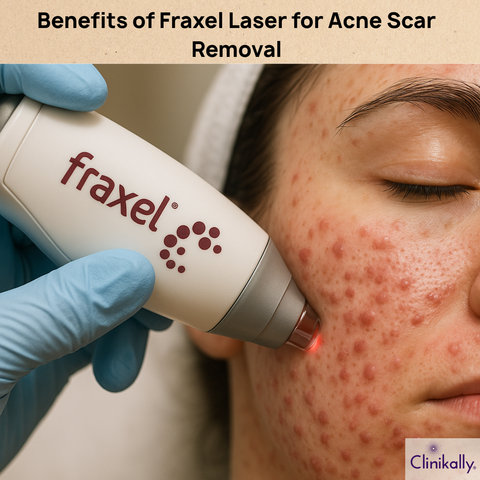
The benefits of fraxel laser for acne scars are listed below:
-
Significant decrease in scar depth: Fraxel smoothes atrophic scars (boxcar, rolling, mild ice pick) by encouraging collagen remodeling and replacing disordered scar tissue with healthy dermal matrix. Results in shallower, less noticeable scars.
-
Improves overall skin texture: By forming microthermal zones that resurface the skin and tighten the dermis. Reduces rough texture, uneven skin surface, and big pores.
-
Fades post-acne pigmentation (PIH): The Fraxel Dual's 1927 nm wavelength targets surface melanin. Effective for brown, red, or purplish acne scars and uneven skin tone. It is especially beneficial for Asian and medium skin tones struggling with PIH.
-
Non-surgical, minimally invasive: There are no cuts or needles necessary. A general anesthetic is unnecessary; topical numbing lotion will suffice. It is safe for scars on the face, neck, chest, and back.
-
Stimulates long-term collagen production: After 3-6 months, the effects enhance further. The skin seems firmer, younger, and better supported from within.
-
Customizable for various scar kinds and depths: Settings can be altered to penetrate deeper for moderate boxcar/rolling scars while remaining superficial for pigment-only concerns. Enables tailored, scar-specific treatment strategies. Scar treatment and anti-aging properties. Enhances fine lines, UV damage, and skin suppleness. Ideal for those with acne scars and early signs of aging.
-
Quick sessions and predictable recovery: Each session lasts 20 to 40 minutes. It normally takes 3-7 days, depending on the laser kind and depth. In comparison to ablative lasers, you can return to routine activities rapidly.
-
Safe for many skin tones: Non-ablative fraxel (1550 nm) is safer for Fitzpatrick skin types III–IV when conducted correctly. Reduces the likelihood of hyperpigmentation or scarring when protocols are followed.
-
Permanent improvement: The newly generated collagen is structurally stronger and more ordered than before. Scars do not recur after treatment; however, maintenance or combination therapy may be required for maximum results.
Minimally Invasive Yet Effective Skin Resurfacing
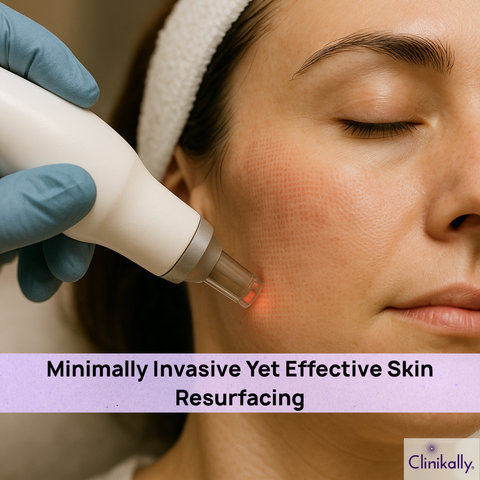
Minimally invasive skin resurfacing provides excellent remedies for a variety of skin issues while requiring minimal downtime. Wrinkles, acne scars, pigmentation disorders, and other concerns can be addressed with procedures including as laser resurfacing, chemical peels, and microneedling, which frequently require just local anesthesia and result in faster recovery periods. These treatments promote collagen formation and skin regeneration, resulting in smoother, brighter, and more youthful-looking skin. Minimally invasive skin resurfacing refers to non-surgical procedures that promote skin renewal, improve texture, tone, scars, and fine wrinkles, have little to no downtime, and cause minimum disruption to the skin barrier. These treatments stimulate the body's natural healing and collagen regeneration processes without causing major skin ablations or cuts.
Improvements in Skin Tone, Texture, and Clarity
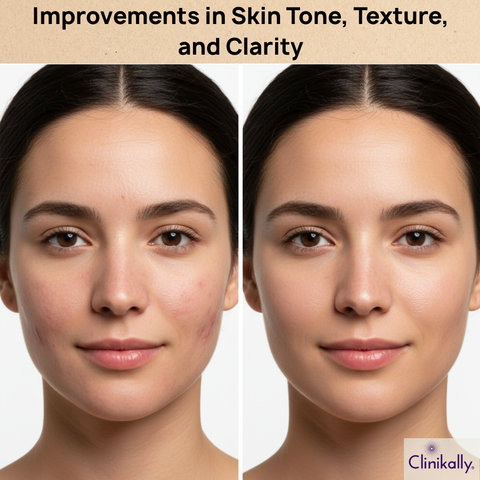
Skin look improves through three main dimensions, including tone (evenness of skin color). It minimizes hyperpigmentation, redness, dullness, and texture (smoothness and surface uniformity). It softens rough spots, scars, big pores, and clarity (overall glow, luminosity, and transparency). It boosts brightness and reduces blotchiness.
Skin resurfacing therapies, including Fraxel, microneedling, and laser peels, function by:
-
Stimulating Collagen and Elastin: Smoother texture, firmer appearance, and fewer fine wrinkles and acne scars.
-
Increasing cell turnover: Removes skin cells that are damaged, pigmented, or rough. Replaces with newer, healthier cells to improve clarity and tone.
-
Breaking up uneven pigmentation: Targets melanin clusters (sunspots, PIH, discolouration).This results in a more even complexion.
-
Shrinking pores: Pore shrinkage occurs when collagen remodels the area surrounding the pores. Texture becomes finer and less gritty.
Visible Results with Reduced Downtime
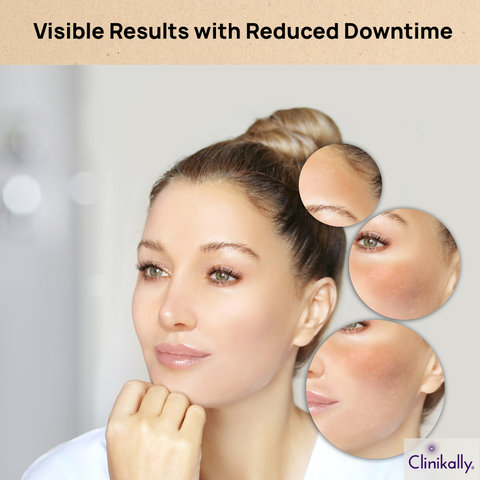
It refers to skin treatments that provide quantifiable changes in tone, texture, and scarring, have a short recovery time (typically 1 to 7 days), and allow you to resume your normal activities fast, without lingering redness, peeling, or sensitivity. These medicines achieve a balance between safety and efficacy.
Treatment Journey: What to Expect Before, During, and After Fraxel
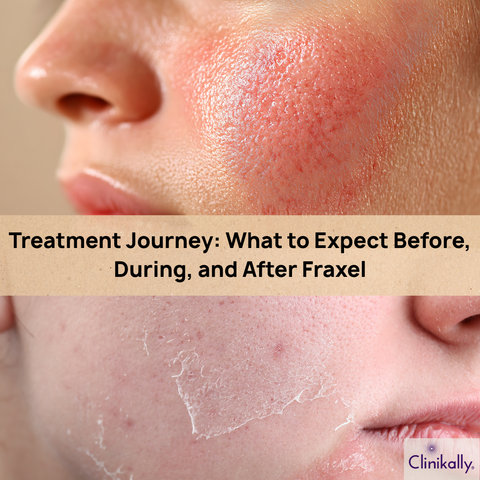
The treatment path with Fraxel laser—from preparation to post-treatment care, so you know exactly what to expect at every point.
Before:
-
One to two weeks beforehand: Avoid sun exposure and tanning, whether natural or artificial. Eliminate retinoids, acids, and exfoliants. Avoid waxing, peeling, and laser hair removal on the treatment area. If you are prone to cold sores, start taking antiviral medications (as prescribed by your doctor).
-
24-48 hours ahead: Maintain proper hydration: Drink lots of water. Avoid alcohol and blood thinners (such as aspirin, ibuprofen, and fish oil). Wash your skin with a mild cleanser and avoid makeup and actives. The step-by-step process of washing, applying numbing cream, and doing laser passes begins.
After:
-
Days 1-3 (redness, swelling, sensitivity): The skin will be heated, tight, and flushed. Swelling may occur (particularly near the eyes). Apply cool compresses and keep the skin moisturized. There are no cosmetics or harsh products yet.
-
Days 3–6 (peeling and texture changes): Skin starts to flake, peel, and feel gritty. A "bronzing" or sandpaper-like texture is typical. Do not pluck or clean the skin; allow it to shed naturally.
-
Days 6-10 (new skin appears): The redness decreases, revealing smoother skin. Tone and texture improve dramatically. You can now apply mild makeup, mineral sunscreen, and hydration products.
Pre-Treatment Skin Preparation and Consultation
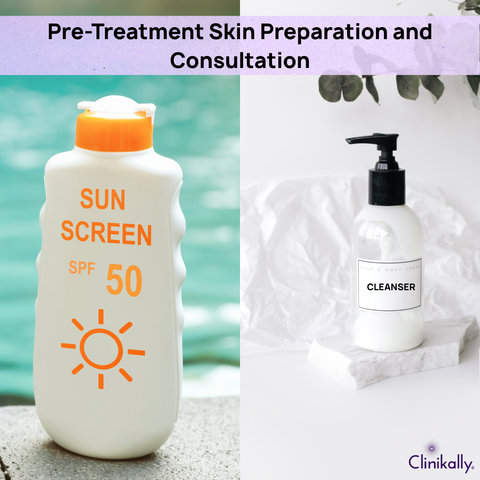
Pre-treatment skin preparation and consultation for Fraxel laser therapy are designed to ensure your skin is healthy, responsive, and ready for optimal outcomes with lowest risk.
-
Skin assessment: Determine your skin type (Fitzpatrick scale) and assess acne scar type (ice pick, rolling, boxcar), pigmentation (PIH, melasma, sunspots), sensitivity, and history of eczema, rosacea, or active acne.
-
Health and lifestyle history: A history of cold sores, keloids, or poor wound healing. Current skincare regimen (particularly actives such as retinoids, AHAs, or acids), recent facials, chemical peels, lasers, or injectables, and oral drug use (such as isotretinoin or antibiotics). Treatment planning includes deciding on the type, depth, and intensity of fraxel according on your goals and skin issues, as well as the number of sessions (usually 3-5).
-
2-4 weeks before to treatment: Topical retinoids (tretinoin, retinol), exfoliants (AHAs, BHAs, scrubs, enzymes), benzoyl peroxide or severe acne treatments, as well as any recent peels, laser hair removal, or vigorous facials.
-
Strict sun protection: Apply broad-spectrum SPF 30-50 daily, avoid sunburns and tanning, and wear hats or stay inside during peak sunshine hours.
-
5–7 days before treatment: Use a hydrating, gentle cleanser and moisturizer on a regular basis, and focus on barrier repair with ingredients such as ceramides, niacinamide, and panthenol. Stay hydrated (both internally and topically).
-
24–48 hours before fraxel: 24-48 hours before fraxel, discontinue all active skincare (vitamin C, exfoliants, acids). Avoid saunas, hot showers, and workouts that cause inflammation. Cleanse gently to avoid irritation or microtrauma.
Sensations During the Session and Immediate Aftercare
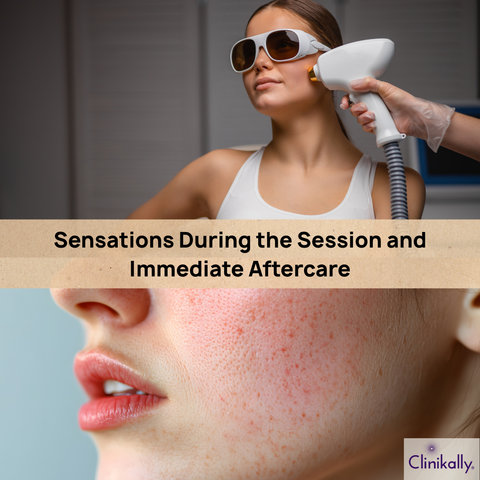
Sensations experienced during the fraxel laser session are listed below:
-
Numbing phase (45-60 minutes): A topical anesthetic cream is given prior to the surgery. You will feel numb, but not fully desensitized.
-
Laser application (15–30 minutes): The laser is swept over your skin in several sweeps. Most people report the sensation as warm, prickly, or stinging, similar to a rubber band snap followed by a hot burst of air. The discomfort is minimal and bearable due to cold air cooling throughout the process and the laser's fractionated nature (it treats micro-columns rather than the entire surface).
-
Immediately after laser passes: Immediately following laser passes, you may get a burning, sunburn-like sensation. The treated region may feel tight, tingling, flushed, and somewhat swollen, particularly under the eyes and cheeks. This sensation usually fades within 1-3 hours.
-
Immediate aftercare (0–48 hours post-treatment): For the First 24 hours, cool the skin gently use cold compresses (not ice) to soothe discomfort. Avoid heat (hot showers, saunas, workouts). Moisturize generously use a bland, healing moisturizer like Cicalfate, Aquaphor, Vanicream, or a hyaluronic acid serum. Reapply throughout the day to prevent tightness and dryness. Sun protection is critical. Avoid direct sun exposure; stay indoors or wear a wide-brim hat if going outside, and SPF isn’t applied on day 1 but will start on day 2 once peeling begins, and skip makeup and actives. Day 2 and beyond, redness may persist but should gradually lessen, skin will start to feel dry, gritty, and bronzed, gentle cleaning and moisturizing continue, and use broad-spectrum SPF 30-50 before any daylight exposure.
Healing Timeline and Skin Peeling Explained
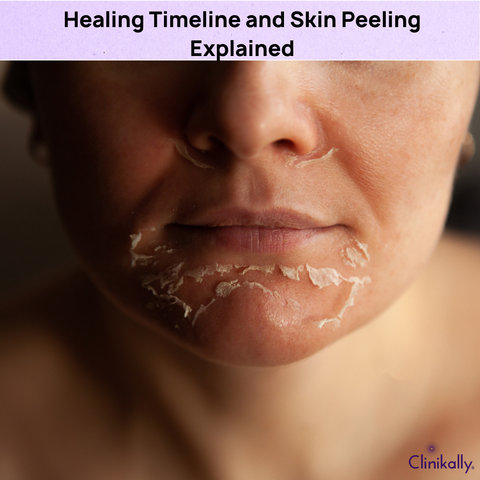
Following Fraxel laser treatment, your skin goes through a well-defined healing process that includes inflammation, cell turnover, and progressive regeneration. Understanding this schedule can help you manage expectations, provide correct aftercare, and determine what is usual versus concerning.
-
Day 1 (Immediate after treatment): Following your Fraxel session, your skin will most likely feel sunburned, warm, red, and slightly puffy. This is a natural inflammatory response. If a deeper setting or ablative Fraxel was used, you may notice minor stinging, tightness, or pinpoint bleeding. Cooling compresses and a thick moisturizer are typically recommended.
-
Days 2-3 (Swelling and Redness Peak): Swelling may develop significantly, especially around the eyes, and redness may worsen. At this moment, your skin may feel dry or scratchy as dead skin cells surface. It's critical to avoid touching or stroking your skin. Keep it clean, moisturized, and sun-safe.
-
Days 3–5 (peeling and shedding begin): Most people identify this period with Fraxel recovery. As the outer layers of injured skin prepare to slough off, they may appear bronzed or browned. You will notice flaking and peeling, particularly around the nose, lips, and cheeks. This procedure can take 3-5 days, depending on the treatment depth and your skin type. Do not pick at the peeling skin. This can cause scars or hyperpigmentation. Instead, continue to use moderate treatment and hydration to promote natural shedding.
-
Days 6-7 (fresh skin emerges): The peeling subsides, and the fresh skin beneath begins to reveal itself—usually smoother, softer, and somewhat pink. Redness can last for a few days to weeks, depending on your skin's sensitivity and the severity of the therapy. At this point, you can normally continue applying mineral makeup if desired.
-
Weeks 2-4 (subtle improvements continued): Your skin continues to repair at a deeper level. Any remaining redness decreases over time, and scar depth, tone, and texture may improve. Collagen manufacture is currently underway and will continue for several months.
Is Fraxel the Right Choice for Your Acne Scars? Personalized Insights for Your Skin
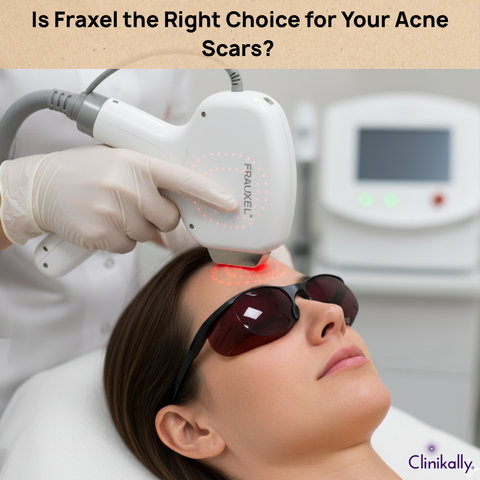
Fraxel laser is an effective treatment for acne scars, but its suitability depends on your scar type, skin tone, and overall skin condition. Unlike more aggressive procedures, Fraxel provides controlled, fractional skin resurfacing that stimulates collagen and regenerates damaged tissue with little downtime. It works notably well on atrophic scars such as boxcar, rolling, and superficial ice pick scars, where collagen remodeling can noticeably smooth the skin. Fraxel is typically safe and effective on fair to medium skin tones (Fitzpatrick I-III), with a low risk of pigmentation problems. People with darker skin tones (Fitzpatrick IV-VI) may need to take a more cautious approach to reduce the possibility of post-inflammatory hyperpigmentation (PIH). A trained physician will alter laser settings and recommend pre-treatment skin prep (such as topical lighteners or retinoids) to improve outcomes and safety. Fraxel may not be good for:
-
Have aggressive acne, skin infections, or inflammatory skin conditions.
-
Are susceptible to keloid scarring.
-
Want instant results (as the full effects build over 3-6 months)
For best results, you should schedule 3-5 sessions spaced 4-6 weeks apart. For deeper scarring or resistant markings, combining Fraxel with microneedling, subcision, or PRP may produce superior results.