Best Vitamin Supplements for Maximum Absorption
When it comes to vitamin supplements and maximum absorption, various things must be considered, including the type of vitamin, how it is taken, and whether any supplemental nutrients can help with absorption. In this blog, we'll look at some important vitamins and supplements to consider for optimal absorption.
What Affects Vitamin Absorption?
Vitamin absorption can be influenced by a variety of circumstances, including how the vitamin is ingested and your general health. Understanding what influences vitamin absorption can help you make better decisions about how and when to take supplements and which foods to incorporate into your diet. Vitamin absorption is influenced by the type of vitamin (fat-soluble vs. water-soluble), dietary fat, the presence of other nutrients, digestive health, age, health conditions, medications, supplement form, vitamin dosage, timing of supplementation, alcohol, and smoking.
Understanding Bioavailability
The complex process of bioavailability is influenced by a number of variables, such as the vitamin's shape, the presence of other nutrients, age, digestive health, and mode of consumption. When selecting supplements or organizing meals, these aspects should be taken into account to maximize nutritional absorption. You may optimize the advantages of the vitamins you take by taking supplements in more bioavailable forms, knowing how nutrients interact, and matching vitamins with the appropriate foods.
Water-Soluble vs. Fat-Soluble Vitamins
Water-soluble vitamins: Water-soluble vitamins dissolve in water and are easily absorbed into the bloodstream following digestion. These vitamins are not fat-soluble and are often absorbed straight into the bloodstream via the small intestine.
-
Water-soluble vitamins do not accumulate in considerable concentrations in the body. Any extra amounts that are not consumed by the body are usually eliminated through the urine. This is why you must replace these vitamins on a regular basis, as the body does not store them in sufficient quantities.
-
They cannot be stored and therefore must be consumed on a daily basis.
-
Water-soluble vitamins are more vulnerable to heat, light, and air. Cooking and food processing can degrade or eliminate the potency of these vitamins.
Fat-soluble vitamins: Fat-soluble vitamins dissolve in fat and are absorbed alongside dietary fat in the digestive tract. These vitamins are stored in the body's adipose tissue and liver, where they can be used later.
-
It can be kept in the body for long periods of time, particularly in the liver and adipose tissue. This allows the body to use these vitamins as needed.
-
Fat-soluble vitamins, which are stored in the body, can reach harmful amounts if ingested in excess. When taking these vitamins, make sure not to exceed the recommended quantity.
-
To be properly absorbed, it must be taken with a fat-containing meal. Without fat, absorption is reduced.
How Gut Health Impacts Absorption
A healthy gut is essential for absorbing nutrients. How well your body absorbs vitamins, minerals, and other vital nutrients depends on several factors, including the health of the gut lining, the balance of gut bacteria, and the effectiveness of digestive processes. You may maximize nutrient absorption and enhance your general well-being by promoting your gut health with probiotics, a balanced diet, adequate water, and stress management. It's critical to see a healthcare professional or dermatologists for an appropriate assessment and treatment if you have digestive problems or suspect nutrient malabsorption.
Comparing Different Forms of Vitamin Supplements
The most common forms of vitamin supplements are compared as follows.
-
Tablets are one of the most popular types of vitamin supplements. They are typically solid, compressed vitamins that may include fillers, binders, and preservatives.
-
Capsules are another common type of vitamin supplement. They comprise powdered or liquid vitamins in a gelatin or vegetarian capsule.
-
Softgel capsules have a soft, gelatin-like outer layer. These frequently contain liquid or oil-based nutrients, making them particularly beneficial for fat-soluble vitamins such as vitamin D, E, and A.
-
Liquid vitamins come in bottles, usually in concentrated form, and are taken with a spoon or dropper. They may be provided as single-nutrient formulations or multivitamin supplements.
-
Powdered vitamin supplements come in separate packets or tubs and are usually blended with water, juice, or smoothies.
-
Chewable vitamins are meant to be chewed before ingestion. They are frequently available in fun, fruit-flavored varieties and are particularly popular among children and others who loathe ingesting medicines.
-
Sublingual tablets or sprays dissolve under the tongue, allowing vitamins to be absorbed directly into the bloodstream via the mucous membranes of the mouth.
Vitamins: Pills, Liquids, or Powders?
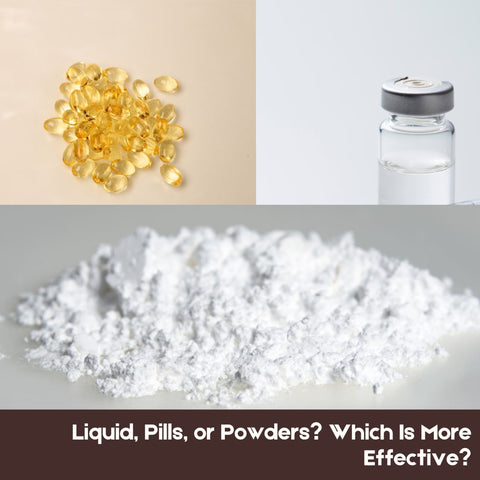
When determining whether to take vitamin supplements in liquid, tablet, or powder form, you should examine how your body absorbs these nutrients, the effectiveness of each form, and your own personal preferences. All three types of supplements can be beneficial, but their efficacy, convenience, and absorption rates may differ based on the nutrient, your digestive system, and your lifestyle. The efficacy of each type of supplement:
1. Liquid Vitamins: Liquid vitamins are dissolved in a liquid, usually water, and are generally taken with a spoon or dropper. The liquid form may contain concentrated concentrations of vitamins or minerals, and because they are already dissolved, they are absorbed as soon as they enter your mouth and digestive system.
-
Because liquids do not require stomach digestion, they are absorbed more quickly than pills. They pass directly into the bloodstream via the stomach lining and intestines.
-
Because the nutrients in liquid vitamins are dissolved, they may have higher bioavailability, which means your body can access and absorb them more effectively.
-
Liquid vitamins allow you to quickly alter the dosage, which is especially important if you need to adjust the quantity based on your specific demands or health problems.
-
People with Crohn's disease, IBS, or gastritis may find liquids simpler to digest and absorb.
2. Pill or Capsule Vitamins: Pills or capsules are solid types of supplements in which vitamins and minerals are compacted into a tablet or enclosed in a gelatin or veggie capsule. These are normally taken whole and digested by stomach acids before being absorbed in the intestines.
-
Pills take longer to absorb nutrients than liquids because they must first break down in the stomach. However, many high-quality pills and capsules are engineered to disintegrate at precise speeds in order to maximize absorption.
-
Pills and capsules are portable and convenient to use. They are portable, easy to store, and available in a wide range of dosages and combinations.
-
Pills and capsules have a longer shelf life than liquids because they are less prone to destruction from light and air.
3. Powdered vitamins: Powdered vitamins are in a dry form that must be blended with water, juice, or smoothies. The powders are frequently very concentrated, and you can change the dosage simply varying the amount of powder you mix. These powders can contain individual nutrients or be part of a multi-nutrient combination.
-
Powders, like liquid vitamins, dissolve in liquid and are easily absorbed by the digestive system. They do not have to go through the same breakdown process as pills, making them ideal for quick absorption.
-
Powders can also have a better bioavailability than tablets since they are absorbed straight from the liquid they are mixed with, delivering a fast boost of nutrients.
-
Powders, like liquid vitamins, can be easily customized to meet specific needs. You may take more or less based on your health goals.
-
If you require higher amounts of specific vitamins or minerals (such as vitamin C or magnesium), powders may be a better option than tablets.
Are Liposomal Vitamins Worth It?
Liposomal vitamins are supplements encased in liposomes, which are tiny spherical structures composed of a phospholipid bilayer (the same substance found in cell membranes). These liposomes serve as delivery vehicles, transporting nutrients more efficiently to cells. The basic concept is that liposomes protect active compounds (such as vitamins or minerals) from digestive enzymes and stomach acid, allowing them to be absorbed more effectively in the intestines. This means that liposomal vitamins may reach their intended destination in the bloodstream more efficiently than regular supplements. In brief, yes, but with some significant caveats.
-
Specific needs: If you want to boost the absorption of specific vitamins or antioxidants (such as Vitamin C or glutathione), liposomal supplements may be worth trying, especially if regular supplements haven't worked for you. Their increased bioavailability has the potential to significantly change the way nutrients work in your body.
-
If you are willing to pay more: If money isn't an issue, liposomal supplements can be an excellent alternative for individuals who want to get the most out of their vitamins. They're especially beneficial for folks who require larger amounts of specific nutrients or have digestive difficulties that make vitamin absorption difficult.
-
Not for everyone: If you're on a tight budget or prefer simplicity, standard supplements might suffice. Most people can get by with ordinary vitamins, so the extra cost of liposomal choices may not be essential unless you have specific shortfalls or health issues.
Chewable vs. Sublingual Vitamins
Although chewable and sublingual vitamins have specific advantages, neither is generally superior to regular pills or capsules. Here's a simple guide to help you decide which one is best for you:
-
Chewable Vitamins: Ideal for those who have difficulty swallowing pills, prefer a more pleasurable vitamin, or require a quick, easy-to-consume choice. However, they may not deliver as large amounts and may contain additional sugars or fillers.
-
Sublingual Vitamins: Sublingual vitamins are ideal for people who want faster, more effective absorption of specific nutrients, especially if they have digestion or absorption difficulties. However, flavor might be a concern, and they are not appropriate for all nutrients.
Finally, depending on your unique needs, both forms can be effective and useful additions to a well-balanced supplement regimen. As usual, a healthcare expert before selecting a supplement type, especially if you have any medical concerns or specific vitamin deficits.
Synthetic vs. Natural Vitamins
-
One of the most compelling reasons in favor of natural vitamins is their bioavailability—the degree to which your body can absorb and use the nutrients. Natural vitamins frequently include extra cofactors (such as enzymes and other substances) to aid in their absorption and usage by the body.
-
In terms of potency, synthetic vitamins can be more concentrated and give a higher dose of the nutrient in a single tablet. However, this does not necessarily imply that they are more effective. According to some research, natural vitamins may be more effective because they contain additional supporting components that aid the body's metabolism.
-
Natural vitamins are often better tolerated by the body since they are absorbed as part of a dietary matrix, making overdosing more difficult. They are also generally safer in terms of toxicity because natural foods do not contain abnormally high levels of any single nutrient. However, excessive amounts of synthetic vitamins can occasionally cause gastric distress or poisoning. For example, too much synthetic Vitamin A (retinol) can produce nausea, dizziness, and even liver damage.
-
Natural vitamins are often more expensive due to the extraction method and the superior quality of the substances. Food-derived supplements are generally more expensive due to the more complex manufacturing procedures required. Synthetic vitamins, on the other hand, are less expensive and more easily produced in large quantities.
-
Natural vitamins are more expensive, but they may offer additional benefits due to their whole-food origin and bioavailability. Synthetic vitamins are less expensive and more widely available, but they may lack the essential components present in food-based vitamins.
-
Natural vitamins can be more environmentally friendly if they are sourced sustainably, especially from organic, plant-based sources. However, there may be issues about how some natural supplements are obtained, particularly with rare or endangered plants. Synthetic vitamins, on the other hand, are often manufactured in a laboratory setting and have a lesser environmental impact due to raw material extraction. However, the production process does have an environmental impact.
Natural Ways to Boost Vitamin Absorption

Some natural ways to increase vitamin absorption are:
-
Combine fat-soluble vitamins with healthy fats: Fat-soluble vitamins, such as Vitamins A, D, E, and K, require fat for proper absorption by the body. Consuming these vitamins with a source of healthy fat can greatly improve their absorption.
-
Consume a well-balanced diet rich in fiber: Fiber is needed for gut health, and a healthy gut is required for optimum nutritional absorption. A high-fiber diet can boost the rate at which your body absorbs vitamins and minerals from food.
-
Improve gut health with probiotics: A healthy gut is required for the absorption of several nutrients, including vitamins. Probiotics (the "good" bacteria in your gut) aid digestion and vitamin absorption. A disturbed gut flora can impair nutrition absorption.
-
Stay hydrated: Water is vital for digestion and vitamin absorption. Dehydration can impede digestion and reduce vitamin and mineral absorption rates.
-
Combine vitamin C and iron-rich foods: Iron absorption can be improved when combined with Vitamin C. Vitamin C helps to convert plant-based iron (non-heme iron) into a more absorbable form.
-
Avoid excessive alcohol consumption: While small amounts of alcohol are generally not detrimental to vitamin absorption, excessive alcohol use can decrease the absorption of specific nutrients, including vitamin B12, folate, and vitamin A.
-
Manage stress: Chronic stress can impair your body's capacity to absorb and use vitamins and minerals. High-stress levels can disrupt the digestive system, limit stomach acid production, and harm gut health, making it more difficult for your body to absorb nutrients.
-
Consider timing and meal composition: Water-soluble vitamins (such as vitamin C and B vitamins) and fat-soluble vitamins (such as vitamin E, A, D, and K) can be absorbed differently depending on when you consume them.
-
Cook certain foods for better nutrient absorption: Cooking certain meals can improve the bioavailability of some vitamins and minerals by breaking down fiber or releasing nutrients that would otherwise be difficult for your body to absorb.
Best Food Pairings for Nutrients
The best food combinations for optimizing nutrient absorption are:
-
Vitamin C + iron (plant-based): Vitamin C increases the absorption of non-heme iron. Non-heme iron is less efficiently absorbed by the body than heme iron from animal sources; Vitamin C converts it into a more absorbable form.
-
Fat-soluble vitamins + healthy fats: Vitamins A, D, E, and K are fat-soluble, which means they require fat for effective absorption by the body. Consuming these vitamins alongside a healthy fat source increases bioavailability.
-
Turmeric + black pepper: Curcumin, the main ingredient in turmeric, has strong anti-inflammatory qualities, although it is poorly absorbed by the body. Piperine, a molecule found in black pepper, can boost curcumin absorption by up to 2,000%.
-
Avocado + tomatoes: Avocados include healthful fats, which aid in the absorption of lycopene, an antioxidant found in tomatoes that promotes heart health and may lower the risk of cancer.
-
Whole grains + legumes: Whole grains and legumes work well together because they generate a complete protein when combined. Whole grains have low lysine but high methionine, whereas legumes have high lysine but low methionine. They work together to give your body with all of the needed amino acids.
-
Garlic + onions: Garlic and onions are both high in sulfur compounds, which have been demonstrated to aid in detoxifying in the body. These chemicals can improve the body's ability to absorb and utilize certain minerals, such as iron and zinc.
Supplements with Higher Absorption Rates: What to Look For
It's important to take into account the supplement's form, any additional absorption-enhancing substances, and the best time to take it in order to optimize absorption. Your body's ability to use these nutrients can also be greatly impacted by keeping your stomach healthy, selecting high-quality goods, and being aware of any potential absorption inhibitors. When incorporating new supplements into your routine, always get medical advice, particularly if you are on other medications or have any underlying medical conditions.
Common Deficiencies and How to Overcome Them
Nutrient deficiencies are a common problem that can impair overall health, energy levels, and even mood. While it is always preferable to obtain nutrients from food sources, supplements may be required to address deficiencies. Some of the most common nutrient deficiencies and how to treat them include vitamin D deficiency, iron deficiency, vitamin B12 deficiency, calcium deficiency, magnesium deficiency, folate (vitamin B9) deficiency, vitamin A deficiency, omega-3 fatty acid deficiency, iodine deficiency, and zinc deficiency.
Factors to Consider When Buying Vitamin Supplements
When purchasing vitamin supplements, it is critical to make informed choices based on your specific health requirements, preferences, and lifestyle. Always prioritize quality, search for transparency in the components, and, if in question, speak with a healthcare expert to ensure that the supplement is appropriate for you. Whether you're treating a deficiency or improving your overall health, choosing the appropriate supplement can make a big difference.
How to Choose the Right Supplement?
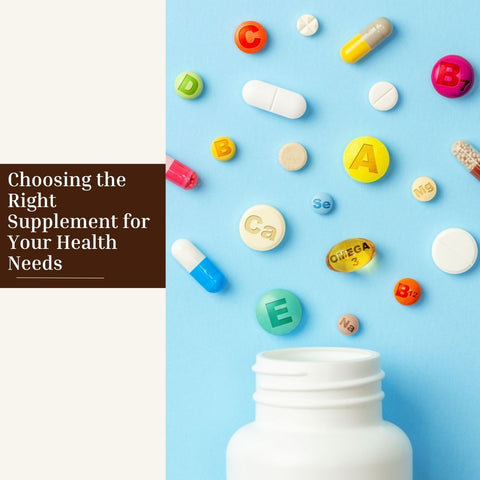
Choosing the proper supplement for your health needs can have a significant impact on your overall well-being. The idea is to focus on your specific health objectives, detect any deficiencies, and select high-quality, bioavailable supplements that are suited for your lifestyle. Always consult with a healthcare expert to ensure you are making the best decisions for your specific health needs. With the correct supplements, you may easily cover nutritional gaps and improve your overall health.