Shea Olein vs. Shea Butter:A Scientific Comparison for Skincare Formulators
Doctor's Desk
Author
9 Dec, 2025
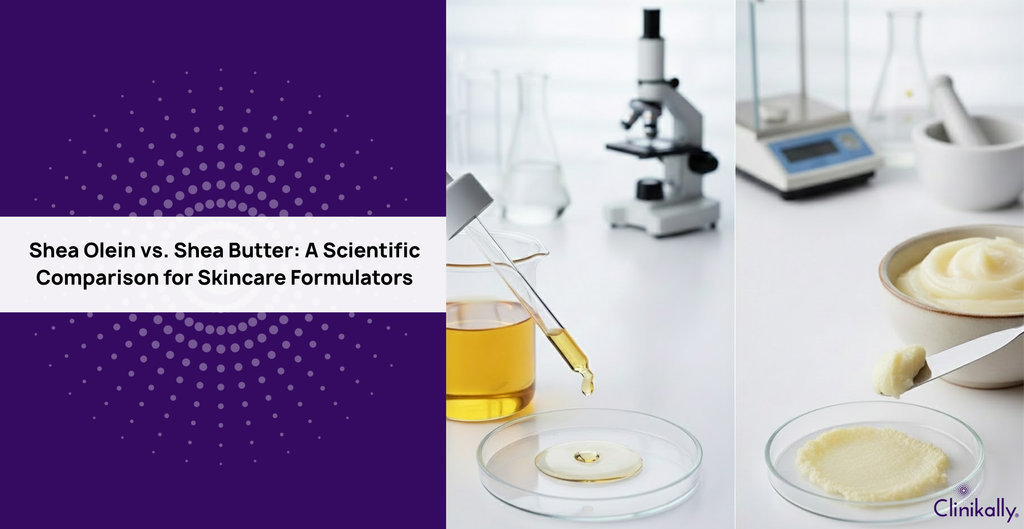
Shea olein and shea butter may appear to be quite similar, which is true; nevertheless, there are several variances that many people are unaware of. Even while they share a common origin, numerous other factors distinguish each of these items and make them unique and valuable. Learn about these distinctions so that you may make better decisions when you have the opportunity to pick between them based on your requirements and expectations.
Composition Matters: How Processing Transforms Shea Kernels
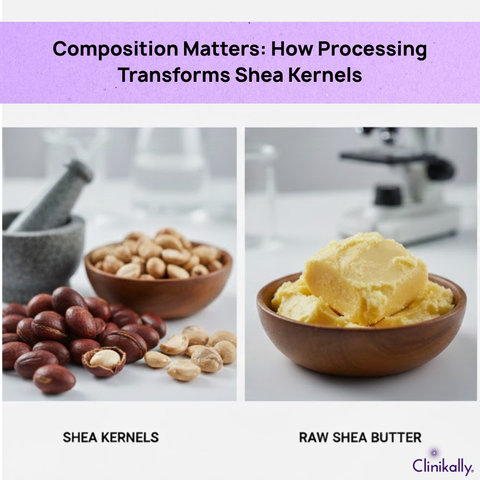
The chemical and functional qualities of raw shea kernels change substantially as they are processed into shea-derived skincare products. Processing processes, particularly extraction and fractionation, decide whether the end product is shea butter or shea olein, both with distinct compositions and use in cosmetic formulations.
-
Raw Shea Kernels: Shea kernels contain around 50% fat (mostly triglycerides). Unsaponifiables include phytosterols, vitamins A and E, and phenolic compounds. Protein, carbs, and trace minerals. Traditional or mechanical pressing extracts the fat, resulting in shea butter.
-
Processing to shea butter: Shea butter is made by roasting and grinding raw kernels. Pressed or cooked to get unrefined shea butter. Rich in stearic acid (solidifying, occlusive) and oleic acid (emollient, nourishing), this product contains unsaponifiables that provide anti-inflammatory and antioxidant effects, as well as a semi-solid to solid waxy texture. Refined shea butter is deodorized, bleached, and filtered, lowering active ingredients while increasing stability and consistency.
-
Shea butter is refrigerated and mechanically separated into two fractions: stearin (dense, waxy) and olein (fluid, light). Shea olein contains more oleic acid, which improves skin penetration and fluidity, and less stearic acid, making it non-comedogenic and better suitable for lightweight applications.
The Fractionation Journey from Butter to Olein
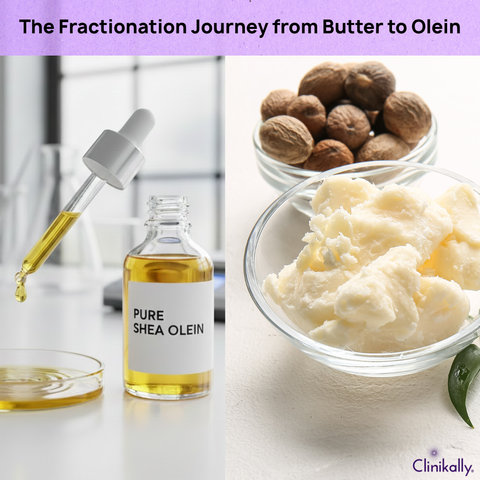
Fractionation is a precise procedure that separates shea butter, a semi-solid fat derived from Vitellaria paradoxa nuts, into two components: shea stearin (solid) and shea olein (liquid). This separation increases formulation adaptability by isolating the many functional characteristics of shea fat. The voyage begins with gently boiling whole shea butter to liquefy its lipid matrix while preserving its beneficial ingredients. The liquid is then progressively cooled under controlled conditions, causing high-melting-point triglycerides (mostly stearic acid) to crystallize. These sediments are filtered or centrifuged away, leaving behind shea olein—a transparent, golden liquid rich in oleic acid and unsaponifiables. Shea olein contains crucial skin-beneficial components such as tocopherols, phytosterols, and catechins but has a lighter texture and better absorption. It is highly regarded in skincare due to its emollient characteristics, rapid absorption, and non-greasy finish, making it perfect for serums, lotions, face oils, and hair products.
Fatty Acid & Unsaponifiable Profiles Compared
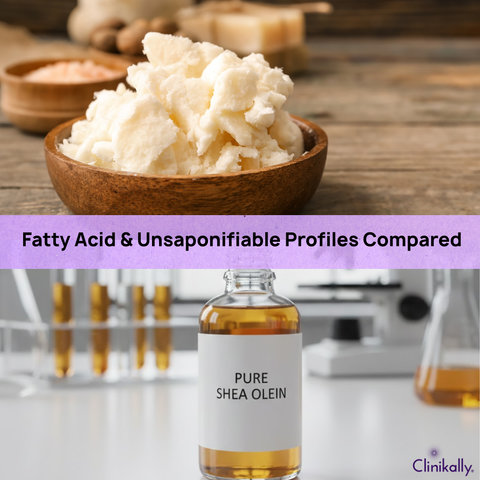
Shea butter and shea olein, both obtained from the Vitellaria paradoxa nut, have drastically different compositions due to the fractionation process. This changes the proportion of fatty acids and unsaponifiables, making each more suitable for diverse skincare uses.
Shea butter is semi-solid at normal temperature and contains roughly equal amounts of oleic acid (40-50%) and stearic acid (35-45%), providing rich emollience and occlusive protection. It also contains trace levels of linoleic, palmitic, and other fatty acids, which aid in skin structure and hydration. Its high stearic acid content results in a thicker texture, making it perfect for heavy creams and balms. In contrast, shea olein, the liquid fraction, contains more oleic acid (55-75%) and less stearic acid (10-25%), resulting in a lighter, faster-absorbing texture. It's better suited for facial oils, serums, and lotions.
Both forms preserve important unsaponifiables such as tocopherols (vitamin E), phytosterols, triterpenes, and polyphenols, which have antioxidant, calming, and skin-repairing qualities. Shea olein may concentrate some of these chemicals by selective retention during processing.
Texture, Absorption, and Sensory Differences
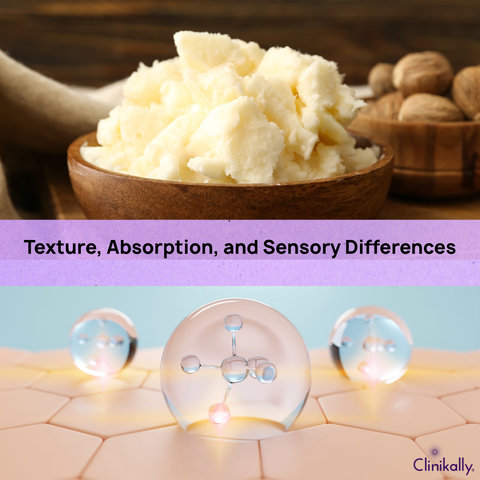
Shea butter and shea olein are not only different in composition, but they also have different sensory profiles, which are important factors to consider when developing products and improving user experience. Here's how they compared:
-
Texture: Shea butter is semi-solid to solid at normal temperature. Thick, rich, and creamy texture. Adds body and stiffness to formulas such as balms, butters, and barrier creams. Shea olein liquid is at room temperature. Lightweight and flowing, with a smooth, oily feel. Suitable for mild emulsions, serums, and face oils.
-
Absorption: Shea butter absorbs slowly, creating a protective occlusive layer on the face and leaving a slightly greasy finish; it is very beneficial for dry or damaged skin. Shea oil, on the other hand, contains more oleic acid and so absorbs faster. Penetrates quickly without clogging the pores. Non-greasy finish, ideal for daytime or warm-weather products.
-
Sensorial experience: Shea butter provides a "nourishing" and robust feel. It may feel thick or waxy depending on concentration and processing. Shea olein, on the other hand, provides a smooth glide and a silky finish. Improves spreadability and elegance in lightweight or layered formulations.
Skin and Hair Benefits: When to Choose Olein or Butter
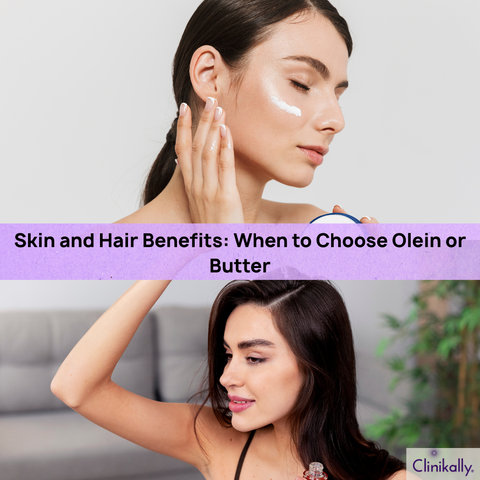
Shea butter and shea olein both provide significant skin and hair benefits, but their optimal use differ due to differences in texture, absorption, and lipid makeup. Shea butter's high stearic acid content makes it solid at room temperature and gives deep, long-lasting hydration. It is ideal for dry, cracked skin, barrier repair, and thick, curly hair. Its occlusive properties lock in moisture, making it great for night creams, balms, and hair treatments. Shea olein, the liquid fraction obtained by mild fractionation, has higher oleic acid, resulting in a lighter texture and faster absorption. It's suitable for everyday usage, particularly in lotions, face oils, and serums for normal, oily, or acne-prone skin. Its non-greasy texture and high concentration of antioxidants such as tocopherols and polyphenols make it ideal for sensitive, mature, or inflamed skin. Shea olein hydrates the scalp and fine hair without causing weight or buildup.
Hydration & Barrier Repair: Performance Side-by-Side
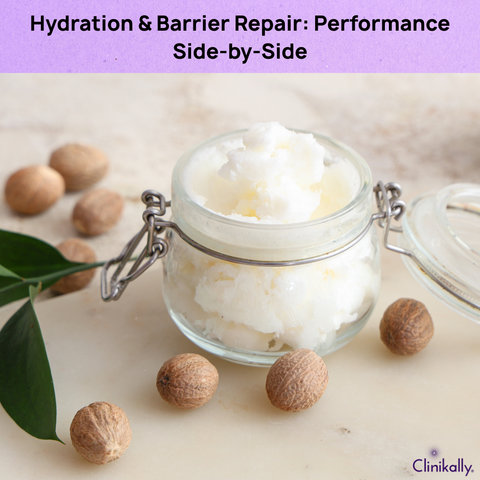
Shea butter and shea olein are both extracted from the Vitellaria paradoxa nut and are highly valued for their skin-nourishing effects. However, their efficiency in hydration and barrier restoration differs due to differences in physical shape and fatty acid makeup.
Shea butter, which is solid at room temperature, contains a high concentration of stearic and palmitic acids, making it an excellent lipid barrier strengthener. It generates an occlusive barrier that seals in moisture, hence reducing transepidermal water loss (TEWL). This makes it great for treating dry, flaky, or damaged skin, especially around the elbows, heels, and in eczema-prone conditions. It also contains calming substances such as phytosterols, allantoin, and tocopherols, which help with inflammation control and repair.
Shea olein, the liquid fraction produced by fractionation, contains higher oleic acid, resulting in a lighter texture and faster absorption. Though less occlusive than shea butter, it moisturizes well and is ideal for oily, acne-prone, or sensitive skin. Its antioxidant-rich profile reduces inflammation and promotes skin comfort without heaviness, making it perfect for midday or humid conditions.
While shea butter excels in deep moisture retention and barrier healing, shea olein gives lightweight hydration and a smoother skin sensation. For formulators and customers, the decision between the two is based on skin type, climate, and product texture choice. Both substances, whether used together or separately, are crucial for maintaining skin health, moisture, and resilience.
Acne-Prone and Sensitive Skin: Comedogenic Insights
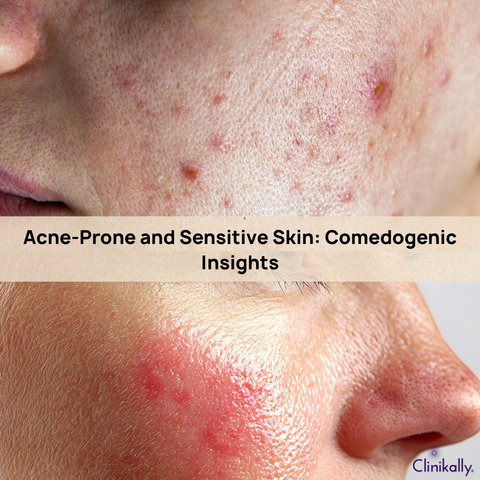
When it comes to acne-prone and sensitive skin, non-comedogenic and calming substances are essential. Shea butter and shea olein are both derived from the shea nut, but they have different textures, absorption rates, and effects on the skin. Shea butter has a thicker, more occlusive texture and a comedogenic rating of approximately 0-2. While it contains barrier-repairing stearic and palmitic acids, its thicker consistency can be problematic for oily or acne-prone skin, especially when applied in high quantities. However, anti-inflammatory components like as phytosterols and allantoin may still assist dry, irritated skin in modest or targeted applications (for example, around the eyes or on dry spots).
Shea olein, the liquid fraction produced by fractionation, has a lighter viscosity and a lower comedogenic grade (0-1). It absorbs rapidly and is highly tolerated by sensitive and acne-prone skin. Its high oleic acid and antioxidant content assist in reducing inflammation without blocking pores, making it a better choice for daytime use or layering with other acne treatments.
Both types provide anti-inflammatory and moisturizing properties, but refined versions are better for sensitive skin to eliminate the chance of irritation from natural impurities or fragrance compounds.
Hair-Care Applications: Scalp Serums to Leave-In Masks
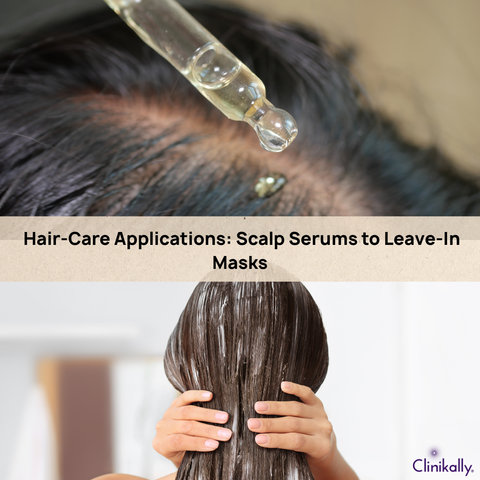
Shea butter and shea olein provide numerous benefits in hair care formulas, ranging from healing dry scalps to profoundly nourishing strands. Their unique textures and fatty acid profiles make them appropriate for a variety of product kinds and hair issues.
-
Scalp serums and treatments: Shea olein, with its light, liquid texture and greater oleic acid concentration, is suitable for scalp serums. It is easily absorbed, providing moisture without blocking follicles or leaving a greasy residue. It reduces inflammation, alleviates irritation, and may promote hair growth by enhancing scalp health. Raw shea butter, on the other hand, is thicker and more occlusive, and it can be used in overnight scalp balms for dry, flaky, or irritated skin—but only in small amounts to minimize accumulation.
-
Leave-in conditioners and hair oils: Shea Olein is ideal for leave-in treatments for fine to medium hair. It reduces frizz, adds luster, and prevents breakage without weighing down your hair. Shea butter, on the other hand, works best in leave-in creams or butters with coarse, curly, or coily textures. It coats the hair shaft, retaining moisture and minimizing protein loss.
-
Deep conditioning and masks: Shea butter is a wonderful ingredient in deep conditioning masks for damaged or porous hair. It softens the strands, increases suppleness, and restores strength. When mixed with richer emollients, shea olein improves mask spreadability and provides a lighter moisturizing touch.
Key Takeaways for Formulators and Conscious Consumers
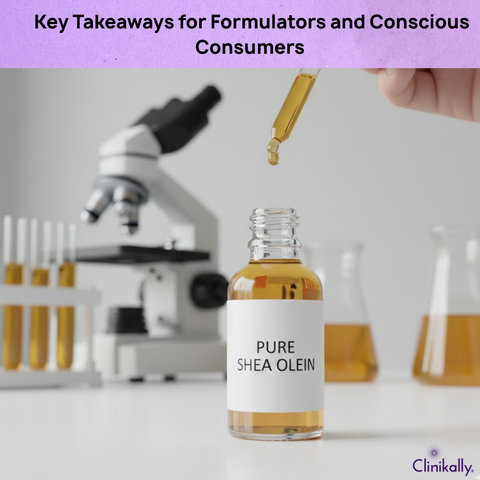
Shea butter and shea olein, both derived from the Vitellaria paradoxa nut, have numerous benefits in skincare and haircare, but they differ greatly in texture, absorption, and compatibility for different applications. Understanding the differences is critical for both formulators and ingredient-conscious customers.
Shea butter is a rich, emollient base that formulators use to create balms, body butters, and deep conditioning masks. Its thick consistency, occlusive texture, and high stearic and palmitic acid content make it ideal for retaining moisture and strengthening the skin's barrier. In contrast, shea olein derived through fractionation is lighter, more spreadable, and high in oleic acid. It is ideal for fluid formulas such as serums, lotions, scalp treatments, and mild hair oils. Shea olein improves product appearance while also providing hydrating and anti-inflammatory properties.
Skin and hair type should dictate ingredient selection for health-conscious consumers. Shea butter's highly nourishing characteristics are especially beneficial for dry, aged, or textured skin and hair. Sensitive, oily, or acne-prone skin, as well as fine to medium hair, benefit from shea olein's lighter texture and low comedogenic rating. Shea olein is especially great for humid regions or layering beneath makeup and sunscreen.