Preservative-Free Beauty: A Safer Option or Just Skincare Hype?
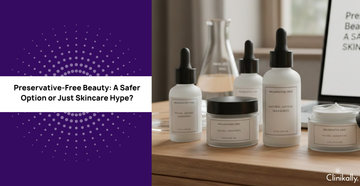
The emergence of preservative-free beauty has ignited fierce controversy in the skincare community. Billed as a cleaner, healthier alternative, the preservative free products promise to minimize irritation and appeal to consumers looking for natural, "chemical-free" approaches. But are they actually safer for your skin or merely another fad surfing the clean beauty tide? While preservatives are commonly confused, they are vital to safeguard formulas against damaging bacteria, mold, and spoilage. Without them, products will have reduced shelf lives and increased contamination risks. It is important to comprehend the chemistry behind preservatives vs. preservative-free in order to determine if this trend is about actual safety or marketing trickery. Continue reading on Clinikally to understand more.
Understanding Preservatives in Skincare: What They Do and Why They Matter
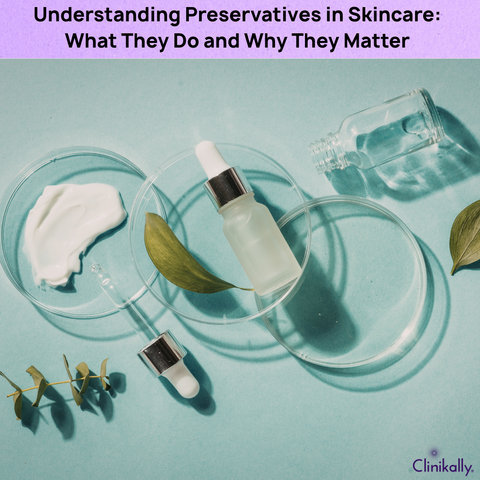
Preservatives in cosmetics are necessary ingredients that prevent products from becoming bad, ineffective, unsafe and unstable during use. Since water and natural extracts are used in the majority of creams, serums, and lotions, they have the potential to become a breeding ground for mold, yeast, and bacteria. Preservatives function by inhibiting microbial growth, safeguarding the formula integrity along with the well-being of the user. In addition to shelf life extension, they also guarantee uniformity in texture, fragrance, and functionality. Though frequently misunderstood within the realm of clean beauty, preservatives are strictly governed and applied in safe dosages, rendering them an essential aspect of contemporary skincare science.
The Role of Preservatives in Cosmetic Stability and Safety
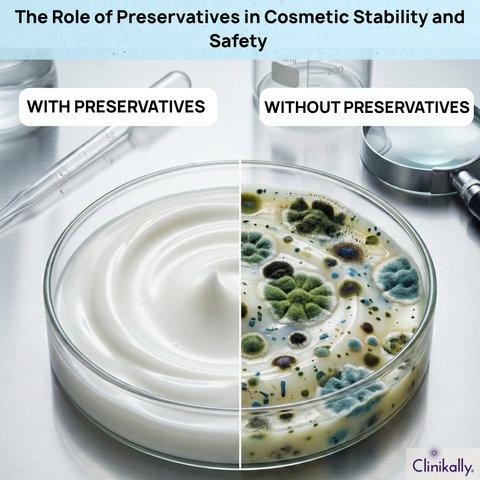
In the skincare and beauty business, effectiveness and safety of products are essentials. Preservatives help ensure that creams, serums, and lotions do not become vulnerable to bacterial, mold, and fungal growth. Besides prolonging the shelf life of products, preservatives also safeguard consumer health by inhibiting the growth of harmful microbes.
-
Preservatives keep skin care products from experiencing texture, color, and scent variations, keeping them consistent and effective over their intended shelf life.
-
Cosmetics are exposed to contamination whenever they are opened or handled. Preservatives function as a guard against bacteria, yeast, and mold that otherwise would grow in water-based products.
-
By preventing harmful microorganisms, preservatives minimize the risk of skin infections, irritation, and allergy, keeping products safe for everyday use.
-
Longer-lasting products mean they don't spoil rapidly, cutting down waste and offering consumers more value for money.
-
Even after manufacturing, skincare products come into contact with air, fingers, and applicators. Preservatives protect the formula from real-life contamination.
-
International cosmetic laws demand products to be microbiologically safe. Preservatives ensure that brands comply with these safety regulations, and this builds customer confidence.
-
With preservatives, formulators can formulate innovative, water-based or natural ingredients without compromising on performance or safety.
As there is an increasing demand for "clean beauty" and short ingredient lists, removal of preservatives is not an option. It is so because preservatives are crucial to strike a balance between product performance, safety, and consumer confidence. The future of skin care is based on employing safe, efficient, and science-driven preservation systems that safeguard the product and the user alike.
Commonly Used Preservatives: From Parabens to Phenoxyethanol
Preservatives play a vital role in safeguarding skincare and cosmetic products from microbial contamination, spoilage, and even health hazards. Although consumer interest in "clean beauty" continues to expand, most of these ingredients continue to be industry staples because they are effective, stable, and sanctioned by regulations. The following are the eight most prevalent preservatives used in formulations today:
-
Formaldehyde Releasers such as DMDM Hydantoin, Imidazolidinyl Urea, Quaternium-15 release small quantities of formaldehyde slowly to avoid microbial contamination. These are extremely cost-effective. Its usage has decreased due to sensitivity issues but is still permitted under regulated quantities.
-
Parabens such as Methylparaben, Propylparaben, Butylparaben are used extensively for decades because of their broad-spectrum antimicrobial activity. These have become controversial in recent years.
-
Phenoxyethanol is a widely used paraben substitute. It is bactericidal in action but is mild on the skin.
-
Isothiazolinones such as Methylisothiazolinone, Methylchloroisothiazolinone are very effective against bacteria, fungi, and yeasts. These are extensively used in rinse-off products such as shampoos and shower gels and are banned in leave-on products due to possible allergic reactions.
-
Sodium Benzoate is used as a food-grade preservative and also used in skincare, especially in natural or mild products. It is most effective in products with a lower pH (acidic conditions) such as in facial cleaners, serums, and children's skin care products.
-
Potassium Sorbate is another mild, food-grade preservative that is effective against mold and yeast. It is very popular among natural or "eco-labeled" cosmetics.
-
Organic Acids & Derivatives such as Sorbic Acid, Dehydroacetic Acid, Benzoic Acid confer broad-spectrum antimicrobial protection, particularly in acidic products. These are well liked in "green beauty" because of their natural occurrence.
-
Benzyl Alcohol acts as both a preservative and solvent in cosmetic products. It is found naturally in essential oils but is also synthetically produced.
From parabens to phenoxyethanol, preservatives are still the foundation of cosmetic product safety. As consumer trends drive toward "cleaner" options, all preservatives, whether natural and synthetic, play the same role: to keep skincare products free from contamination and users safe. The trick is regulated concentrations and intelligent combinations for balance between efficacy, stability, and consumer trust.
Why Preservatives Are Often Misunderstood in Clean Beauty Circles
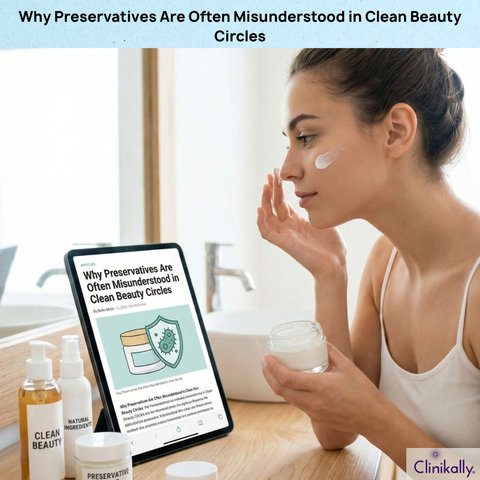
In the clean beauty movement, customers are increasingly attracted to "natural," "organic," or "chemical-free" labels. Although this trend has driven transparency and awareness, it has also created myths about preservatives. In fact, preservatives are not necessarily bad, infact, these enhance the product safety. However, the confusion usually comes from fear marketing, outdated science, or a lack of education about how these ingredients actually work. Preservatives are misunderstood and disliked because:
-
Clean beauty tends to correlate "natural" with safe and "synthetic" with toxic. However, numerous natural ingredients can be irritating, whereas well-tested synthetic preservatives can be more gentle and effective.
-
Most preservatives, such as parabens or formaldehyde releasers, have been subject to scare headlines in the media. Even when regulatory agencies establish their safety at low concentrations, they continue to be shunned as "toxic."
-
Companies occasionally use "free-from" labeling (such as paraben free) to position products, suggesting alternatives are safer when they utilize other preservatives still performing the same role.
-
Irritation in susceptible individuals can be caused by some preservatives but doesn't necessarily label them as universally hazardous. Misinterpreting these subtleties instigates generalizability.
-
Social media and blogs often oversimplify scientific studies, leading consumers to believe all preservatives are harmful without context of dosage, formulation, or regulatory safety reviews.
-
Deceiving the customer while marketing is another reason. However, the absence of preservatives can actually increase health risks. Contaminated products may cause skin infections, rashes, or worse, which is rarely highlighted in “clean beauty” messaging.
-
Lack of awareness and education is another reason. People presume that "preservative-free" is safer.
Preservatives get a bad rap in clean beauty circles, but this is to the detriment of their important function of guarding products and people alike. The emphasis, then, needs to be placed on good formulating practice, safe levels, and disclosure rather than banning preservatives.
The Rise of Preservative-Free Products: Fact, Fiction, and Formulation
The increasing trend of preservative-free skincare products indicates a change in consumer preference for cleaner, more natural beauty products. Marked as safer for sensitive skin and "harmless to the earth," these products have become the epitome of the clean beauty trend. Yet, reality is not so simple. Preservative-free products are attractive to consumers wanting minimalism and purity but tend to be unstable, have a limited shelf life, and pose microbial risks. Preservative-free creams, serums, and lotions are more susceptible to contamination without preservatives. As a result packaging, storage, and strict usage instructions become paramount. Meanwhile, creative brands are pushing the boundaries of water-free bases, airtight containers, and natural preservation systems to deliver safety while also listening to consumer demand. Knowing the truth from fiction of preservative-free beauty empowers consumers to make informed decisions and purchase safe, yet effective, skincare products.
What “Preservative-Free” Really Means in Beauty Labeling
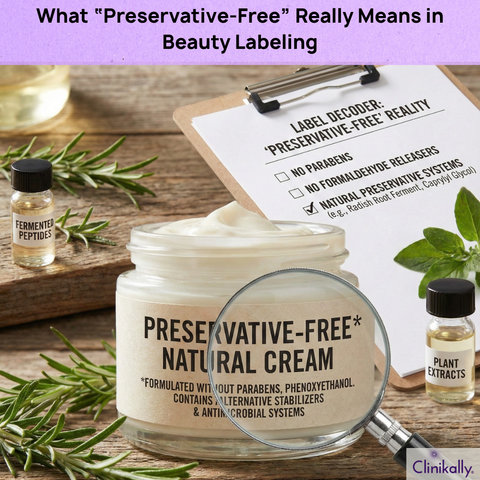
If a product describes itself as being "preservative-free," it is not necessarily devoid of preservatives or protected against spoilage. Within the language of beauty labeling, a label of “Preservative-Free” typically indicates that a product doesn't use conventional synthetic preservatives such as parabens or formaldehyde releasers. However, it can still have adopted other methods such as antioxidants, essential oils, or special packaging to provide protection from deterioration. Water-free formulas are also sometimes used by brands, which are inherently resistant to microbial growth. While "preservative-free" is a draw for clean beauty fans, it is misleading if people think it promises safety.
In this practice, such skincare or beauty products often have limited shelf life and need refrigeration or special usage instructions. Knowing what preservative-free labeling really means allows consumers to distinguish marketing hyperbole from science and select products that find harmony between purity, safety, efficacy and performance.
Are These Products Truly Safer for Sensitive Skin?
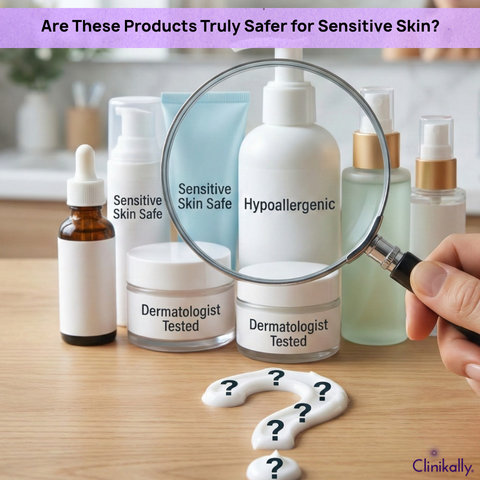
The popularity of "clean" and "preservative-free" skin care has numerous consumers convinced that these products are inherently gentler and safer especially for sensitive skin. However, the truth is more complicated. Sensitive skin needs protection from irritation and contamination, and preservatives have a role to play there. Here are five important facts to consider before assuming "preservative-free" means safer.
-
Preservative-free skincare products are more susceptible to bacteria, yeast, and mold which can lead to breakouts, rashes, or infections that are particularly disruptive to sensitive skin.
-
Today's formulas apply milder preservatives such as phenoxyethanol or potassium sorbate, which are less likely to cause irritation. Not all preservatives are harsh. Also, a lot of "sensitive skin" brands thoughtfully choose the preservatives that cause less irritation, to produce both safe and gentle results.
-
Products that say they are preservative-free usually employ different preservation systems, such as high alcoholic concentration or acidic pH. These may be even more irritating than conventional preservatives to sensitive skin.
-
Few preservatives might be absolutely safe at levels approved by regulators. Sensitive skin responds more to poor formulations than to properly used preservatives.
-
Items without strong preservatives may need to be refrigerated or have limited use times. If consumers fail to follow these storage guidelines, the product will spoil, thus causing harm to sensitive skin if used.
While "clean beauty" encourages that less preservative is better and therefore safer skincare, the fact is that preservatives are vital defense systems, particularly for sensitive skin. For sensitive skin, gentle yet science-driven preservation systems in products are vastly safer than preservative-free products which can weaken stability and safety.
Microbial Risks: Can Preservative-Free Skincare Go Bad Faster?
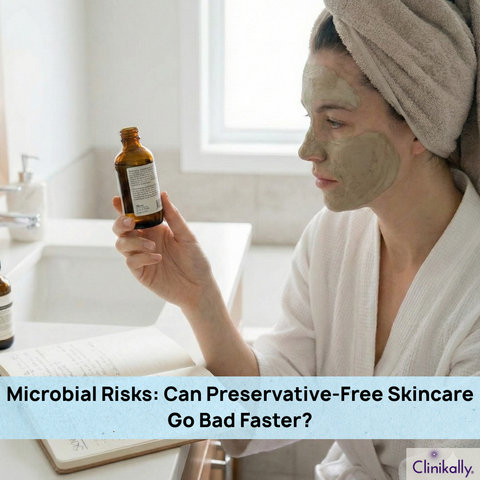
The "preservative-free" beauty trend has picked up in the clean beauty community, vowing gentler and more natural ingredients. But although the notion is attractive, pulling out preservatives poses severe microbial dangers. Without preservatives, creams, serums, and lotions are susceptible to bacteria, yeast, and mold. It happens because:
-
Preservative-free products frequently need refrigeration or have to be used within a few weeks. Disregarding these storage guidelines speeds up spoilage, making products unsafe much earlier than they appear or smell "off."
-
Most of the “clean” skincare has water which is the ideal breeding ground for fungi and bacteria. Without preservatives, contamination can occur in days or weeks.
-
Fingers or applicators are inserted into bottles/ jars each time you apply it. This causes microbes to transfer into the product. Preservatives typically kill these intruders
-
Dirty skincare doesn't necessarily have visible signs, such as mold or smell. Microbes can still linger and may cause rashes, acne outbreaks, or infections, especially in sensitive or compromised skin.
-
Natural oils, plant extracts, and herbal infusions are most susceptible to microbial activity. Ironically, most preservative-free "green" products turn rancid even more quickly than conventional formulas.
Yes, preservative-free skincare can go bad much faster due to microbial contamination. While the “clean beauty” promise of minimal ingredients is appealing, the absence of preservatives removes a crucial layer of safety. For truly safe skincare, it’s essential to choose products with gentle, science-backed preservation systems or strictly follow the short shelf-life guidelines of preservative-free alternatives.
Choosing What’s Right for You: Evaluating Skin Type, Product Use, and Lifestyle
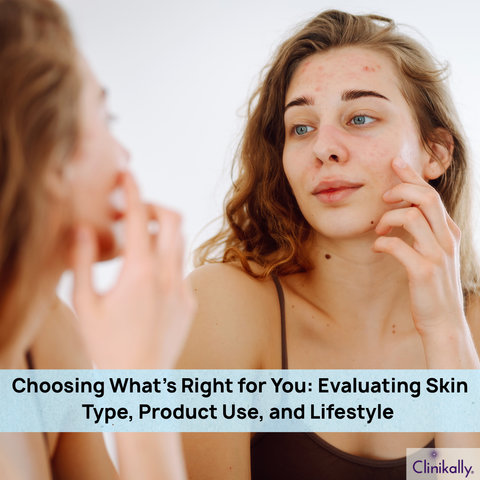
When it comes to skincare, choosing the right products isn’t just about following trends. In fact, it’s about understanding your skin type and individual needs. Oily, dry, sensitive, or combination skin all react differently to ingredients, preservatives, and formulations. For example, sensitive or reactive skin may benefit from minimalist formulas or preservative alternatives, while oily and acne-prone skin often requires products with proven stability to avoid contamination risks. Assessing your skin type assists you in deciding if a preservative-free product is a safe option or if a highly preserved version provides superior long-term protection and skin equilibrium.
Similarly, assessment of product use and lifestyle routine is also equally relevant and essential. Every-day products such as moisturizers or sunscreens will benefit from stability and safety, whereas occasional-use treatments might be more beneficial to preservative-free or small-batch options. Lifestyle comes into play as well. Travelers, people who workout extensively, or folks who live in hot, humid environments might require more strongly preserved products to prevent spoilage. Conversely, those who only use fresh, small amounts of skincare and are careful about storage might prefer preservative-free options. By considering skin type, patterns of use, and lifestyle considerations all together, you'll be able to make more intelligent, better-suited-to-your-needs skincare decisions that serve safety and efficacy well.
Preservative-Free for Reactive Skin: Who Might Benefit Most
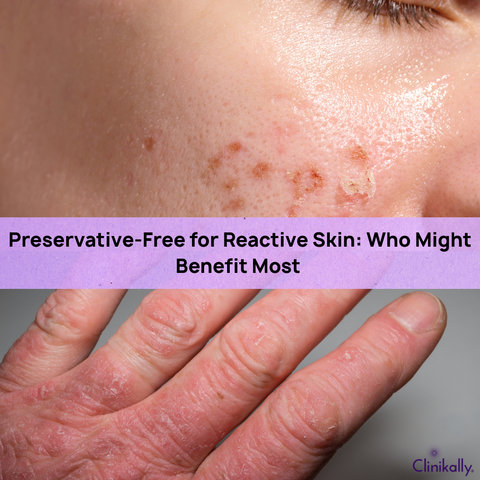
Preservatives are essential for maintaining the safety of skincare products, but for others with reactive or extremely sensitive skin, they may prove to be an irritant. Though avoiding preservatives altogether is not a practical approach, certain individuals may profit from products formulated without conventional harmful preservatives, provided people use these responsibly and store the skincare with minimal preservatives properly. People that benefit the maximum from preservative-free products are:
-
Some individuals who experience contact dermatitis or allergic contact dermatitis to prevalent preservatives such as parabens, formaldehyde releasers, or isothiazolinones. For these individuals, alternative preservation systems or preservative-free products could minimize irritation.
-
Individuals with Chronic Skin Disorders such as Rosacea, Psoriasis or Eczema as these skins already possess impaired barriers and hence are more reactive. Flare-ups can be minimised if irritants are avoided.
-
Extremely hypersensitive individuals may react to even low levels of preservatives. Extremely minimalist, preservative-free formulations can be more acceptable when combined with rigorous freshness and storage procedures.
-
People who are prescribed preservative-free or pharmacy-compounded skin care on a short-term basis, by a dermatologist in the clinical setting. These products are frequently prepared in small batches and have an extremely short shelf life.
-
Consumers who value freshness over convenience are best suited for preservative-free products. Some niche brands offer preservative-free products that are kept in the refrigerator with expiration dates nearer to food than cosmetics.
Preservative-free skin care is not necessarily safer, rather preservatives are actually an important protection against contamination for most individuals. However, in the case of those with certain allergies, hypersensitivity, long-term illnesses, or extremely sensitive skin, properly formulated preservative-free products can bring relief.
Formulation Tips: What to Look for in Low-Preservative Products
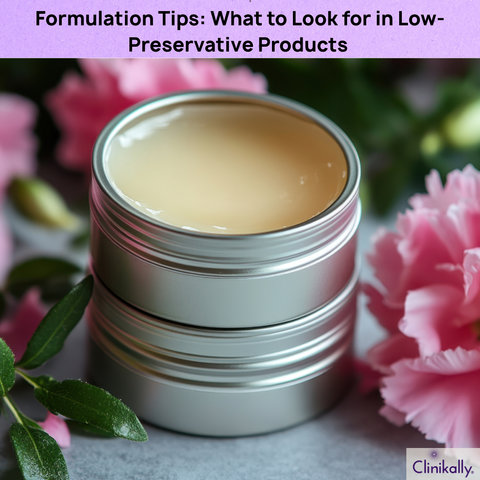
As the demand for gentler, cleaner skincare rises, low-preservative products are finding favor in the market. These will minimize potential irritants, but they're not all equal. To make an intelligent choice, one must know how formulation impacts both performance and safety. Remember and follow these key tips while choosing safer, low-preservative skincare.
-
Choose water free products such as balms, skin oils, and waterless powder cleansers, as these are less conducive to microbial growth by nature.
-
Choose products that use antioxidants (such as Vitamin E), essential oils, or air-tight packaging to maintain freshness, as these are milder alternatives to preservatives.
-
Prefer airless pumps or tubes in packaging as these restrict exposure and protect low-preservative items better.
-
Look for companies that boast of "freshly made" or "small-batch" manufacturing as these tend to employ minimal preservation.
-
Look for formulations that are created at lower pH (acidic conditions) as these inherently inhibit microbial development.
-
Prefer oil, butter, and wax-based products as these don't favor microbial development like water-based products do. These are excellent choices for those who want minimal preservation.
-
Look for products that provide clear storage instructions as few low-preservative products require refrigeration or must be used within weeks. If a brand doesn’t provide clear storage guidance, that’s a red flag.
By searching for water-free bases, protective packaging, transparent expiration dates, and strict storage guidelines, consumers can partake in the advantages of clean beauty without sacrificing safety.
Packaging and Storage: Key to Making Preservative-Free Work
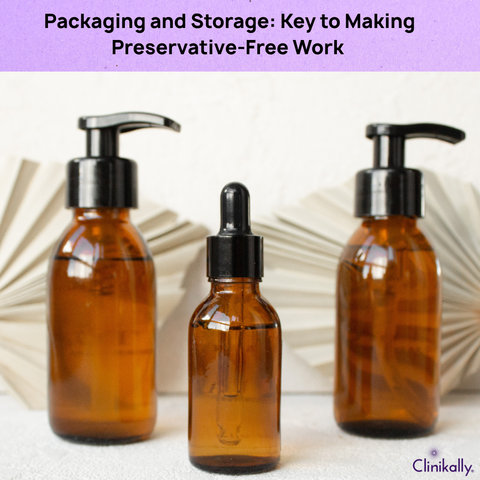
The secret to making preservative-free products work is clever packaging and rigid storage conditions. Without those, even the most benevolent formulations spoil rapidly, causing contamination and possible skin irritation. Proper packaging and storage enables Preservative-Free Skincare to sustain. Fe guidelines are:
-
Light-sensitive ingredients, including natural oils and botanicals, have a shorter shelf life when exposed to UV light. Amber glass, opaque plastic, or coated packaging preserves active ingredients.
-
Airless pump packaging minimizes air and skin exposure. Every pump delivers a controlled quantity, eliminating exposure to bacteria in the formula.
-
Spatulas, droppers, or pump applicators avoid direct finger-to-product contact. Cleaning tools minimizes contamination hazards.
-
Individually sealed ampoules or capsules maintain freshness by limiting exposure once opened. These are ideal for preservative-free or active-heavy serums.
-
In contrast to long-shelf-life conventional cosmetics, preservative-free ones tend to expire in weeks or months. Clear labeling ensures consumers use products while still safe.
-
Numerous preservative-free items must be refrigerated to retard microbial growth. Cold storage replicates the food model, lengthening freshness for short-lived products
-
Heat and humidity speed product spoilage. Preservative-free products should be stored away from bathrooms or warm areas, and never left in automobiles or handbags for long periods.
For preservative-free skincare to truly work, packaging and storage are just as important as the formulation itself. Consumers drawn to preservative-free beauty must embrace that the shorter shelf life of products intices stricter storage habits.
Personalized Recommendations: Should You Go Preservative-Free in Your Routine?
Deciding whether to go preservative-free in your skincare routine ultimately depends on your skin type, sensitivities, and lifestyle. While preservative-free products may benefit those with allergies or highly reactive skin, they also come with shorter shelf lives and stricter storage requirements. For most people, well-formulated products with safe, regulated preservatives provide greater protection and consistency. The secret is finding balance between selecting products that suit your specific needs without compromising on safety and efficacy. By analyzing your skin issues, daily routine, and comfort level, you can decide whether preservative-free beauty is a worthy investment or just a fad. That being said, consulting a dermatologist is the best way to understand your skin and get the products according to that.