Vegan Supplements You Need for Strong Nutrition and Daily Wellness
Going vegan is a big choice that is often motivated by a desire for better health, a less impact on the environment, and a more compassionate lifestyle. The benefits of vegan supplements can be significant. A dish full of plants is naturally high in fiber, vitamins, and antioxidants, which can help your heart and give you more energy.
But the truth is, even the most colorful and well-planned vegan plate includes a few nutritional gaps. Even for people who consume meat, it's hard to get certain nutrients in today's environment (with sanitized food and indoor lifestyles). If you want to live a vegan lifestyle, you must consider plant-based supplements to fulfil your nutrient requirements. Thus, it's essential to act smart about how to get vegan nutrition.
Supplements are like a safety net for your nourishment. This article will help you find the best vegan supplements (the few essentials you need to make a healthy diet even better) to maximum energy, strong bones and a sharp mind.
The Absolute Non-Negotiable: The Vegan B12 Supplement
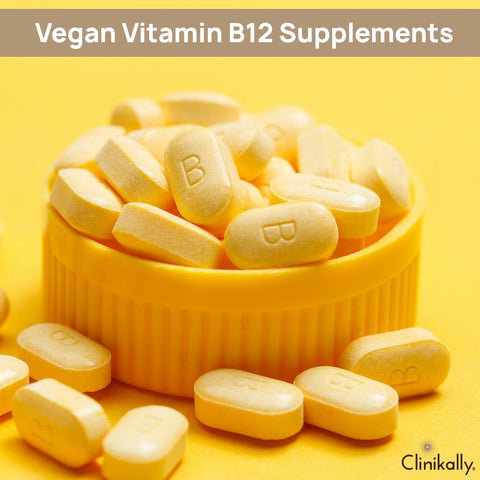
This is the most important thing to remember from this whole guide: Everyone who follows a vegan diet must take a vegan B12 supplement. This is one of the most essential supplements for long-term vegan health.
Vitamin B12 or Cobalamin, is very important for your health. It is necessary for the production of DNA, red blood cells, and keeps your nerves healthy.
But here's the interesting part: animals and plants don't make vitamin B12. It comes from tiny bacteria that dwell in the soil and in the guts of animals. Our farming and hygiene methods have cleansed this source away today.
Omnivores get vitamin B12 from meat and dairy as it builds up in animal tissues. If you are a vegan, you must get it from trusted outside sources. Using seaweed or fermented foods as your only source of B12 is risky since they typically have inactive B12 imposters that your body can't use. The scientific answer is very clear: you need a dedicated vegan B12 supplement.
How Vegan B12 Supplement is Made?
Since neither plants nor animals make B12, the supplement is created using a smart, clean, and 100% vegan process called fermentation (like brewing). Scientists feed B12-producing bacteria a sugary liquid made entirely from plant sources. The bacteria then naturally excrete pure Vitamin B12, which is harvested, purified, and dried into the reliable powder that goes into your pill. It’s the ultimate way to get the nutrients directly!
The Role of B12 in the Body
B12 is a superstar for two primary systems:
- Nervous System Health: It protects the delicate nerves that pass through your body. Not getting enough vitamin B12 for a long time can cause serious problems like tingling, numbness, and even permanent nerve damage.
- Energy and Blood: It's important for making healthy red blood cells that carry oxygen. If you don't get enough B12, you can have a type of anemia which makes you very tired and weak.
Vegan B12 Supplement Dosages and Forms
B12 is hard for your body to absorb because it can only be absorbed in a small amount at a time. This means you have three simple and useful ways to get more nutrients:
|
Supplement Frequency |
Recommended Dosage |
Why This Dose? |
|
Daily |
25 to 100 micrograms (/mu g or mcg) |
A simple, steady amount that meets daily needs easily. |
|
Twice a Week |
1,000 micrograms (/mu g or mcg) |
A higher dose to make up for the lower absorption rate when taken less regularly. |
|
Weekly |
2,000 to 2,500 micrograms (/mu g or mcg) |
This very high dose ensures enough B12 gets into your system through passive absorption for a whole week. |
Cyanocobalamin vs. Methylcobalamin
You can find two primary types of B12 supplements:
- Cyanocobalamin: The most common, stable, and well-known form. Your body easily turns this into the active form. For most healthy vegans, this is the standard recommendation.
- Methylcobalamin: This is the "active" form. It's often more expensive and less stable, and studies show that it doesn't always work better than cyanocobalamin to fix a deficiency.
Experts recommend that Cyanocobalamin is the safest and most effective solution for keeping your health stable over the long run.
Building a Strong Foundation: Bone Health Supplements
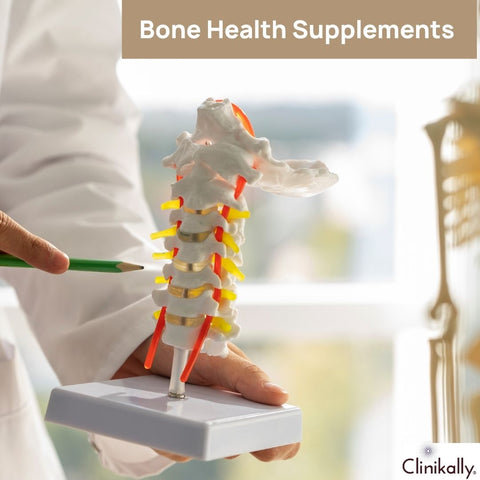
B12 keeps you healthy from inside, but the next two nutrients are important for making a strong, stable structure. Calcium and Vitamin D are the dynamic duo when it comes to bone health. They function together like a lock and key because vitamin D is essential for the body to absorb calcium from food and supplements. There are several calcium and vitamin D supplements available like Shelcal 500 Calcium & Vitamin D3 Tablet, Carbamide Forte Tablet, etc.
Vegan Calcium Supplement: Separating Myth from Fact
People think that vegans have weak bones because they don't eat dairy products, but this is a myth. Dairy is a well-known source, but many plant foods are also good sources of calcium.
Calcium is the main building block for bones and teeth. It is also important for moving muscles, helping blood coagulate, and making sure nerves to communicate properly.
Before using a vegan calcium supplement, try to fulfil your dietary calcium intake:
- Fortified Plant Milks and Yogurts: Check the label! These are often matched to the levels in cow’s milk.
- Calcium-Set Tofu: Tofu that uses calcium sulfate as the setting agent.
- Low-Oxalate Greens: Kale, choy, and collard greens are good sources of calcium that your body can easily absorb.
- Other Sources: Tahini, almonds, and dried figs.
Most adults need about 1,000 mg of calcium per day. If you regularly drink fortified plant milk (which usually has the same calcium as dairy) and eat plenty of low-oxalate greens like kale, you might easily hit this target.
The need for a vegan calcium supplement comes down to consistency. If you struggle to track your intake, or if you skip fortified foods often, a small "booster" supplement (500-600 mg) is a smart idea. It acts as an easy nutritional backup plan to ensure your bones stay strong no matter what you eat that day.
Vegan Vitamin D Supplement: The Sunshine Vitamin for Everyone
Your body can make vitamin D when your skin is exposed to strong sunshine, which is what makes it unique. But a lot of people don't get enough vitamin D regardless of their diet because they spend most of their time indoors, wear sunscreen, or live in cloudy places. This makes a vegan vitamin D supplement a near-universal necessity.
Vitamin D is essential for everyone because it helps your body absorb calcium, supports immunity, and even influences mood. Even if you consume enough calcium, your body cannot use it effectively without sufficient vitamin D. When choosing a vegan supplement, go for true plant based Vitamin D3 made from Lichen, as traditional D3 is derived from lanolin sourced from sheep’s wool. Lichen sourced vitamin D3 supplement provides the same active and effective form your body needs. Most people require 1,000 to 2,000 IU of D3 daily, but there is no ideal amount as it varies from person to person. To know your actual levels, a simple blood test is the only reliable way and if your vitamin D is low, your doctor may temporarily recommend a higher dosage.
Brain & Heart Power: Vegan Omega 3 Supplements
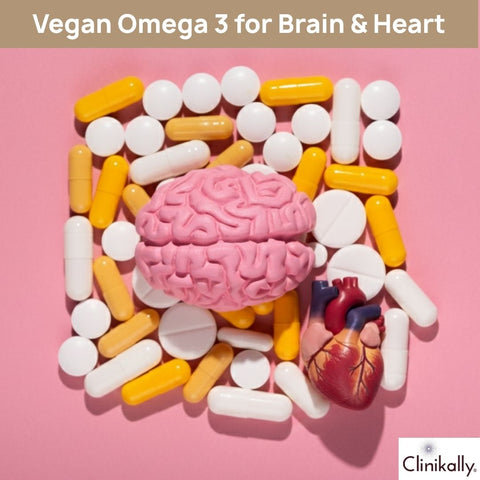
If Vitamin B12 is the insurance policy for your nervous system, then Omega 3 fatty acids are fuel for your brain and the protector of your heart. These are essential fats, which means your body needs them to function properly, but it cannot produce them on its own. You have to get them from food or supplements.
For a long time, fish oil was the main topic of conversation about these good fats. But vegans and anyone else who wants a clean, long-lasting supply can skip the fish and go straight to the genuine source. Let’s explore the role of vegan omega 3 supplements.
The Omega 3 Breakdown: ALA, EPA, and DHA
The Omega 3 family has three key members you need to know:
- ALA (Alpha Linolenic Acid): This is the most basic form found abundantly in many plant foods.
- EPA (Eicosapentaenoic Acid): This is good for reducing inflammation and keeping your heart healthy.
- DHA (Docosahexaenoic Acid): It makes up a significant part of your brain’s gray matter and retina.
If you consume a healthy plant-based diet, you probably already get enough ALA. You can find it in Flax Oil, Flaxseeds, Chia Seeds, Walnuts, Hemp Oil and Seeds. These foods are great, but they only give you the raw ingredients (ALA) and the main problem is to convert this ALA into the essential EPA and DHA. Think of it like a nutritional factory. Unfortunately, this factory is usually very inefficient.
The conversion rate is low, especially for DHA. For EPA, it's usually less than 5%, and for DHA, it can be less than 0.5%. Age, gender, and diet are some factors that can make this nutritional factory run even more slowly.
You might not get enough EPA and DHA for your brain and heart to work at their best if you only take ALA. This is why vegan omega 3 supplements are now widely considered an essential part of the best vegan supplements strategy.
Why Algae Oil Is the Most Effective Vegan Omega 3
Vegan Omega 3 supplements skip the body’s slow conversion process by giving you pure EPA and DHA that are ready for immediate use. Since fish do not produce Omega 3 on their own and instead obtain it by eating microalgae, algae oil becomes the most powerful vegan source of these essential fats. Algae oil, made directly from microalgae, delivers ready made EPA and DHA in a clean and sustainable way, avoiding concerns like ocean pollution, heavy metals, and overfishing that come with traditional fish oil.
Benefits of Supplemental DHA/EPA
Taking a high-quality algae oil supplement will help you get all the benefits:
- Cognitive Function: DHA is important for keeping brain cells healthy, supporting memory and focus.
- Heart Health: EPA and DHA can help keep blood pressure in a healthy range and reduce inflammation.
- Anti Inflammation: They help fight inflammation, benefiting joint health and mood stability.
Tip: Find a good algal oil that gives you at least 250-500 mg of EPA and DHA every day.
Iron and the Multivitamin Approach for Energy and Vitality
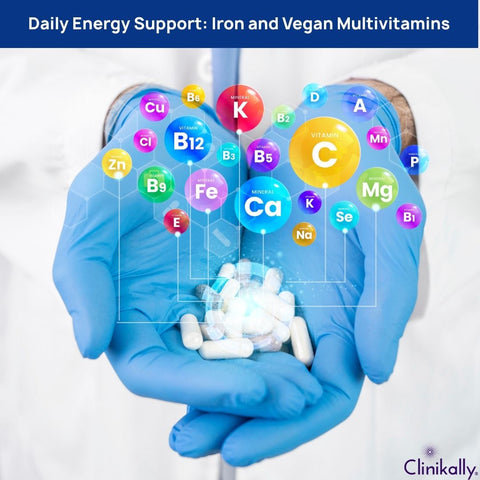
After supporting your body with vitamin B12, bones through vitamin D and calcium, and brain fuel from Omega 3s, the next step is to boost up your energy levels with Iron and multivitamins. Iron is a mineral that helps your body get oxygen, gives you energy, and keeps your immune system strong. Low iron levels lead to crushing fatigue, weakness, and poor concentration.
Vegans often rely on non-heme iron from lentils, beans, tofu, and other plant foods, but this form is absorbed more slowly than the heme iron found in animal products. This is why some people, especially menstruating women, are more prone to low iron levels. To improve absorption, pair iron rich foods with vitamin C, like adding bell peppers or oranges to meals, and avoid tea or coffee for at least an hour around your iron intake since they can block absorption.
A well chosen vegan multivitamin can further help cover overall vitality. But you should never start vegan iron supplements without a doctor's advice and a recent blood test. Why? Because unlike many vitamins, iron is stored in the body, and too much consumption can be harmful and damage organs. If you have iron deficiency, your doctor will recommend a safe dosage.
The Vegan Multivitamin Choice
A vegan multivitamin is the best way to make sure you're getting all the nutrients you need. Taking a multivitamin is an effective method to fill in small, typical gaps in key trace elements that you might not know you have, such as Iodine (necessary for thyroid health) and Zinc (important for immunity).
A good vegan multivitamin should accomplish the following things well:
- Contain B12: At least a moderate amount.
- Contain Lichen D3: Make sure the Vitamin D is the highly effective plant-based D3 form.
- Include Iodine: A small but vital dose for your metabolism.
- Don't take Iron (Usually): If you don't need it, choose a multivitamin without Iron to prevent taking too much.
Is a Multivitamin Sufficient for All My Needs?
A multivitamin is a wonderful baseline, but it frequently does not contain high enough dosages of the three most vital nutrients (B12, D3, and Omega 3) to be the only thing you take.
Usually, the ideal strategy is to take a combination of a High-Quality Vegan Multivitamin (for general trace minerals) and a Dedicated B12, D3, and Algae Omega 3 Supplements (for the best, targeted doses).
The Performance Edge: Vegan Protein Supplements
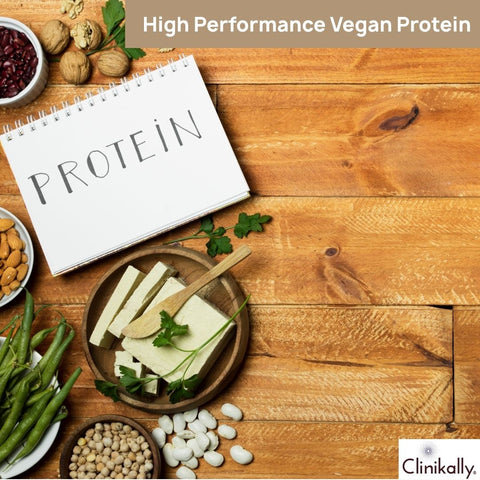
A plant based diet provides plenty of protein through grains, legumes, seeds, nuts, tofu, and a variety of whole foods, making the idea that vegans struggle to meet protein needs largely a myth. Most people easily meet their daily requirements by eating enough and choosing diverse plant foods.
However, vegan protein supplements can still be valuable for several reasons. They are convenient for a quick, measurable post workout recovery, help athletes and active individuals meet higher protein demands for muscle repair, and add satiety when blended into meals or smoothies to support weight management.
There are different types of vegan protein powders available and their quality has improved significantly with popular options. The common sources are:
- Pea Protein: Very high in protein (around 20-25 grams per scoop), easy to digest, and typically used as a base for blends.
- Brown Rice Protein: A good source, commonly mixed with pea protein to make a complete amino acid profile.
- Soy Protein: A complete protein, but often avoided by some due to preference.
- Hemp Protein: This is a complete protein that also has fiber and omega fats, although it doesn't have as much protein as pea or rice.
Complete Proteins vs. Blends
A "complete protein" has all nine of the essential amino acids that you need which your body can’t make on its own. Soy and quinoa are complete proteins; however, most plant proteins don't have enough of one or two important amino acids.
This is why the best vegan protein supplements are often blends like a mix of rice and pea protein. When mixed together, they cover all nine amino acids perfectly, and give you the same high-quality building blocks as animal protein.
To choose the best vegan protein supplement, you should find a protein powder that:
- Use a Blend: Look for blends (pea + rice is very common) make sure you get all the essential amino acids.
- Has Low Sugar: Avoid protein supplements loaded with added sugars or artificial sweeteners.
- Is Third Party Tested: This ensures the product actually contains what the label claims and is free of contaminants.
The Holistic Approach to Vegan Nutrition
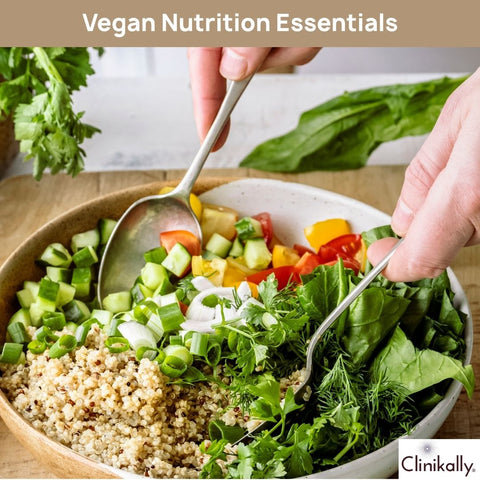
Supplements can fill important gaps, but remember, supplements are not a substitute for a healthy diet.
The true core of vegan nutrition comes from eating a wide variety of whole plant foods:
- Legumes: Beans, lentils, and chickpeas are full of protein and iron.
- Grains: Whole grains like oats and quinoa provide you energy and important fiber.
- Fruits and Vegetables: They are the main sources of vitamins, minerals, and antioxidants that fight disease.
To get the most health benefits from a vegan lifestyle, focus on whole foods instead of heavily processed substitutes and make fortified foods a consistent part of your routine. Fortified plant milks, cereals, and nutritional yeast offer easy and reliable ways to boost nutrients like calcium, vitamin D, and B12, helping you stay strong, nourished, and balanced every day.
Best Vegan Supplements: A Final Review Checklist
This list makes sure you have everything you need:
|
Nutrient |
Why It's Essential |
What to Buy |
|
B12 |
Nerve health, energy, blood formation. |
Cyanocobalamin supplement (100-2500 mcg dose). |
|
Vitamin D |
Calcium absorption, immune health. |
Lichen sourced D3 supplement (1000-2000 IU). |
|
Omega 3s (EPA/DHA) |
Brain function, heart health. |
Algae Oil supplement (250-500 mg combined EPA/DHA). |
|
Iron/Calcium |
Bone/muscle function (Calcium), energy/blood (Iron). |
Food first, supplement only if intake is low or deficiency confirmed. |
|
Multivitamin |
Insurance for Iodine, Zinc, Selenium. |
A high quality, iron free vegan multivitamin. |
Conclusion
A plant-based diet is a great way to start living a healthier life. You can make sure your body gets all the nutrients it needs to thrive by knowing which nutritional areas need particular care and choosing the best vegan supplements intelligently.
Taking a supplement doesn't mean you're not following a vegan diet; it means you're being smart and aware about what you eat. By prioritizing the Big Three (B12, D3, Omega 3) and using a multivitamin and protein powder strategically, you guarantee that you are not just surviving on a plant-based diet, but truly flourishing.
Are you ready to start improving your vegan health? If you have specific health goals or symptoms, the first thing you should do is talk to a healthcare professional or a certified dietitian to be sure these recommendations are right for you.