When Topical Treatments Aren’t Enough to Remove Skin Spots
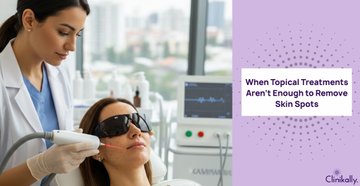
Many brown spots can be effectively treated with topical therapies such as vitamin C, retinoids, azelaic acid, and tranexamic acid. However, some pigmentation does not respond well because of its depth, origin, or long-term recurrence. In this blog, we'll look at how topical therapies aren't enough to eliminate skin patches.
Why Topical Treatments Often Fall Short for Skin Spots

Topical therapies for dark spots and hyperpigmentation include vitamin C, retinoids, azelaic acid, and hydroquinone. While these chemicals can be useful, they frequently fall short because to many limitations, particularly when the pigmentation is severe, persistent, or undiagnosed. One main issue is that some skin spots, such as dermal melasma or sun-induced lentigines, are located in deeper layers of the skin, where topicals cannot fully penetrate. Inconsistent application, insufficient SPF use, and poor product layering can all hurt treatment outcomes. Over-the-counter medications also use lesser amounts of active chemicals, which may be insufficient to treat obstinate pigmentation.
Topicals also act slowly, frequently taking 8-12 weeks or longer to produce apparent results. Meanwhile, prolonged sun exposure, hormonal factors, or inflammation can cause pigment rebound, reversing progress. Certain topicals, when applied incorrectly, can cause irritation or aggravate discolouration in specific skin tones.
Understanding the Limits of Topical Treatments
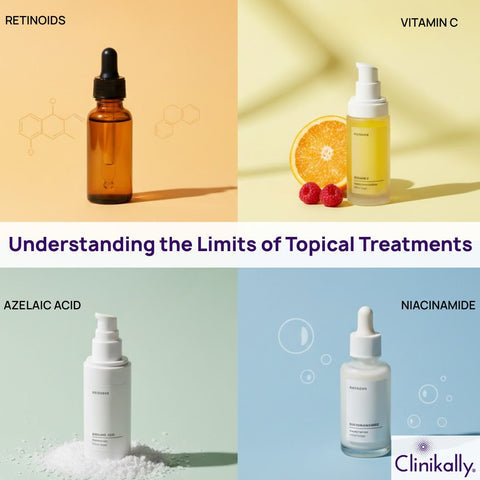
Topical treatments are the first line of defense against skin discolouration, providing benefits such as reduced pigmentation, improved texture, and better skin tone. However, their efficacy is limited, particularly when treating deep, obstinate, or hormonally driven skin lesions. Topicals primarily target the epidermis, or outermost layer of skin. While substances such as retinoids, vitamin C, azelaic acid, and niacinamide help reduce minor pigmentation, they may not reach deeper dermal layers, where more permanent spots such as melasma or sun damage exist. Full resolution is difficult to achieve with creams or serums alone. Skin barrier difficulties, inappropriate product use, and inconsistent sun protection can all have a negative impact on results. Many individuals expect quick results, but topicals frequently take 8-12 weeks of consistent treatment to demonstrate any change—and even then, outcomes may plateau. Hormonal effects, chronic inflammation, or previous UV exposure can all cause melanin to be produced on a constant basis, making topicals less effective. In such circumstances, physicians may offer professional treatments such as chemical peels, lasers, or microneedling to break up deeper pigment.
Common Skin Conditions That Resist Topical Treatments
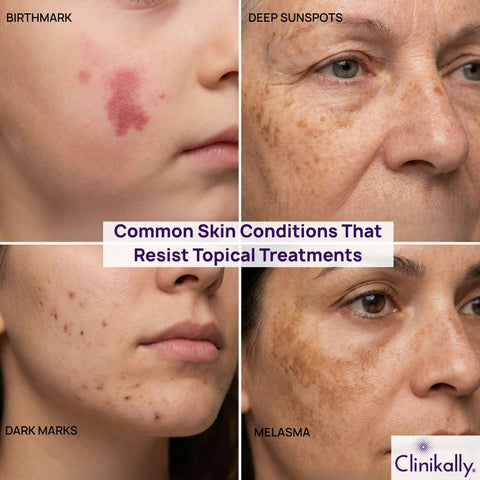
While many skin issues react well to over-the-counter or prescription topicals, other conditions are resistant to conventional treatments, particularly when the underlying reason is deeper, persistent, or complicated.
- Melasma: It is caused by hormones, sun exposure, or heat and is commonly found deep in the dermis, making it resistant to topical brighteners such as hydroquinone and vitamin C. It usually recurs without adequate sun protection and may necessitate oral or procedural therapy.
- Deep sunspots (or solar lentigines): Long-standing sunspots may be beyond the scope of surface-level remedies. Mild cases can be improved with retinoids or acids, but stubborn areas may require chemical peels or laser therapy.
- Post-inflammatory hyperpigmentation (PIH): Dark marks left after acne or skin injury can be difficult to remove, particularly on darker skin tones. Inflammation-related pigmentation is typically slow to respond and might increase with harsh or irritating products.
- Dermal pigmentation: Any pigment that is beneath the epidermis (including some birthmarks or genetic abnormalities) is typically unaffected by topical medicines and necessitates specialized treatment.
- Scarring and texture irregularities: While topicals can help erase discolouration, they cannot totally address deeper scarring or indented texture; microneedling, fillers, or resurfacing procedures may be more successful.
How Long Should You Use Topical Treatments for Spots?
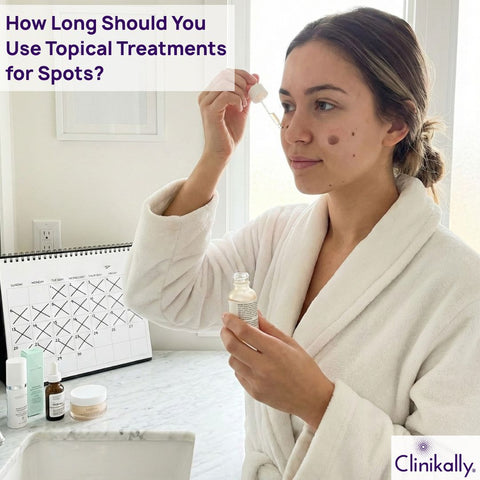
Topical treatments for brown spots and hyperpigmentation must be used consistently and with patience, since apparent improvement might take weeks or even months. Most therapies, including vitamin C, niacinamide, retinoids, azelaic acid, and hydroquinone, begin to show benefits after 8 to 12 weeks of consistent use. The exact length varies depending on the kind of pigmentation, depth of discolouration, skin tone, and active chemical utilized. For example, post-inflammatory hyperpigmentation (PIH) can fade in 2-3 months with good treatment, whereas melasma or deep sunspots can take longer and require continuing management.
Some treatments, like retinoids or azelaic acid, are safe for long-term use, while others—such as hydroquinone—are typically used in 3–4 month cycles to prevent rebound pigmentation or irritation. It’s crucial to combine topicals with daily sunscreen, as UV exposure can undo progress and worsen spots. If there’s no visible change after 12–16 weeks, or if pigmentation worsens, consult a dermatologist to explore stronger prescription options or professional procedures.
Exploring Alternatives When Topical Treatments Don’t Work
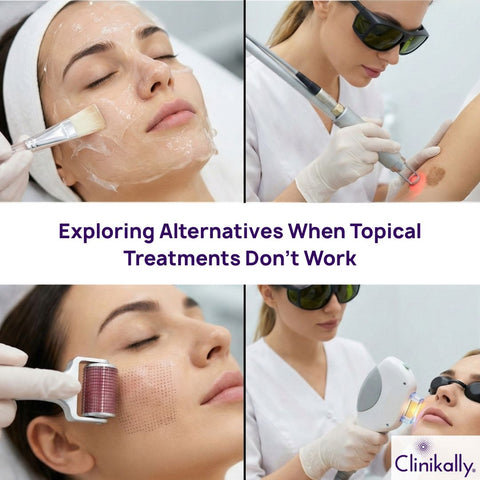
When topical treatments fail to reduce stubborn brown spots or hyperpigmentation, it may be time to look into more sophisticated options. This is especially true for skin conditions like melasma, deep sunspots, and post-inflammatory hyperpigmentation, which are resistant to surface-level treatments and serums.
-
Chemical peels exfoliate the skin with stronger acids, breaking up pigment clusters more deeply than at-home exfoliants. Glycolic acid and trichloroacetic acid (TCA) are routinely used under dermatological care.
-
Laser therapies, including Q-switched lasers, Fraxel, and IPL (Intense Pulsed Light), target melanin at different depths and can produce more dramatic results. However, they pose dangers such as rebound pigmentation, particularly in darker skin tones, and necessitate careful aftercare.
-
Microneedling is another successful method. It increases collagen and improves the penetration of pigmentation-reducing serums such as vitamin C and tranexamic acid, allowing discoloration to fade from the inside out.
In some circumstances, dermatologists may prescribe oral therapies (such as tranexamic acid for melasma) or a tailored in-office regimen for recalcitrant areas.
Professional Treatments for Stubborn Spots: What Are Your Options?
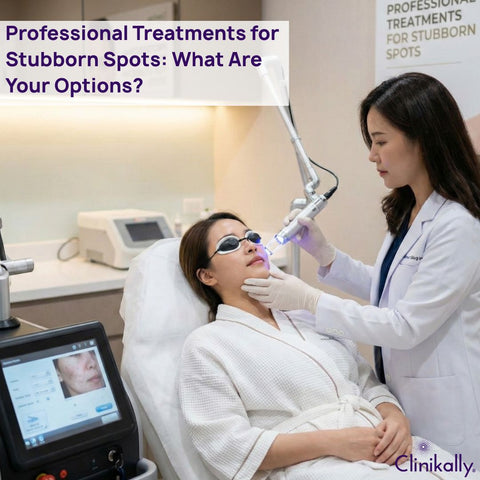
When over-the-counter or prescription topicals fail to remove brown spots, professional treatments provide more targeted solutions that penetrate deeper into the skin. These procedures are frequently required for melasma, sunspots, and post-inflammatory hyperpigmentation that are resistant to normal skincare.
-
Chemical peels: Dermatologists do chemical peels, which exfoliate and remove pigmented skin layers using acids such as glycolic, salicylic, and TCA. Multiple sessions may be required, depending on the depth and type of skin.
-
Laser treatments: Options such as Fraxel, Q-switched lasers, and IPL (Intense Pulsed Light), can break down melanin clumps. While lasers are effective, they must be properly evaluated, especially for darker skin tones, which are at risk of rebound pigmentation.
-
Microneedling: Causes microscopic micro-injuries that stimulate collagen and improve the penetration of brightening substances like as vitamin C or tranexamic acid. It is a milder treatment for PIH and melasma.
-
Prescription regimens and in-office lightening protocols: Dermatologists may recommend compounded creams or oral tranexamic acid for chronic melasma. Some clinics provide customized pigment management plans that include peels, lasers, and skincare.
-
Cryotherapy or Electrosurgery: These are used to eliminate pigmented cells from isolated sunspots or lentigines using either freezing or electrical current.
Chemical Peels and Laser Treatments for Persistent Spots
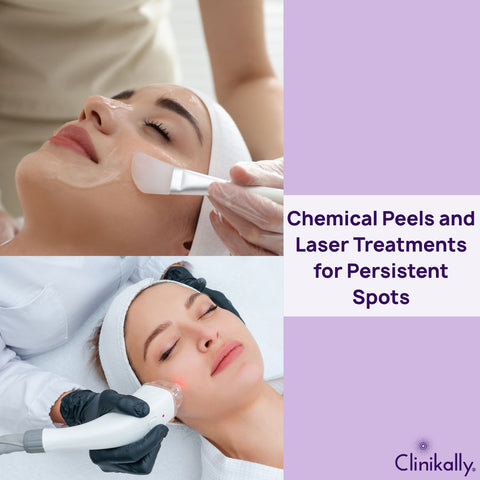
When topical treatments fail to remove obstinate dark spots, chemical peels and laser treatments provide more targeted and intensive results. These techniques have the ability to penetrate deeper skin layers, which are frequently home to persistent pigmentation such as sunspots, melasma, and post-inflammatory hyperpigmentation (PIH).
-
Chemical peels use a concentrated acid (such as glycolic, salicylic, lactic, or TCA) to exfoliate the skin and induce cell turnover. Light to medium peels can help erase superficial pigmentation, whilst deeper peels can target deep discoloration. Multiple treatments may be required, and post-treatment sun protection is critical to avoiding rebound spots.
-
Laser therapies such as Q-switched lasers, Fraxel, and IPL (Intense Pulsed Light) use controlled energy to target excess melanin. Lasers convert pigment into small particles that are progressively eliminated by the body. Results can be striking, although they vary depending on skin tone and pigment depth. Darker skin types may require milder, more specialized lasers to lessen the risk of post-treatment hyperpigmentation.
Both approaches provide faster, more noticeable benefits than topicals alone, but should only be carried out by qualified professionals. A dermatologist can assess your skin type, pigmentation pattern, and treatment goals before recommending the safest and most effective strategy for long-lasting clarity.
Microneedling: An Effective Treatment for Stubborn Pigmentation
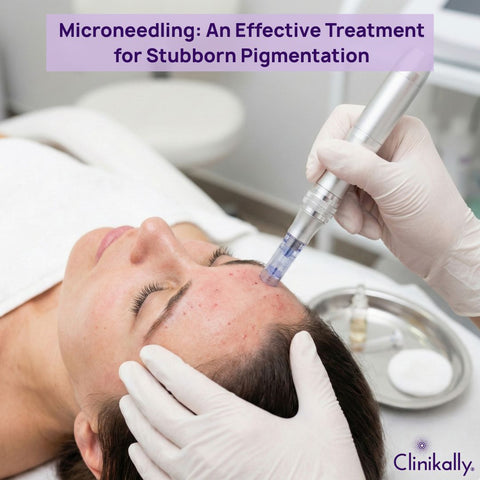
Microneedling is a minimally invasive, dermatologist-approved therapy that can drastically reduce stubborn pigmentation, including melasma, sunspots, and post-inflammatory hyperpigmentation. It works by making tiny, controlled punctures in the skin with fine needles, which stimulates a natural healing response and increases collagen formation and cell turnover.
This technique helps to break up melanin clusters, allowing brightening medicines like vitamin C, tranexamic acid, or azelaic acid to penetrate deeper into the skin. These compounds are frequently administered immediately after the treatment. These serums absorb more effectively through the microchannels formed by the needles, which improves their pigment-fading properties.
Microneedling is particularly beneficial for patients who have not reacted well to topical therapies alone. It is generally safe for all skin tones, giving it an excellent choice for people concerned about pigment rebound or discomfort from lasers or peels.
Multiple sessions (generally 3-6, spaced 4-6 weeks apart) are usually required for best outcomes. The downtime is minimal—mild redness and irritation for 1-3 days—and the results improve steadily over several weeks.
When performed by a qualified expert, microneedling is a safe, effective way to get smoother, more even-toned skin—especially when accompanied with rigorous sun protection and a supportive skincare routine.
How to Choose the Right Treatment for Your Skin Spots
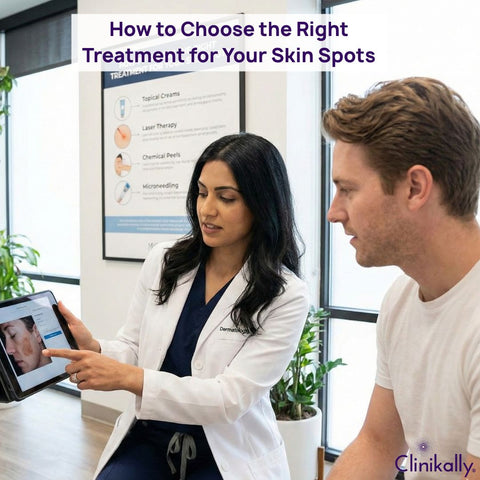
The appropriate therapy for skin spots is determined by the type, depth, and cause of the pigmentation, as well as your skin tone and sensitivity. Melasma, sunspots (lentigines), and post-inflammatory hyperpigmentation (PIH) are all types of dark spots that require distinct treatment methods. Start with topical treatments if your spots are mild or new. Vitamin C, niacinamide, retinoids, and azelaic acid can help brighten the skin and erase discolouration. These are suitable for surface-level pigmentation and upkeep.
If spots remain after 8-12 weeks of consistent use, consider professional treatments:
-
Chemical peels exfoliate and renew skin, making them ideal for treating sunspots and PIH.
-
Laser treatments, such as Q-switched or Fraxel, target deeper pigment but may not be suitable for darker skin tones.
-
Microneedling is a gentler method for increasing topical penetration and improving stubborn discoloration.
Dermatologists may recommend oral tranexamic acid or custom prescription mixtures to treat melasma or hormonal pigmentation. Regardless of treatment, daily broad-spectrum sunscreen is required to prevent recurrence and protect the results. A consultation with a trained dermatologist can help you identify your spot type and choose the safest, most effective treatment approach for long-term clarity and even skin tone.
When to See a Dermatologist for Advanced Treatment Options
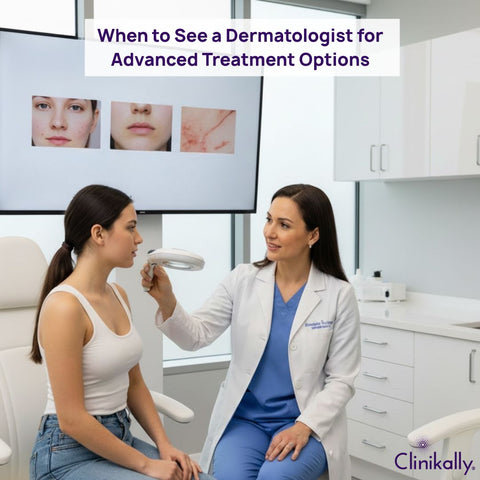
If over-the-counter lotions and home cures haven't helped your dark spots after 8-12 weeks of constant use, it's time to see a dermatologist. Persistent, worsening, or atypical pigmentation frequently necessitates professional evaluation and advanced treatment. Visit a dermatologist if your spots are:
-
Dark, irregular, or changing in size or shape (to rule out skin cancer).
-
Worsening despite sunscreen and topicals.
-
Deep-seated or hormonally triggered, as in melasma.
-
Accompanied by other skin issues like acne, scarring, or inflammation.
A dermatologist can distinguish between disorders that appear to be similar, such as sunspots, melasma, lentigines, or PIH, but require different treatment strategies. They may also suggest harsher prescription treatments (such as hydroquinone blends, tretinoin, or oral tranexamic acid) or in-office procedures, including chemical peels, microneedling, or laser therapy.
Professional tools are frequently more successful and faster in treating deeper pigmentation, but they must be adjusted to your skin tone and type to avoid side effects such as post-treatment hyperpigmentation.
Combining Topical Treatments with Professional Solutions
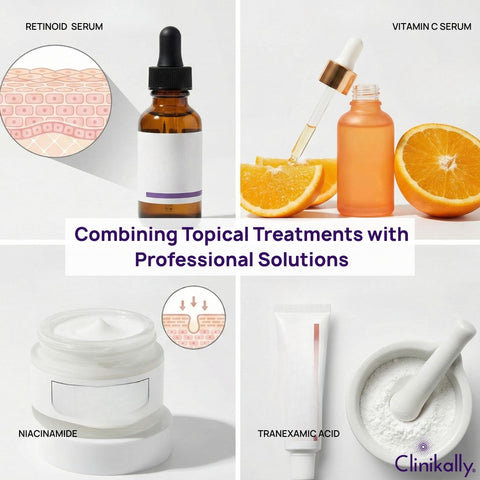
Combining topical therapies with professional procedures can provide faster, longer-lasting outcomes for persistent skin spots such as melasma, sunspots, and post-inflammatory hyperpigmentation (PIH). This dual technique treats both surface-level discolouration and deeper pigment deposits, resulting in a more comprehensive effect.
-
Topical treatments such as retinoids, vitamin C, niacinamide, tranexamic acid, and azelaic acid aid in lightening the skin, regulating melanin production, and enhancing texture. These work gradually and are critical for sustaining results and avoiding recurrences.
-
Professional treatments for obstinate or deep-set pigmentation include chemical peels, microneedling, and laser therapy. These methods increase skin turnover and improve active ingredient penetration, particularly when used with brightening serums.
-
For example, microneedling followed by topical vitamin C or tranexamic acid improves absorption and efficacy. Following a chemical peel, applying moderate topicals on a regular basis helps to retain the results and prevent new spots from emerging.
-
Dermatologists frequently employ a tiered treatment approach, combining in-office pigment removal techniques with a personalized at-home maintenance practice.
To guarantee safety, all treatments, especially on sensitive or darker skin tones, must be overseen and accompanied by daily sunscreen. With the appropriate combination, even the most resistant areas can be dramatically decreased over time.
What to Expect from Professional Spot Treatment Procedures
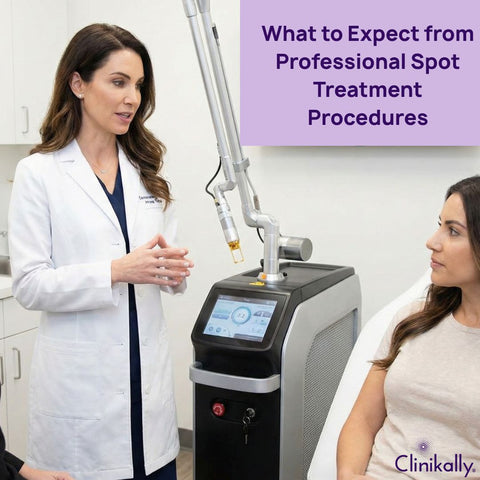
Professional spot treatments, like chemical peels, laser therapy, microneedling, and cryotherapy, provide focused remedies for persistent brown spots that do not respond to topical skincare alone. Understanding what to expect will help you make informed decisions and obtain the best results.
-
Consultation and diagnostics: Your dermatologist will evaluate your pigmentation type (e.g., melasma, sunspots, PIH) and skin tone before recommending the safest and most effective treatment.
-
Treatment session: Chemical peels exfoliate with acids, which may result in peeling or redness for a few days. Laser treatments break down pigment, but they may require multiple sessions and can cause temporary swelling or darkening before fading. Microneedling creates tiny skin punctures with minimal downtime and improves product absorption. Cryotherapy freezes isolated spots, which may result in a temporary scab.
-
Post-treatment care: Redness, flaking, or minor irritation may last 1-7 days, depending on the technique. Strict sun protection is essential to prevent rebound pigmentation.
-
Result timeline: Visible improvement usually occurs after 2-3 sessions, although full effects may take several weeks. Maintenance with topical medicines and sunscreen is required.
-
Professional procedures: They are safe and effective when suited to your skin's specific requirements and overseen by a competent professional.
Personalizing Your Spot Treatment Journey
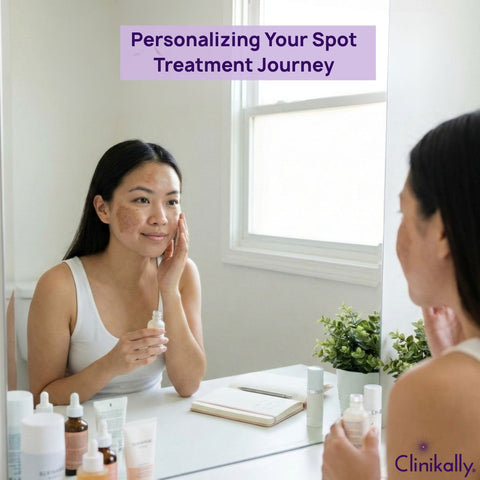
Every case of skin discoloration is unique, so tailoring is essential for effective spot therapy. Whether you have sunspots, melasma, or post-inflammatory hyperpigmentation (PIH), your treatment plan is tailored to your skin type, tone, lifestyle, and pigmentation depth.
-
Start by determining the type of location you have. Sunspots, for example, usually respond well to retinoids and peels, whereas melasma, which is commonly caused by hormones and heat, requires softer, longer-term methods like tranexamic acid, azelaic acid, or oral therapies, along with strict sun protection.
-
If your skin is sensitive or has a deeper tone, use low-irritation topicals such as niacinamide or licorice root, and avoid severe peels and some lasers. Microneedling is often a safer in-office procedure that improves topical efficacy without causing post-treatment pigmentation.
-
Consider your lifestyle and habits as well—outdoor exposure, consistency with skincare, and even stress levels can all have an impact on pigment production. A dermatologist can assist you in developing a strategy that blends home care (topicals and SPF) with professional procedures that are tailored to your specific goals.
Finally, tailoring your technique guarantees not just faster results but also long-term skin health and confidence. Stick to what works best for your skin, and make adjustments as it changes.
How to Tailor Your Skincare Routine for Persistent Spots

Persistent dark spots, whether caused by sun damage, melasma, or post-inflammatory hyperpigmentation, necessitate a strategic, tailored skincare regimen that goes beyond the basics. The goal is to minimize pigmentation, prevent recurrence, and promote healthy skin renewal while avoiding discomfort.
Morning routine:
-
Gentle Cleanser: Avoid harsh scrubs, which can aggravate pigmentation.
-
Antioxidants: Use a vitamin C serum to combat free radicals and brighten the complexion.
-
Niacinamide or Licorice Extract: Reduces inflammation and melanin transfer.
-
Broad-Spectrum Sunscreen (SPF 30+ daily): The most important step toward preventing further pigmentation.
Evening routine:
-
Cleanse: Take off sunscreen, makeup, and pollutants.
-
Targeted treatments: To increase cell turnover and fade pigment, rotate active ingredients such as retinoids, azelaic acid, or tranexamic acid.
-
Hydrating moisturizer: Use ceramides and hyaluronic acid to protect your barrier and soothe irritation.
Understanding the Importance of Consistent Treatment and Care
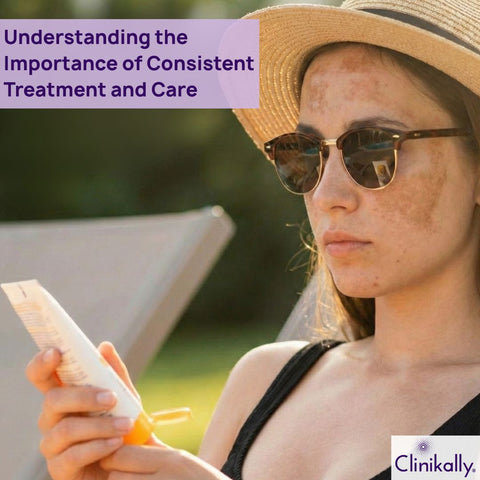
When it comes to removing obstinate skin spots like sunspots, melasma, and post-inflammatory hyperpigmentation (PIH), consistency is key. Even the most successful therapies might fail if not utilized consistently and appropriately.
-
Pigmentation does not fade overnight: It can take weeks, even months, for skin to respond to brightening treatments and rejuvenate itself. Interrupting your program or regularly switching products might slow progress and possibly cause irritation, particularly in sensitive or deeper skin tones.
-
Daily sun protection is essential: Without sunscreen, UV exposure can reverse any progress, deepen existing spots, and cause new pigmentation. Think about SPF as the foundation of any spot-correcting regimen.
-
Consistent application: Active substances such as retinoids, vitamin C, azelaic acid, and tranexamic acid require time to exert their full benefits. Skipping applications or discontinuing therapy early sometimes results in disappointment.
-
Consistency in treatments: Whether you're getting chemical peels, microneedling, or laser therapy, following the suggested timetable and aftercare recommendations will result in better, safer outcomes.
Easing Your Spot Treatment Journey
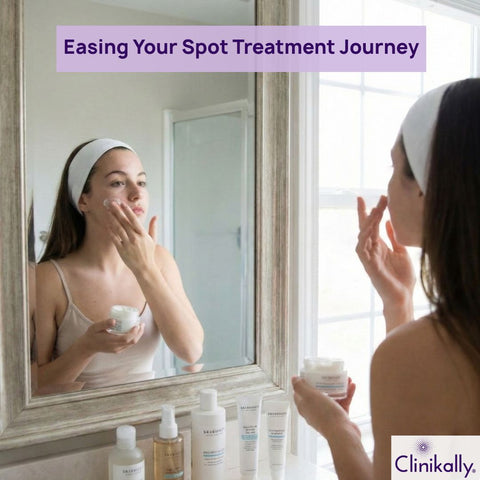
To properly treat black spots, you must go beyond simply following trendy skincare trends; you must take a specialized strategy that is tailored to your skin's specific needs. Understanding the source, level, and type of pigmentation (such as melasma, sunspots, or post-inflammatory hyperpigmentation) is the first step in developing an effective treatment plan. Start with a precise diagnosis, preferably from a dermatologist. From there, create a program that incorporates evidence-based topicals such as vitamin C, niacinamide, retinoids, or azelaic acid to combat surface discolouration. If your skin is sensitive or prone to irritation, use gentler brightening agents and calming moisturizers to help maintain a healthy skin barrier. For deeper or more resistant pigmentation, professional treatments such as chemical peels, microneedling, or laser therapy can be safely coupled with homecare actives when guided by a professional.